



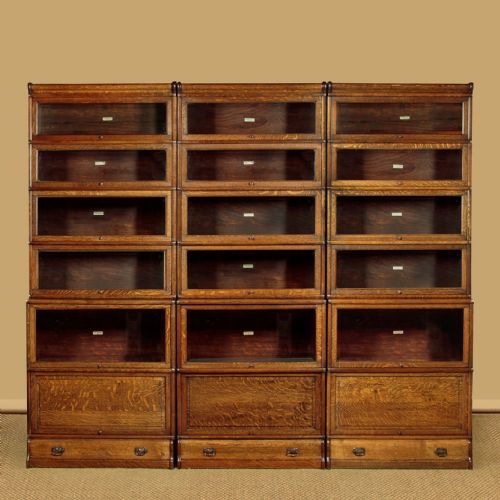
Modular Library Bookcase
A modular library bookcase gives you adaptable shelving with glazed stacking sections, combining practical home storage with period character.
Modular Library Bookcase
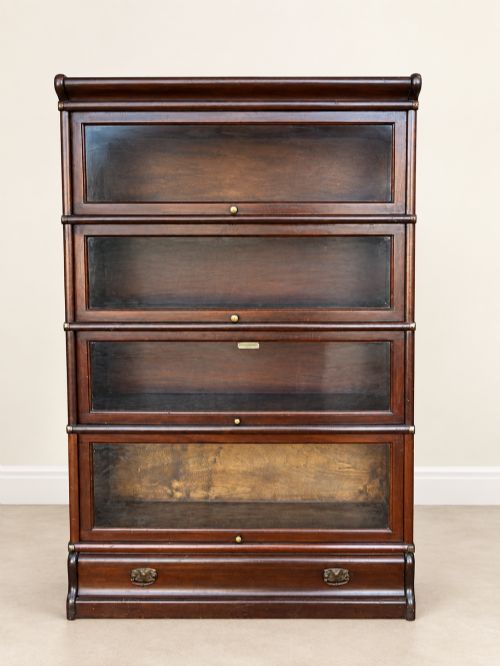
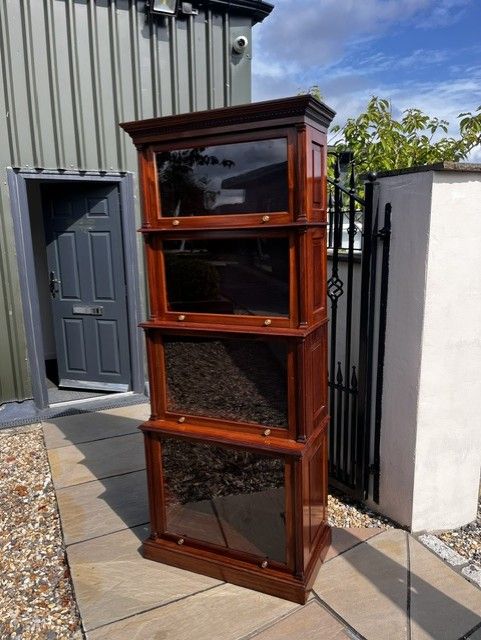
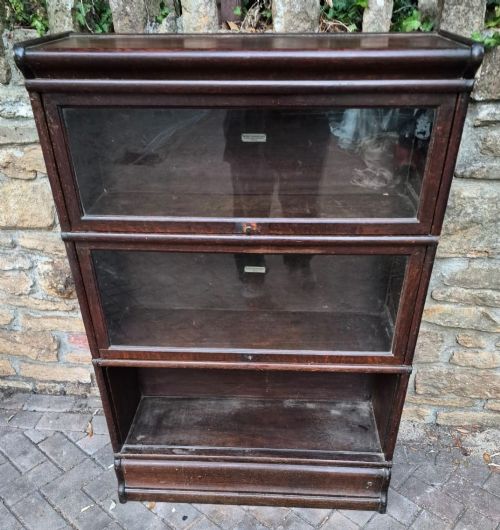
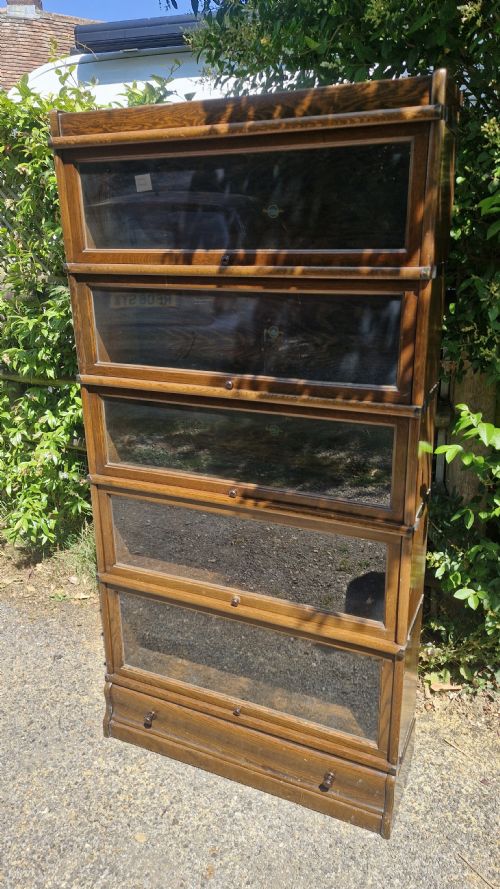
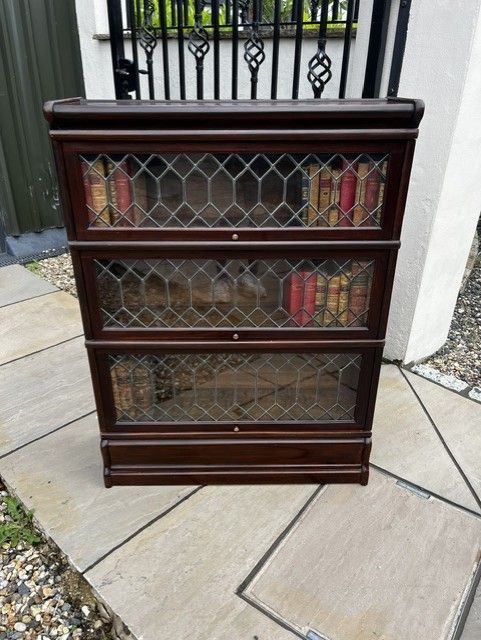
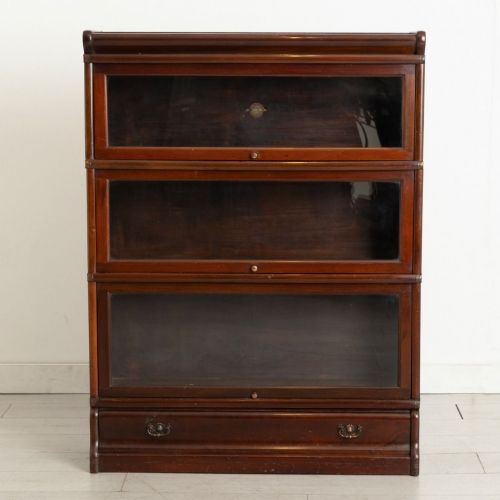
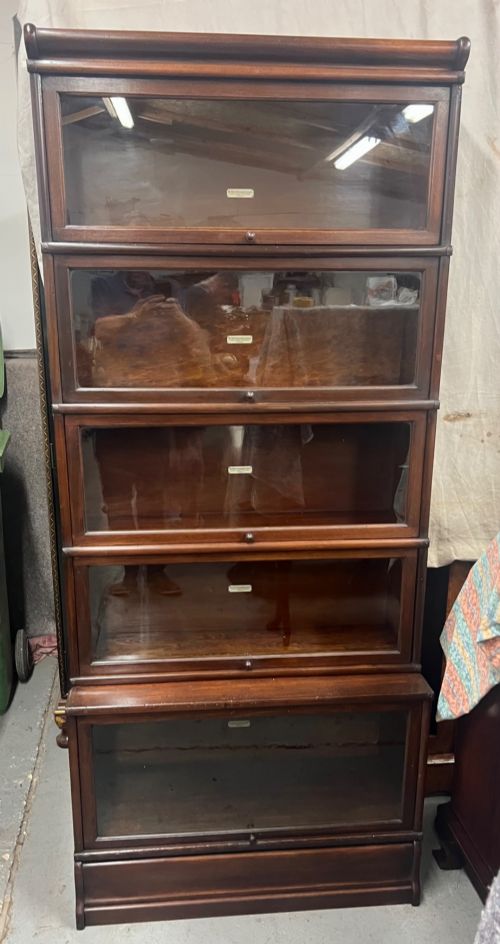
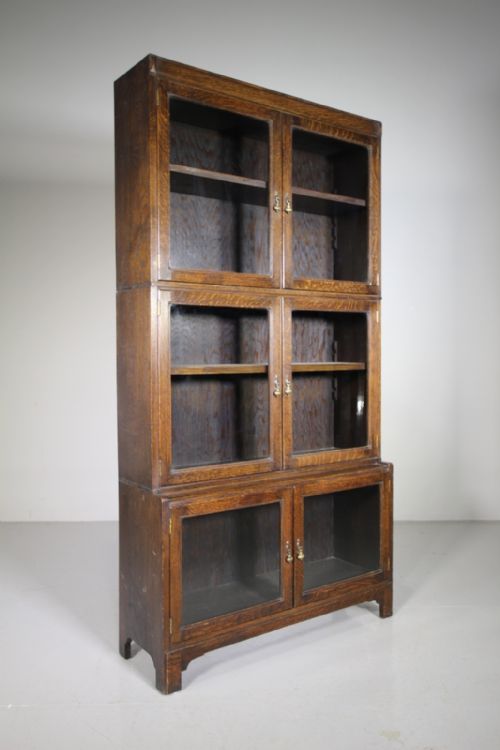
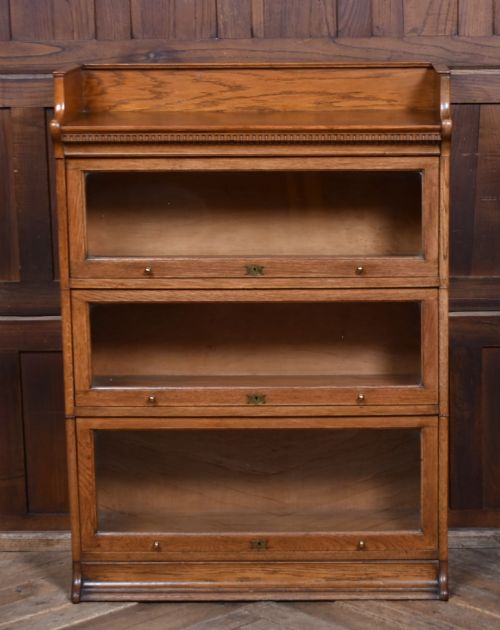
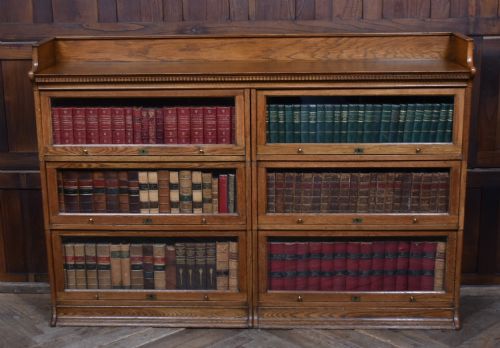
A modular library bookcase is a sectional piece designed to store and protect books in tiered compartments. You will most frequently meet oak and mahogany examples originating from the Edwardian period through to the 1930s.
Most pieces date from the early twentieth century, spanning styles from Arts and Crafts simplicity to Art Deco geometric lines. They serve equally well in studies, living rooms, and offices for housing collections of varying heights.
What varies in quality
Quality in a modular library bookcase rests on the selection of timber and the precision of the stacking mechanism. Superior pieces use solid mahogany or figured oak throughout, avoiding inferior veneers on primary surfaces.
The refinement of the door action separates standard utility office pieces from finer domestic furniture. Smoothly operating glass lifts and well-fitted cornices and plinths indicate superior workshop production.
Listings feature modular library bookcases produced in solid oak and mahogany across the Edwardian era, 1910, 1920, and 1930.
Globe Wernicke·Lebus·Minty·Heal s·Gunn·AMYL
The Modular Library Bookcase Glossary
- Stacking bookcase
- A modular piece composed of separate tier units placed one upon another. These sections can be added to or rearranged according to storage needs.
- Sectional bookcase
- Another term for a modular bookcase built in vertical tiers. Each tier operates as an independent box with its own door.
- Cornice
- The ornamental moulding fixed to the top of the bookcase. It caps the uppermost stacking section to finish the piece.
- Lead came
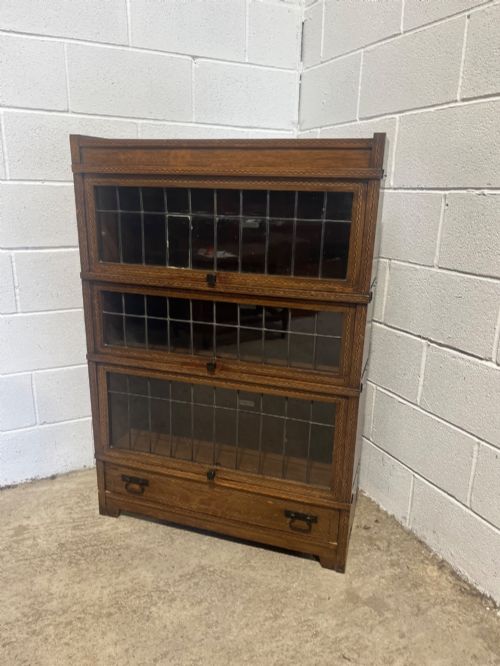
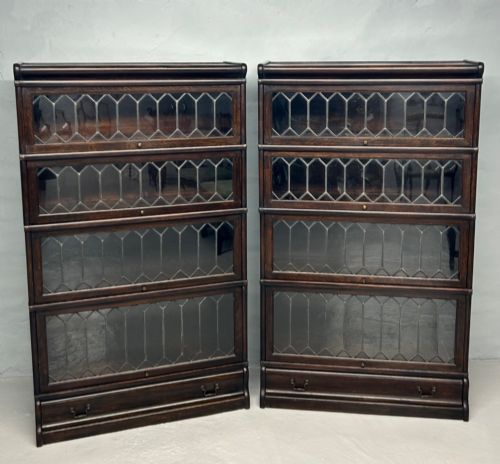
- The narrow strip of lead used to hold small panes of glass together in leaded doors. This technique adds decorative division to the glazed front.
Modular Library Bookcase: Frequently Asked Questions
How do sectional bookcases work?
Each tier sits independently upon the next, held in alignment by pins or matching rebate joints rather than fixed glue or screws. This allows the entire cabinet to be dismantled into manageable single boxes for moving or reconfiguring.
The glass doors utilise a balancing arm mechanism that lets them slide horizontally into the recess above the books. You open each tier individually to access the volumes stored inside.
What periods do these bookcases span?
The pieces seen here date predominantly from the early twentieth century, covering Edwardian production through to the 1930s. You will also find occasional nineteenth-century examples alongside designs influenced by the Arts and Crafts movement and Art Deco.
Maker signatures and hardware styles help narrow down the decade of manufacture. Oak versions are common in Edwardian and 1910s contexts, while mahogany appears across multiple decades.
Can I add more tiers to my bookcase?
Adding extra sections depends on finding matching tiers from the same maker and era. Because dimensions and mechanism styles vary between manufacturers like Globe Wernicke or Minty, sections are rarely interchangeable.
Measuring the depth and width of your existing base, plinth, and top cornice is essential before attempting to source a compatible middle tier. Wood species and finish colour must also align for a cohesive appearance.
How should I clean wood and glass sections?
Dust the exterior oak or mahogany regularly with a soft, dry cloth to prevent grime build-up on the polished surface. Apply a traditional beeswax sparingly when the wood appears dry, buffing it gently to maintain the lustre.
Clean the glass panels using a mild glass cleaner applied to a cloth rather than sprayed directly onto the surface. This avoids liquid seeping into the surrounding wood frame or lead came joints.