
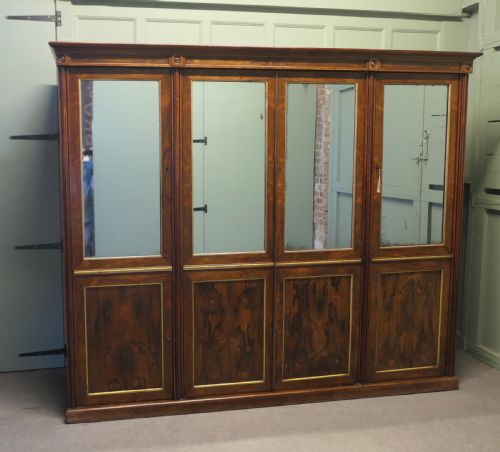
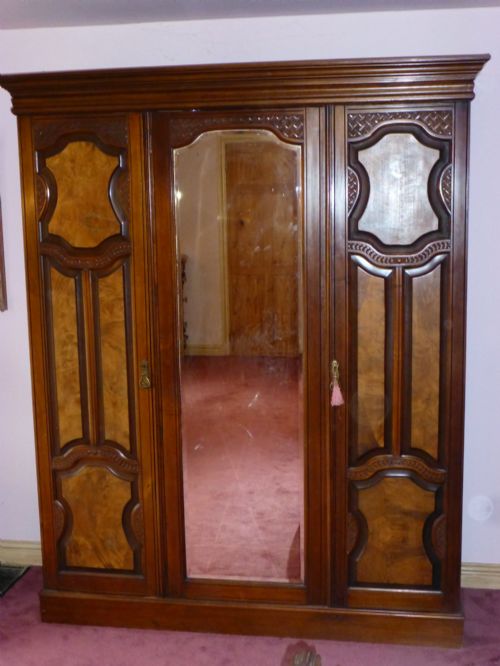
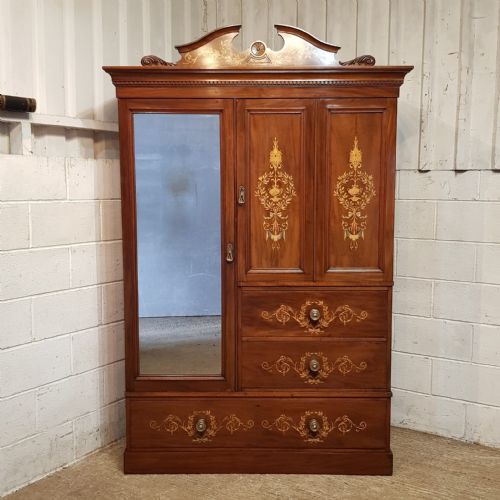
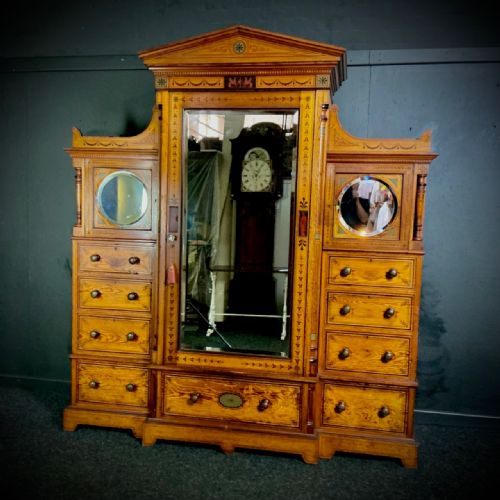
Mirrored Compactum Wardrobe
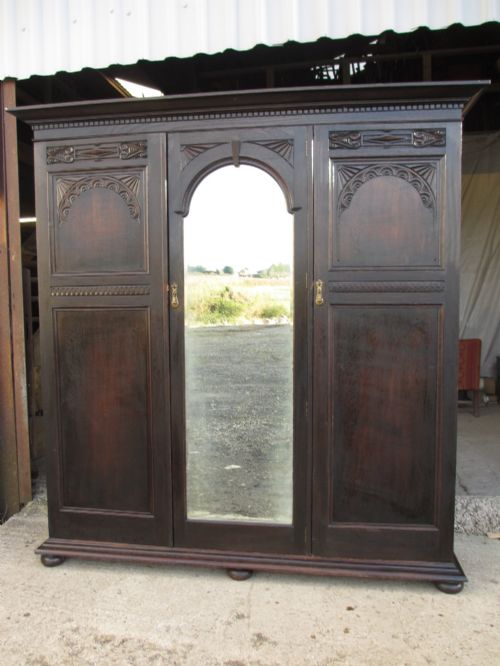
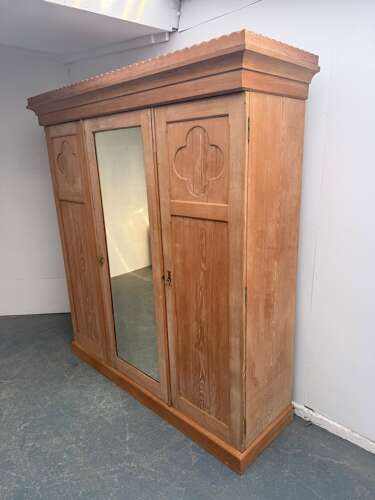
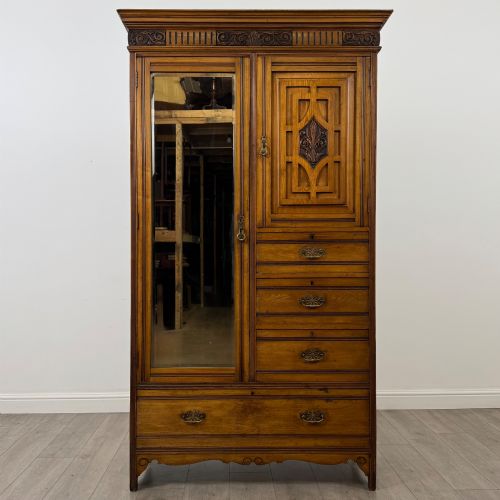
When you search for a mirrored compactum wardrobe, you are looking at substantial multi-door bedroom furniture designed to combine hanging space, drawers, and shelving in one unit.
Mirrored Compactum Wardrobe
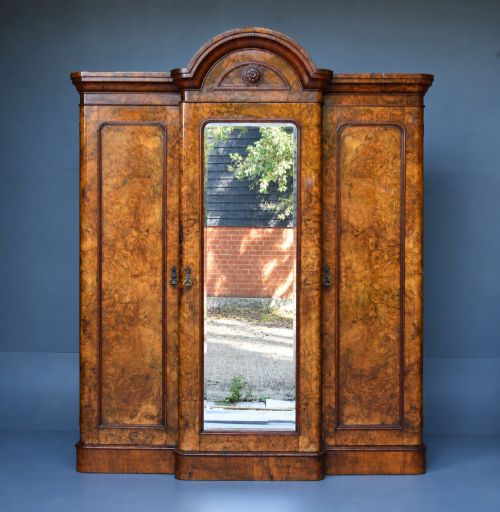
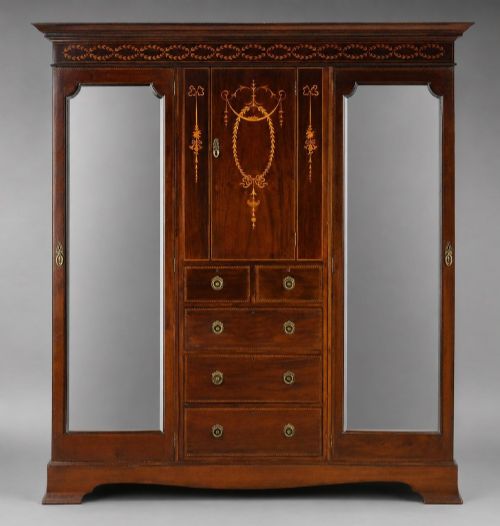
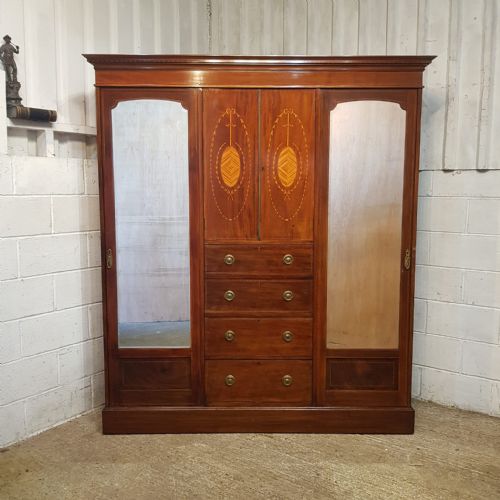
A mirrored compactum wardrobe brings together multiple storage functions, typically combining hanging compartments with internal drawers and linen presses behind mirrored central doors. These pieces emerge chiefly across the Victorian and Edwardian periods, stretching from the late nineteenth century into the early twentieth century.
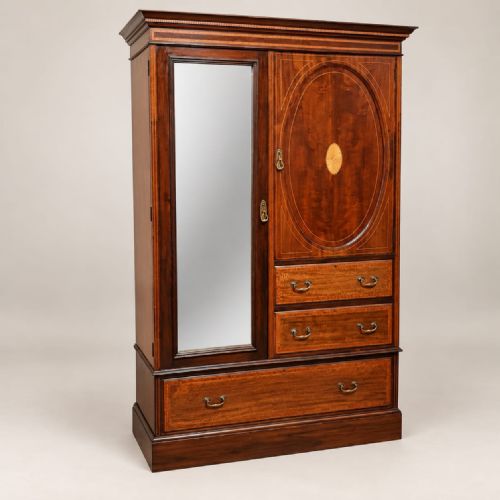
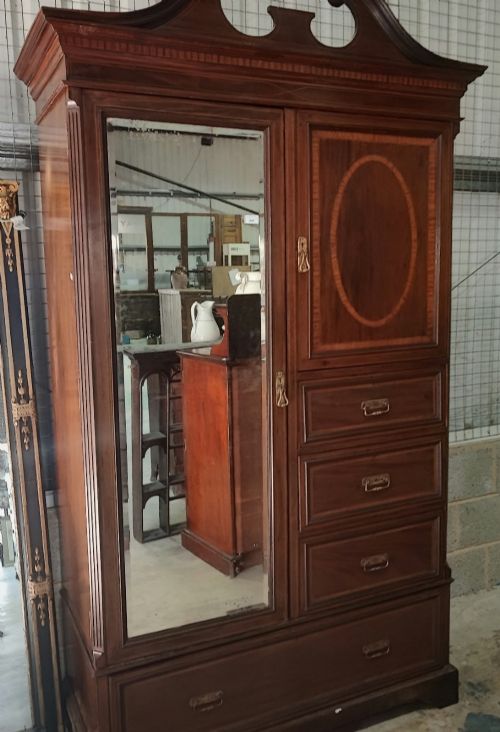
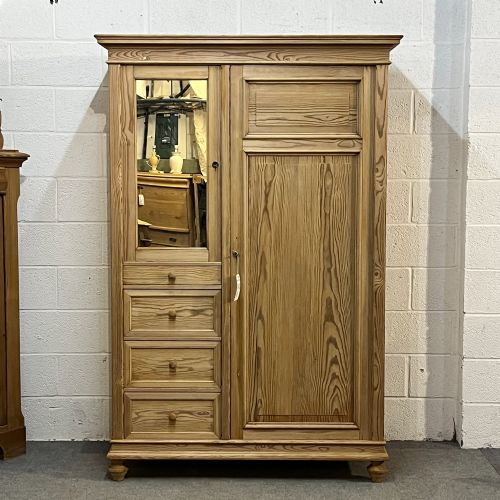
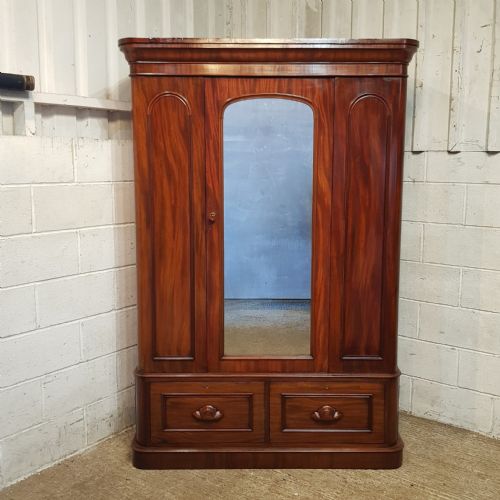
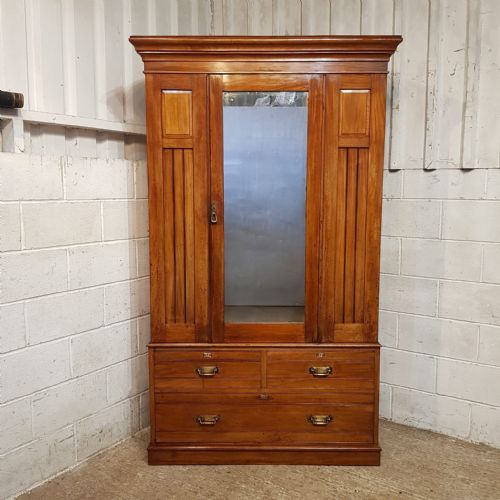
The format appears in several distinct woods, with mahogany, walnut, burr walnut, and ash forming the majority of survivals. Makers constructed them as single, double, or triple door configurations, often incorporating satinwood inlay, brass handles, and deep base drawers.
Buyers encounter everything from compact ash examples suitable for smaller chambers to large burr walnut and mahogany triple wardrobes designed for substantial Victorian and Edwardian bedrooms.
How they were made
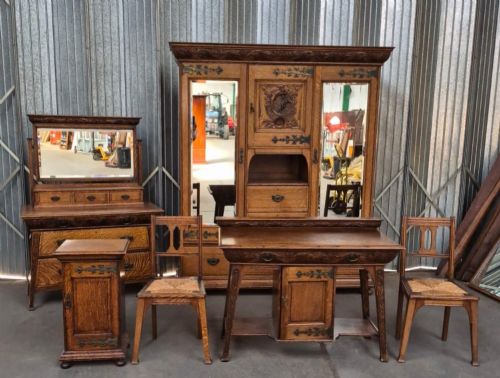
Cabinet makers built these wardrobes using solid timber frames faced with figured veneers such as burr walnut, mahogany, and satinwood, applying brass fittings and bevelled glass mirror plates to the central doors. Carved details, inlaid banded lines, and panelled construction define the regional workshop methods of the period.
Larger triple and combination formats required modular construction, allowing the central tower of drawers and hanging sections to detach from flanking wardrobes for transport and installation in domestic spaces.
Listings span the Victorian and Edwardian eras, featuring woods such as mahogany, ash, oak, walnut, and burr walnut alongside brass and glass.
What varies in quality
Quality rests upon the selection of timber veneers, the precision of the inlay, and the structural integrity of internal drawer boxes and sliding linen trays. Superior examples employ highly figured burr walnut or rich mahogany with thick brass hardware and hand-cut dovetails.
The weight and clarity of the original bevelled mirror glass, alongside the crispness of carved mouldings and decorative panels, separate standard commercial output from pieces produced by notable workshops.
Edwards and Roberts·Holland and Sons·Shapland and Petter·Lamb of Manchester·Maple and Co·Heals
The Mirrored Compactum Wardrobe Glossary
- Compactum
- A multi-function wardrobe that integrates hanging space, shelving, and internal drawers within a single architectural unit.
- Combination wardrobe
- A piece uniting wardrobe compartments with central banks of drawers and sometimes a linen press.
- Burr walnut
- A prized timber veneer harvested from the gnarled growths of walnut trees, yielding rich, swirling grain patterns.
- Bevelled glass
- Mirror plate finished with an angled, polished edge, commonly seen on late Victorian and Edwardian wardrobe doors.
- Satinwood
- A pale, lustrous exotic hardwood utilised for contrasting stringing and decorative marquetry inlay.
Mirrored Compactum Wardrobe: Frequently Asked Questions
How do I dismantle a mirrored compactum wardrobe?
Most large Victorian and Edwardian examples separate into modular sections, consisting of a left wardrobe, a right wardrobe, and a central compactum unit with a cornice and plinth.
Undo the internal connector bolts and screws holding the cornices and plinths in place to separate the heavy timber components safely.
What is the difference between a wardrobe and a compactum?
A standard wardrobe provides primarily hanging space behind doors, whilst a compactum incorporates dedicated internal banks of drawers, shelves, and linen slides alongside the hanging sections.
This multi-functional internal layout offered nineteenth-century users a complete bedroom storage system within a single piece of furniture.
How do I care for antique wood and mirror glass?
Maintain the timber surfaces with traditional beeswax, avoiding modern silicone polishes that can degrade nineteenth-century French polish finishes over time.
Clean the glass plates with mild solution and soft cloths, taking care to prevent moisture from seeping behind the bevelled edges of the mirror.