

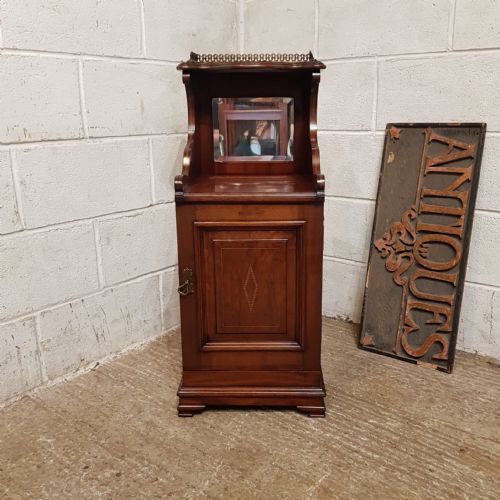
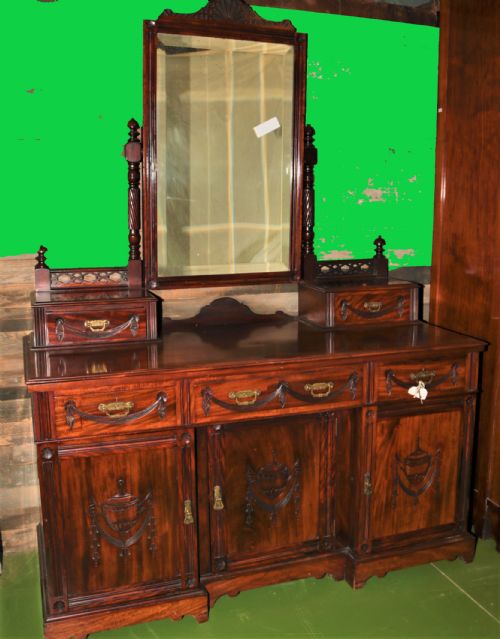


Mirrored Bedside Cabinet
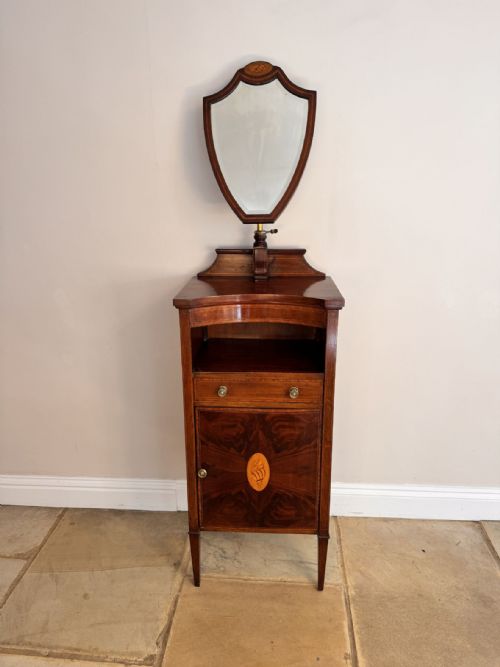
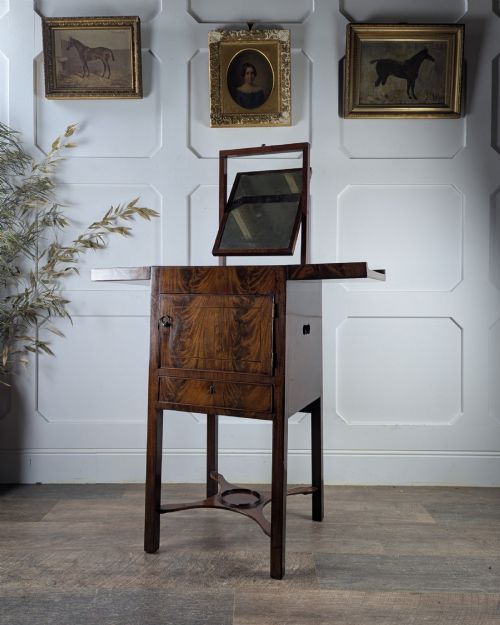
These mirrored bedside cabinet pieces bring reflective surfaces and rich timbers to the bedroom, offering practical storage with decorative presence.
Mirrored Bedside Cabinet
A mirrored bedside cabinet provides compact bedside storage while using reflective glass surfaces to bounce light around a bedroom. These pieces appear across several periods, drawing on Edwardian, Victorian, and Georgian designs.
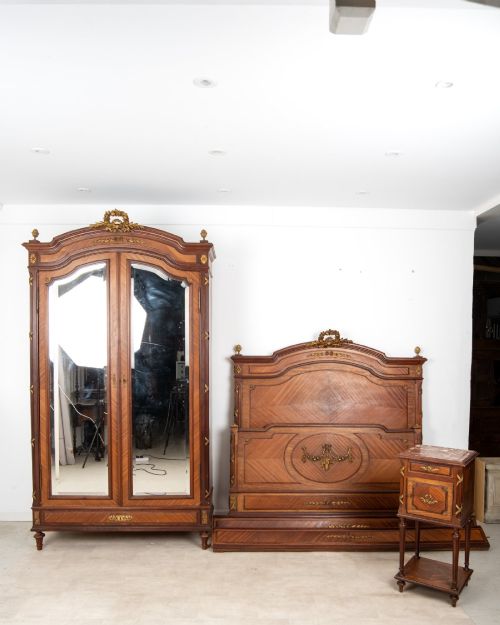
Most examples on this page emerge from late nineteenth and early twentieth century traditions, often appearing alongside larger bedroom suites or as standalone items. The form ranges from simple mahogany cupboards to inlaid rosewood chests and walnut occasional tables with mirrored tops.
Makers and cabinetmakers constructed these units to sit neatly beside a bed, combining enclosed cupboard space with a useful surface for lamps and personal items. The inclusion of mirror glass, whether on the top surface or incorporated into doors, defines this specific group.
How they were made
Craftsmen utilised dense timbers such as mahogany, walnut, and rosewood for the structural frames, sometimes employing Cuban mahogany or decorative marquetry inlay. These woods provide the durable foundation required for daily bedroom use.
Glass panels and mirror plates were fitted into the timber frameworks, accompanied by brass hardware and occasionally ormolu mounts. Joinery techniques from the Victorian and Edwardian eras ensure the stability of these compact cabinets.
Mirrored Bedside Cabinet Retail Price Guide 2026
Typical asking prices for mirrored bedside cabinet among the pieces listed under this phrase on Sellingantiques today, from the lower quarter to the upper quarter. They describe what is for sale here now, not the wider market.
One past piece managed to double as a music cabinet, a mirrored vanity, and a magazine rack all at once.
What varies in quality
The refinement of the timber grain and the precision of the marquetry inlay separate standard production from superior examples. Dense hardwoods like rosewood and Cuban mahogany denote higher tier cabinetmaking.
The integration of the mirror glass within the timber structure and the quality of brass or ormolu mounts dictate the overall finish. Better pieces display seamless joints and balanced proportions across the entire cabinet.
Waring & Gillows
The Mirrored Bedside Cabinet Glossary
- Ormolu
- Gilded bronze mounts applied to furniture for decorative effect. It appears on French revival pieces.
- Breakfront
- A piece of furniture where the central section projects forward from the flanking sides. This shape provides visual depth to wardrobes and large cabinets.
- Cuban Mahogany
- A dense, dark timber prized for its rich grain and durability in antique furniture. Cabinetmakers utilised it extensively for Georgian and Victorian pieces.
Mirrored Bedside Cabinet: Frequently Asked Questions
What is a mirrored bedside cabinet?
A mirrored bedside cabinet is a compact bedroom storage unit featuring glass or mirrored elements alongside traditional timber construction.
These pieces combine enclosed shelving or cupboard space with a reflective surface, serving both practical and decorative functions in the bedroom.
How do I date a bedside cabinet?
Dating relies on examining the timber species, construction techniques, and stylistic markers such as Victorian inlay or Art Deco geometry.
Comparing the hardware, drawer dovetails, and overall silhouette against documented period examples helps confirm the approximate decade of manufacture.
Are these cabinets part of larger suites?
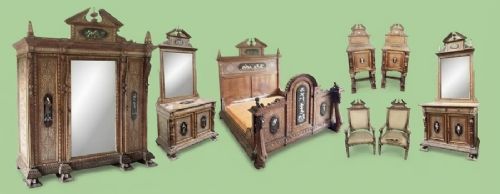
Some mirrored bedside cabinets originate as components of larger matching bedroom suites that include wardrobes, dressing tables, and beds.
Others were produced as individual pieces or pairs specifically designed to stand alongside a bed independently.
What woods were used for these cabinets?
Cabinetmakers utilised various hardwoods including mahogany, Cuban mahogany, walnut, and rosewood for the main structures.
These timbers were frequently enhanced with marquetry inlay or paired with brass and ormolu mounts to achieve distinct aesthetic styles.