


Mirror Back Server Cabinet
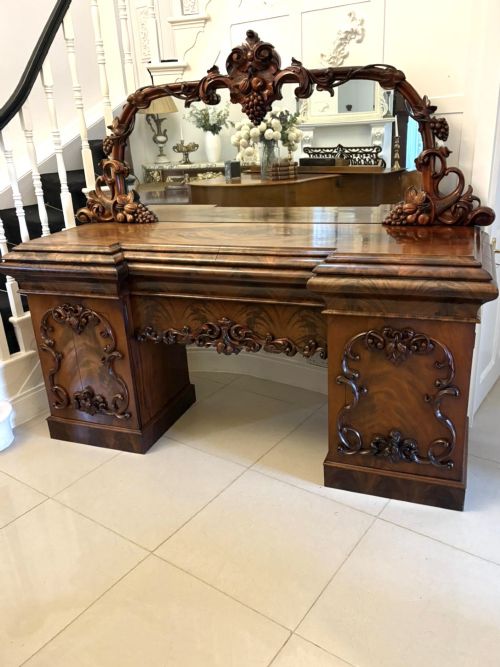
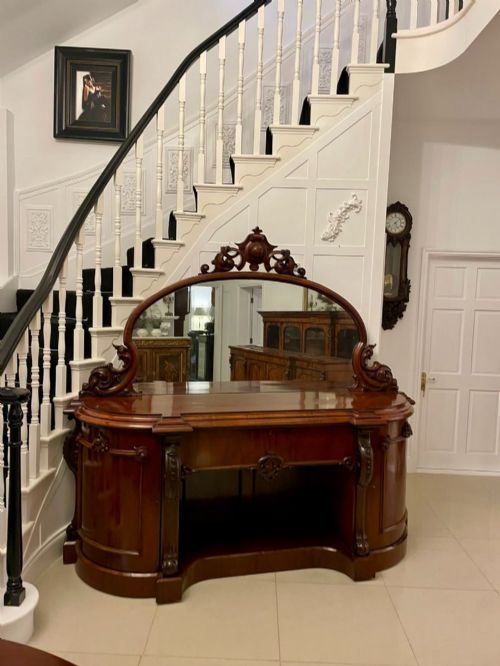
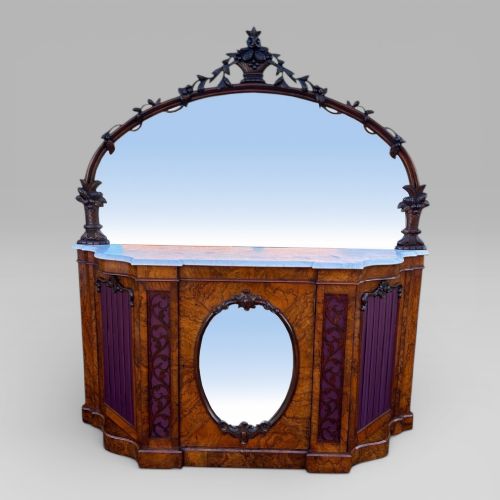
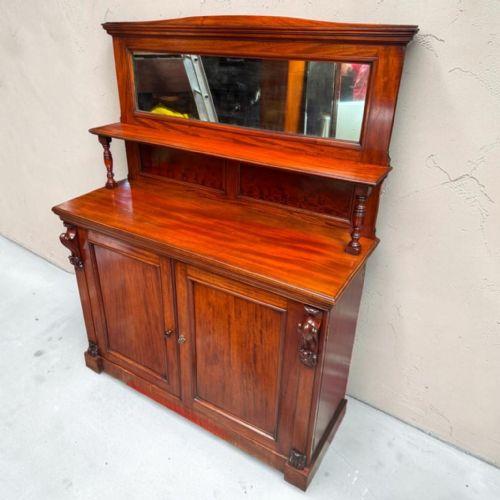
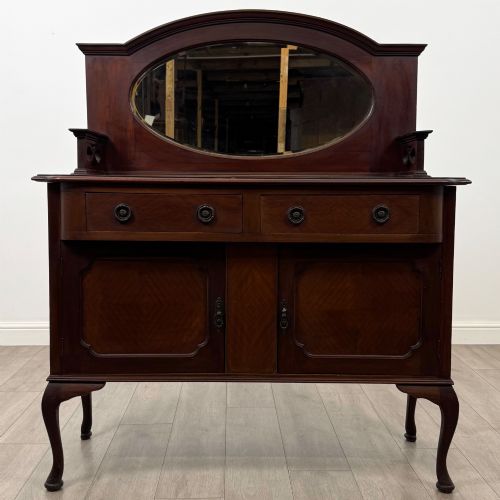
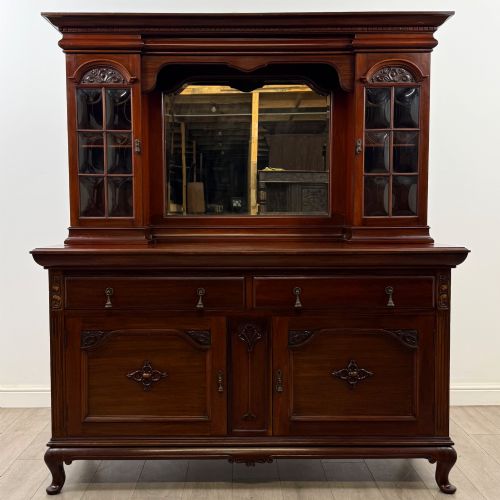
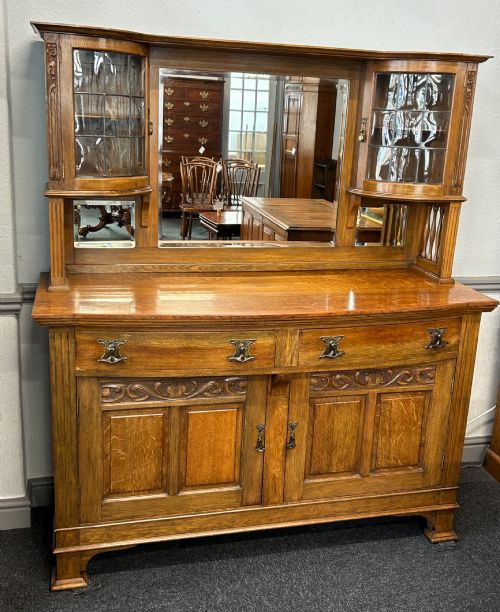
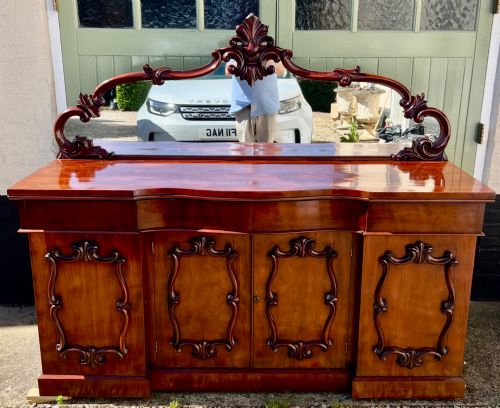
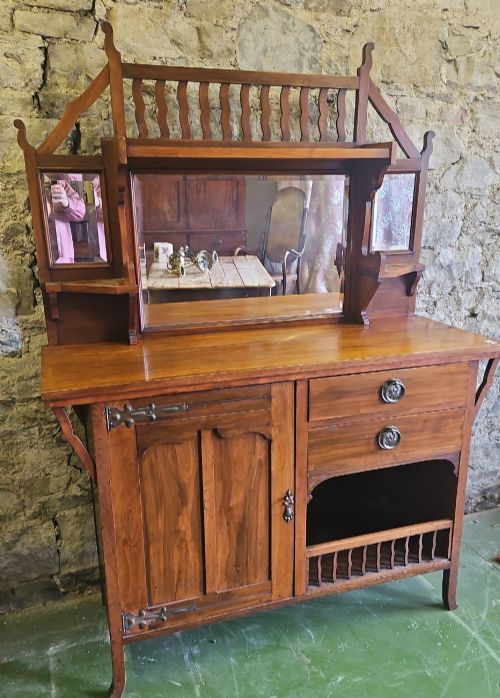
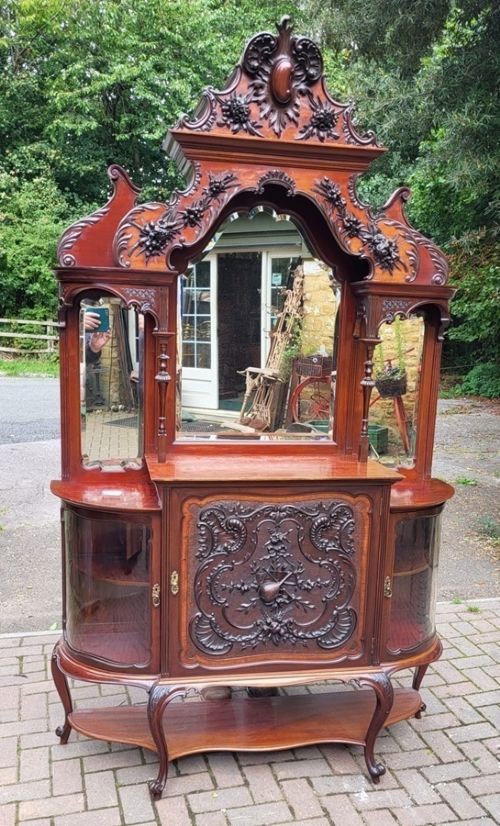
A mirror back server cabinet brings formal presence to a dining room, combining a large display mirror with substantial timber storage below.
Mirror Back Server Cabinet
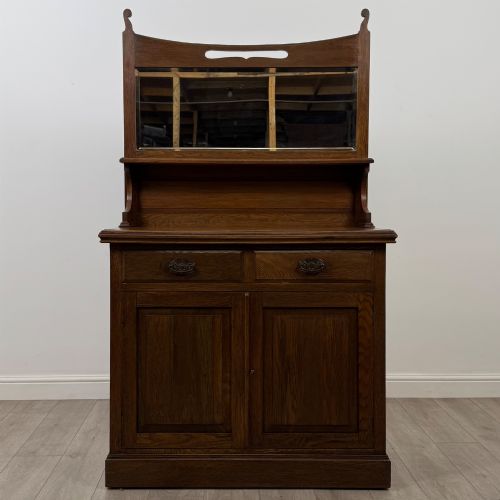
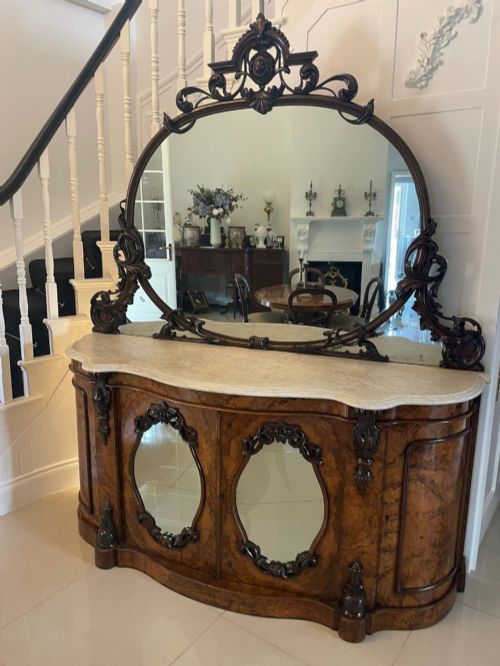
When you search for a mirror back server cabinet, you encounter substantial dining furniture designed primarily during the Victorian and Edwardian periods. These large storage pieces incorporate an integrated mirror above a low sideboard, buffet, or credenza base.
The majority of pieces you meet on this page date from the nineteenth century into the early twentieth century. They appear in forms described across listings as sideboards, credenzas, chiffoniers, and dressers.
Makers designed these items to anchor principal rooms, using the glass plate to reflect light and display decorative china or silver placed on the surface below.
How mirror back server cabinet items were made
Cabinet makers built these frames using dense hardwoods like mahogany, walnut, and oak, frequently selecting figured veneers such as pollard oak and burr walnut for key visual surfaces. Glass plates were silvered and set into carved wooden frames attached securely to the rear of the lower cabinet.
Decorative detailing relied heavily upon hand carving, brass handles, and occasionally marble tops or inlaid motifs. Joinery combined traditional framing methods to support the considerable weight of both the timber base and the upright mirror.
What varies in quality
The distinction between standard production and the finest examples rests upon the selection of timber and the depth of hand carving. Superior pieces utilise finely figured veneers and feature intricate, crisply executed carvings rather than plain machine mouldings.
Proportion and structural integrity also separate the grades. The best items maintain a balanced relationship between the height of the mirror back and the mass of the lower server cabinet, retaining original brass hardware and clean, unblemished mirror glass.
T Simpson and Son·Gillows
The Mirror Back Server Cabinet Glossary
- Mirror Back
- A tall glass plate mounted in a wooden frame attached to the upper rear of a sideboard or cabinet. It serves to bounce light around the room and display objects placed on the server top.
- Credenza
- A low dining room cabinet used for serving food and storing tableware. In nineteenth-century pieces, this form frequently incorporates the signature mirror back.
- Chiffonier
- A small sideboard or low cabinet typically fitted with doors enclosing shelves. Some nineteenth-century examples include a raised superstructure with mirrors and small display shelves.
- Pollard Oak
- Timber harvested from trees that were pollarded, creating a dense, highly knotted grain pattern prized by Victorian cabinet makers. It provides a striking, textured surface on grand server cabinets.
- Breakfront
- A piece of furniture where the central section projects forward from the flanking outer sections. This architectural arrangement adds depth and visual rhythm to larger server cabinets.
Mirror Back Server Cabinet: Frequently Asked Questions
How do I style a mirror back server cabinet?
Position the cabinet against a principal wall in a dining room or spacious hallway where it receives adequate natural light. Keep the surface uncluttered by displaying only a few select ceramic or silver pieces.
Allow the timber tone and the mirror plate to act as the primary visual anchor for the room. Coordinate the surrounding decor with the period style of the woodwork, whether Victorian mahogany or Arts and Crafts oak.
What is the difference between a sideboard and a credenza?
A sideboard is traditionally a long piece of dining furniture designed for serving food and storing linens. It often stands on legs or short pedestals.
A credenza generally refers to a low cabinet enclosed by doors across the entire front without open legs. In antique listings, these terms frequently overlap depending on regional terminology and specific cabinet configurations.
How do I care for antique mirror glass?
Clean the mirror plate gently using a soft microfibre cloth and a mild, ammonia-free glass cleaner applied to the cloth rather than sprayed directly onto the glass. This prevents moisture from seeping behind the silvering.
Inspect the wooden frame periodically to ensure the mirror plate remains secure within its housing. Avoid placing the cabinet in direct sunlight to protect both the silver backing and the surrounding timber.