
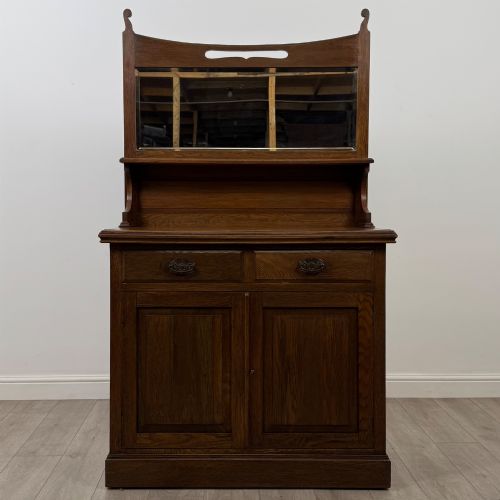
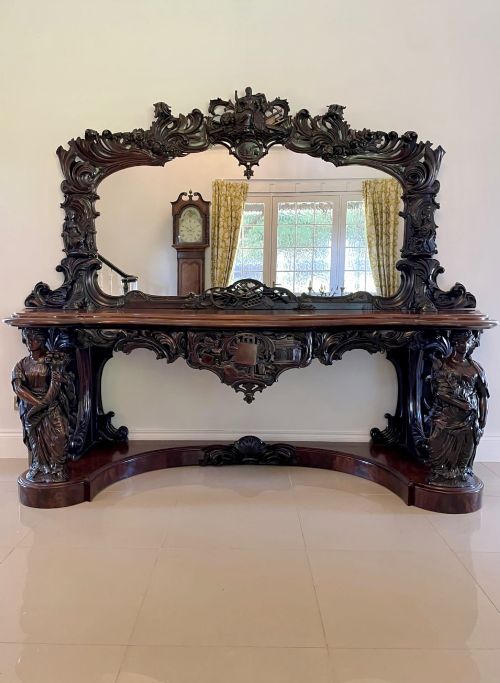
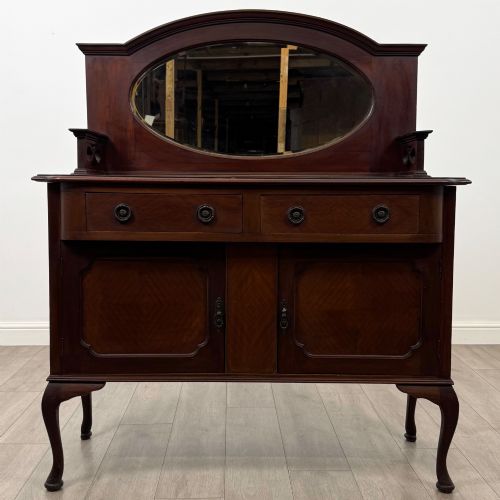


Mirror Back Buffet Table
These mirror back buffet table pieces combine deep mahogany and polished glass to catch the light in a formal dining room.

Mirror Back Buffet Table
A mirror back buffet table serves as a grand dining room storage piece, combining a heavy sideboard base with an integrated tall mirror. These items emerge from Victorian, Edwardian, and nineteenth century periods.
Buyers meet large exhibition console tables and carved wooden sideboards in this selection. Woods span mahogany, pollard oak, American walnut, and standard oak, often shaped in Victorian Rococo Revival or French Empire styles.
The primary forms function as sideboards, console tables, and dresser cabinets, featuring significant glass plates mounted above the timber base.
How they were made
Cabinet makers constructed the foundational frames from solid mahogany, oak, and walnut, often applying flame mahogany veneer over secondary timbers. Carved geometric patterns and elaborate scrollwork define the wooden surfaces.
The tall mirror glass plates sit within secure wooden frames mounted directly to the rear of the buffet base. Brass hardware and fittings occasionally accent the doors and drawers of these heavy cabinets.
Victorian dining guests used the tall mirrors to check their hair between courses without leaving the table.
What varies in quality
Exhibition quality pieces display deeper hand carving and finer timber selection, such as pollard oak or figured walnut, compared to standard utility models. The proportion between the heavy wooden base and the scale of the mirror defines the visual balance of each piece.
The clarity and original state of the mirror glass separate standard examples from finer nineteenth century works. Heavier construction and more intricate structural joinery distinguish the grander console tables.
The Mirror Back Buffet Table Glossary
- Buffet table
- A dining room storage unit designed for serving food and displaying silver. It sits lower than a standard cupboard to allow easy access.
- Mirror back
- An upright glass plate attached to the rear of a sideboard or console. It reflects room light and displays decorative objects placed on the surface below.
- Flame mahogany veneer
- A thin slice of wood cut from the fork of a mahogany tree to create a flickering flame pattern. Cabinet makers laid this over stable base timbers.
- Pollard oak
- Timber taken from oak trees that were cut back to encourage dense branch growth. This process produces a heavily mottled and knotty grain pattern highly prized in Victorian furniture.
Mirror Back Buffet Table: Frequently Asked Questions
Where should I place a mirror back buffet table?
These large furniture items suit formal dining rooms or spacious hallways where their height and reflection enhance the natural light.
Ensure the wall behind can support the visual weight and that floor space allows comfortable opening of the cupboard doors and drawers.
How do I clean the wooden surfaces?
Dust the mahogany, oak, or walnut regularly with a soft, dry cloth to prevent dirt buildup on the carved details and veneers.
Apply a traditional beeswax polish occasionally to nourish the timber and maintain a soft sheen without applying synthetic silicones.
Can the mirror be removed safely?
The upper mirror frame usually detaches from the lower buffet base to facilitate transport through doorways and up staircases.
Keep the original fixing screws secure and enlist assistance to lift the heavy glass plate without twisting the wooden frame.
What is the difference between an Edwardian and a Victorian piece?
Victorian examples often feature heavier carving, darker finishes, and elaborate revival styles such as Rococo or French Empire influences.
Edwardian pieces tend to display lighter mahogany framing and cleaner lines while retaining the practical storage capacity of earlier designs.