

Miniature Watercolour Painting
A miniature watercolour painting delivers remarkable portraiture and delicate landscape detail on a scale that fits within the palm of the hand.
Miniature Watercolour Painting
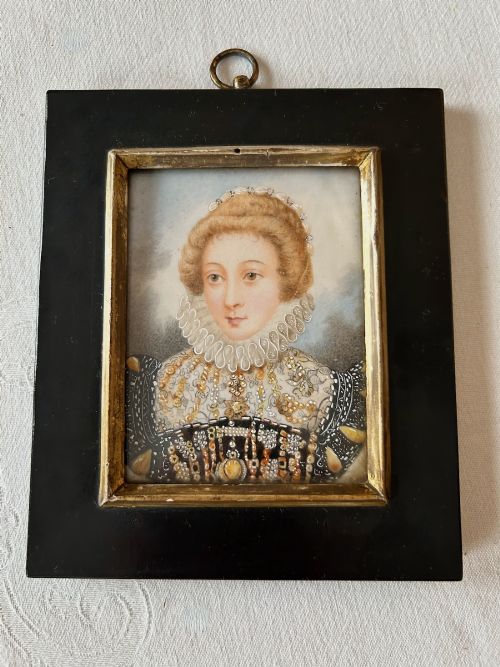
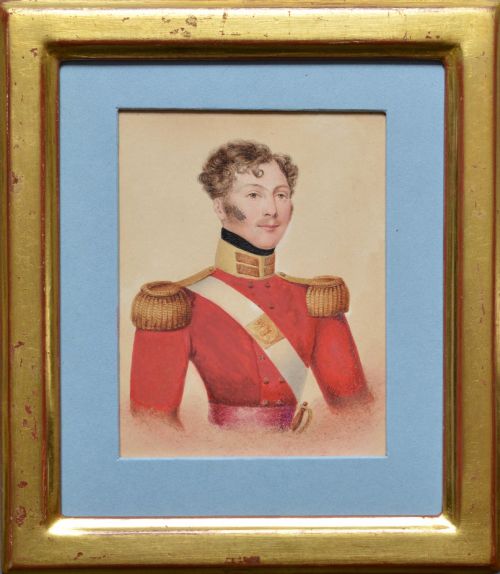
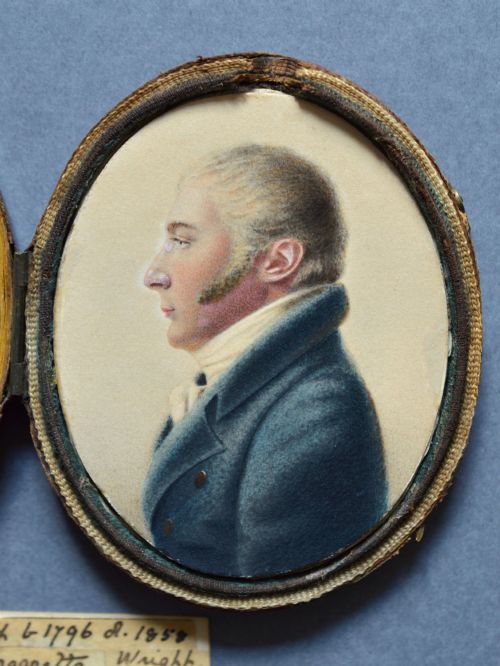
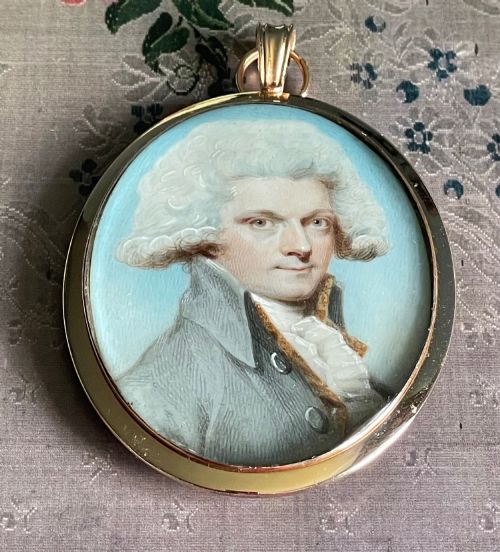
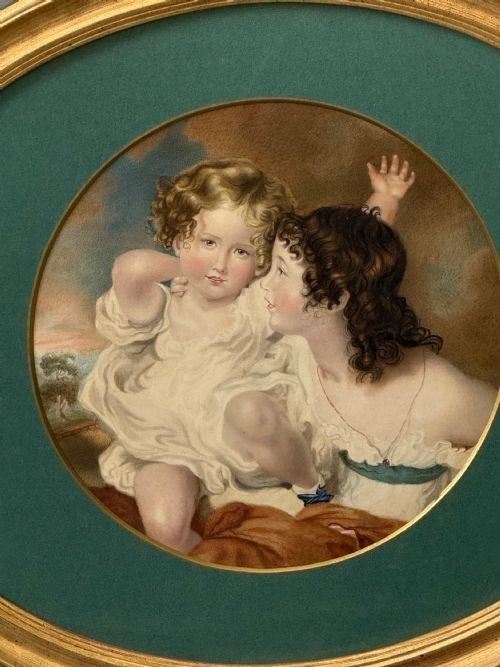
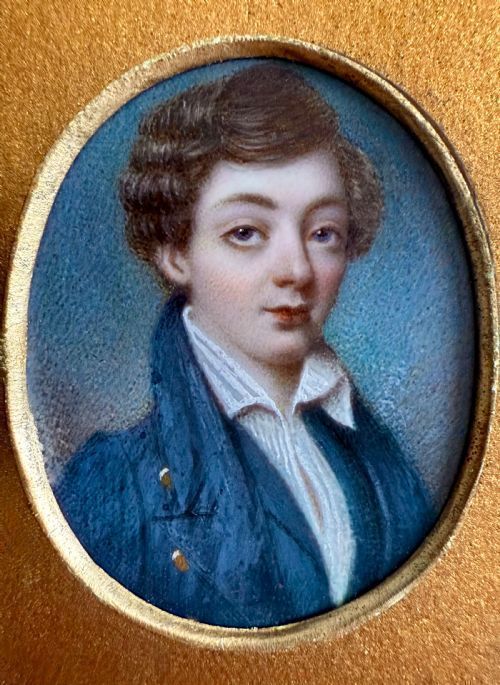
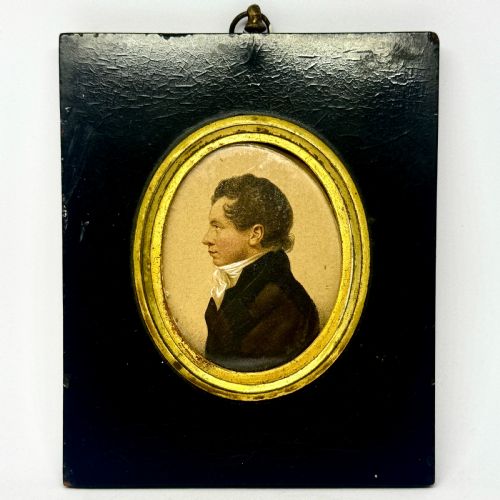
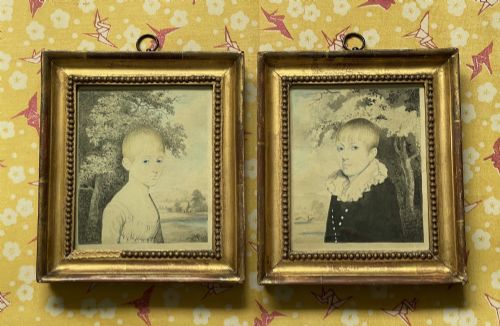
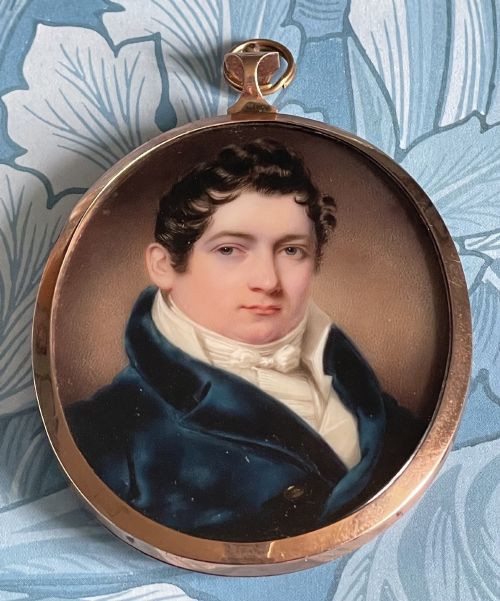
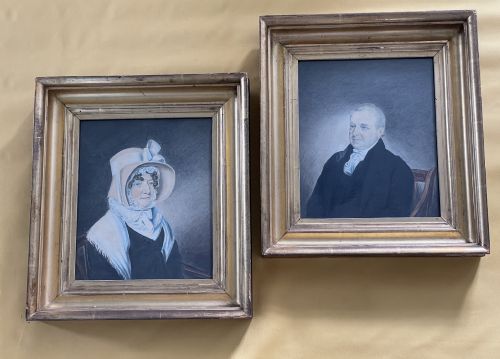
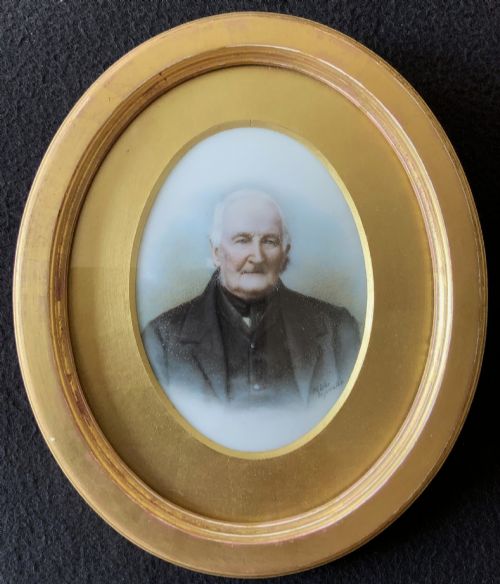
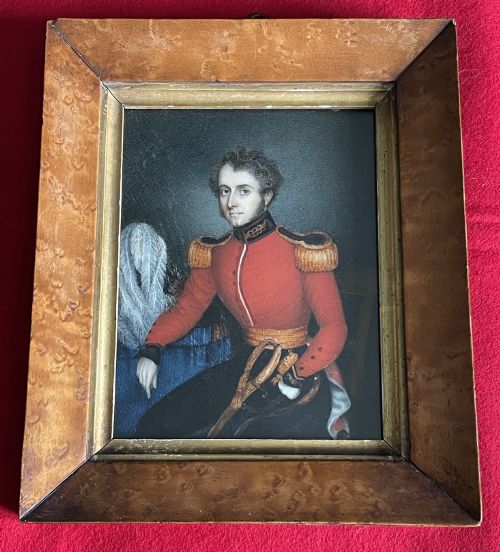
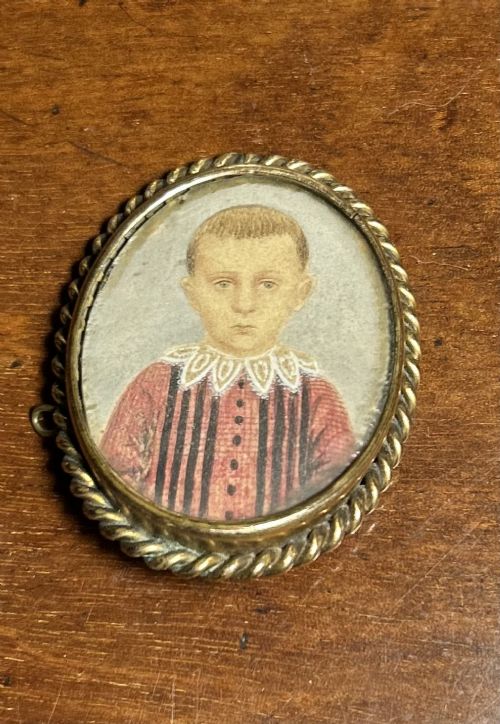
A miniature watercolour painting captures likenesses and scenes with astonishing precision, often measuring only a few inches across. These works serve as intimate personal mementoes, historic records of officers, children, and ladies, and occasionally small topographical views.
The buyer frequently encounters 18th-century and 19th-century portrait miniatures rendered on paper, card, or ivory substitutes, housed behind protective glass. Georgian and Regency examples dominate the selection, alongside Victorian and Edwardian iterations.
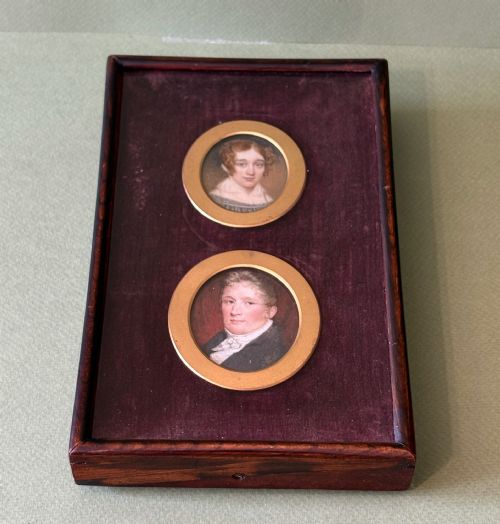
Beyond portraits, the category embraces small-scale landscapes, seascapes, and mythological subjects executed by British, Irish, and continental hands. Many survive within their original ebonised wood frames, pocket-sized brass lockets, or wearable brooch mounts.
How they were made
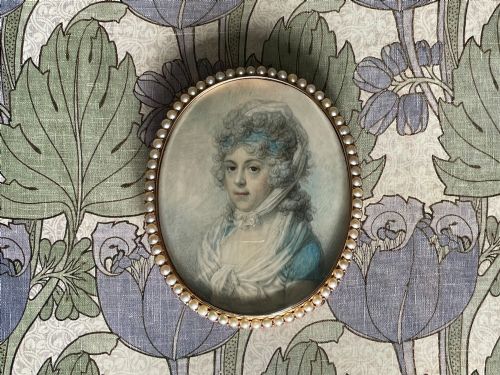
Finished watercolours were sealed beneath glass within narrow gilt metal, brass, or papier-mâché frames to protect the fugitive pigments from light and moisture. Many pieces incorporate seed pearls, hair compartments, or gold leaf accents on the reverse or within the housing.
Materials recorded across the archive include watercolour on paper, card, and glass, secured within gilt metal, brass, and papier-mâché frames.
What varies in quality
The standard of execution in a miniature watercolour painting rests entirely upon the painter's brushwork control and psychological depth. Superior pieces display masterly anatomical proportions, delicate tonal gradations in flesh tones, and sharp clarity in lace or hair.
Original mounts and housing significantly influence desirability, with intact ebonised frames, convex protective glass, and signed versos adding provenance weight. Weaker examples exhibit stiff drafting, muddy pigment mixing, or later, unsympathetic reframing.
Richard Cosway·Charles Shirreff·John C D Engleheart·Frederick Buck·Charles Hayter·William Naish
The Miniature Watercolour Painting Glossary
- Portrait Miniature
- A small-scale painting depicting a specific person, designed for private devotion, pocket carriage, or personal adornment. These works became immensely popular during the Georgian and Regency periods before the advent of photography.
- Ebonised Wood
- Timber treated to resemble dense, black ebony. This dark framing material provides a sharp, contrasting border that accentuates the pale tones of a watercolour portrait.
- Grisaille
- A method of painting executed entirely in shades of grey or neutral monochrome. Artists used this technique to mimic the appearance of sculptural reliefs or cameos.
- Gouache
- An opaque watercolour medium containing pigment mixed with a binding agent and white filler. It produces a dense, matte surface useful for highlighting details like collars and buttons.
Miniature Watercolour Painting: Frequently Asked Questions
How were miniature portraits worn?
Many miniature watercolour paintings were mounted as brooches with pin backs or hung as pendants on chains around the neck. Owners kept these likenesses close to the heart as tokens of affection or remembrance.
Some portable examples were hinged inside double-sided leather or papier-mâché cases designed for pocket travel.
Are these paintings signed?
Signatures appear on some pieces, often discreetly written along the edge or inscribed on the reverse paper alongside sitter details. Many fine works remain unsigned because artists produced them anonymously or attribution relies on stylistic traits.
Dealer archives and scholarly records help link unsigned portrait miniatures to known schools or practitioners.
How should I display them?
Watercolour pigments remain sensitive to ultraviolet light and damp environments. Position these pieces away from direct sunlight and maintain stable indoor humidity to preserve the paper and colours.
Wall-hung groupings work well with small ebonised frames, while desk stands allow close inspection of individual brushwork.
What subjects besides portraits exist?
While portrait miniatures form the bulk of the surviving output, artists also painted small landscapes, maritime scenes, and classical subjects. Romantic revival motifs and topographical views of cities or rivers appear across the 19th century.
These varied subjects share the same meticulous scale and delicate watercolour technique as the portraiture.