


Miniature Travelling Clock
A miniature travelling clock packs the intricate mechanics of a full-sized timepiece into a portable case designed for journeys.
Miniature Travelling Clock
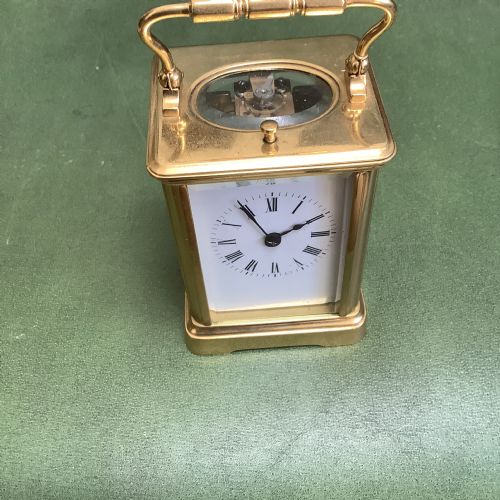
A miniature travelling clock typically takes the form of a small carriage clock, designed for portability during the nineteenth and early twentieth centuries. These portable timepieces appear in Victorian, Edwardian, and Art Deco styles, often accompanied by protective leather cases for transit.
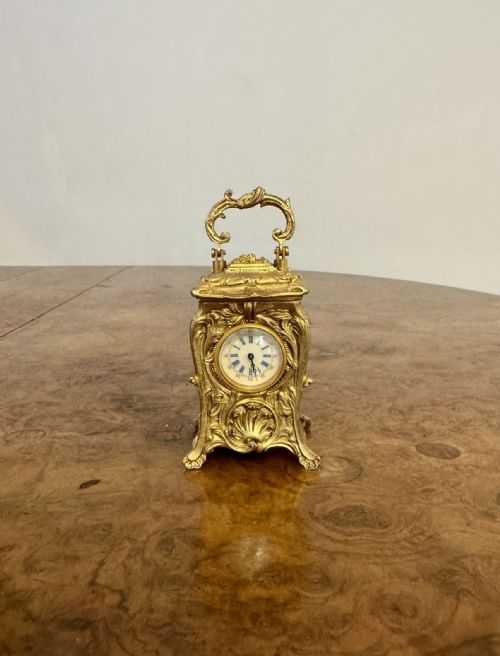
The selection on this page centres heavily on French and English examples from periods spanning the late nineteenth century through to 1930. Forms range from standard rectangular carriage clocks to subminiature sizes, oval shapes, and boudoir timepieces equipped with alarms.
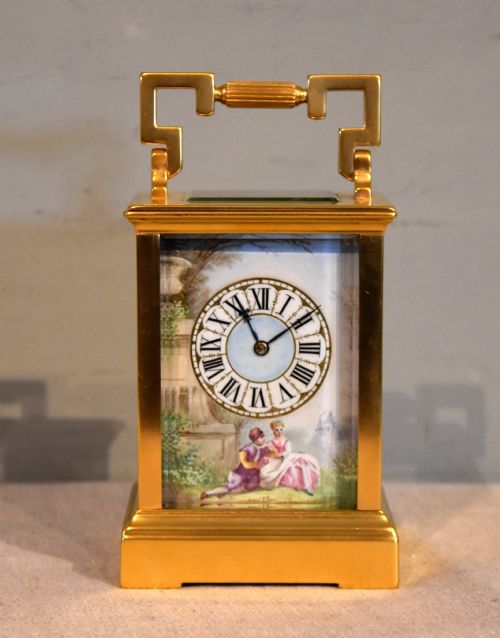
Makers and retailers from London and France produced these pieces for travellers and the export market. Buyers encounter brass, gilt brass, and silver housings, frequently embellished with enamel work or porcelain mounts.
How they were made
Craftsmen utilised brass and silver to construct the structural cases, often finishing the metal with fire gilding or hand hammering. Panels of glass reveal the internal escapement and gear trains, allowing light into the movement.
Decoration relied on skilled hand engraving, chased silver surfaces, and guilloche enamel work. Specialised makers also applied Limoges enamel and porcelain panels to the brass frameworks.
Movements required precision engineering to function within compact spaces, incorporating eight-day mechanisms, alarms, and occasionally striking trains like the grande sonnerie.
Listings feature periods spanning the Victorian and Edwardian eras, through the 19th century, up to Art Deco pieces dated around 1930.
What varies in quality
The crispness of the hand engraving and the depth of the chased silver or gilt brass work separate standard production from superior pieces. Fine examples display deeply cut floral or geometric patterns that remain sharp across every surface.
The integration of decorative arts such as guilloche enamel, Limoges panels, or porcelain mounts dictates the tier of the piece. Intricate enamel work free from hairline cracks elevates the standing of a travelling clock significantly.
The complexity of the internal mechanism introduces another distinction, moving from simple timepieces to those featuring alarms, multiple trains, or specific retailer signatures on the dial.
J Batson & Son·Richard co maker·Henry Matthews·J C Vickery·Jaz·Bayard
The Miniature Travelling Clock Glossary
- Carriage clock
- A portable spring-driven clock originally designed for travellers in the nineteenth century. These clocks typically feature a rectangular brass case with glass panels.
- Guilloche enamel
- A decorative technique where intricate geometric patterns are engine-turned beneath a translucent layer of enamel colour. This finish appears frequently on early twentieth-century dials and cases.
- Grande sonnerie
- A complex striking mechanism that sounds both the hours and the quarters automatically as they pass. Such complications represent the pinnacle of miniature horology.
- Limoges enamel
- Painted enamel work originating from the French city of Limoges, known for rich polychrome depictions. These plaques decorate the panels of select nineteenth-century timepieces.
- Boudoir timepiece
- A small clock intended for domestic bedroom use rather than rigorous travel. They share the miniature scale of travelling clocks but focus on delicate decorative appeal.
Miniature Travelling Clock: Frequently Asked Questions
How do I wind a miniature travelling clock?
Most of these timepieces utilise a dedicated winding key inserted into an arbor on the backplate or dial face. Turn the key gently until you feel resistance, taking care not to over-wind the mainspring.
Ensure you handle the glass panels and delicate brass feet with caution while accessing the rear door for winding.
Did these clocks actually travel?
Originating in an era before reliable pocket watches and widespread station clocks, these timepieces accompanied wealthy travellers on coaches and trains. Their robust metal frames and fitted leather cases protected the mechanical movements during transit.
Owners typically kept them packed away in leather travelling cases until they reached their destination hotel room or temporary residence.
How do I date a brass carriage clock?
Examine the style of the case, the shape of the handle, and any retailer signatures inscribed on the dial or movement backplate. Victorian and Edwardian examples often display distinct design shifts from heavy gilt brass to sleeker Art Deco lines by 1930.
Maker marks and silver hallmarks, where present, provide definitive registration years that narrow down the period of manufacture.
What is a mignonette clock?
A mignonette refers to an exceptionally small subminiature carriage clock designed for maximum portability. These tiny pieces pack standard escapements into housings often measuring only a few inches high.
Collectors prize them for the intense microscopic precision required by the watchmakers who assembled them.