


Small Silver Mantel Clock
A small silver mantel clock sits comfortably on a desk or shelf, combining practical timekeeping with the bright reflection of precious metal.
Small Silver Mantel Clock
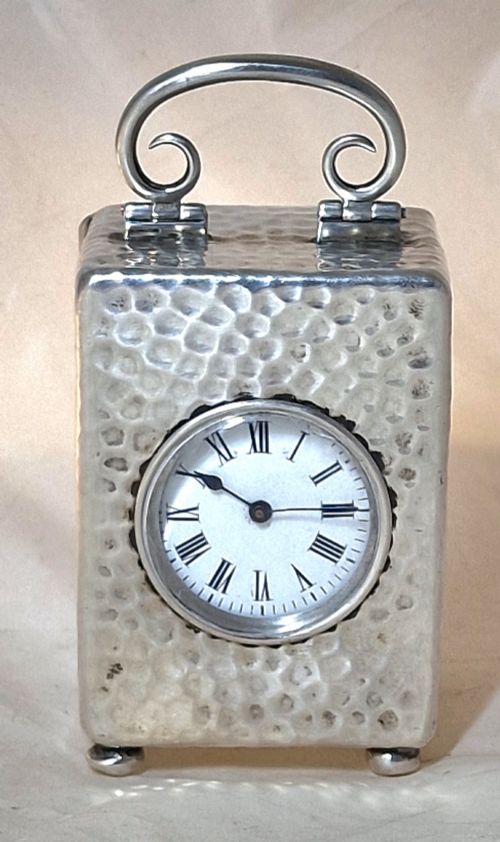
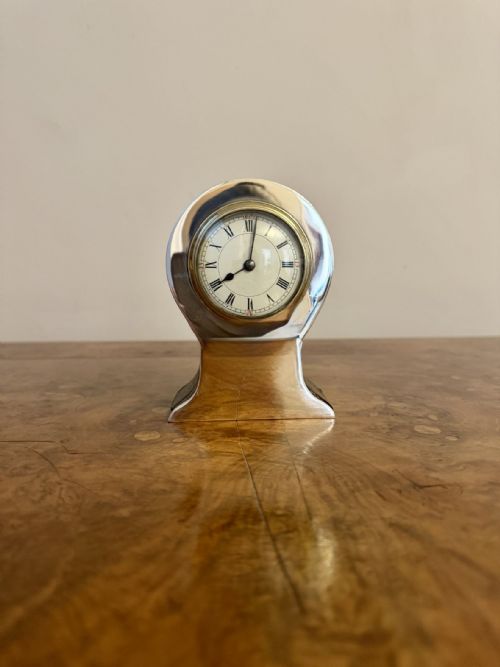
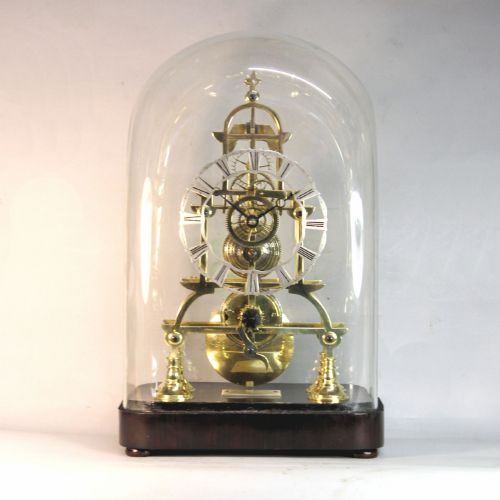
A small silver mantel clock encompasses portable timepieces and compact table pieces created across the Georgian, Victorian, and Edwardian eras. These objects often take the form of miniature carriage clocks, boudoir timepieces, and small bracket clocks designed for domestic spaces.
Buyers frequently encounter Edwardian examples alongside pieces from the late nineteenth and early twentieth centuries. The selection ranges from plain silver-fronted designs to elaborate models featuring enamel and tortoiseshell details.
Materials and construction
Cases utilise sterling silver, silver plating, and mahogany, often paired with glass panels to reveal the movement within. Dial faces display silvered brass or white enamel, sometimes enhanced by colourful guilloche enamel work.
Maker workshops employed traditional mechanical movements, housing them in compact wooden or metal frames. Cabinetmakers and silversmiths collaborated to produce these diminutive timepieces, incorporating decorative elements like hammered finishes.
One tiny clock decided that time travel sounded exhausting and simply stayed put in nineteen-hundred.
Assessing craftsmanship
Quality reveals itself in the crispness of the hallmarking, the weight of the silver casing, and the finesse of the dial engraving. Finer examples display meticulous attention to the movement's housing and the clarity of the enamel work.
The choice of secondary materials, such as genuine tortoiseshell or richly grained mahogany, separates standard production pieces from more ambitious commissions by notable silversmiths and clockmakers.
Richard Winter of Chieveley·William Comyns·J Batson and Son·Perigal of London·A.L. Davenport
The Small Silver Mantel Clock Glossary
- Carriage clock
- A portable spring-driven timepiece originally designed for travelling. These pieces typically feature a rectangular brass or silver case with glass panels and a swing handle on top.
- Guilloche enamel
- A decorative technique where a precise geometric pattern is engraved beneath a translucent layer of coloured enamel. This method creates depth and plays with light across the clock face or case.
- Fusee
- A conical pulley used in older clock movements to maintain even driving force as the mainspring unwinds. This mechanism improves the timekeeping accuracy of the clock.
- Bracket clock
- A portable table clock historically designed to sit on a wall bracket or table. These pieces often feature wooden cases with metal dials and striking movements.
Small Silver Mantel Clock: Frequently Asked Questions
How do I wind a small silver mantel clock?
Most mechanical pieces require a specific key to turn the arbours located on the dial or the back plate. Care must be taken not to overwind the mainspring, stopping as soon as resistance is felt.
Older movements benefit from professional servicing to ensure the gears operate smoothly without excessive wear on the metal components.
Where should I place a mantel clock?
These compact timepieces suit desks, mantelpieces, and small tables where their decorative cases can be appreciated up close. A stable, level surface is essential for the pendulum or balance wheel to beat evenly.
Direct sunlight and damp environments should be avoided to protect sensitive materials like enamel, tortoiseshell, and wood veneers.
How can I tell the period of a clock?
Hallmarks stamped on the silver components provide the most reliable date for the metal case, corresponding to specific assay office marks and date letters. Stylistic clues, such as Edwardian floral motifs or Art Deco geometric lines, also indicate the era of manufacture.
Interior movements sometimes bear the signature of the maker or serial numbers that help place the piece within a specific decade.