

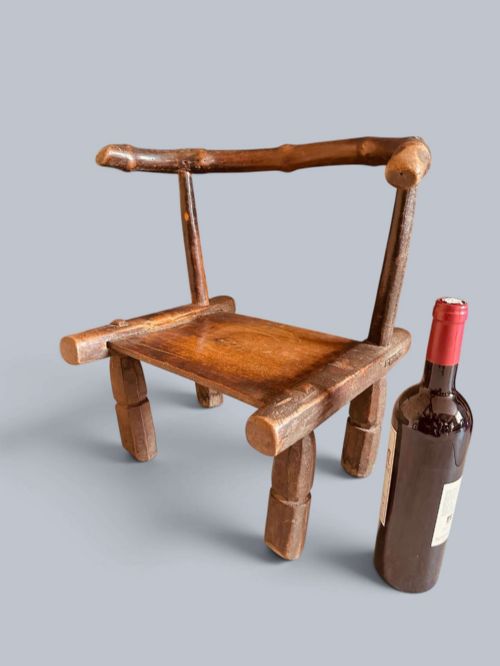


Miniature Rustic Armchair
These small pieces of seating, known as a miniature rustic armchair, bring domestic craft and natural timber straight into a room.
Miniature Rustic Armchair
A miniature rustic armchair is a small seat made for children, built by makers who worked within regional vernacular traditions. These pieces reflect the functional forms of adult country seating scaled down for domestic use.
Most examples found here date from the nineteenth century into the early decades of the twentieth century. They take the form of child's chairs, windsor chairs, and reclining children's armchairs.
The aesthetic embraces folk art and English country vernacular styles, often showing the unpretentious character of wabi sabi design. Makers utilised whatever local timber came to hand, creating sturdy little seats for everyday childhood.
Materials and construction
Makers built each miniature rustic armchair using solid indigenous hardwoods such as elm, ash, beech, oak, and yew wood. These dense timbers provided the structural strength needed for small chairs that endured rigorous daily use.
Construction techniques follow traditional Windsor and country chairmaking methods, joining turned wooden spindles and solid seats. The natural grain and figure of the timber remain visible, highlighting the honest carpentry of the period.
Miniature Rustic Armchair Retail Price Guide 2026
Typical asking prices for miniature rustic armchair among the pieces listed under this phrase on Sellingantiques today, from the lower quarter to the upper quarter. They describe what is for sale here now, not the wider market.
Listings span from the year eighteen hundred through nineteen thirty, encompassing Victorian and Arts and Crafts periods.
Assessing quality
Quality in a miniature rustic armchair rests on the balance of proportions and the choice of timber figure. Chairs featuring richly grained yew wood or well-figured elm display a higher level of material selection by the maker.
The integrity of the construction and the retention of original surfaces separate finer examples from simpler workshop output. Untouched patination accumulated over generations adds depth to the appearance of the wood.
The Miniature Rustic Armchair Glossary
- Windsor chair
- A chair built with a solid wooden seat into which the legs and back spindles are direct-inserted. This method creates a sturdy frame without requiring heavy corner blocks.
- Vernacular
- Objects designed by regional makers following local traditions rather than academic architectural styles. These pieces prioritize practical utility and available materials.
- Wabi sabi
- A Japanese aesthetic centered on the acceptance of transience and imperfection. In these small chairs, it describes the aged timber and honest wear of folk objects.
- Patina
- The surface sheen and colour developed by wood over decades of handling and exposure to light. It serves as a visual marker of age and genuine use.
Miniature Rustic Armchair: Frequently Asked Questions
What were miniature rustic armchairs used for?
These small seats served as practical chairs for children in domestic households during the nineteenth and early twentieth centuries. They allowed youngsters to sit near the hearth or table at a comfortable height.
Today, collectors use them primarily for display as decorative objects in living spaces or hallways. Their compact scale makes them adaptable for placement on side tables or shelves.
How old is a typical chair?
The pieces seen here generally date from the nineteenth century, with examples spanning from eighteen hundred through the nineteen-thirties. Victorian production forms a substantial portion of the surviving items.
Pinpointing an exact decade relies on examining the turning style of the legs, the shaping of the seat, and the tools marks left by the maker.
Which woods were used?
Makers relied on native British hardwoods that grew abundantly in local forests. Elm, ash, beech, oak, and yew wood appear frequently across these listings.
Yew wood was often chosen for its decorative grain, while elm provided strong, splitting-resistant timber for solid saddle seats.
How should I care for the wood?
Maintaining these pieces involves keeping them away from direct heat sources and sudden humidity changes. Excessive dryness can cause old timber to shrink and joints to loosen.
A light application of traditional beeswax helps nourish the historic surface without altering the accumulated patina.