
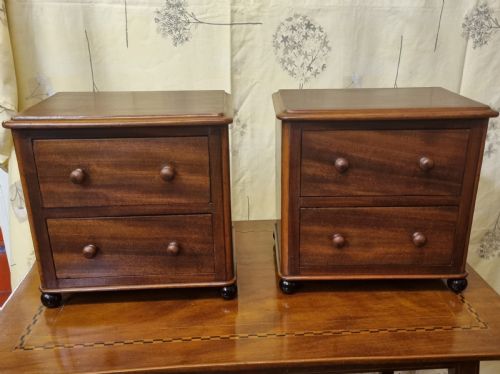
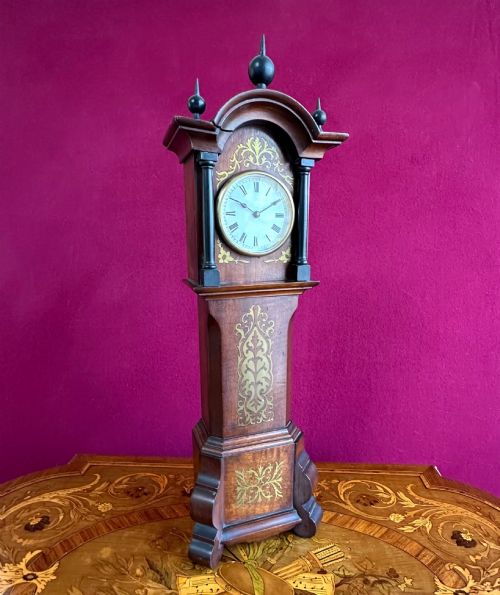

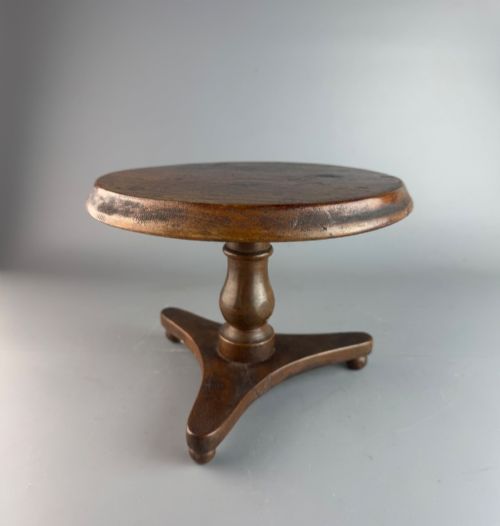


Miniature Mahogany Table
These miniature mahogany table pieces are scaled-down works of fine furniture, prized by collectors for their intricate craftsmanship and fidelity to full-size antiques.
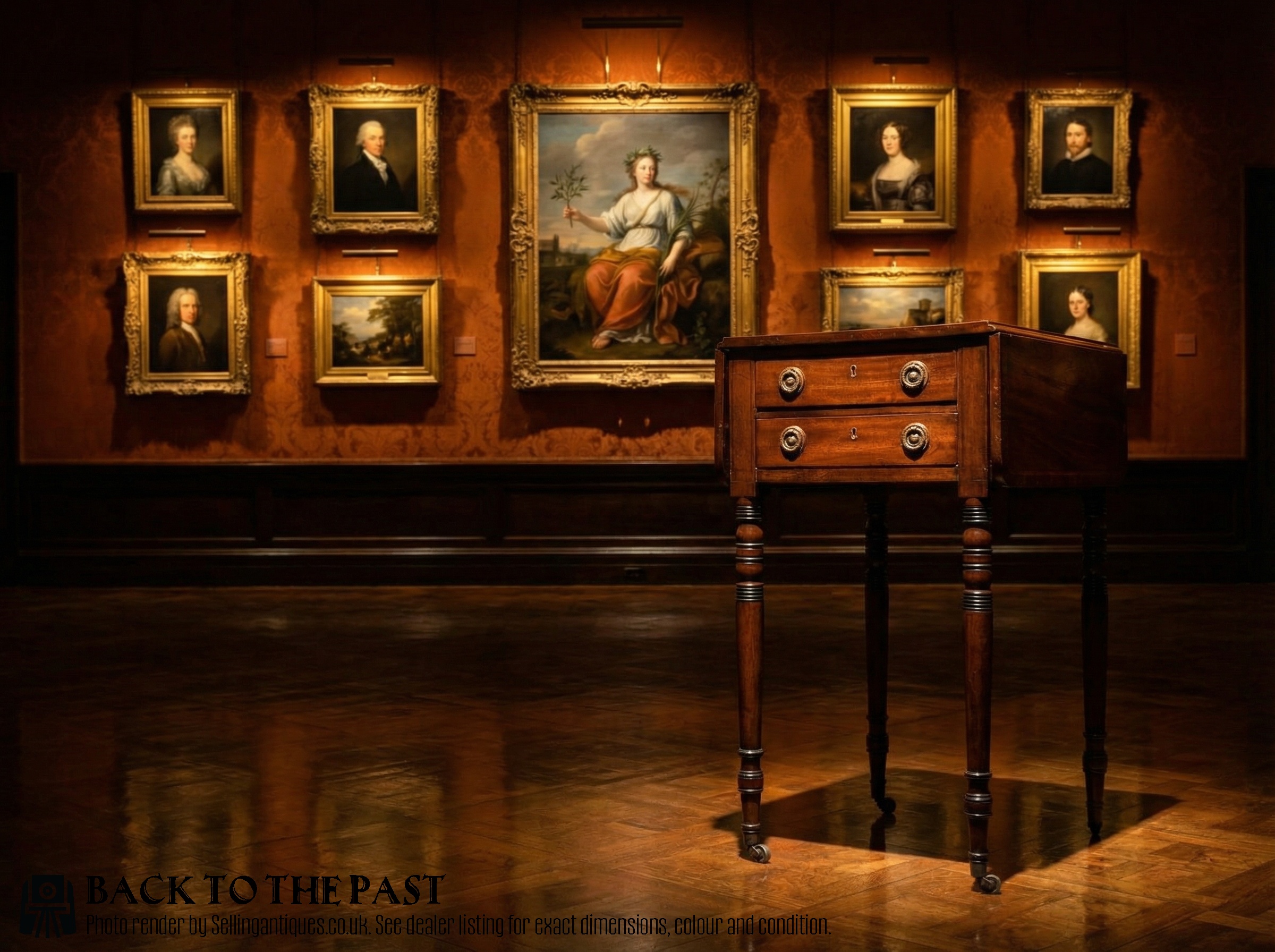
Miniature Mahogany Table
A miniature mahogany table search brings up small-scale furniture and tabletop items spanning the eighteenth, nineteenth, and early twentieth centuries.
The most common forms on this page include breakfast tables, tripod tables, centre tables, and Pembroke tables, alongside related apprentice pieces and tabletop cabinets.
These items reflect major stylistic periods from George II and Georgian to Regency and Victorian, often serving as apprentice pieces or cabinetmaker models.
How cabinetmakers constructed these small pieces
Makers utilised solid mahogany and flame mahogany veneers over hardwood carcasses, applying traditional joinery on a micro scale.
Details frequently incorporate brass hardware, glass panels, and turning work to replicate larger domestic furniture accurately.
Listings combine 18th-century Georgian forms with Victorian and Edwardian examples, spanning mahogany, brass, glass, and walnut.
What separates fine examples from ordinary ones
Proportion and fidelity to period styles dictate the standing of a piece, with superior items maintaining correct architectural scale rather than looking clumsy.
The choice of timber figure, such as flame mahogany, and the crispness of turned tripod bases or inlaid details separate workshop masterpieces from simple novelties.
Mappin & Webb·McCabe London·Adams of Lombard Street
The Miniature Mahogany Table Glossary
- Apprentice piece
- A small item of furniture demonstrated by a craftsman to prove skill before gaining master status. These often show exceptional attention to detail.
- Tripod table
- A small freestanding table supported by three legs radiating from a central pillar. Many feature tilting tops.
- Pembroke table
- A small table with hinged drop leaves on either side. It typically includes a small drawer.
- Flame mahogany
- Timber cut from the fork of the mahogany tree, displaying a distinctive flamelike grain pattern. It was favoured for high-end table tops.
Miniature Mahogany Table: Frequently Asked Questions
What were miniature tables used for?
These small items served various purposes in historic homes, including as dollhouse furnishings, cabinetmaker scale models, or salesman samples.
Craftsmen also produced them as apprentice pieces to demonstrate mastery of woodworking techniques to guilds.
How do I date a miniature mahogany table?
Dating relies on identifying the prevailing style, such as Georgian tripod bases or Victorian centre table framing, combined with wood species and construction methods.
Hardware like brass hinges and glass characteristics also help narrow down the production era to the eighteenth or nineteenth century.
Are apprentice pieces different from dollhouse furniture?
Apprentice pieces are serious works of cabinetmaking executed with the same joinery techniques and timber choices as full-size furniture.
Dollhouse items are typically simpler toys produced with less regard for traditional joinery or high-grade mahogany.
How should I display a miniature table?
Place these small items on sturdy surfaces like desks, cabinets, or dedicated display shelves where their detailed woodwork is easily visible.
Keep them away from direct sunlight and dramatic humidity changes to protect the mahogany timber and any delicate veneers.