





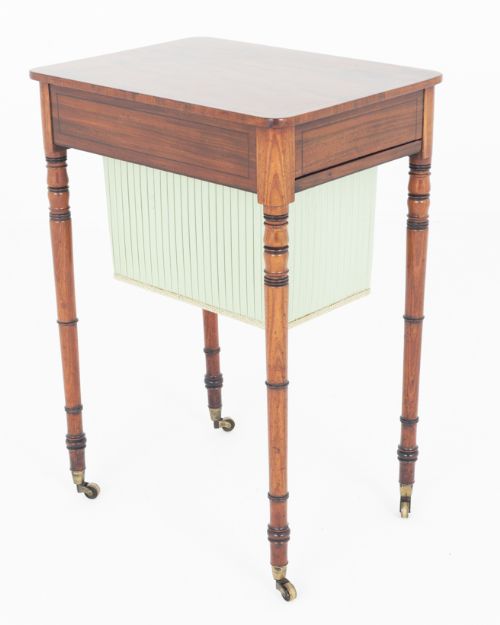


Small Mahogany Table Castors
Small mahogany table castors secure the mobility of compact tables across Georgian, Regency, and Victorian interiors.
Small Mahogany Table Castors
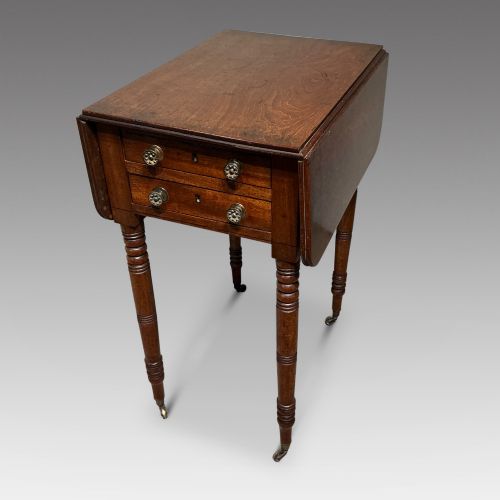
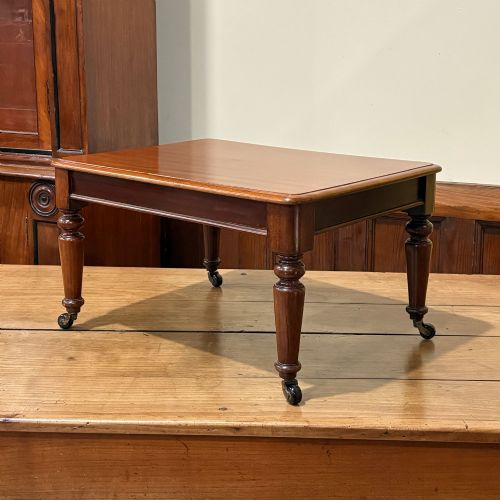
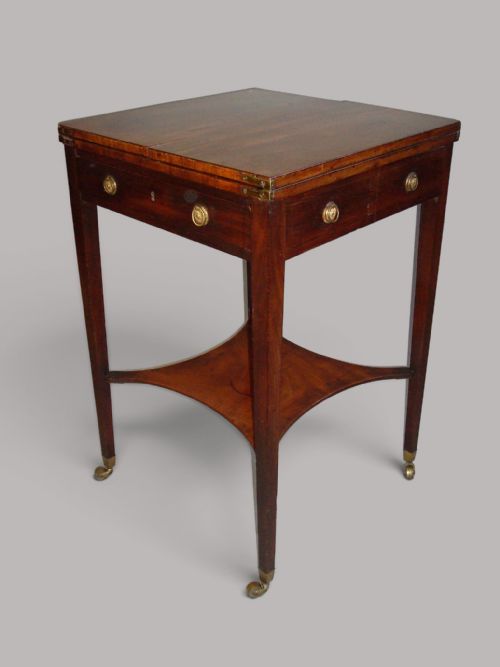
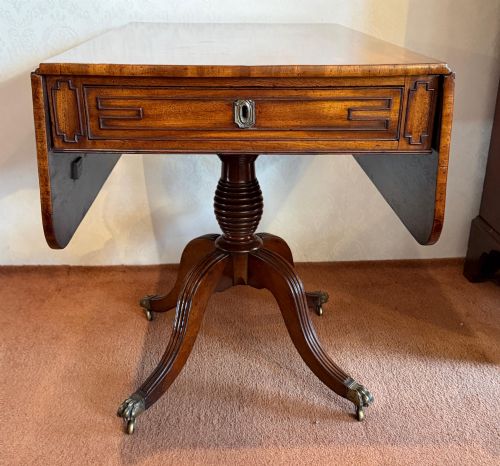
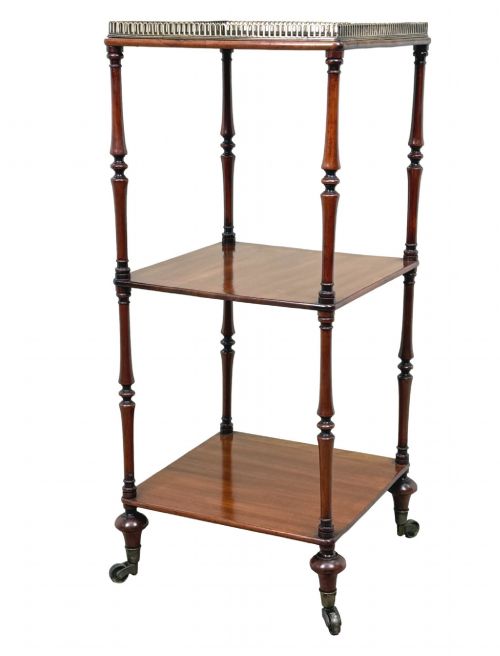
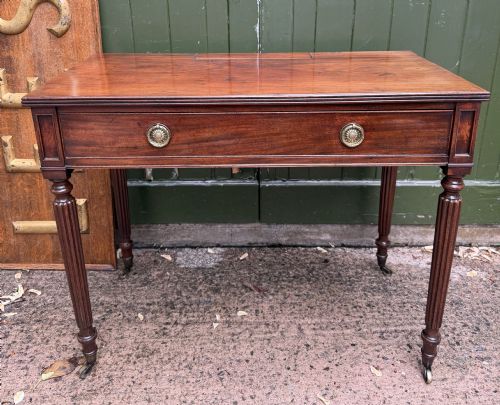
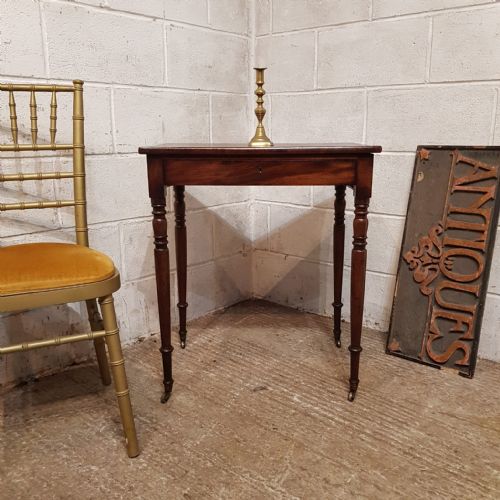
When you search for small mahogany table castors, you encounter the brass rolling fittings attached to the feet of compact tables. The listings on this page span Georgian, Regency, and Victorian periods, appearing on side tables, pembroke tables, and writing desks rather than standing alone.
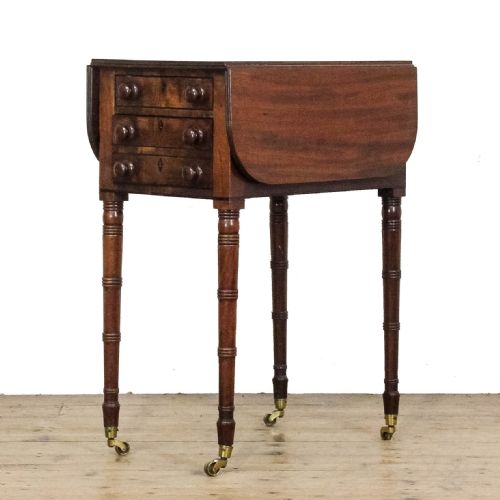
You are most likely to meet small drop-leaf pembroke tables, writing desks, and occasional tables fitted with brass and timber wheels. These pieces date principally from the eighteenth and nineteenth centuries, reflecting a period when furniture required easy movement across carpeted drawing rooms and libraries.
The objects supporting these castors are typically constructed from dense mahogany, occasionally accented with satinwood, boxwood, or leather tops. They represent utilitarian domestic furniture designed for specific tasks such as sewing, writing, and casual dining.
Distinctions in manufacture
Quality rests upon the weight and finish of the brass hardware alongside the joinery of the table frame. Superior examples feature heavy cast brass wheels that turn freely within well-fitted sockets, attached to tightly jointed mahogany legs without wobble.
The refinement of the timber turning and the precision of any inlay or secondary woods like boxwood or satinwood distinguish finer pieces. Lesser examples show simpler turned legs with standard castors and plain mahogany panels lacking decorative stringing or figured grain.
Small Mahogany Table Castors Retail Price Guide 2026
Typical asking prices for small mahogany table castors among the pieces listed under this phrase on Sellingantiques today, from the lower quarter to the upper quarter. They describe what is for sale here now, not the wider market.
Listings feature mahogany tables from the Georgian, Regency, and Victorian eras fitted with brass and leather details.
Jones & Co.·Gillows of Lancaster
The Small Mahogany Table Castors Glossary
- Castor
- A small wheel on a swivel attached to the bottom of furniture to allow smooth rolling. They are commonly made of brass and mounted on timber legs.
- Pembroke table
- A small rectangular table with two hinged flaps dropping from the sides. These frequently feature drawers and rest upon four castors for mobility.
- Sutherland table
- A narrow drop-leaf table with exceptionally small flaps supported by swinging gate legs. They fold flat when not in use and roll easily.
- Whatnot
- An open shelved piece of furniture used for displaying ornaments or holding books. Miniature versions often incorporate small table proportions and castors.
- Satinwood
- A durable hardwood with a lustrous yellow sheen used for decorative banding and inlay on mahogany furniture. It contrasts sharply with darker timber.
Small Mahogany Table Castors: Frequently Asked Questions
What tables use small castors?
Compact furniture designed for movement around a room typically utilises small castors. You find them beneath Pembroke tables, writing desks, sewing tables, and small side tables.
These pieces required mobility to follow the light or clear floor space during domestic routines. The castors allowed heavy mahogany furniture to glide across carpets without snagging.
How do I identify the period?
Dating relies on the joinery, timber selection, and styling of the table frame above the castors. Georgian and Regency pieces display clean lines and heavier brass mounts, while Victorian examples often feature bolder turning.
Examine the secondary woods inside drawers and the casting quality of the brass fittings. Earlier pieces show hand-cut dovetails and heavier gauge brass rollers.
Were these castors added later?
Many tables retain their original brass castors, though replacement hardware is common on antique furniture. Original castors match the wear patterns and proportions of the table legs.
Look for undisturbed screw holes and consistent oxidation on the brass components. A period replacement still functions correctly if fitted to the original leg profile.
How do I care for the castors?
Keep the brass clean using a dry cloth and ensure the wheels remain free of dust and carpet fibres. Avoid harsh liquid polishes that can seep into the surrounding mahogany timber.
Check the fixing screws periodically to ensure the mounting remains tight. Loose pins or screws can split the timber at the base of the table leg if left unchecked.