

Miniature Furniture Chest
These small pieces of miniature furniture chest display the cabinetmaker's skill in microcosm, offering desktop storage or travelling utility.
Miniature Furniture Chest
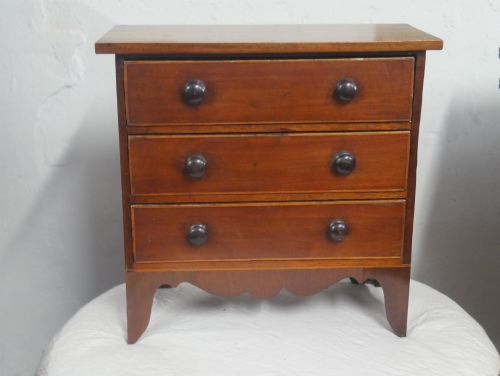
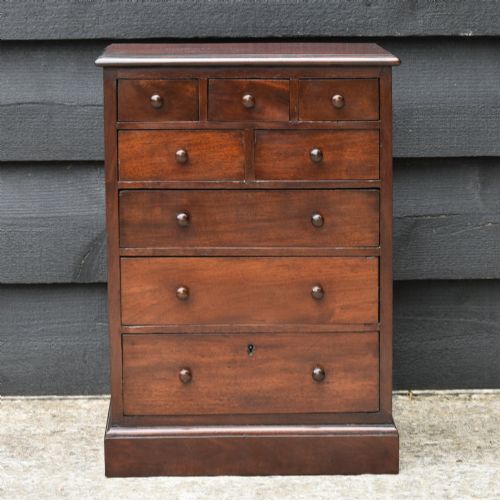
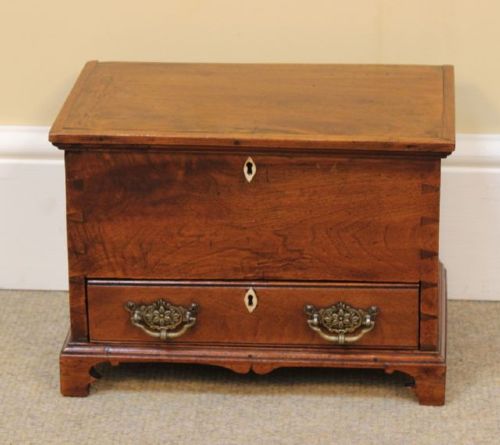
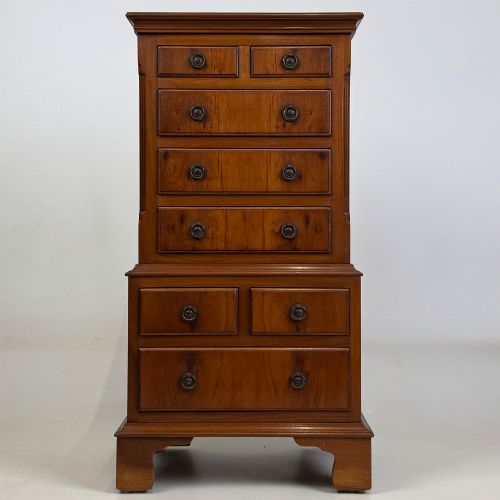
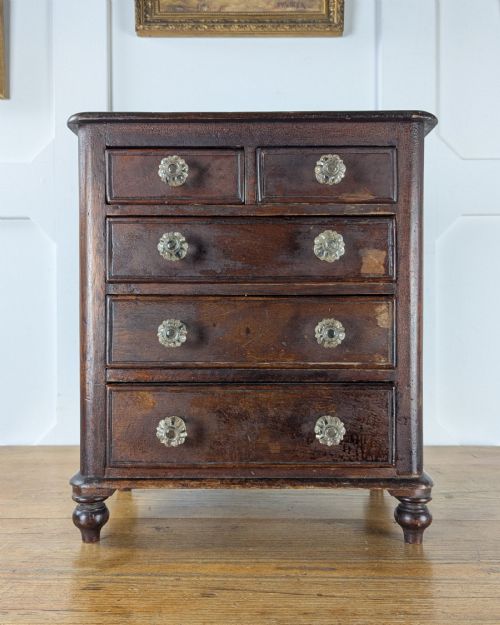
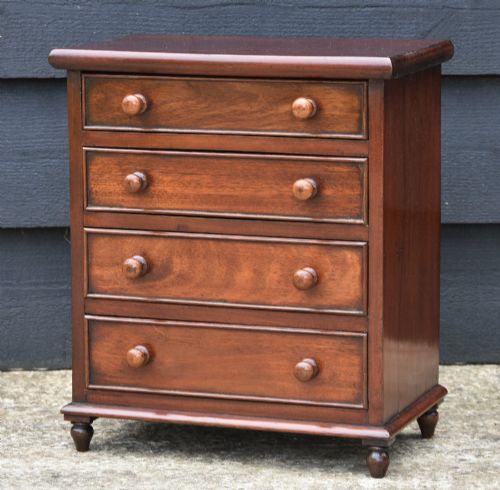
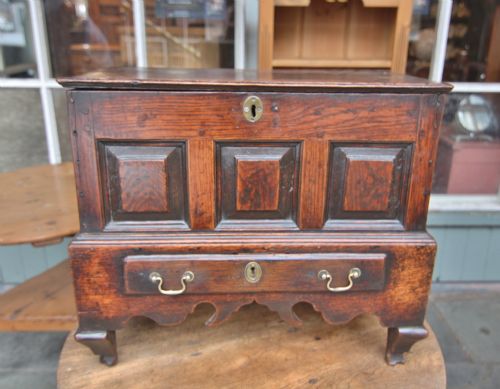
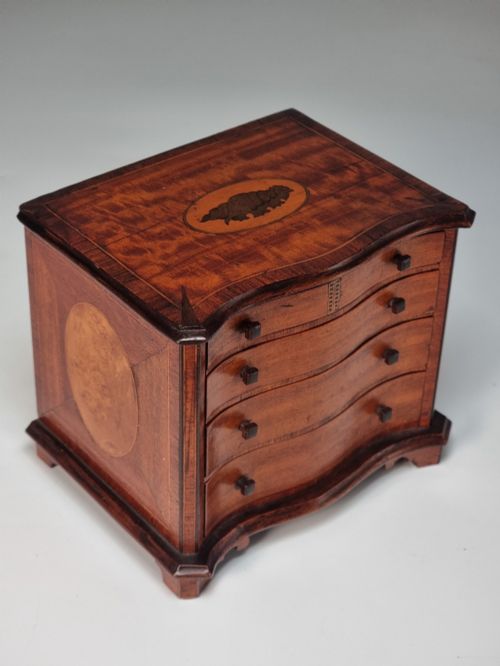
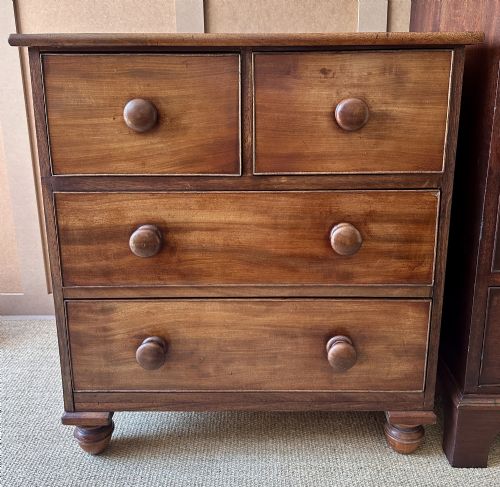
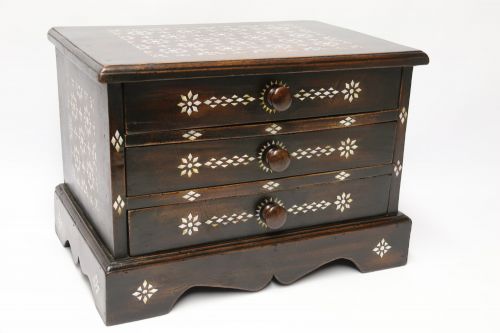
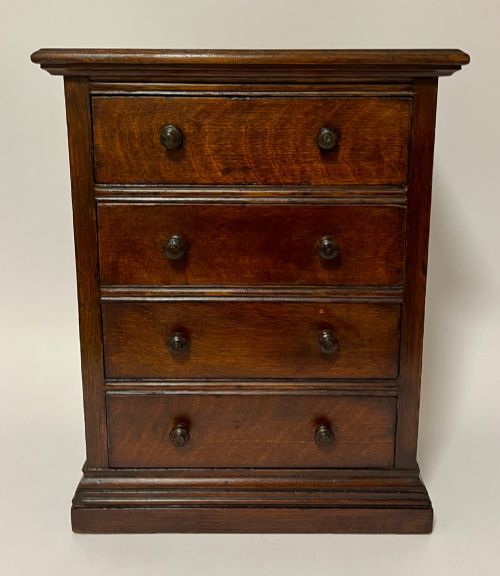
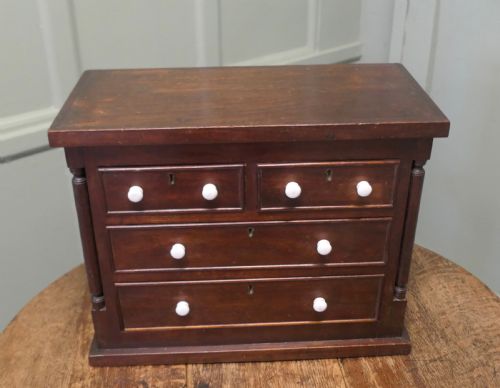
A miniature furniture chest takes several regional forms, most frequently encountered as nineteenth-century apprentice pieces or vernacular coffer bach examples in oak and mahogany. These items range from tabletop drawers and Scotch chests to campaign chests and provincial coffers produced across British and continental workshops.
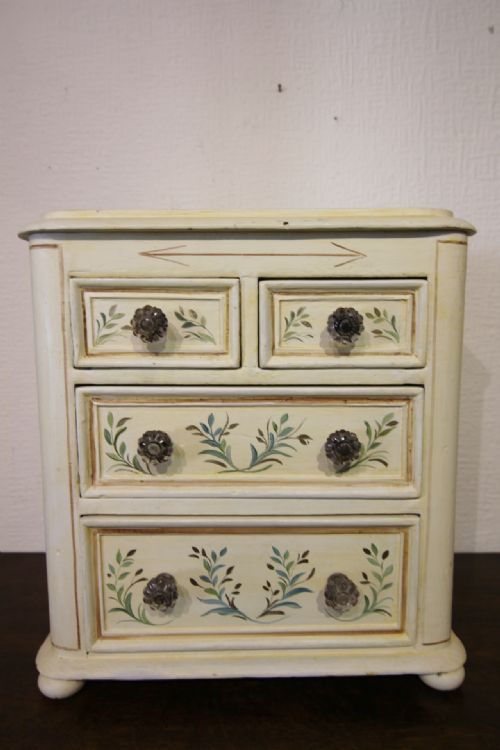
Makers constructed these objects as demonstration pieces, travel samples, or bespoke domestic items for jewellery and keepsakes. The selection spans Georgian, Victorian, and Edwardian periods, alongside vernacular folk art models and occasional overseas pieces such as Chinese export lacquer cabinets.
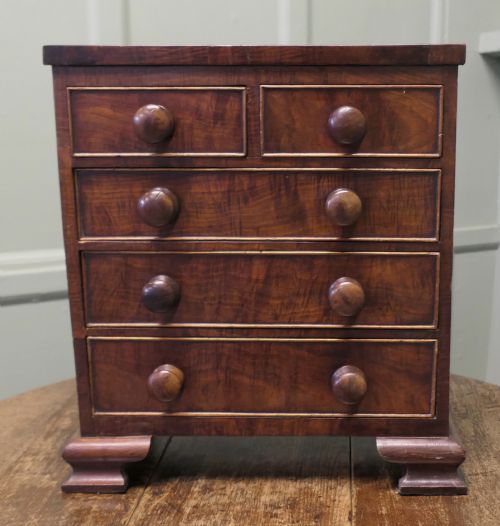
The domestic scale dominates the inventory, with drawer configurations mimicking full-size household chests alongside lift-lid coffer formats. Welsh vernacular traditions account for sturdy oak coffer bach examples, while mahogany and walnut dominate formal nineteenth-century miniature chests.
Materials and Construction
Cabinetmakers utilised hardwoods including mahogany, oak, walnut, satinwood, and yew, often applied as veneers over secondary timbers. Construction methods mirrored full-scale cabinetmaking, featuring dovetailed drawer boxes, turned feet, brass hardware, and occasionally secret compartments.
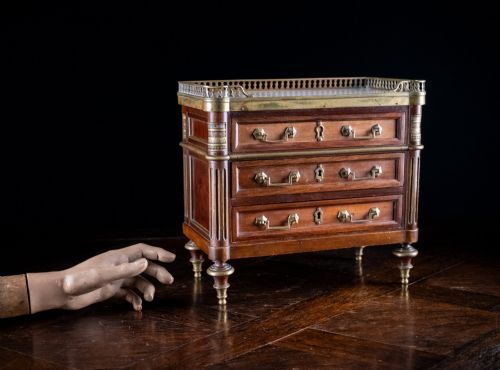
Surface treatments range from polished mahogany and figured walnut to painted finishes, bone inlay, and carved slate. Continental and colonial examples incorporate bronze mounts, marble tops, and marquetry work to achieve decorative variety on a small scale.
Secret drawers tucked behind removable partitions offered Victorian owners a tiny hidden space to stash love letters.
Evaluating Proportion and Detail
Quality rests upon the fidelity of the miniature proportions to full-scale furniture standards and the crispness of the joinery. Superior examples maintain correct drawer depth, precise dovetailing, and original brass fittings without awkward compromises forced by the small scale.
The choice of timber and veneer figure elevates certain pieces above plain utilitarian boxes. Subtle details such as working secret drawers, cockbeaded drawer edges, and fine inlay differentiate master cabinetmaker samples from simpler vernacular items.
A. F. Lloyd
The Miniature Furniture Chest Glossary
- Apprentice piece
- A specimen created by a trainee cabinetmaker to demonstrate competence in joinery before entering a trade guild. These objects typically replicate full-size chest designs.
- Coffer bach
- A small Welsh oak chest featuring a hinged lid above a drawer, traditionally given as a wedding gift or dowry chest. The term translates from Welsh as little coffer.
- Cockbeading
- A narrow half-round moulding planted around the edges of a drawer front. This decorative detail protects the drawer edges and frames the timber grain.
- Campaign chest
- A portable storage unit made in sections with inset brass handles, designed for military transport. Miniature versions replicate this modular colonial utility.
Miniature Furniture Chest: Frequently Asked Questions
What is a miniature furniture chest?
A miniature furniture chest is a small-scale model of a standard chest of drawers, coffer, or cabinet. Craftsmen built them as trade samples, apprentice demonstrations, or personal commissions.
These pieces replicate the joinery, timber selection, and stylistic details of full-sized furniture while occupying minimal tabletop space.
Were apprentice pieces actually made by learners?
Many small chests carry the tradition of apprentice pieces, representing the qualifying work of a young woodworker. Makers tested complex techniques like dovetailing and cockbeading on these small objects.
Some items served as salesman samples for travelling merchants to demonstrate furniture designs to clients.
How do I date a miniature chest?
Dating relies on timber choices, construction methods, and stylistic markers shared with full-scale furniture of the period. Georgian examples often feature oak or mahogany with bracket feet, while Victorian versions display figured walnut and turned feet.
Secondary woods inside the drawers and type of hardware provide further chronological clues.
How were these small chests used historically?
Owners utilised these small chests on desks and tabletops for storing jewellery, documents, and sewing accessories. Their secure drawers and lift lids kept valuable personal items organised in domestic settings.
Travellers and military officers also used portable miniature campaign formats for personal effects.