





Small Mahogany Chest Box
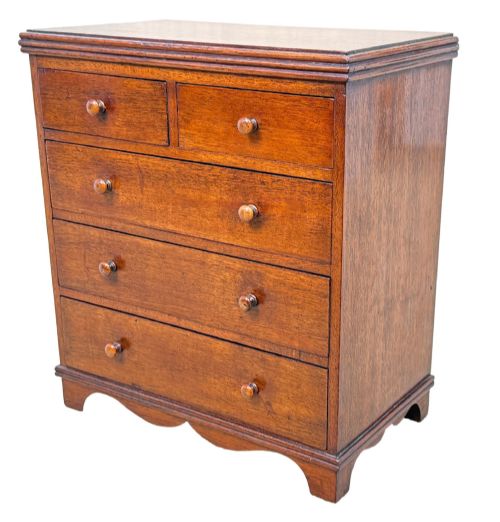
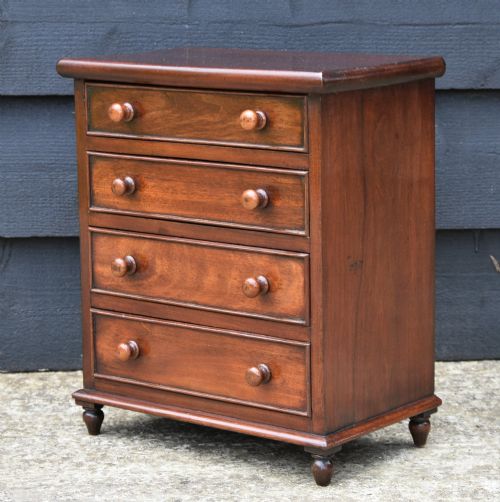
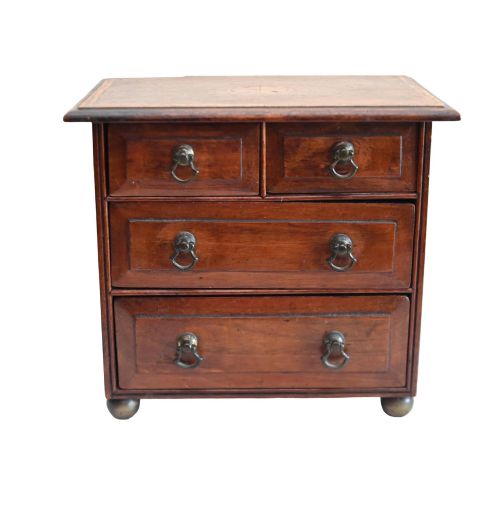
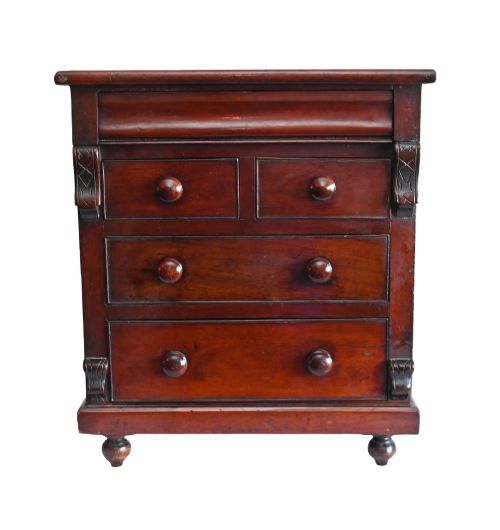
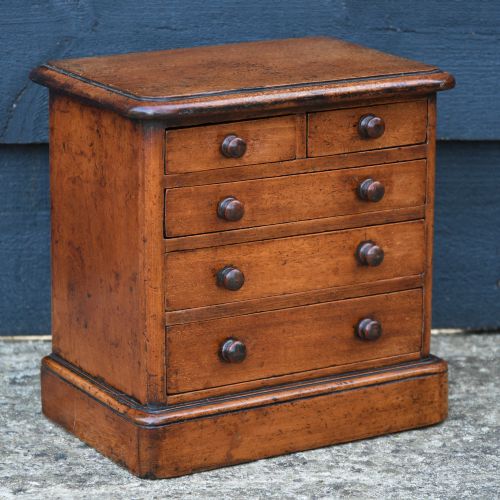
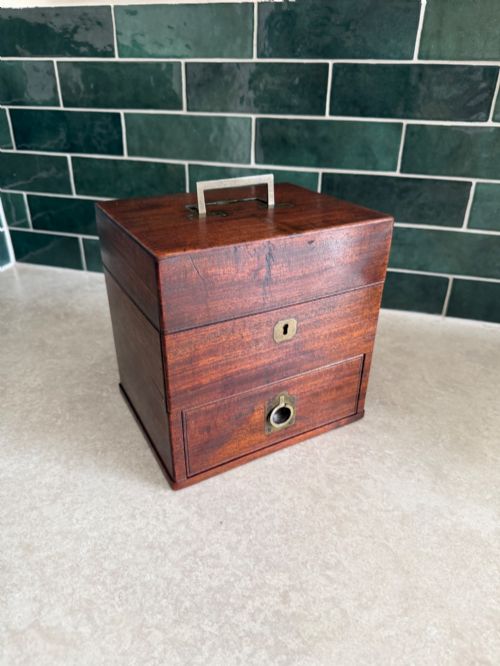
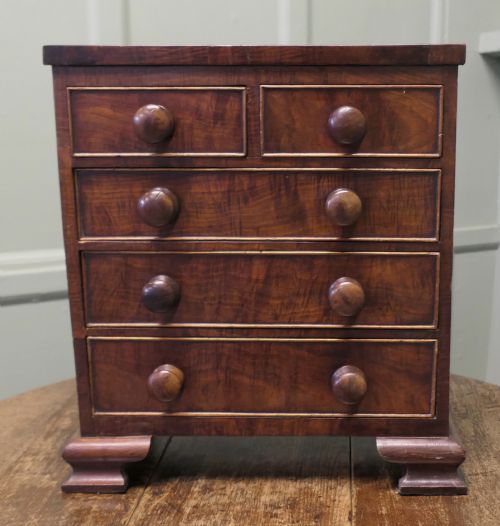
These small mahogany chest box examples range from miniature chests of drawers to tabletop cabinets, offering compact storage for documents, jewellery and specimens.
Small Mahogany Chest Box
When you search for a small mahogany chest box, you encounter a diverse selection of miniature furniture, tea caddies, collectors cabinets and apothecary boxes. These pieces span the 18th century, Georgian, Regency, Victorian and Edwardian periods, reflecting the diverse domestic storage needs of past eras.
Miniature chests of drawers and apprentice pieces dominate the selection, often mirroring full-sized furniture designs with bow fronts or multi-drawer layouts. Alongside these, tabletop storage boxes, cellarettes, spice cabinets and specialised watchmaker chests provide functional compartments on a reduced scale.
Originating largely from British workshops across multiple centuries, these items demonstrate how cabinet makers applied fine joinery techniques to portable and desktop formats. Buyers select them for their historical utility and the refined presence they bring to modern interiors.
What varies in quality
Quality in these small pieces rests upon the crispness of the joinery and the fidelity of proportion relative to their full-scale counterparts. Superior examples exhibit tightly cut dovetails, balanced grain selection across drawer fronts and original brass furniture that fits the intended period.
The degree of internal fitting also distinguishes finer pieces, such as felt linings, functioning locks with keys, and precisely divided compartments within tea caddies and apothecary boxes. Surface patination plays a role, with well-preserved polishing enhancing the depth of the mahogany over time.
Small Mahogany Chest Box Retail Price Guide 2026
Typical asking prices for small mahogany chest box among the pieces listed under this phrase on Sellingantiques today, from the lower quarter to the upper quarter. They describe what is for sale here now, not the wider market.
Watchmaker and clock repairer chests include tiny fitted compartments designed to secure microscopic gears and delicate spare parts.
The Small Mahogany Chest Box Glossary
- Apprentice piece
- A small-scale item demonstrating the skill level required for a craftsman to achieve full guild membership. These often replicate standard furniture forms with high precision.
- Campaign chest
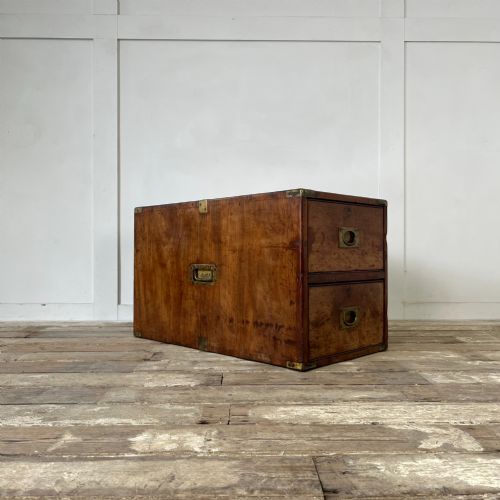
- Portable furniture made in sections with recessed brass handles and corner brackets, designed for military officers on the move. They utilise sturdy joinery to withstand travel.
- Cellarette
- A small cabinet or box used to store bottles of wine or spirits, often lined and fitted with compartments. Regency and Georgian examples frequently feature sarcophagus or box shapes.
- Specimen cabinet
- A multi-drawer tabletop unit designed for organising natural history collections, coins or small curiosities. The drawers are shallow and built to protect delicate items.
- Escutcheon
- A protective plate surrounding a keyhole, usually cast in brass. It prevents the timber around the lock from wearing down through repeated use.
Small Mahogany Chest Box: Frequently Asked Questions
What were small mahogany boxes used for?
These boxes served specialised domestic and professional functions, ranging from securing tea leaves and medicines to storing jewellery, documents and watch repair tools. Their portable nature allowed owners to keep valuables protected and organised within various rooms.
Over time, many of these utility boxes transitioned into decorative items used for desktop organisation or tabletop display in homes.
How do I date a mahogany box?
Dating relies on examining construction methods, timber choices and hardware styles that align with specific eras like the Georgian or Victorian periods. Dovetail joints, secondary woods and lock mechanisms provide key clues regarding the decade of manufacture.
Stylistic cues such as brass campaign mounts, bow fronts or inlay patterns also help narrow down the historical period of the piece.
Are apprentice pieces genuine?
Apprentice pieces are historical items made by trainees to showcase their mastery of cabinet making before examiners. They authentically replicate larger furniture forms down to working drawers and detailed mouldings.
Distinguishing genuine examples involves looking for period-appropriate wear, hand-cut joinery and construction traits consistent with 18th and 19th-century workshop practices.
How do I care for antique mahogany?
Maintaining mahogany involves keeping pieces away from direct sunlight and sudden temperature shifts that can dry out the timber and cause splitting. Regular dusting with a soft, dry cloth preserves the polished surface without applying heavy chemical build-up.
Occasional application of appropriate wax feeds the wood and helps maintain the natural lustre developed over centuries of handling.