




Military Campaign Drawers
Military campaign drawers offer ingenious modular storage, combining robust timber construction with recessed brass hardware designed for officers on the move.
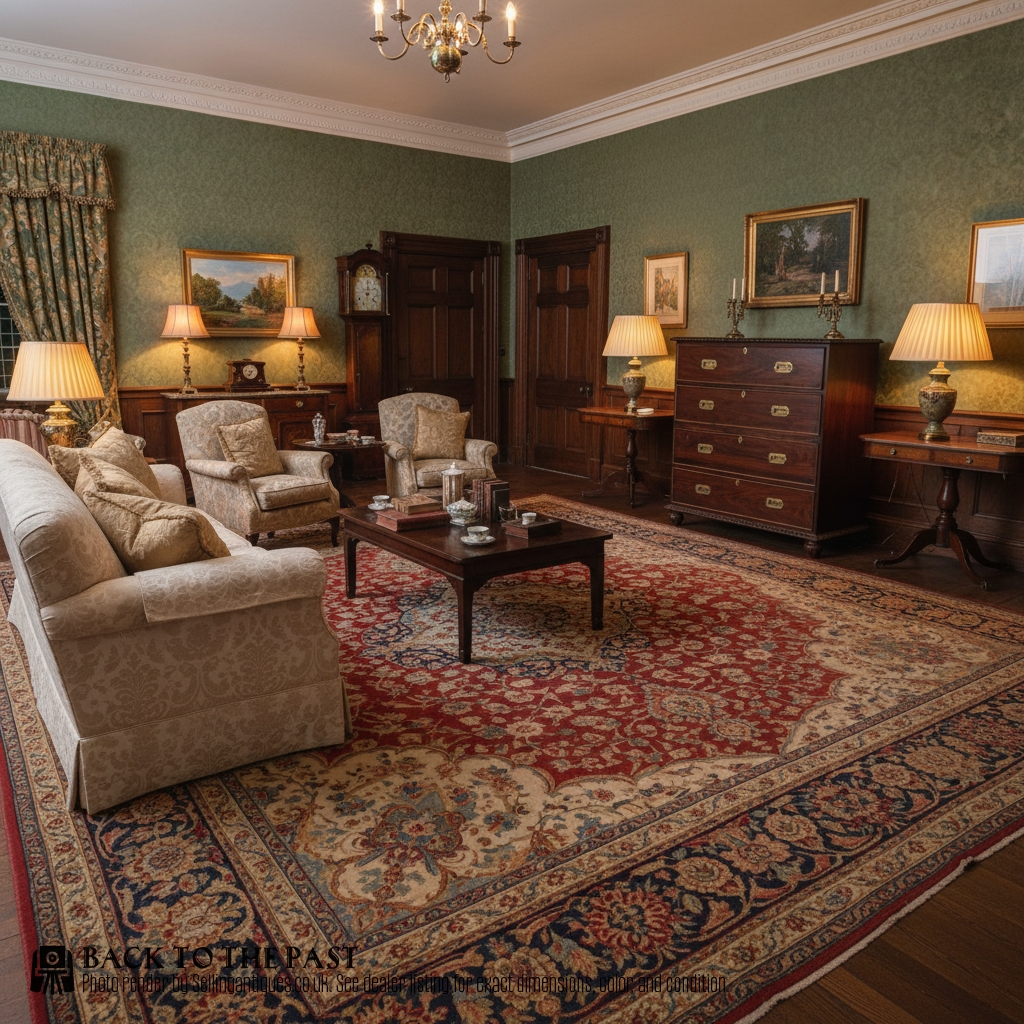
Military Campaign Drawers
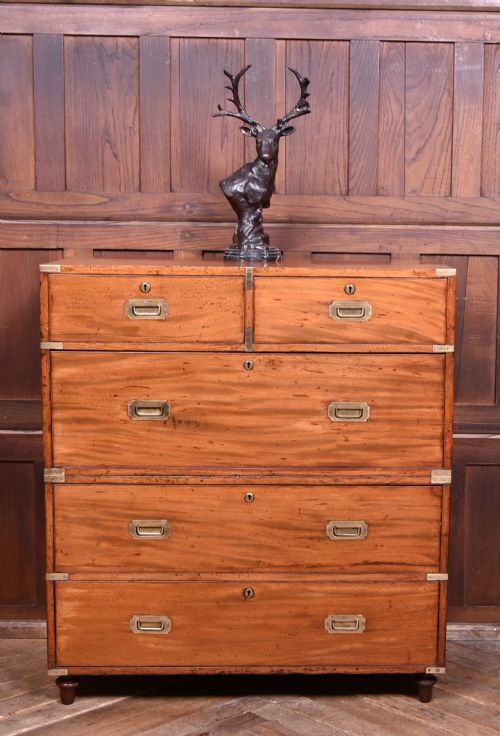
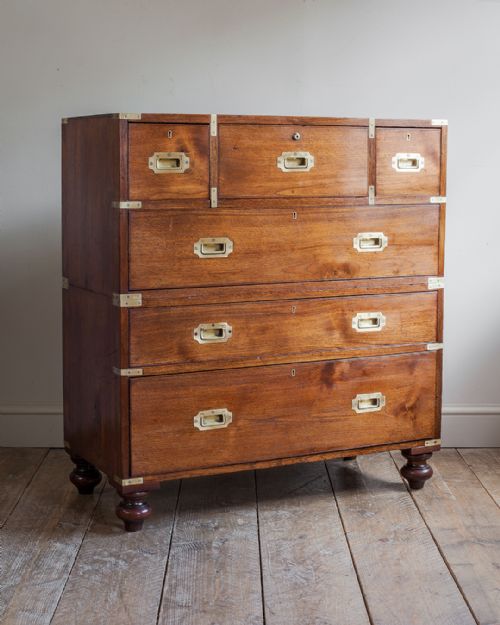
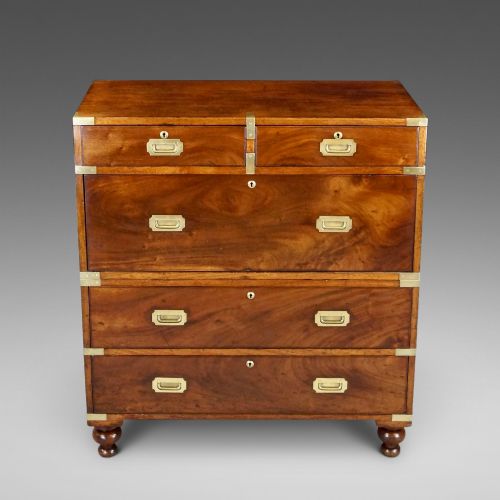
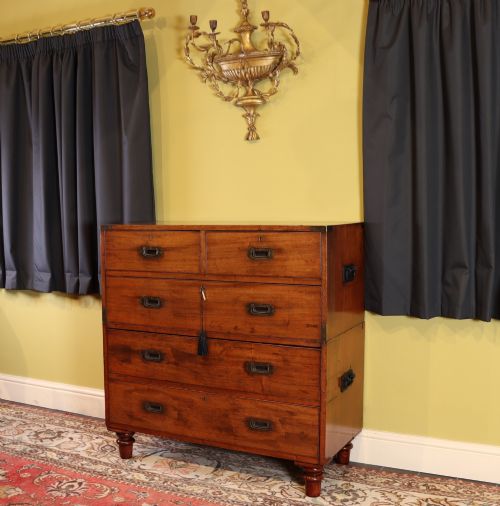
Military campaign drawers encompass portable storage furniture constructed for transport during British military expeditions throughout the eighteenth and nineteenth centuries. A buyer searching this phrase encounters practical chests of drawers, secretaire desks, and two-part configurations designed to dismantle easily. The most frequently met examples on this page are Victorian mahogany and teak chests built in two separate sections.
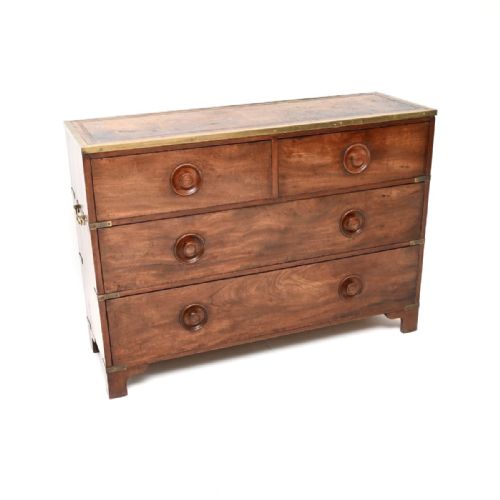
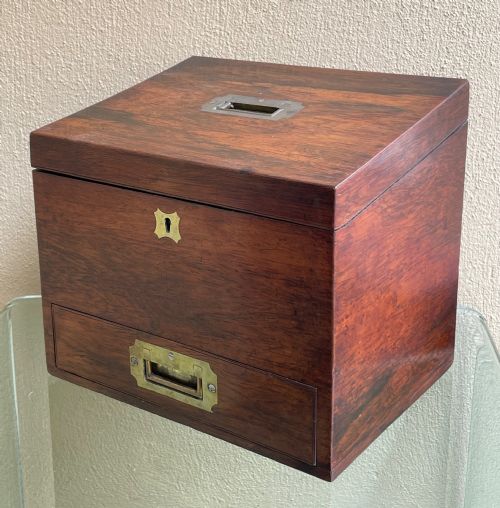
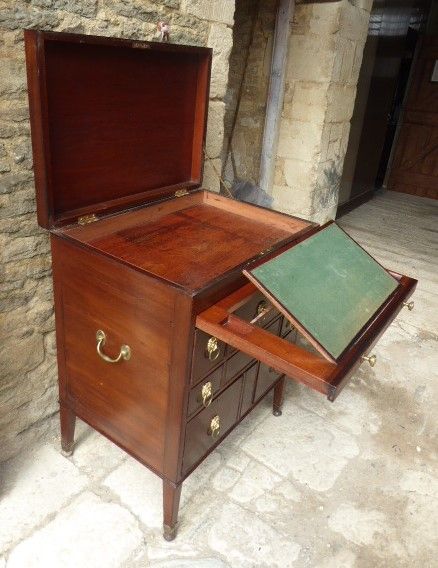
Beyond standard chests of drawers, the selection includes writing slopes, bureaux, filing cabinets, and collectors' cabinets reflecting the diverse administrative needs of officers. Pieces range from compact desktop storage boxes to large tallboys and low chests of drawers. Colonial origins also introduce exotic timbers such as camphor wood and teak, tailored for tropical service.
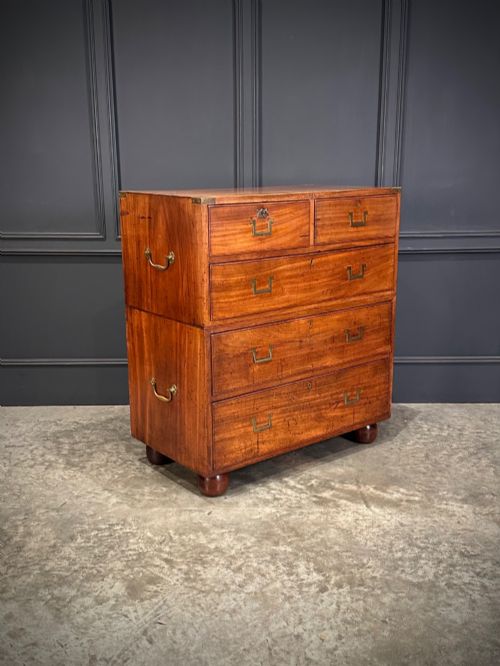
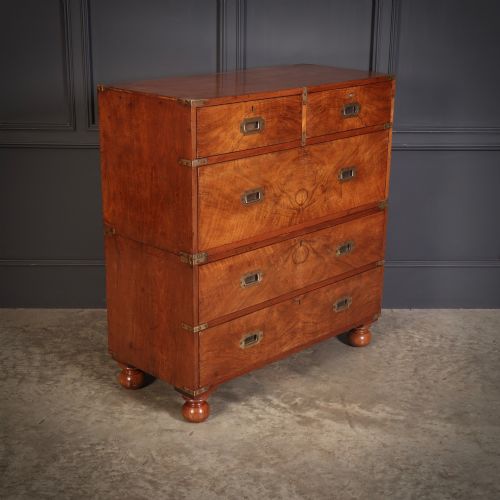
The defining characteristic across these forms remains modular construction, often featuring flush brass corners, strapwork, and side carrying handles. While many items date from the nineteenth century, variations stretch from the eighteenth century into early twentieth-century revivals. Each piece retains the structural adaptability required for frequent relocation by sea or land.
Materials and construction
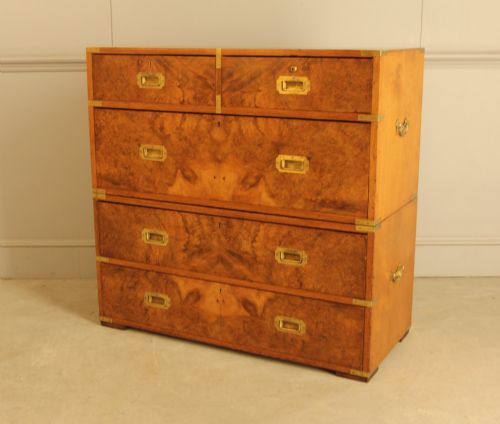
Cabinetmakers utilised dense, durable timbers capable of withstanding harsh climates and rough handling during transport. Mahogany remains predominant, alongside tropical hardwoods such as teak and camphor wood, while walnut and burr walnut appear in select refined iterations. These woods were chosen for stability, resisting the warping caused by humidity and temperature shifts.
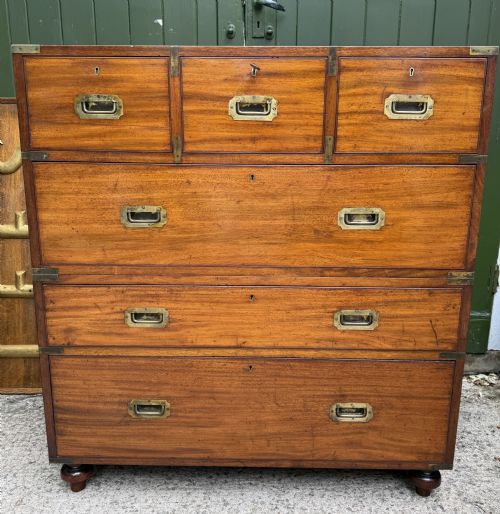
Construction relies heavily on clever dismantling systems, dividing large carcases into two independent upper and lower sections held together by internal brass securing pins or brackets. Recessed brass corners, flush-fitting drawer pulls, and strapwork protect vulnerable edges from impact while maintaining flat surfaces for packing. Drawers frequently feature dust-proof partitions and secure locking mechanisms to safeguard contents during transit.
Camphor wood chests still release their distinctive aromatic scent after two centuries, having originally deterred tropical moths from uniforms.
Evaluating craftsmanship and integrity
Quality reveals itself in the precision of the brasswork and the tightness of the joinery where the two carcases meet. Superior pieces feature solid brass hardware sunk flush into the timber rather than surface-mounted brass plates. The choice of secondary woods for drawer linings, such as oak or mahogany, and the neatness of dovetail joints further distinguish high-grade workshop output.
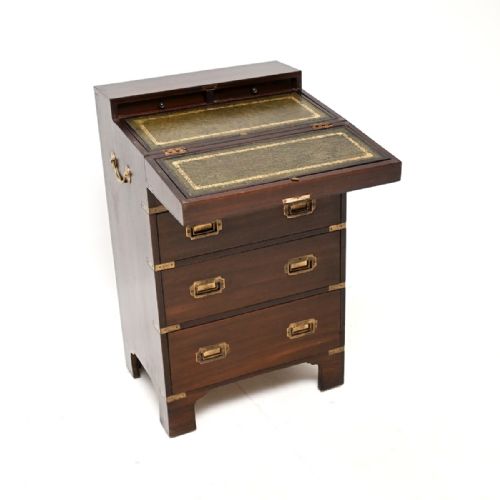
The sophistication of the internal fittings elevates certain examples, particularly secretaire drawers featuring leather-lined writing surfaces, pigeonholes, and secret compartments. Originality of components, including recessed drop handles, working locks, and carrying handles, preserves historical authenticity. Grain matching across drawer fronts and secondary timber selection indicate the level of care invested by the maker.
S. W. Silver & Co. London & Liverpool·Ross & Co.·Army & Navy·W Day The Strand·W Preist Blackfriars London
The Military Campaign Drawers Glossary
- Campaign chest
- A modular chest of drawers built in two or more stacking sections with recessed brass hardware for easy transport. These pieces were commissioned by military officers and travellers.
- Secretaire chest
- A chest of drawers featuring a pull-out top drawer with a hinged writing flap that drops down to reveal small drawers and pigeonholes. This combines wardrobe storage with a compact desk.
- Two-part chest
- A cabinet constructed as two distinct rectangular boxes that stack securely on top of one another. This design reduced weight and bulk for baggage animals and ships.
- Recessed hardware
- Handles, corners, and escutcheons set flush into mortised cavities in the wood so nothing protrudes past the surface. This prevents snagging during transit.
Military Campaign Drawers: Frequently Asked Questions
Why are campaign chests built in two parts?
Dividing the furniture into upper and lower sections made heavy storage manageable for transport on pack animals, wagons, and ships. Each box could be handled independently by a single person.
This modular design also protected the contents and allowed officers to reassemble their quarters quickly upon reaching a new camp.
How do I identify a true military chest?
Genuine examples feature structural characteristics designed for travel, notably recessed brass corners, flush drawer pulls, and side carrying handles. The carcase is typically constructed in two stacking sections with alignment pins.
Interior secondary woods, such as oak or mahogany drawer linings, and maker stamps on the brass or drawer tops provide further confirmation of authenticity.
How do I care for a campaign chest?
Keep the wood nourished with appropriate wax polishes and protect the surfaces from direct sunlight and sudden humidity changes. Avoid placing hot or wet items directly on the polished timber.
Brass hardware can be cleaned gently with a soft cloth to maintain its lustre without stripping patination from the surrounding wood.
What is a secretaire campaign chest?
A secretaire campaign chest incorporates a specialised upper drawer that drops open to reveal a fitted desk interior. Officers used these compartments for writing dispatches and storing sensitive documents.
This dual-purpose design maximised utility in cramped campaign tents by merging a writing desk with bedroom storage.