




Mid Victorian Walnut Furniture
Mid victorian walnut furniture brings rich burr grain and dark warmth into a room, offering practical utility alongside decorative presence.
Mid Victorian Walnut Furniture
Mid victorian walnut furniture encompasses a variety of functional household pieces dating primarily from the middle decades of the nineteenth century. Buyers seeking mid victorian walnut furniture encounter items designed for specific domestic tasks, including writing desks, card tables, and canterburys.
Pieces span straightforward English cabinetmaking and ornate French rococo revival designs. Many examples incorporate specialised internal fittings such as satinwood drawers or brass mounts.
Materials and construction methods
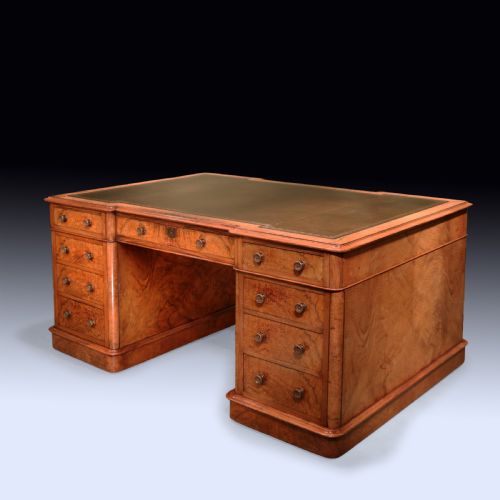
Cabinetmakers utilised solid walnut and decorative burr walnut veneers applied over secondary timbers to create highly figured surfaces. The swirling grain patterns of burr walnut provided the primary visual interest on drawer fronts and table tops.
Metal components such as brass mounts, casters, and hardware added functional strength and decorative contrast to the timber. Secondary woods like mahogany appeared in internal carcases and drawer linings.
Interiors often featured contrasting secondary timbers such as satinwood, alongside leather writing surfaces and ceramic elements.
Current listings feature mid-nineteenth century walnut furniture incorporating brass, ceramic, leather, and mahogany alongside primary burr walnut timbers.
Distinctions in craftsmanship and design
Quality separates standard production pieces from workshop examples boasting attribution to notable makers like James Winter, Shoolbred, or Holland & Sons. Superior pieces display refined proportions and careful timber selection that showcases natural grain movement.
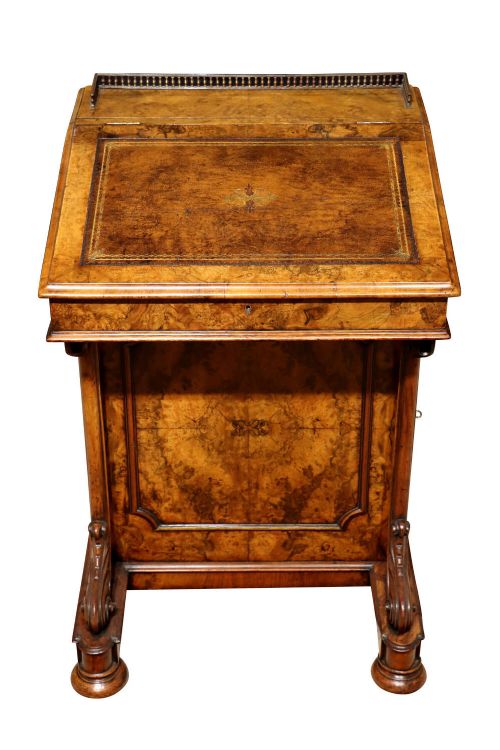
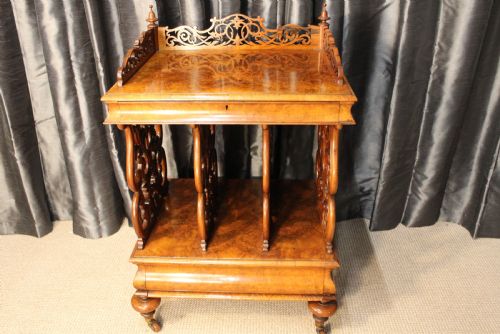
The complexity of internal fittings, such as satinwood drawer layouts within a davenport or intricate fretwork on canterburys, signals higher execution standards. Finishes and hardware integration further define the upper tier of the range.
James Winter·Shoolbred·Holland & Sons
The Mid Victorian Walnut Furniture Glossary
- Burr walnut
- A timber harvested from walnut tree growths, producing intricate and swirling grain patterns prized for decorative veneer work. It forms the defining visual surface on many nineteenth-century case pieces.
- Canterbury
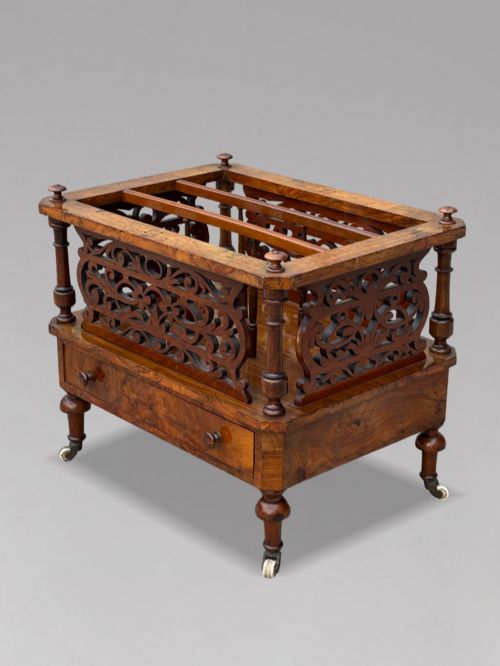
- A low freestanding stand originally designed for holding sheet music, folios or books, featuring partitioned sections and often a base drawer. Makers constructed these in walnut during the mid-nineteenth century.
- Etagere
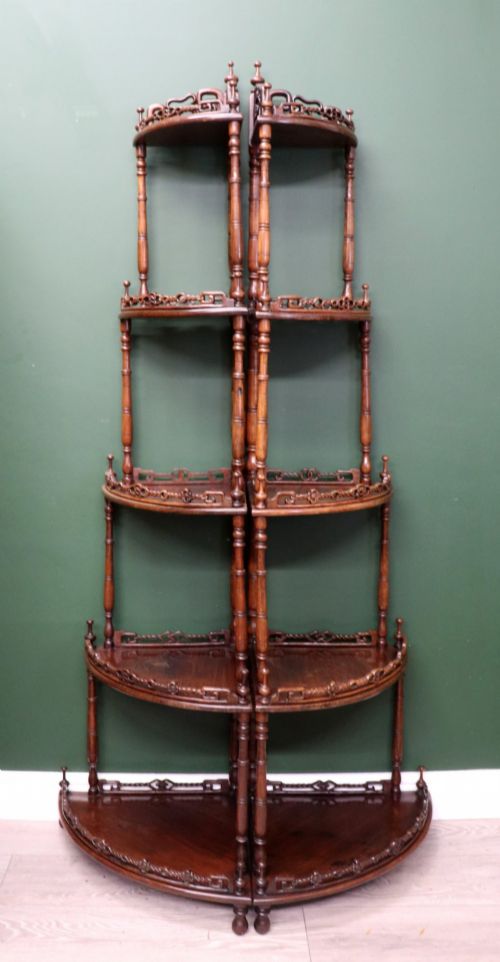
- A set of open display shelves supported by columns or pillars, used for ornament placement. These items often reflect French design influences.
- Wellington chest
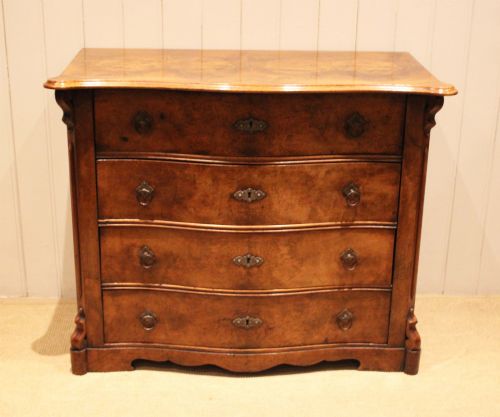
- A tall, narrow chest of drawers secured by a hinged vertical locking stile on one side. This mechanism engages with all drawers simultaneously.
Mid Victorian Walnut Furniture: Frequently Asked Questions
How do I identify mid-nineteenth century walnut furniture?
Look for deep rich walnut and burr walnut veneers combined with construction methods typical of the eighteen fifties and sixties.
Check for secondary timbers like mahogany and traditional hand-cut dovetails inside drawers.
What was a canterbury used for?
A canterbury served as a moveable stand for holding sheet music, periodicals, and portfolios near a piano or seating area.
Many examples include a small base drawer for smaller accessories.
Where should I place a centrestable?
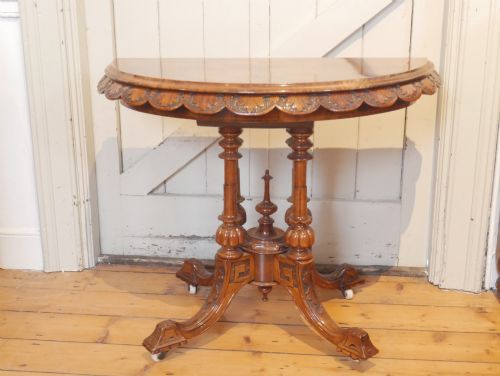
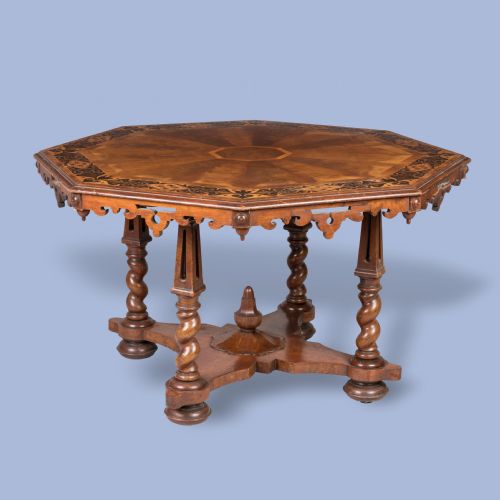
A centrestable functions best standing away from walls in the middle of a room where its finished top and decorative legs remain visible from all sides.
These tables were historically used for display or as occasional writing surfaces.
How do davenport desks function?
A davenport is a compact slant-front desk with a sloping leather-lined writing surface that lifts to reveal internal drawers and pigeonholes.
Drawers typically open to the side rather than the front, flanked by small stationary compartments.