



Mid Victorian Rosewood Table
A mid victorian rosewood table brings rich dark grain and solid nineteenth-century craftsmanship directly into a room.
Mid Victorian Rosewood Table
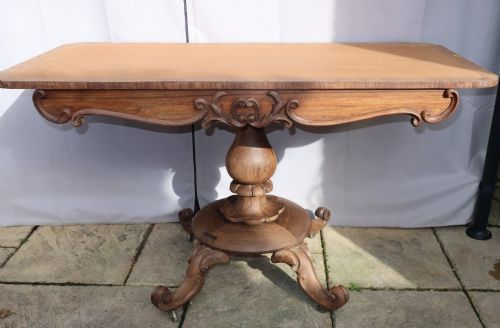
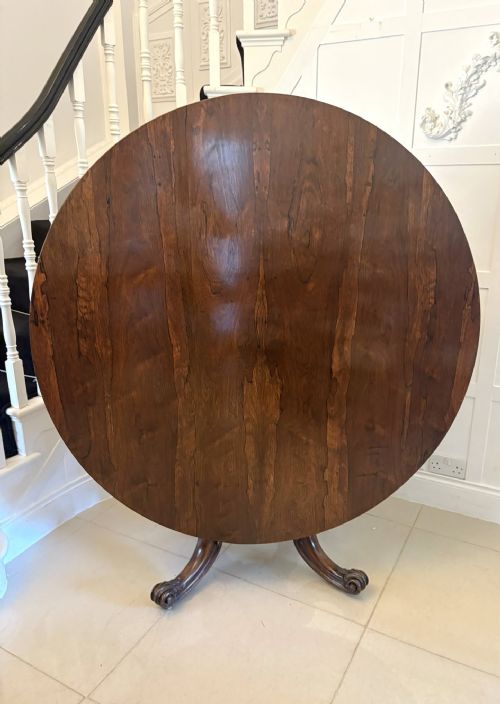
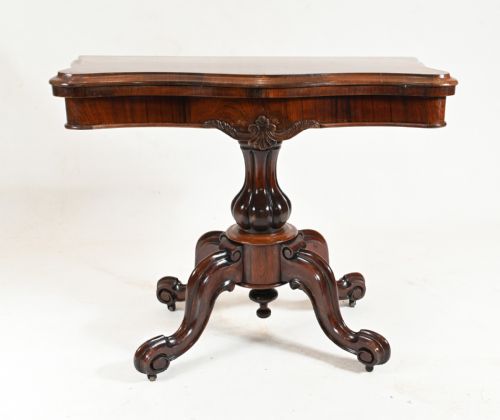
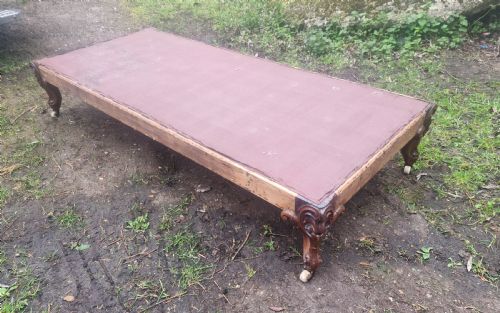
A mid victorian rosewood table encompasses a wide variety of domestic furniture designed during the middle decades of the nineteenth century, including large dining pieces, smaller occasional stands, and games tables. Buyers seeking this phrase typically encounter centre tables and work tables featuring deep reddish-brown timber tones characteristic of the period.
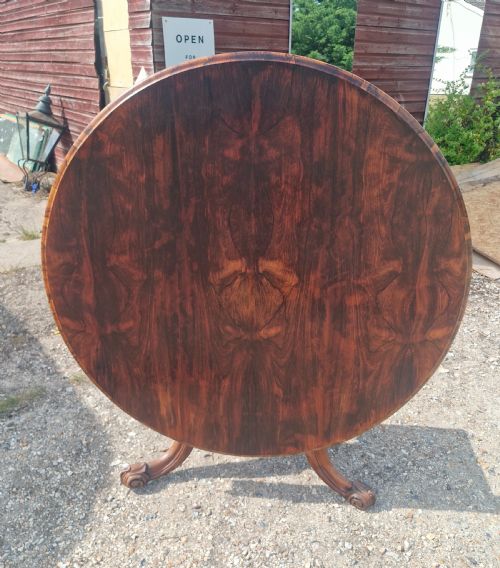
The selection ranges from circular dining and breakfast tables supported on cabriole or pedestal bases to etageres, writing tables, and sewing tables. Many examples date from the eighteen-fifties and eighteen-sixties, reflecting the ornate styles popular during the Victorian era and French Revival movements.
How these pieces were made
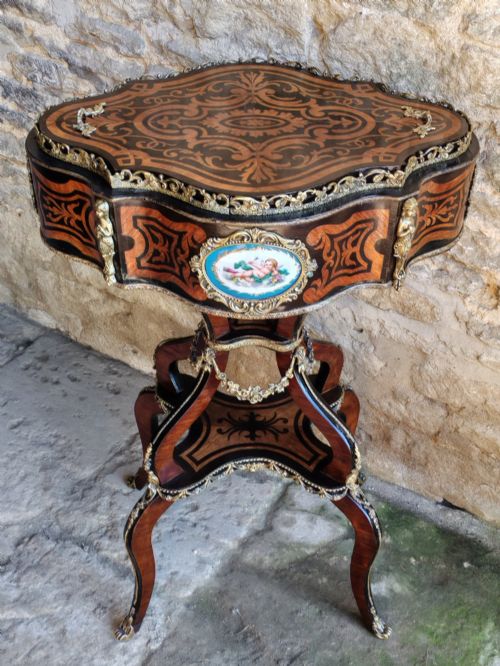
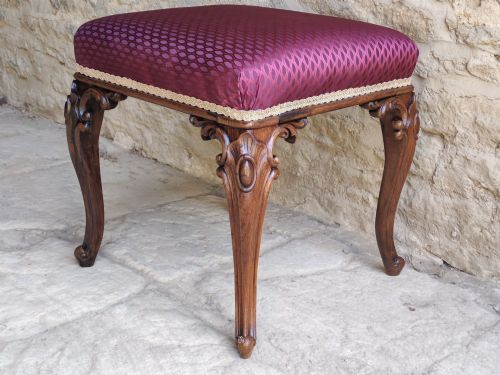
Makers utilised solid rosewood alongside rosewood veneer applied over secondary timbers, often highlighting figured grain patterns on circular table tops. Additional materials such as brass mountings, ceramic components, and ormolu details appear across various forms, while sewing tables and stools frequently incorporate fabric elements.
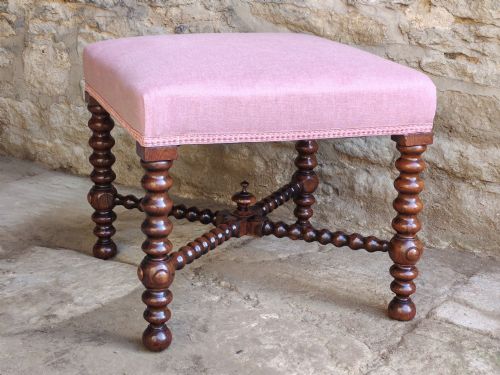
Structural support relies on traditional joinery methods, with turned legs, bobbin legs, and stretcher bases providing stability for heavy tops. Carved decoration appears on many frames, and specialised pieces integrate marquetry work or Tunbridgeware elements to enhance the surface appearance.
Several items include built-in folio stands and secret compartments, proving that Victorian correspondence required serious architectural support.
What varies in quality
The standard of a mid victorian rosewood table depends heavily on the selection of figured timber and the crispness of any carved ornamentation on the base and edges. Pieces displaying finely matched veneer grain and robust structural joinery sit at the higher end of the range.
Proportion and utility also influence distinction, as demonstrated by clever mechanical folding mechanisms in games tables and securely fitted interior compartments in sewing tables. The integration of secondary materials like brass mounts and ormolu accents further separates standard production from exceptional examples.
The Mid Victorian Rosewood Table Glossary
- Centre table
- A freestanding table finished on all sides so it can stand in the middle of a room rather than against a wall.
- Étagère
- An open tiered piece of furniture used for displaying ornaments and small objects.
- Loo table
- A large round nineteenth-century table originally used for the card game loo, often featuring a snap-top mechanism.
- Marquetry
- Decorative inlay work using various woods to create pictorial or geometric patterns on a surface.
- Ormolu
- Gilt bronze mounted as a decorative feature on furniture and decorative objects.
Mid Victorian Rosewood Table: Frequently Asked Questions
What is a loo table?
A loo table is a large circular table designed for nineteenth-century card games, featuring a top that tilts vertically on a central pillar when not in use.
This tilting mechanism allowed the table to be stored against a wall to save space in crowded Victorian parlours.
How do I use a centre table?
A centre table stands in the middle of a room as a decorative and functional surface for lamps, books, or floral arrangements.
Because these tables are finished on all sides, they create a natural focal point away from the walls.
What is an etagere?
An etagere is an open shelved stand used during the Victorian period for displaying small decorative items and porcelain.
These multitiered pieces combine rosewood framing with delicate supports, adding vertical interest to a room.
How do I date a Victorian table?
Dating a Victorian table involves examining the timber selection, construction methods, and stylistic influences recorded in the piece.
Mid-century examples often combine solid rosewood frames with figured veneers and specific revival styles popular between eighteen-fifty and eighteen-seventy.