
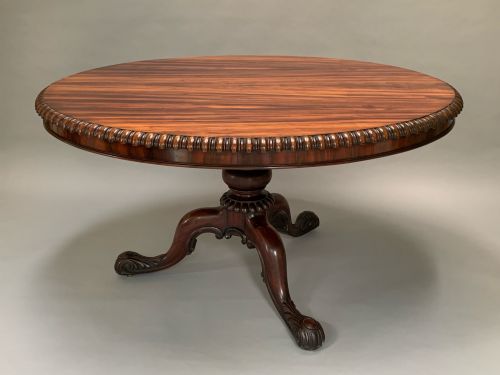
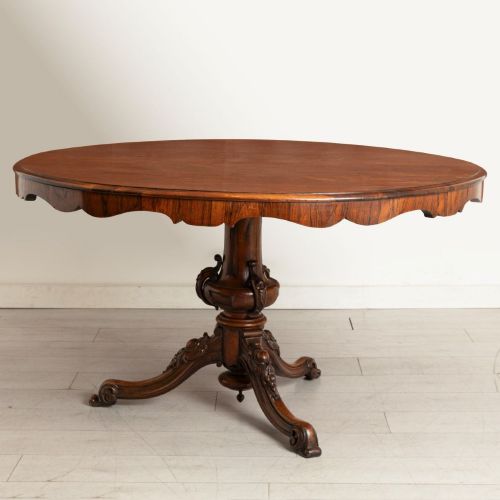
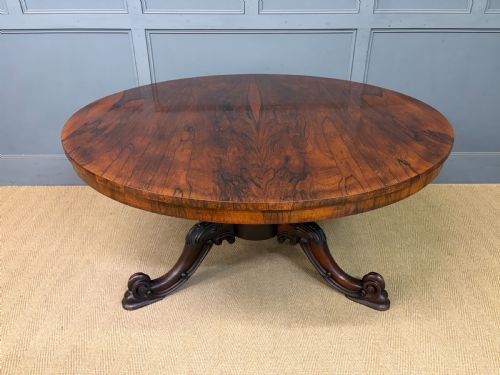
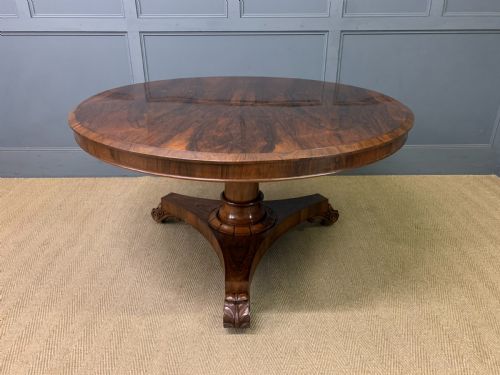


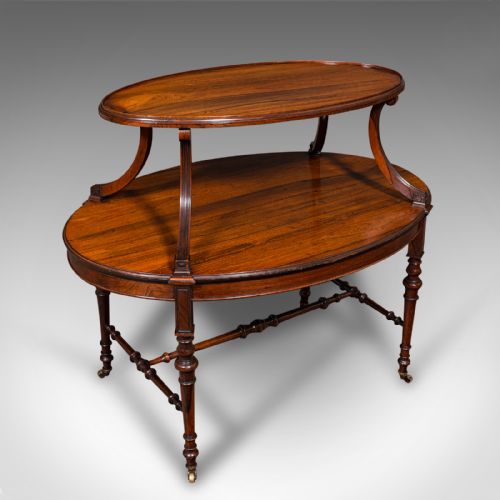

Oval Rosewood Table
An oval rosewood table brings rich grain and warmth to a room, offering a versatile surface shaped for gathering.
Oval Rosewood Table
An oval rosewood table appears in forms ranging from large dining and loo tables to smaller occasional, lamp, and centre pieces. The nineteenth century yields the highest number of examples, particularly from the Victorian and William IV eras.
Buyers frequently encounter tilt-top and loo tables supported by turned and carved pedestals, alongside Pembroke and coffee table variants. Edwardian and later twentieth-century pieces introduce inlay, dropleaf designs, and occasional formats.
Origins span English workshops and French makers, incorporating stylistic revivals such as Louis XV and Louis XVI alongside Regency and George III influences.
How They Were Made
Construction relies heavily on rosewood veneers applied to solid timber carcases, often paired with secondary woods like mahogany and satinwood. Cabinet makers utilised brass, bone, and ebony for inlay and decorative stringing.
Pedestal bases are frequently turned from solid rosewood, supporting tilt-top mechanisms or fixed tops with moulded edging. Marquetry and trompe l'oeil techniques appear on top surfaces, particularly in French and later Edwardian pieces.
Listings feature periods from George III through to Art Deco, with the Victorian era representing the largest share of furniture.
What Varies in Quality
Quality rests on the depth of the timber grain and the precision of the veneer work across the oval top. Finer examples display meticulous marquetry or inlay without disruption to the underlying rosewood surface.
The stability and carving of the central pedestal or leg assembly distinguish standard production from superior library and dining tables. Solid timber components and well-executed turning demonstrate the skill of the original maker.
Gillows·Haentgos Freres Paris·Johnstone & Jeanes
The Oval Rosewood Table Glossary
- Rosewood
- A dense, dark timber prized for its prominent figuring and reddish-brown colour with black grain. It takes a high polish and forms the primary surface of these tables.
- Loo Table
- A large nineteenth-century round or oval table designed for the popular card game of loo. Many feature tilt-top mechanisms to save space when not in use.
- Pembroke Table
- A small table with hinged flaps on two opposite sides supported by folding brackets. They serve versatile roles as breakfast or occasional tables.
- Tilt-Top
- A mechanism allowing the table top to pivot to a vertical position. This design enables convenient storage against a wall.
- Marquetry
- Decorative patterns formed by the insertion of pieces of wood, bone, or brass into a veneer. It creates pictorial or geometric designs on table tops.
Oval Rosewood Table: Frequently Asked Questions
What is a loo table?
A loo table is a versatile nineteenth-century table designed for card games played during the evening. Their large oval tops provide ample surface area for gathering.
Many of these tables incorporate tilt-top mechanisms so the top can be folded away vertically against a wall when not in use. This practical design suited domestic spaces where rooms served multiple functions throughout the day.
How do I care for rosewood?
Rosewood requires protection from direct sunlight and extreme humidity to prevent the veneer from drying out or splitting. Gentle dusting with a dry cloth maintains the surface without stripping the natural finish.
Avoid placing hot items or liquids directly on the wood to preserve the polish and grain. Occasional treatment with suitable furniture wax helps maintain the lustre of the timber.
Where were these tables used?
These tables served various domestic settings depending on their size and form, from formal dining rooms to libraries and drawing rooms. Centre tables stood prominently in large halls or reception spaces as decorative and functional focal points.
Smaller occasional, lamp, and wine tables fitted comfortably beside seating areas or in corners. Dining and breakfast variants accommodated family meals before moving to the drawing room for social occasions.