


Mid Victorian Footstool
A mid victorian footstool brings rich timber frames and tactile needlepoint into a room, offering comfort and period character.
Mid Victorian Footstool
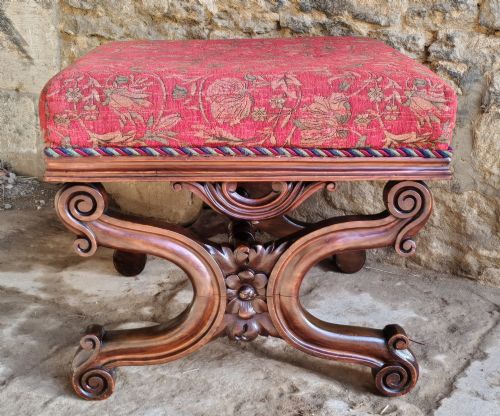
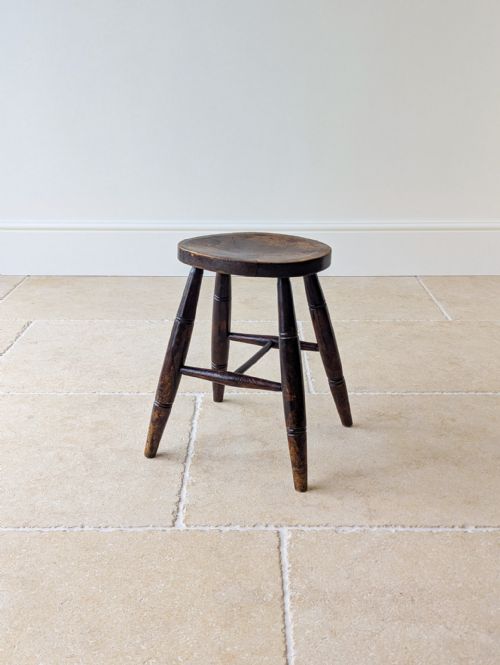
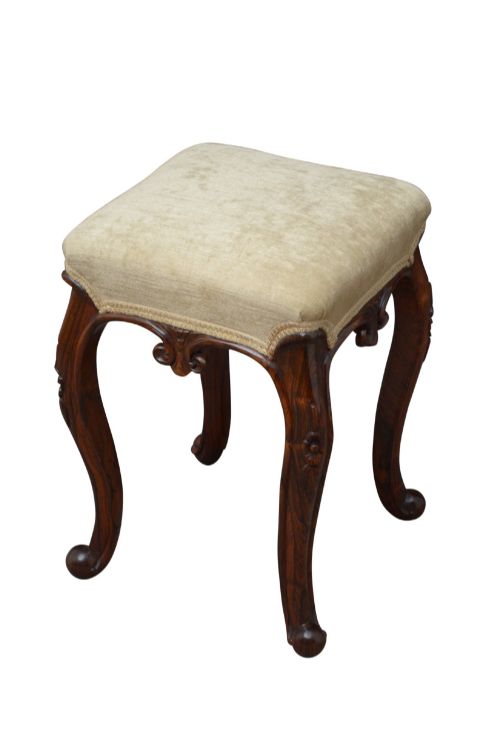
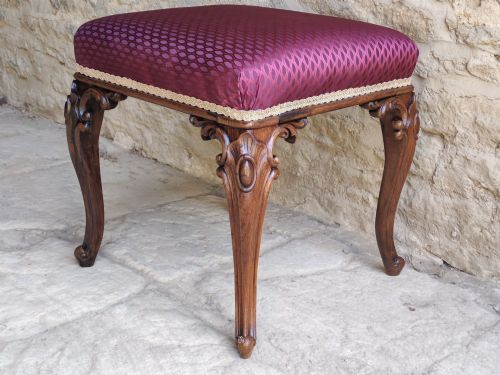
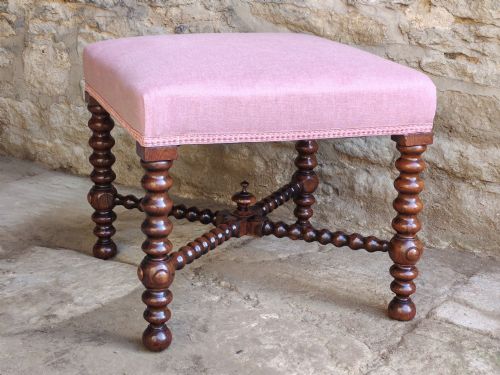
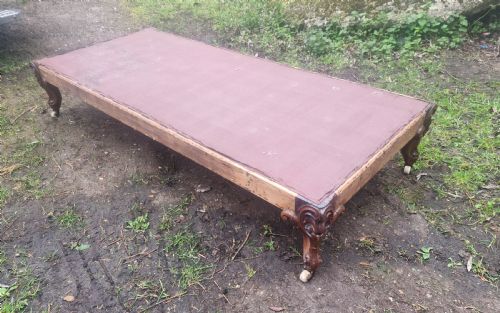
A mid victorian footstool is a low seating piece designed for firesides, dressing tables, and drawing rooms during the nineteenth century. These items appear in various formats on this page, including compact footrests, longer ottomans, and swivel piano stools.
The objects span the Victorian era from the eighteen-fifties to the eighteen-seventies, reflecting diverse regional styles such as country oak designs and ornate revival pieces. Buyers frequently encounter rosewood and walnut frames paired with original textiles or plain upholstery ready for renewal.
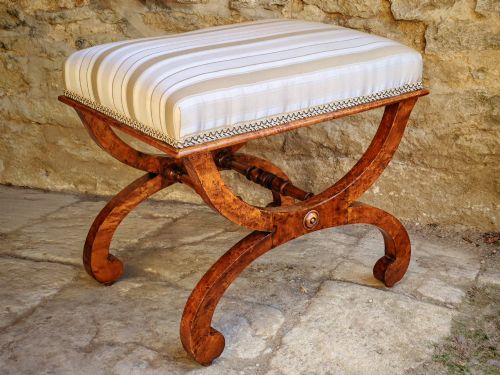
Form follows function across the selection, ranging from simple x-frame supports to elaborate cabriole legs and bobbin turnings. Each mid victorian footstool demonstrates the robust carpentry and distinct aesthetic priorities of the period.
How they were made
Makers utilised dense native and imported timbers, shaping mahogany, walnut, rosewood, and oak into sturdy structural frames. Joinery relied on traditional techniques to support frequent weight bearing and daily household use.
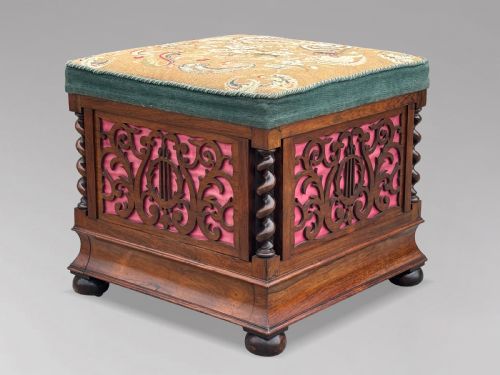
Upholstered surfaces incorporated textiles such as velvet, fabric, tapestry, and gros-point needlework. Frame decoration combined hand carving with turned elements like bobbin legs, reflecting prevailing Victorian tastes.
Mid Victorian Footstool Retail Price Guide 2026
Typical asking prices for mid victorian footstool among the pieces listed under this phrase on Sellingantiques today, from the lower quarter to the upper quarter. They describe what is for sale here now, not the wider market.
Listings feature woods including rosewood, walnut, mahogany, oak, burr maple, and goncalo alves.
What varies in quality
The distinction between standard examples and finer pieces rests primarily on timber selection and decorative carving. Dense timbers like burr maple, rosewood, and figured walnut elevate the stature of a frame.
Sustained craftsmanship shows in the depth and crispness of hand-carved details on legs and rails. Superior items retain well-executed needlepoint or substantial timber frames that remain rigid through decades of use.
The Mid Victorian Footstool Glossary
- Gros-point
- A type of needlepoint embroidery worked on heavy canvas with coarse woollen yarn. This durable stitch frequently forms the decorative top of period ottomans.
- Cabriole leg
- A furniture leg that curves outward and then tapers inward, inspired by animal limbs. This form appears frequently on mid-nineteenth-century dressing table stools.
- X-frame
- A structural support formed by two intersecting members shaped like the letter X. It provides inherent strength and stability to small seating forms.
- Ottoman
- A low, upholstered seat or footstool without arms or a back. Larger nineteenth-century examples often feature generous padding for domestic lounges.
- Bobbin leg
- A turned furniture leg featuring a series of rounded, spool-like swellings. This decorative turning style is common on mid-Victorian rosewood pieces.
Mid Victorian Footstool: Frequently Asked Questions
How are these stools used today?
These pieces function well beside armchairs as fireside footrests or placed at the foot of a bed. Their compact dimensions also suit placement beneath dressing tables.
Larger ottomans serve as informal coffee tables when topped with a solid tray. They introduce nineteenth-century warmth into modern living spaces without dominating a room.
What woods appear most often?
Rosewood and walnut dominate the surviving nineteenth-century inventory on this page. These dense timbers allowed carvers to execute crisp details and curved forms.
Mahogany and oak appear alongside rarer choices like burr maple and goncalo alves wood. Each timber brings a distinct grain and weight to the frame.
Are the needlepoint tops original?
Many pieces retain period needlework or gros-point upholstery applied during the nineteenth century. Needlepoint was a popular domestic pastime and frequently decorated footstools.
Some listings note that frames require reupholstering, allowing buyers to select fresh fabric. Original textile survivals offer authentic texture but may show expected signs of age.
How do I date a footstool?
Dating relies on stylistic clues, timber choices, and construction methods recorded across the Victorian era. Pieces from the eighteen-fifties and sixties often feature rich rosewood frames and revival ornamentation.
Cabinetmakers of this period blended Regency influences with emerging Victorian tastes. Subtle shifts in leg turning and upholstery techniques help narrow down the decade of production.