




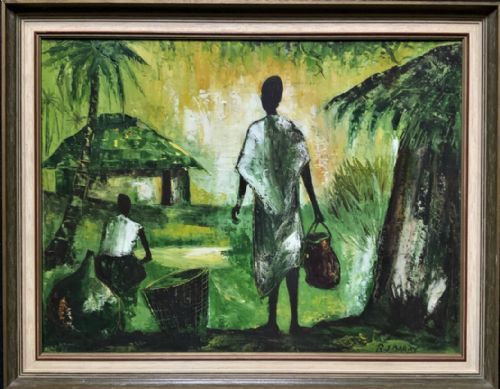


Mid Century Village Scene
These mid century village scene works capture rural settlements through modernist, impressionist, and expressionist lenses across the decades.
Mid Century Village Scene
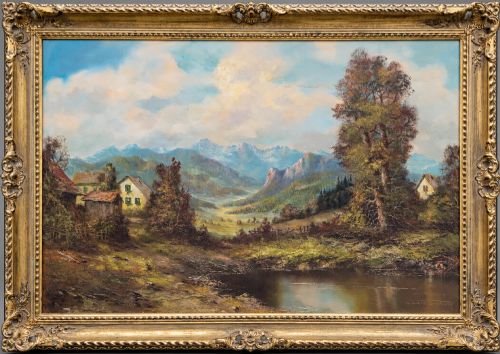
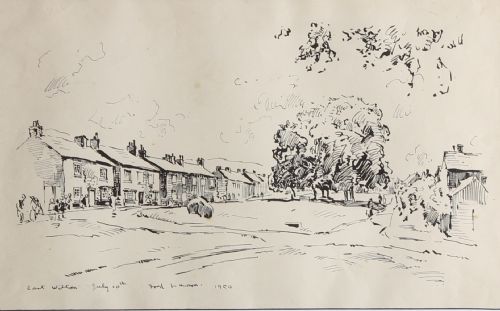
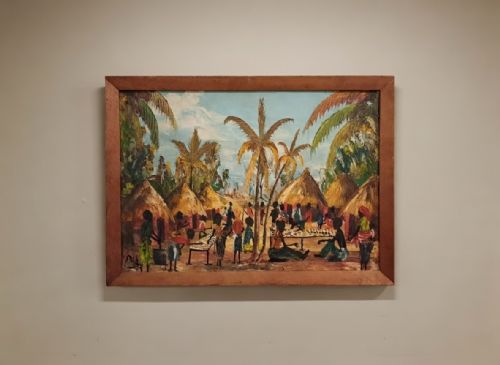
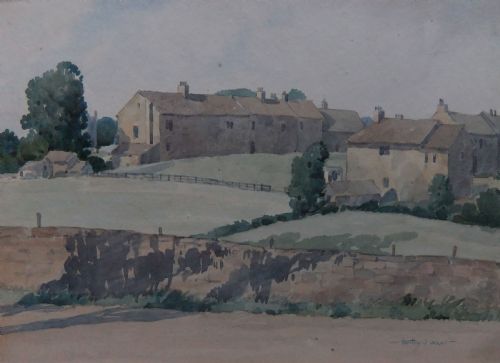
A mid century village scene presents rural or town settlements through the aesthetic movements of the nineteen thirties, forties, fifties, and sixties. These artworks range from British topographical watercolours to Continental avant-garde and African folk art compositions.
The works most commonly encountered here are paintings and drawings executed in oil paint, watercolour, or ink on canvas, paper, and board. They record specific locations like East Witton, Dedham, and Polperro, alongside unlocalised rural communities.
Stylistically, these pieces draw upon mid-century modernist, impressionist, realis, and expressionist vocabularies. Painters utilise these frameworks to interpret domestic architecture, streetscapes, and agricultural life.
Materials and technique
Artists record these subjects using oil paint and watercolour as the primary media, applied to canvas, paper, wood, and board. Ink and pastel drawings also appear, providing linear precision beneath or alongside washes of colour.
Support materials vary from stretched canvas to card and paper, housed within framed artwork formats that preserve the paper and canvas surfaces. Pigments are handled with varying density, from fluid watercolour washes to heavy impasto oils characteristic of expressionist application.
Recorded supports encompass wood, paper, canvas, and glass.
Judging quality in mid century village scene works
Quality rests upon the confidence of the brushwork and the clarity of the composition, distinguishing academic dexterity from tentative execution. The handling of medium, whether the transparency of watercolour or the weight of oil paint, determines the visual impact.
Provenance and attribution elevate certain works, particularly when signed by documented painters or associated with specific regional schools. The preservation of the paper, canvas, and original framing elements also influences the standing of an individual piece.
Fred Lawson·Mercedes Legrand·Louie Stanley Maurice Prince·Sir William George Gillies·Stanley Orchart·Christiaan Pieter Snyders
The Mid Century Village Scene Glossary
- Watercolour
- A paint consisting of pigment suspended in a water-soluble binder, used on paper to create translucent washes.
- Impasto
- Paint applied thickly to a canvas or board, standing out in relief from the surface and showing brush or palette knife marks.
- Expressionism
- A modernist style where the artist distorts reality for emotional effect, prioritising inner feelings over literal representation.
- Board
- A rigid wooden or fibrous sheet used as a painting support instead of stretched canvas.
Mid Century Village Scene: Frequently Asked Questions
What periods do these paintings cover?
The selections span from the nineteen thirties through to the nineteen sixties, capturing changing aesthetic approaches across those decades.
Works reflect the artistic concerns of wartime and post-war Britain, Europe, and international regions.
How are these artworks executed?
Makers employ oil paint, watercolour, ink, and pastel upon supports including canvas, paper, and board.
Techniques range from fluid washes to heavy, expressionist application of pigment.
Where do the depicted locations come from?
Certain pieces record named British locations such as East Witton, Dedham High Street, and Polperro Harbour.
Other compositions portray unlocalised rural settlements, African villages, and imaginative or wartime European townscapes.
How should I display framed artwork?
Hang these pieces away from direct sunlight to protect watercolours, paper supports, and oil pigments from fading.
Keep them in stable environmental conditions to prevent moisture damage to canvas and wood frames.