



Mid Century Rosewood Tables
Mid century rosewood tables bring rich grain and warm timber tones to a room, spanning Victorian centre tables to Danish modern desks.
Mid Century Rosewood Tables
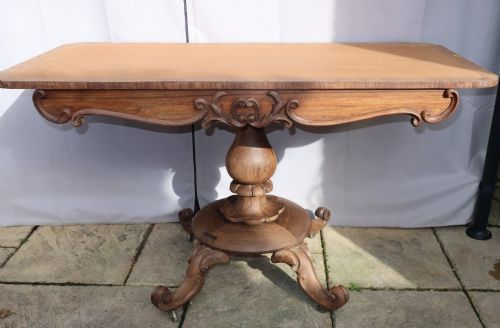
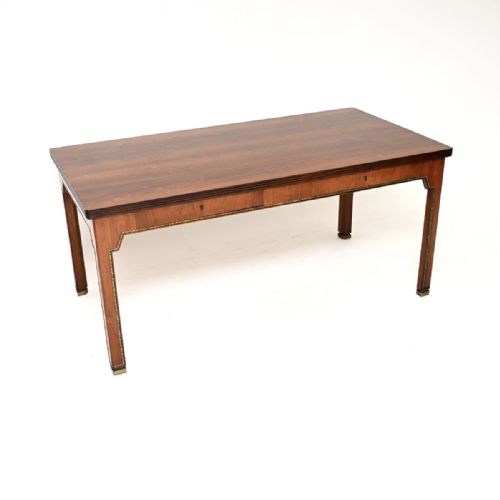
Mid century rosewood tables encompass a surprising variety of forms, drawing heavily on Victorian origins alongside twentieth-century modernism. When you search for mid century rosewood tables, you encounter pieces ranging from mid-nineteenth-century centre tables and sewing tables to 1930s Danish desks and nests of tables.
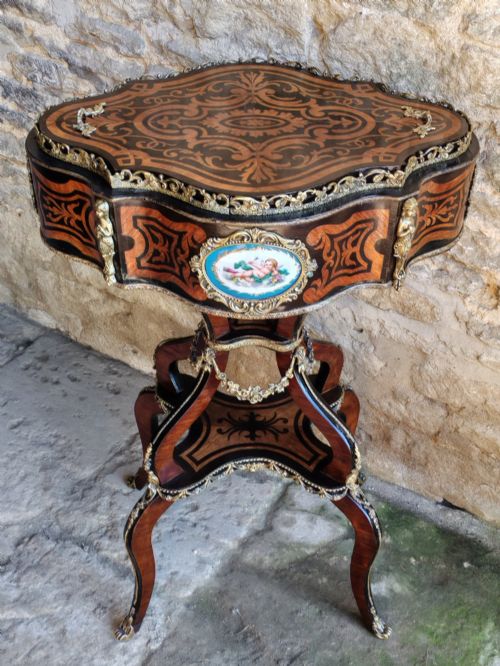
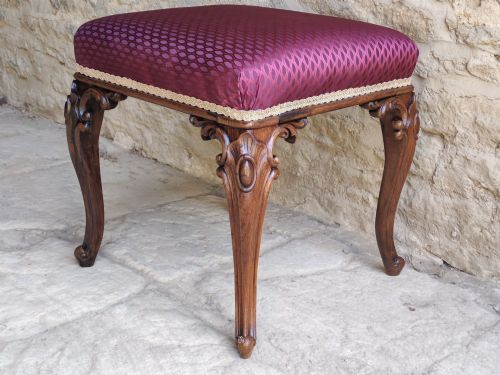
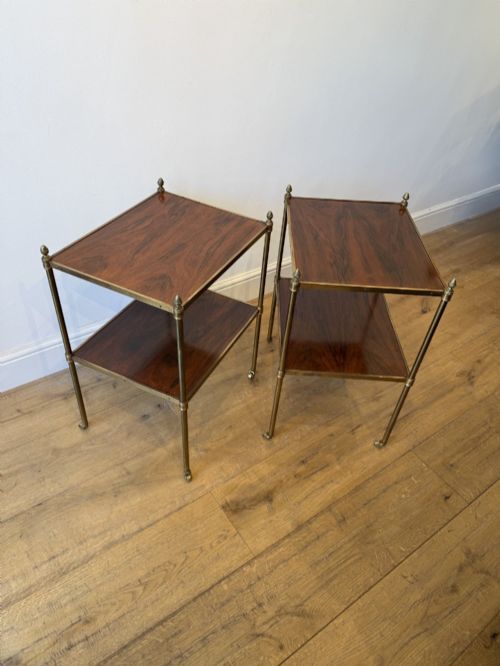
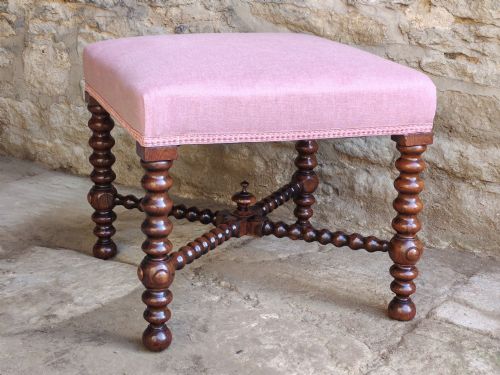
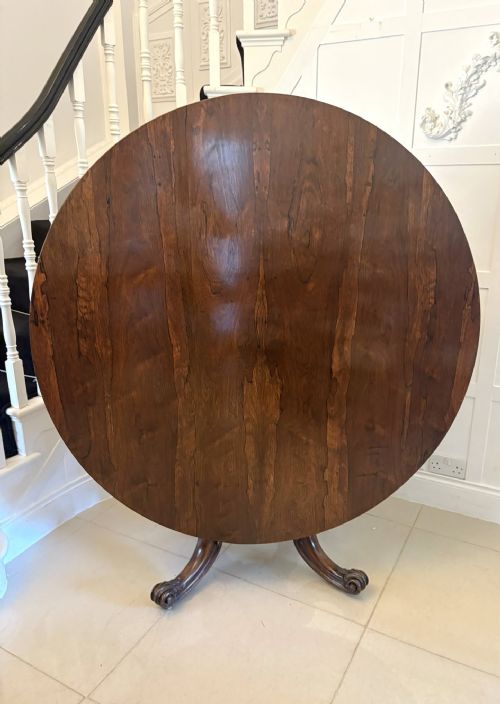
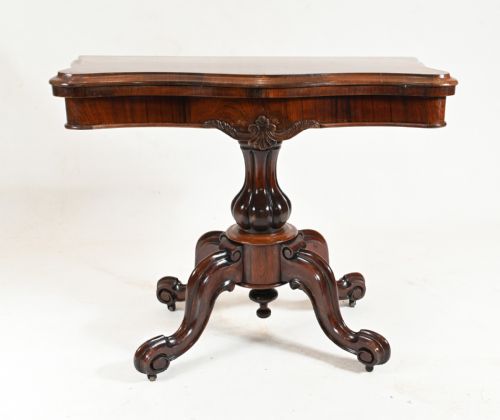
The selection on this page leans strongly towards nineteenth-century examples, including circular dining tables, games tables, and étagères, alongside select pieces from the 1920s and 1930s. Forms vary from simple bobbin leg stools and coffee tables to elaborate Anglo-Indian pier tables and French manner brass-mounted étagères.
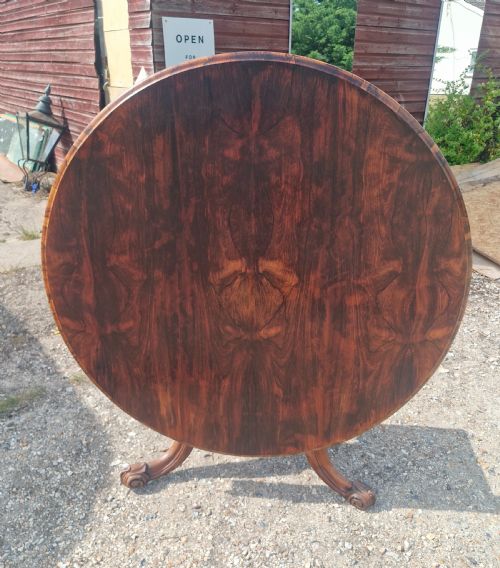
Origin and period definitions stretch across the Victorian era into the interwar years, offering a mix of formal dining pieces and smaller occasional furniture. Each item displays the dense, figured grain typical of the timber, whether shaped as an oval centre table or configured as an Art Deco nest.
How they were made
Construction relies heavily on solid and veneered rosewood, frequently complemented by brass mounts, leather inserts, and ormolu detailing. Cabinetmakers selected timber with prominent figuring, particularly for table tops where the natural grain patterns served as the primary decoration.
Secondary materials such as walnut, kingwood, and porcelain appear in specific styles, while structural elements often utilise traditional joinery suited to the period. Brass components, including castors and gallery rails, secure the edges and support the mobility of heavier centre and games tables.
Listings combine Victorian designs with 1930s Art Deco pieces, uniting diverse eras through the shared use of rosewood and brass.
What varies in quality
Quality rests primarily in the selection of the timber grain and the crispness of any carved or applied ornamentation. Tables featuring highly figured, book-matched rosewood veneers demonstrate a higher grade of craftsmanship than plain or heavily distressed surfaces.
The integrity of the construction, from the stability of the pedestal bases to the precise fitting of drawers in writing and sewing tables, dictates the overall standard. Finer pieces maintain original brass mounts and leather surfaces without clumsy modern replacements.
Mallett
The Mid Century Rosewood Tables Glossary
- Centre table
- A freestanding table designed to be viewed from all sides, commonly placed in the middle of a Victorian room.
- Étagère
- A piece of furniture consisting of open shelves for displaying small objects, often built with two or more tiers.
- Figured rosewood
- Timber exhibiting distinct, natural patterns and swirls in the grain, highly prized for decorative table tops.
- Pier table
- A table designed to stand against a wall, frequently positioned beneath a mirror or between windows.
- Loo table
- A large round or oval Victorian table originally used for the card game loo, featuring a tilt-top mechanism.
Mid Century Rosewood Tables: Frequently Asked Questions
How do I clean a rosewood table?
Maintain the polished timber surface by dusting regularly with a soft, dry cloth to prevent grit accumulation.
Avoid using silicone-based polishes or excessive moisture, which can damage the delicate antique finish over time.
Can I use a centre table for dining?
Centre tables from the nineteenth century generally stand slightly lower or feature pedestals that might restrict legroom compared to dedicated dining furniture.
Smaller Victorian examples work well for intimate meals, provided you protect the polished top with appropriate table linen.
What is an étagère used for?
These tiered shelving units serve to display decorative objects, books, or small collections in a drawing room.
Their open structure adds vertical interest to a room without blocking light or making the space feel crowded.
How do I date a rosewood table?
Examine the construction methods, turning styles, and secondary timbers underneath or inside the drawers for period clues.
Victorian pieces often display heavier carved pedestals, whereas 1930s items show cleaner lines and influences from Danish design.