




Mid Century Folk Painting
Mid century folk painting brings together unpretentious brushwork and rustic charm, offering buyers a direct connection to vernacular artistic traditions.
Mid Century Folk Painting
When you search for mid century folk painting, you encounter works that capture simple domestic scenes, landscapes, and naive portraits. The selection spans mid twentieth century canvases and boards alongside nineteenth century antecedents that share a similar vernacular spirit.
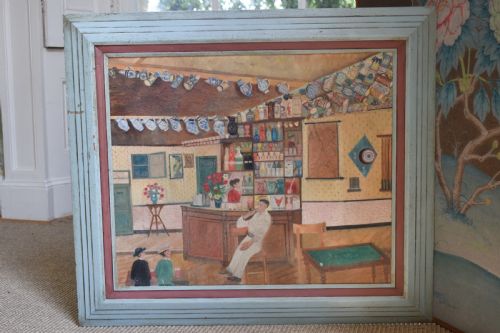
The objects listed show a strong representation of oil paintings, framed scenes, and naive folk art by provincial makers. These pieces often feature pastoral views, interior bar scenes, and regional English or European landscapes created outside academic traditions.
Materials and construction
Makers utilised oil paint applied to canvas, board, or wooden panels to create these compositions. The support materials typically consist of straightforward pine or oak for associated painted boxes, chests, and wooden panels.
Techniques rely on direct, unpolished application rather than academic precision, aligning with naive and folk art traditions. Pigments are brushed onto prepared surfaces with a focus on narrative or decorative outcome over strict perspective.
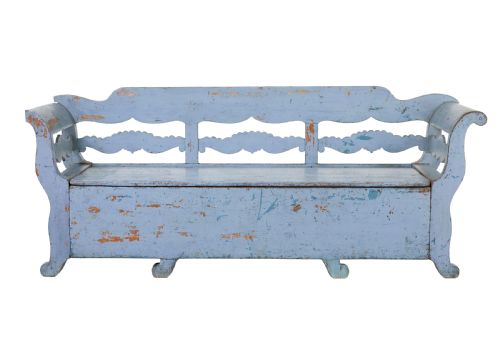
Among the portraits and landscapes, a surprising nineteenth century Swedish chest decorated with a labyrinth offers a maze for the eye.
Evaluating quality and execution
Quality rests upon the strength of the composition and the confidence of the brushwork rather than adherence to strict academic rules. Superior examples maintain a distinct character and visual balance that elevate simple subject matter.
The integrity of the painted surface and the harmonious ageing of the wood or canvas distinguish finer pieces. Stronger works display an assured handling of colour and form that sustains interest across the entire composition.
Gertrude Halsband·Irene Lagut·William Burns
The Mid Century Folk Painting Glossary
- Naive Art
- Art produced by a self-taught artist, typically characterised by a simple, direct approach to perspective and colour. This style avoids classical rules of proportion in favour of expressive clarity.
- Folk Art
- Artistic work created within a traditional culture, often by rural artisans or untrained painters. It encompasses utilitarian objects and paintings reflecting community heritage.
- Oil Paint
- A slow-drying paint made by combining pigments with a drying oil such as linseed. It allows for rich colour saturation and textured application on canvas or board.
- Provenance
- The chronology of the ownership and origin of a piece. It provides historical context and verifies the authenticity of a work.
Mid Century Folk Painting: Frequently Asked Questions
What defines mid century folk painting?
These works are defined by a self-taught or provincial approach to subject matter, prioritising narrative and direct expression over academic technique.
They often depict landscapes, portraits, or everyday scenes using oil paint on canvas or board during the mid twentieth century.
How do I display these paintings at home?
Mid century folk painting suits interiors that embrace rustic, eclectic, or traditional aesthetics. Their unpretentious character allows them to anchor a gallery wall or stand alone as a focal point.
Pair them with natural wood furniture, painted storage chests, or complementary nineteenth century pieces for a cohesive display.
Are these paintings signed by artists?
Some pieces feature signatures or attribution to specific painters, while many remain anonymous products of provincial or regional schools.
Works by named artists such as William Burns or Gertrude Halsband carry explicit attribution in their titles, whereas naive school pieces often lack recorded maker details.
How do folk paintings differ from academic art?
Folk paintings bypass formal training conventions, resulting in flattened perspective and uninhibited use of colour and line. They focus on storytelling and direct visual impact.
Academic art adheres strictly to classical rules of anatomy, perspective, and proportion taught in official academies.