

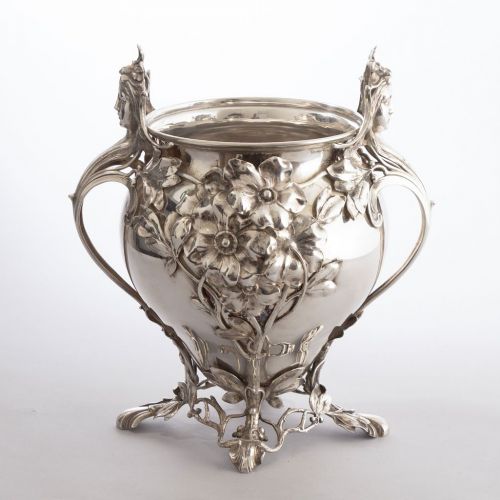


Metal Wine Bucket
A metal wine bucket keeps bottles chilled at the table while bringing weight and polish to a room.
Metal Wine Bucket
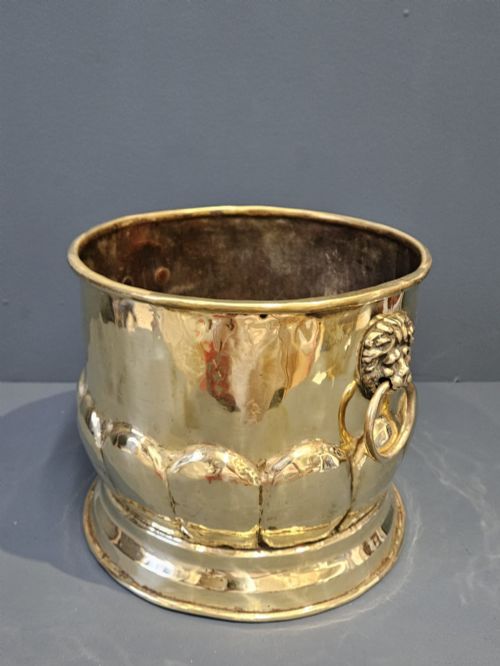
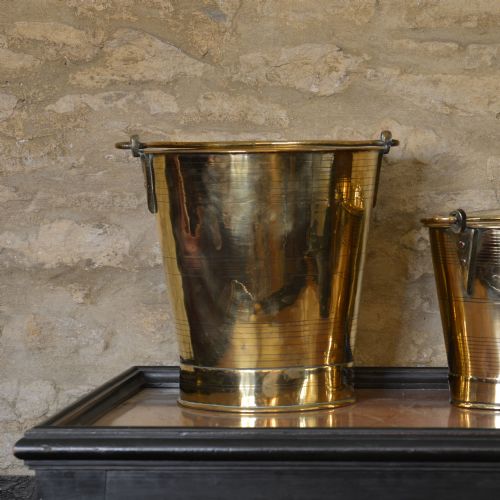
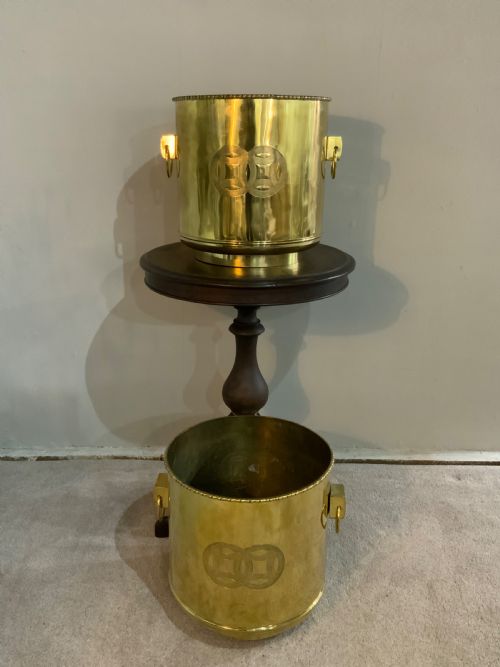
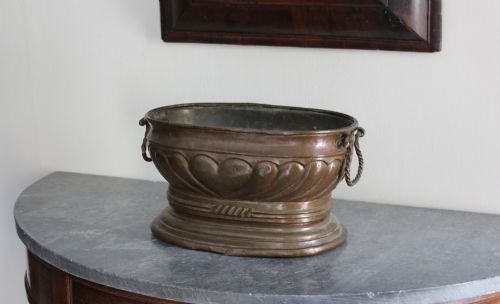
A metal wine bucket serves to hold ice and water alongside bottles during dining, though many survivors double as planters and jardiniers. The selection draws heavily on nineteenth-century examples in copper, brass and silver plate, alongside twentieth-century designs.
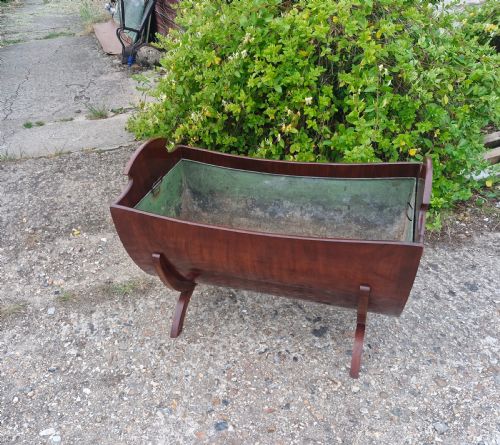
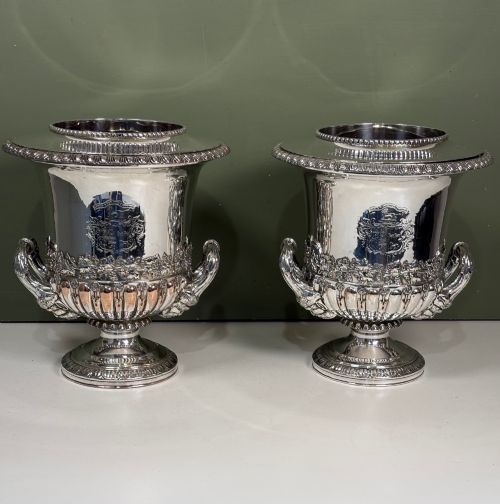
Buyers encounter forms ranging from heavy Georgian monteiths and Regency coolers to French bistro champagne bowls and Art Deco ice buckets. Utility dictates the shape, with sturdy handles and deep vessels designed for constant service.
Origins stretch across British, French, Italian and German workshops, incorporating domestic vessels like grain measures and grape hods into wine service. Each piece reflects the social habits of its period, from country house dining to Parisian restaurants.
How they were made
Metals such as copper, brass, pewter, iron and tin-ware form the primary bodies, often shaped by hand hammering or spinning on a lathe. Silver plating and Old Sheffield plate add a reflective surface over a base metal core.
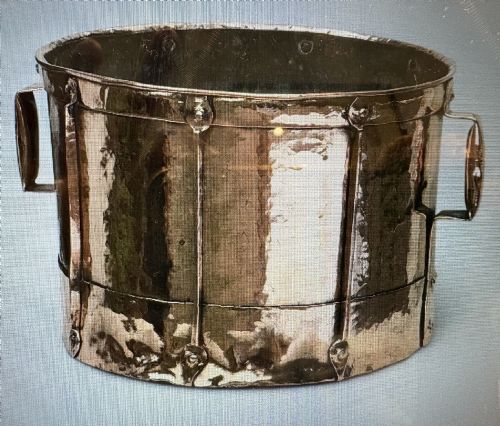
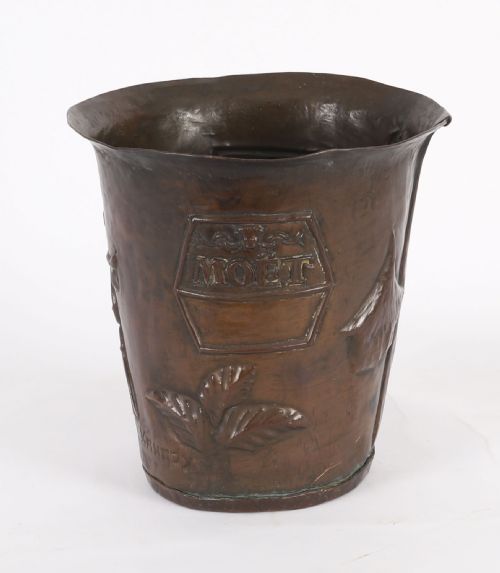
Construction techniques include cooperative wooden stave assembly bound with metal hoops, cast handles riveted to heavy walls, and soldered seams. Surface decoration relies on embossing, japanning, engraving and applied cast mounts.
Vineyard workers once carried grapes in these heavy copper hottes before the vessels found a second life chilling champagne.
What varies in quality
Wall thickness and overall heft distinguish substantial vessels from lighter domesticware, as heavy gauge metal holds temperature longer and resists dents. The crispness of chased or embossed ornament reveals the skill of the artisan who worked the sheet.
Construction details such as the seating of applied handles, the neatness of dovetail or soldered joints, and the survival of original plating indicate the standard of production. Makers who supplied high-end establishments or noble households typically employed heavier metals and more rigorous finishing.
Christofle·WMF·Elkington·Macabo·Luc Lanel
The Metal Wine Bucket Glossary
- Monteith
- A punch bowl or wine cooler featuring a scalloped or notched rim designed to hold wine glasses by their bases. This eighteenth-century form allows stemware to chill while resting in the bowl.
- Old Sheffield Plated
- A composite material made by fusing a thin sheet of silver to a thicker copper ingot before rolling them into sheets. This eighteenth and early nineteenth-century technique produces a rich surface that reveals underlying copper where wear occurs.
- Japanned
- A European imitation of Asian lacquerwork created by applying successive layers of varnish and heat-curing them on metal or wood. Tin-ware wine coolers often utilised this dark, glossy finish to prevent rust.
- Jardiniere
- An ornamental pot or stand, typically ceramic or metal, used for holding flowering plants. Many large nineteenth-century brass and copper vessels originally made for plants serve equally well as wine buckets.
- Ferrat
- A traditional French agricultural vessel, often in copper, originally used for gathering grapes or grain. These utilitarian containers frequently transition into large wine or champagne coolers.
Metal Wine Bucket: Frequently Asked Questions
How do I clean an antique metal wine bucket?
Wash the interior with warm soapy water and a soft cloth, avoiding harsh abrasive pads that scratch old surfaces. Preserve the natural patina on copper and brass by using mild polishes sparingly.
Silver plated items require gentle cleaning with dedicated silver creams to prevent wearing through the thin plating. Dry thoroughly after use to avoid water spots and tarnishing.
Can I use an antique bucket for actual ice and wine?
Most solid metal and silver plated vessels hold ice and bottles securely without issue, provided the soldered joints remain sound. Check the interior for leaks before filling.
Japanned tin-ware and older copper pieces with fragile linings benefit from a modern liner or gentle handling to protect their historic surfaces from constant moisture.
How do I distinguish nineteenth-century copper from modern reproductions?
Examine the construction marks, looking for hand-beaten hammer blows, uneven thickness, and dovetailed or hand-soldered seams rather than uniform machine rolling. Old copper exhibits a deep, varied patina built up over generations.
Weight and mounting details also offer clues, as older brass handles are typically cast and riveted rather than screwed into place with modern hardware.
What is the difference between a wine cooler and an ice bucket?
Wine coolers traditionally measure wider and deeper to accommodate bottles standing upright or tilted in water and ice. They often feature robust handles for carrying heavy loads.
Ice buckets tend to be more compact vessels designed specifically to hold ice cubes for drinks, frequently including lids and draining spoons.