
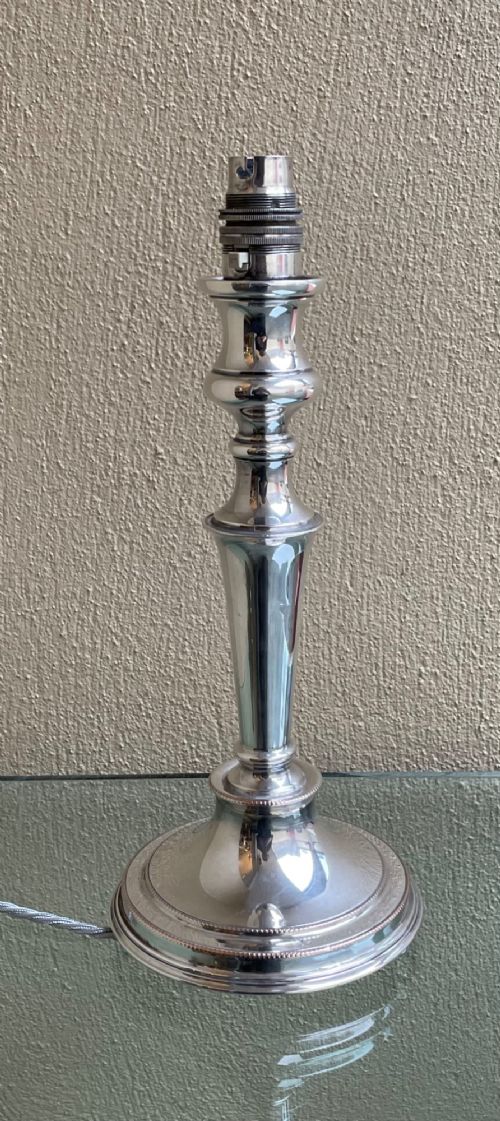
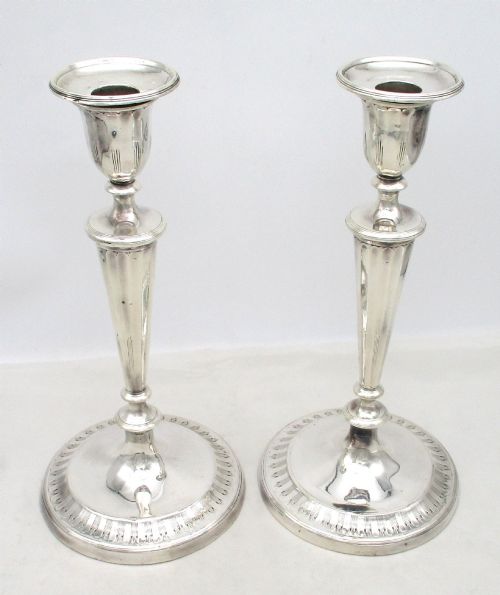
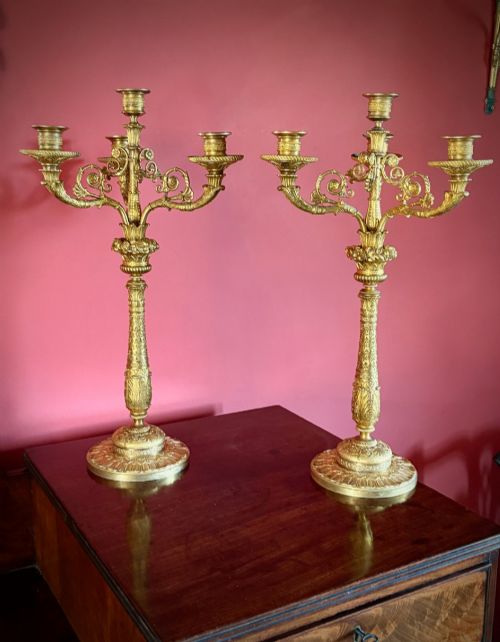
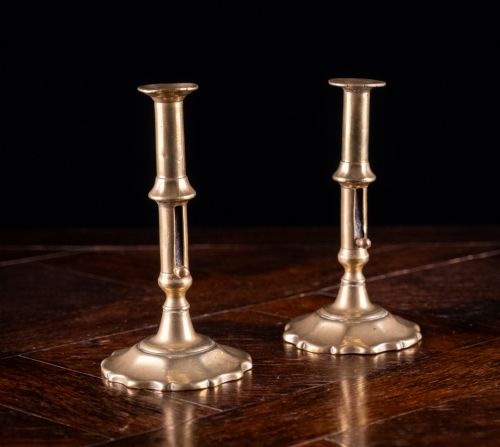

Metal Table Candlesticks
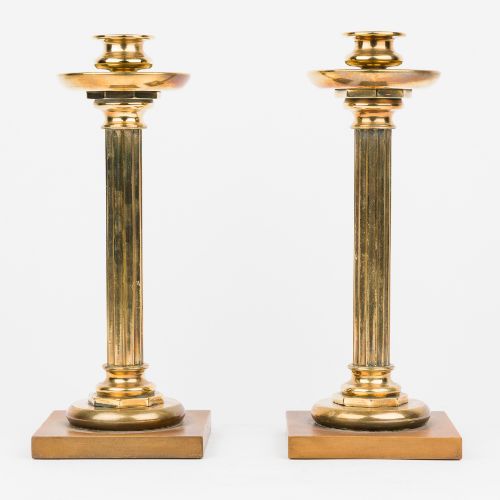
Metal table candlesticks bring light and proportion to a room, ranging from simple brass work to grand ormolu forms.
Metal Table Candlesticks
Metal table candlesticks provide sturdy support for lighting a room, appearing in forms from plain domestic items to elaborate multi-light fittings. You encounter pieces spanning several centuries, shaped by changing tastes in design and interior decoration.
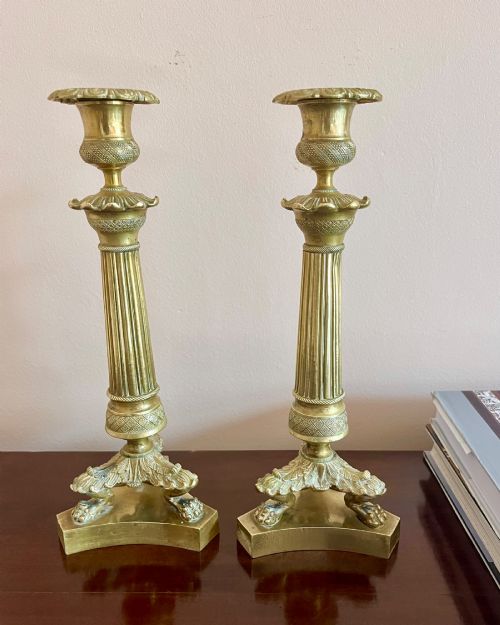
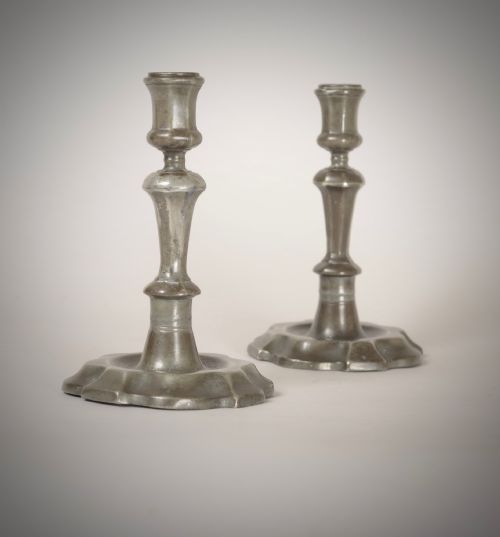
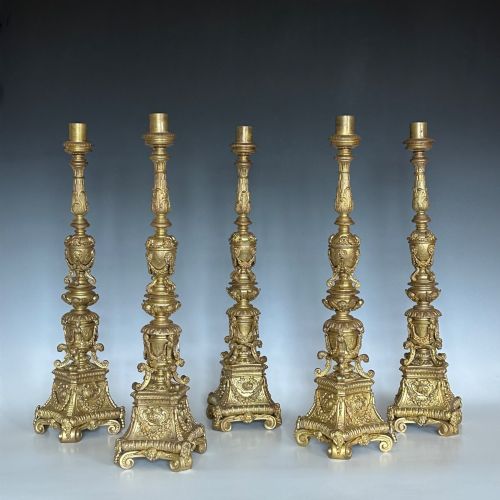
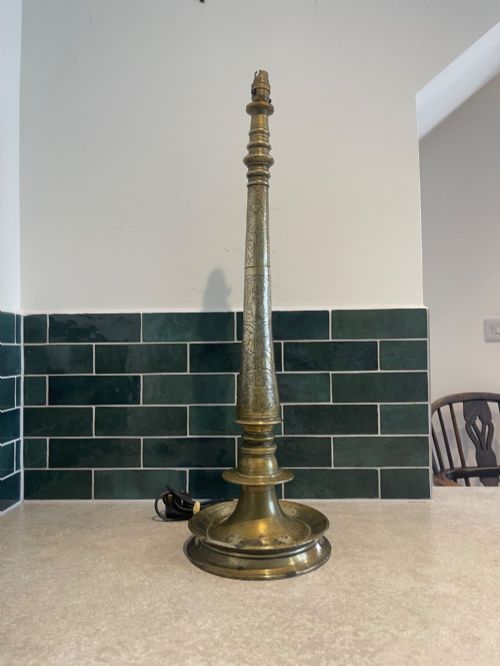
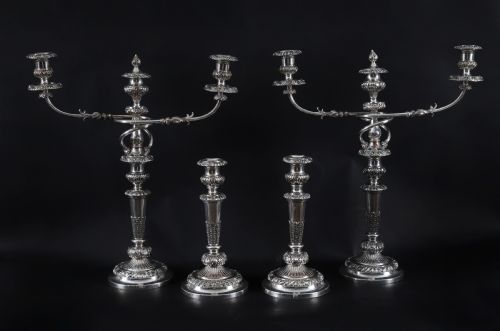
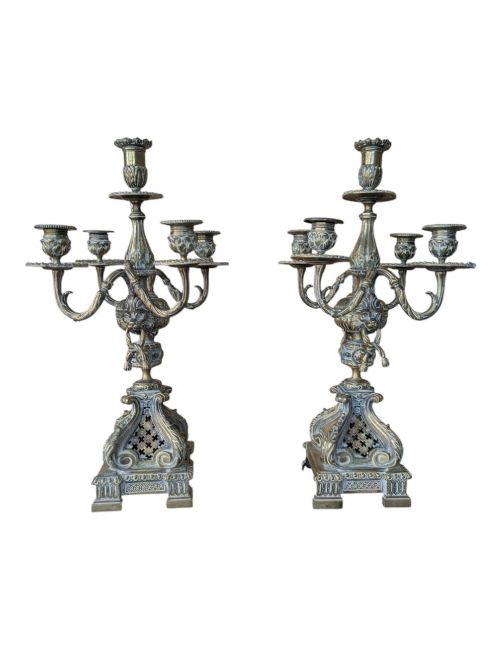
Brass examples from the eighteenth and nineteenth centuries form a large part of what you find here, alongside silver-plated, bronze, and ormolu pieces. Many survive in pairs, though single items and larger garniture sets also appear among the selections.
The objects cross multiple periods including the Georgian, Regency, Victorian, and Art Deco eras. Their origins stretch from domestic British workshops to French Empire and Italian studios.
Materials and construction
Makers utilised casting techniques for brass and bronze, often working in sections that were joined together or threaded on a central spindle. Seamed construction appears on eighteenth-century examples where sheet metal was rolled and soldered at the edges.
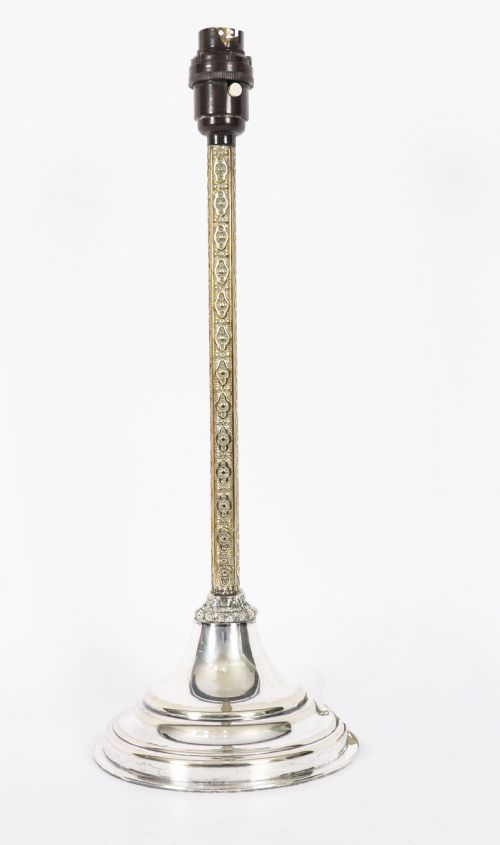
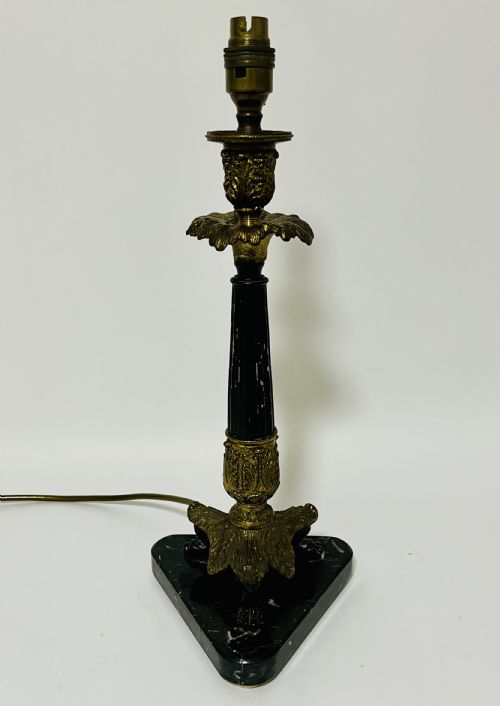
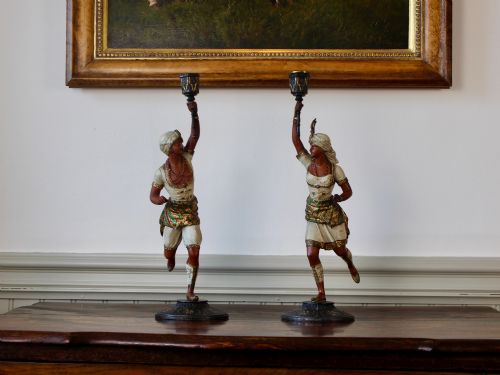
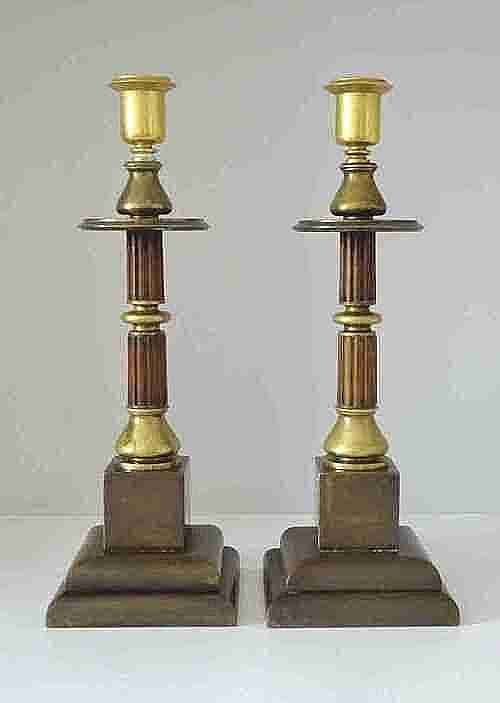
Surface finishes range from polished brass and cold painted spelter to silver plating over a base metal. Ormolu and gilt bronze pieces received layers of gold applied to a copper alloy base, creating a durable metallic lustre.
The listings span from the 18th century through to the Art Deco period of the 1920s, featuring brass, bronze, silver plate, and ormolu.
Standards of craftsmanship
The precision of the casting and the crispness of the chased detail separate standard items from finer work. Superior pieces retain sharp foliage, clean edges, and well-balanced proportions without the blurring that comes from worn moulds.
Weight and structural integrity indicate quality, as heavier solid castings or thick silver plating endure better over time. Original components and matching pairs command greater attention from collectors than later alterations.
Mappin & Webb
The Metal Table Candlesticks Glossary
- Ormolu
- A gilt bronze finish created by applying finely ground gold mercury amalgam to a bronze object. This technique produced a rich golden colour popular in French Empire and Neoclassical design.
- Pricket
- A sharp metal spike set in the centre of a drip pan to hold a candle directly. These appear frequently on ecclesiastical pieces and specific historical forms.
- Ejector
- A concealed internal mechanism in a candlestick shaft used to push out the remaining stub of a candle. It operates via a small slide on the side.
- Spelter
- An alloy of zinc and lead used as a cheaper substitute for bronze. It was frequently painted or electroplated to imitate superior metals in Victorian decorative objects.
Metal Table Candlesticks: Frequently Asked Questions
How do I date a brass candlestick?
Examine the base construction, casting seams, and wear patterns to determine the period of manufacture. Earlier pieces often show heavier casting methods and distinct tool marks from hand finishing.
Compare the stylistic motifs, such as shaped bases or columns, against known design periods like Georgian or Regency to narrow down the decade.
Can I polish antique silver plated candlesticks?
Light cleaning with a soft cloth removes dust and prevents tarnish from building up on the plated surface. Avoid aggressive metal polishes that can wear away the thin silver layer over the base metal.
Store the items in stable humidity conditions to minimise the need for frequent cleaning and preserve the remaining finish.
Were these pieces used for daily lighting?
Domestic examples provided essential illumination in homes before the widespread adoption of gas and electric lighting. Servants carried and tended them throughout the evening hours.
More ornate ormolu and gilt bronze versions served decorative functions in formal reception rooms as much as they provided light.