




Metal Relief Wall Decor
These pieces of metal relief wall decor bring depth and texture to a room, offering sculptural presence in copper, bronze and cast metal.
Metal Relief Wall Decor
Metal relief wall decor encompasses cast and hammered plaques, panels and roundels designed to hang flat against a surface. They appear across periods from the nineteenth century through the Edwardian era and into the mid twentieth century, reflecting varied stylistic impulses.
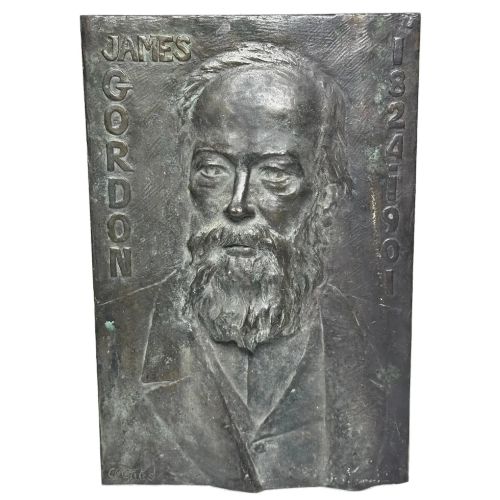
The versions most frequently met on this page include bronze and copper portrait plaques, commemorative pieces and heraldic panels. Formats range from individual roundels mounted in turned mahogany frames to larger rectangular panels and gilt tableaux.
Origins stretch from English and Scottish workshops to French Empire designs and Indo-Persian pieces. Makers utilise oak and mahogany alongside glass and metal mounts to frame and support the central relief work.
Materials and technique
Makers shaped these panels primarily from bronze, copper and cast lead bronzed compositions, often working the metal into raised relief through casting or hammering. Portraiture and heraldic designs rely on the malleability of copper and the crisp detail achievable in bronze.
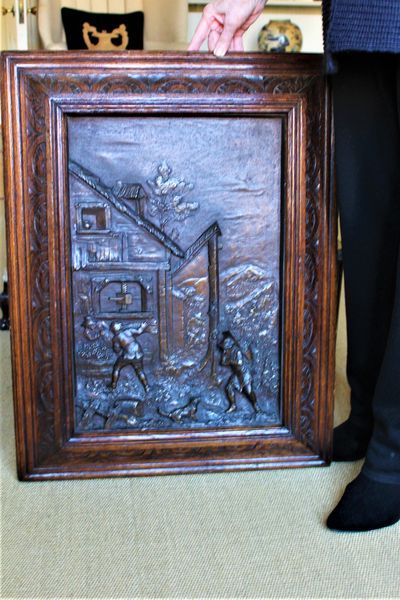
Frames play a structural role, with turned mahogany and oak surrounds housing the metalwork. Gilt finishes and patination techniques were applied to highlight the figures and decorative motifs within the tableaux.
The listings span materials from cast bronze and copper to oak, mahogany and glass.
Distinctions in quality
The integration of the frame matters considerably. Pieces set within original turned mahogany or oak surrounds demonstrate a coherence between the metal plaque and its housing that elevates the object.
The Metal Relief Wall Decor Glossary
- Relief
- Sculpture where the figures project from a flat background. High relief projects significantly, while low relief remains flatter.
- Roundel
- A circular panel or plaque used for decorative wall display. They frequently appear set inside turned wooden frames.
- Gilt
- A thin layer of gold applied to the surface of a metal or wood object. It provides a luminous finish to tableaux and highlights specific details.
- Heraldic
- Pertaining to armorial bearings and family crests. Heraldic plaques record lineage and official affiliations.
- Patina
- The surface coloration and sheen acquired by metal over time through oxidation and handling. A stable patina indicates age and use.
Metal Relief Wall Decor: Frequently Asked Questions
How do I hang heavy bronze wall plaques safely?
Heavy bronze and cast metal plaques require secure fixings anchored directly into wall studs or masonry using appropriate wall plugs and screws. The weight demands sturdy picture wire or direct bracket mounting rather than standard picture hooks.
Ensure the wooden frame or integrated hanging loops on the back of the plaque are structurally sound before committing the piece to the wall.
What is the best way to clean antique copper and bronze?
Antique copper and bronze generally require nothing more than gentle dusting with a soft, dry cloth. Removing the natural patina through aggressive polishing diminishes the historical character and visual depth of the metal.
Consult a conservator if active corrosion or grime threatens the stability of the metal surface.
How can I tell a Victorian plaque from an Edwardian one?
Victorian plaques often lean towards Gothic Revival, classical portraiture or ornate commemorative subjects with heavy ornamentation. Edwardian pieces frequently introduce softer lines, organic motifs and the characteristic styling associated with Art Nouveau.
Examining the securing hardware, framing timber and any signatures or inscriptions helps narrow down the production period.
Were these plaques always framed in wood?
Many metal relief plaques were cast as standalone panels intended to be mounted directly to walls or set into architectural joinery. Others were paired with turned mahogany or oak frames from the outset to enhance their presence as independent artworks.
Framing styles often reflect the domestic fashions of the specific decade in which the piece was produced.