


Metal Dog Statue
These metal dog statue pieces capture hounds, terriers and temple lions in bronze, spelter and cast iron across several centuries.
Metal Dog Statue
A metal dog statue spans domestic pets and mythical beasts, rendered in bronze, cast iron and spelter from the eighteenth to the twentieth century. These figures take the form of table lamps, bookends, fire dogs and garden statues, reflecting varied domestic and decorative uses over time.
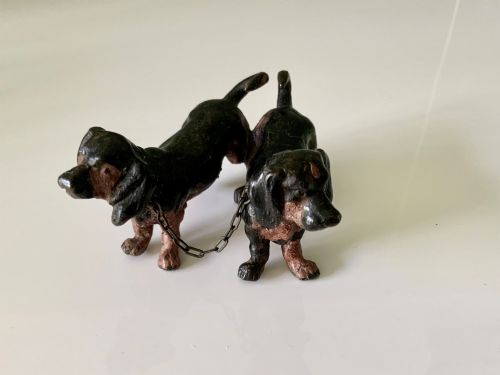
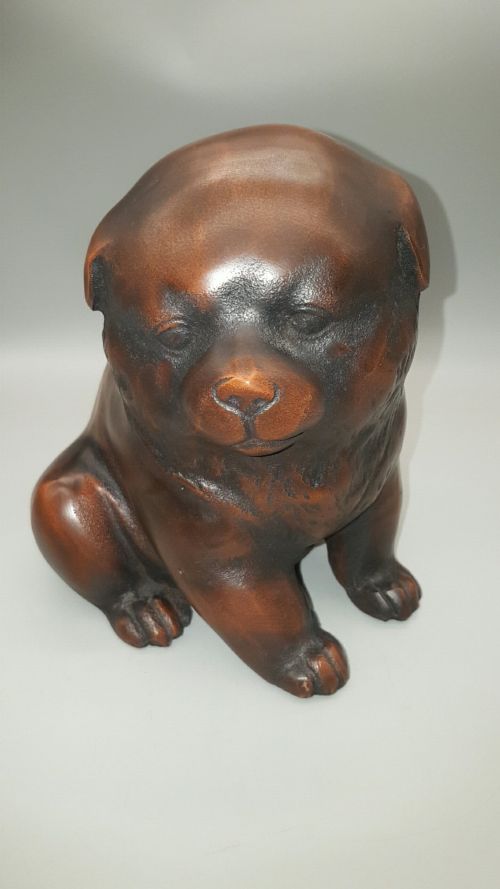
The domestic breeds range from dachshunds and poodles to spaniels, terriers and bulldogs, often modelled in characteristic poses like begging, racing or resting. Alongside European sporting dogs appear Japanese bronze okimono, Chinese foo dogs and Tibetan temple lions cast in gilt bronze.
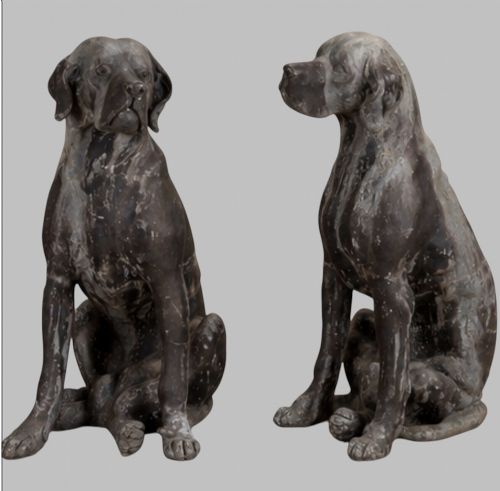
Art Deco and Animalier styles sit alongside Meiji period Japanese works and French foundry productions. Buyers meet everything from small cabinet figures to life-sized cast lead hounds and large temple guardians.
How they were made
Foundries utilised traditional casting techniques, pouring molten bronze, brass or cast iron into moulds before finishing the surfaces by hand. Spelter served as a cheaper alternative to bronze, often receiving cold painted details or patinated metal finishes.
Sculptors mounted figures onto marble plinths or combined them with brass in table lamps and bookends. Cold painting applied polychrome pigments onto bronze or spelter surfaces, creating vibrant colours on small figures and animalier models.
A nodding dog in spelter offers a cheerful counterpoint to stern bronze temple lions.
What varies in quality
The distinction lies in the crispness of the chase work and the fidelity of the cast to the original model. Sculptures cast by established foundries or bearing signatures show superior anatomical precision and surface texture compared to generic commercial productions.
Material choice dictates weight and longevity, with solid bronze and lead commanding greater substance than spelter or thin cast iron. The preservation of cold painted colour and the integration of marble bases also influence the character of the piece.
Tsunemitsu·Shosai·Unno Shomin·Eurotrope Bouret·P.de Soete·J. Moigniez·H. Bal·Louis Lejeune·Franze Bergman·AL Barye·Barbedienne·Henri Jaquesmart
The Metal Dog Statue Glossary
- Animalier
- A nineteenth-century artistic movement dedicated to the realistic depiction of animals. Sculptors in this tradition focused on the exact anatomy and movement of dogs and wild beasts.
- Cold painted
- A technique where pigment is applied to metal without firing, common on Austrian bronzes. This finish requires careful preservation to avoid flaking over time.
- Okimono
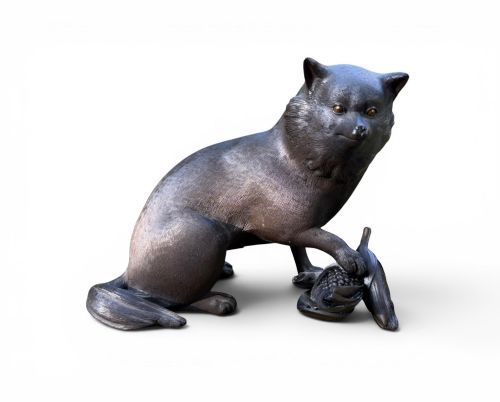
- A Japanese decorative object intended for display, often carved or cast in bronze. These figures capture subjects like the tanuki with fine sculptural detail.
- Spelter
- A zinc alloy utilised as a substitute for bronze in decorative figures and bookends. It is lighter than bronze and typically bears a patinated or painted surface.
Metal Dog Statue: Frequently Asked Questions
How do I identify cast iron from bronze?
Cast iron is heavier, magnetic and prone to surface oxidation or rust if unprotected. Bronze has a warmer touch, non-magnetic properties and develops a stable green or brown patina over time.
Examining the underside or hidden areas often reveals the base metal beneath any applied paint or lacquer finish.
Where were cold painted bronzes made?
Vienna became the main centre for cold painted bronze production during the late nineteenth and early twentieth centuries. Foundries there specialised in small animal figures with brightly coloured enamel finishes.
These pieces required meticulous hand painting after the initial casting and cleaning processes.
What is an Animalier sculpture?
Animalier sculptures focus primarily on animals in naturalistic or dramatic poses, popularised in nineteenth-century France. Artists studied live subjects in menageries to capture accurate musculature and movement.
Foundries like Barbedienne translated these models into high-quality bronze editions.
How should I clean a patinated metal dog?
Dusting with a soft, dry brush removes surface particles without disturbing the underlying patina. Avoid chemical polishes or water, which can strip cold painted pigments or damage historic finishes.
Applying microcrystalline wax helps protect exposed metal surfaces from moisture and handling wear.