




Metal Bound Coffer
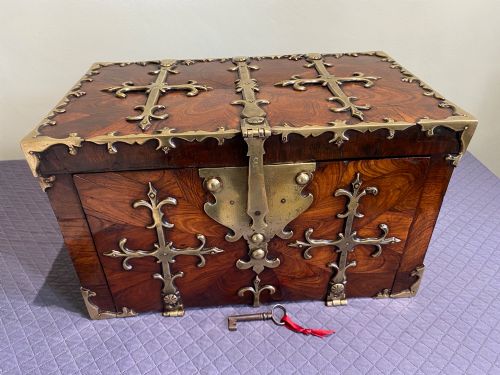
A metal bound coffer is a heavy-duty storage piece secured with metal straps, built to protect valuables during travel or secure items at home.
Metal Bound Coffer
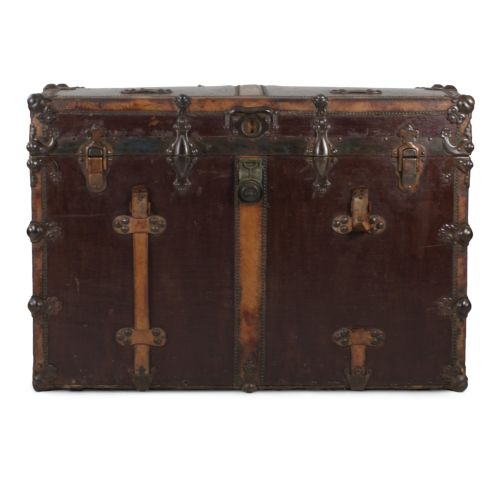
When you search for a metal bound coffer, you are looking at robust storage boxes designed for security and transport across centuries. These pieces range from heavy oak silver chests and pine travelling trunks to specialised strongboxes and dowry chests.
You are most likely to meet nineteenth-century examples on this page, particularly Victorian oak silver chests and pine trunks fitted with iron or brass bands. Earlier pieces from the sixteenth and seventeenth centuries, such as Nuremberg caskets and Armada chests, also appear alongside regional examples from India and Sweden.
How they were made
Construction relies on sturdy timber carcases, principally oak and pine, alongside denser woods like teak and kingwood. These wooden bodies are reinforced with iron, steel, or brass bands and straps, which are fastened to provide structural rigidity and security.
Surfaces are treated with various finishes, including leather and hide coverings, painted decoration, or polished veneers. Interiors often feature specialised fittings such as zinc linings, compartments, and complex locking mechanisms.
A travelling trunk on this page comes complete with a bright red interior, ready to surprise anyone lifting the lid.
What varies in quality
Quality reveals itself in the integrity of the materials and the sophistication of the hardware. Pieces utilising dense hardwoods and substantial iron or brass mountings demonstrate a higher grade of manufacture than basic pine utility boxes.
The refinement of the mechanism and internal arrangement separates standard luggage from bespoke commissions. Elaborate locks, original fitted interiors, and detailed metalwork elevate a practical container into a work of cabinet-making skill.
Samuel Pratt·Seabrook of St Pauls
The Metal Bound Coffer Glossary
- Armada chest
- A heavy iron strongbox disguised as a wooden chest, produced in Germany and Flanders during the sixteenth and seventeenth centuries. These containers relied on complex internal locking mechanisms operated by a single key.
- Silver chest
- A heavy-duty wooden box reinforced with metal bands, designed specifically to store and transport family silver. They frequently feature internal baize-lined trays and robust carrying handles.
- Coffre forte
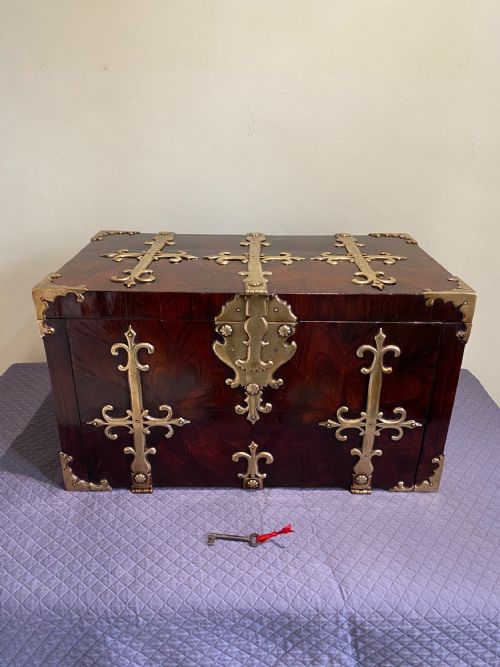
- A French term for a strongbox or secure chest, often veneered in fine timbers such as kingwood. They represent domestic security combined with high-status cabinet work.
- Damchiya
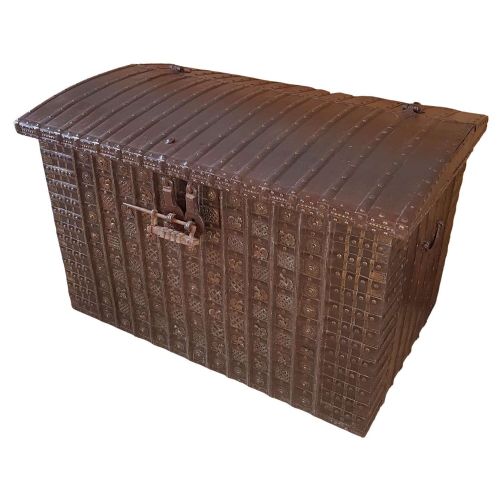
- A traditional Indian dowry chest characterised by low proportions and heavy iron banding. These regional pieces were built to store household valuables and textiles.
- Nuremberg casket
- A small, highly secure metal box manufactured in Germany during the sixteenth century. They use intricate strapwork and concealed locking plates beneath the lid.
Metal Bound Coffer: Frequently Asked Questions
What is a metal bound coffer used for?
These pieces served primarily for the secure storage and transport of valuables, documents, and silver. Households utilised them both for long-distance travel and domestic safekeeping.
Today, they function effectively as coffee tables, blanket boxes, and statement storage furniture in period or contemporary interiors.
How do I date a metal bound coffer?
Dating relies on observing the timber species, construction methods, and the style of the metal mountings. Hand-beaten iron straps and dovetail joints indicate earlier periods, while machine-rolled steel and zinc linings point to the nineteenth century.
Hardware such as locks and handles provides additional clues, as manufacturing techniques shifted from individual forge work to industrial production.
Are these trunks suitable for travel today?
Most antique pieces were built for historical modes of transport like carriages, ships, and trains rather than modern baggage handling. Their heavy timber carcases and iron straps make them exceptionally sturdy, but modern transit can damage fragile finishes and antique leather.
They find their best application remaining stationary in the home, where their structural strength supports everyday use as furniture.
What is the difference between a coffer and a silver chest?
A coffer generally refers to an older, heavily framed storage chest often associated with security and valuables from the seventeenth century and earlier. A silver chest is a more specific nineteenth-century form designed with internal trays to hold flatware and holloware.
Silver chests almost exclusively feature robust oak or pine bodies with heavy iron bands and side carrying handles for domestic service.