
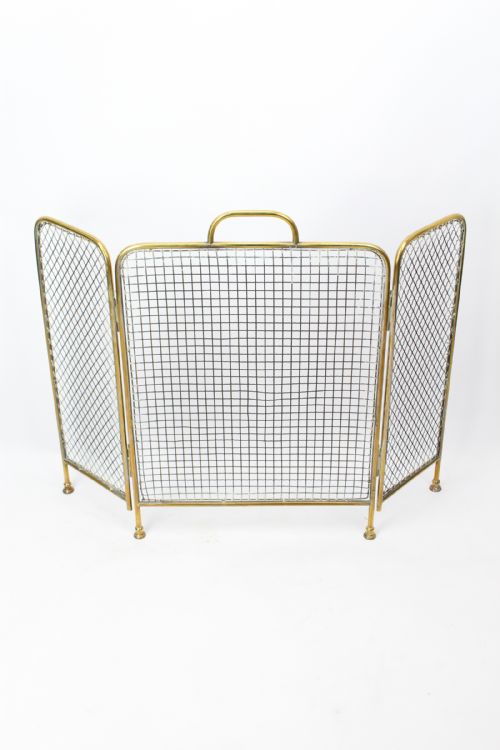


Mesh Fireplace Guard
A mesh fireplace guard keeps stray embers in the hearth while showing off period brass and ironwork.
Mesh Fireplace Guard
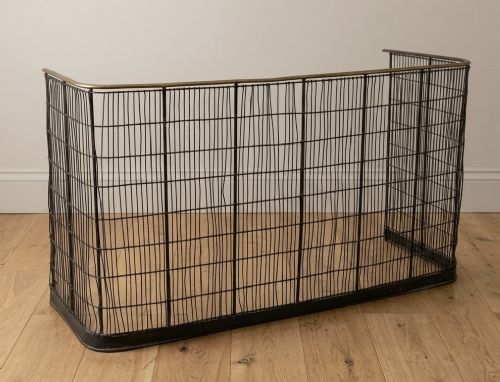
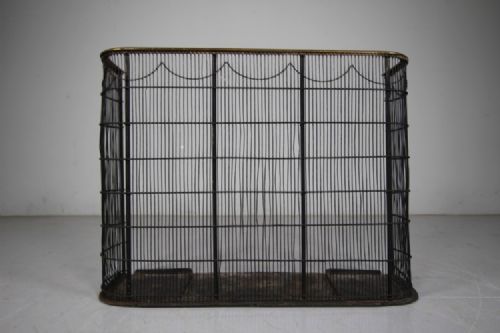
A mesh fireplace guard serves as both a protective spark barrier and a decorative domestic accessory in the nineteenth and early twentieth centuries. These pieces appear in forms ranging from simple folding panels to nursery fenders designed to enclose an entire hearth.
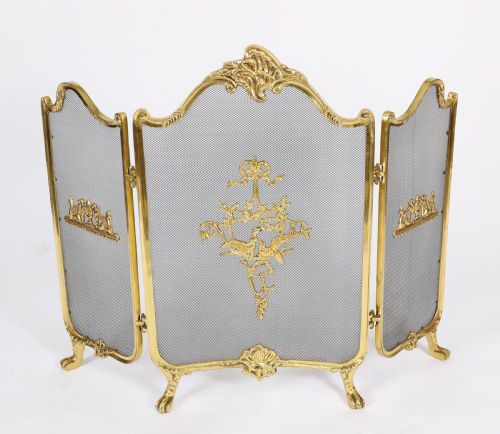
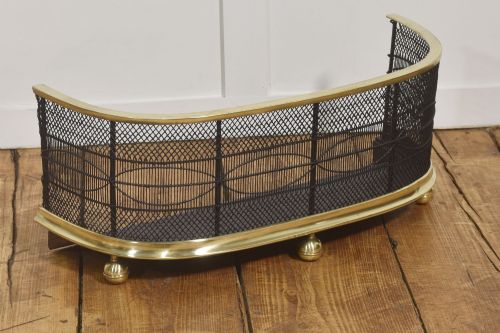
The selections available on this page run from the Victorian era into the Edwardian period, with heavy representation of French styling. Buyers encounter folding spark guards alongside sturdy wire mesh nursery guards built for daily household safety.
Materials and construction
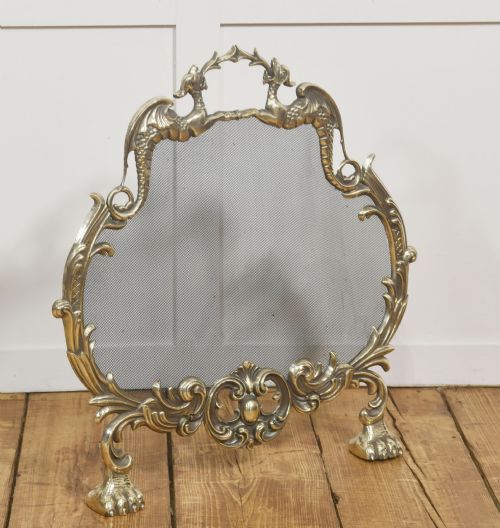
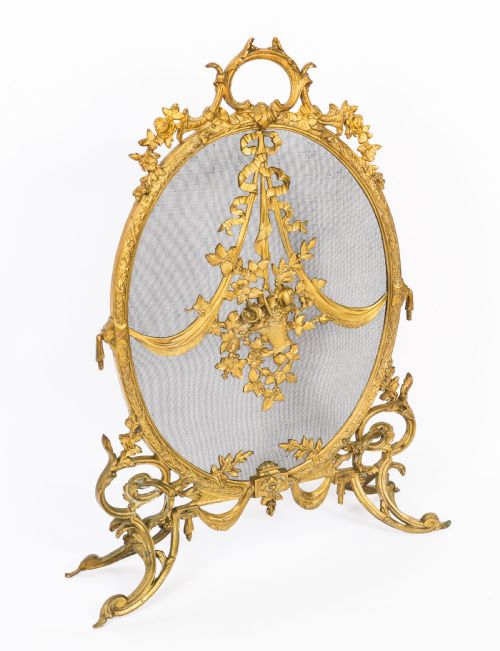
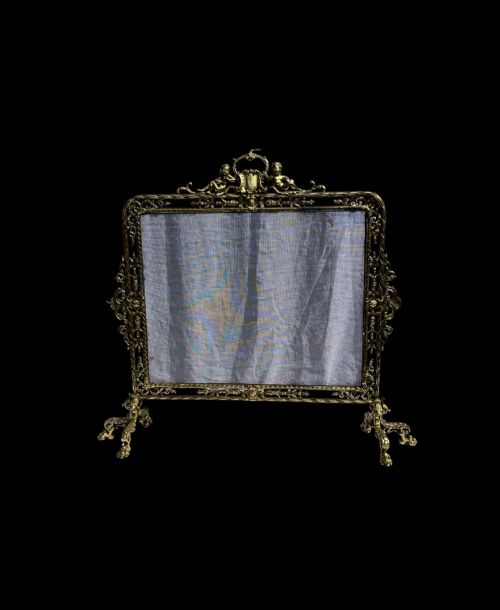
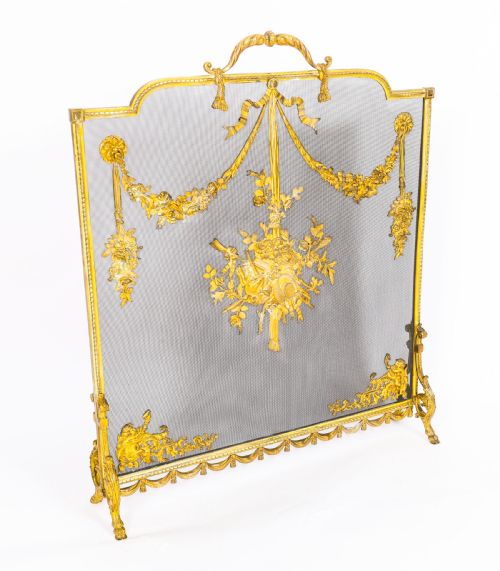
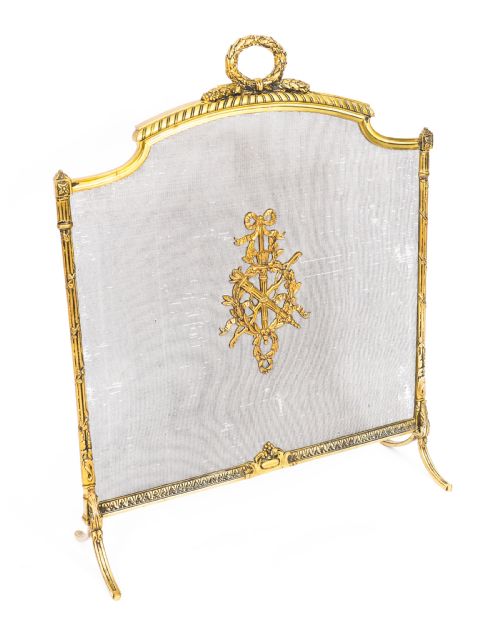
Construction relies heavily on brass frames paired with fine wire mesh or ironwork. Artisans formed intricate rococo motifs and structural supports using cast and gilt bronze alongside wrought iron and steel.
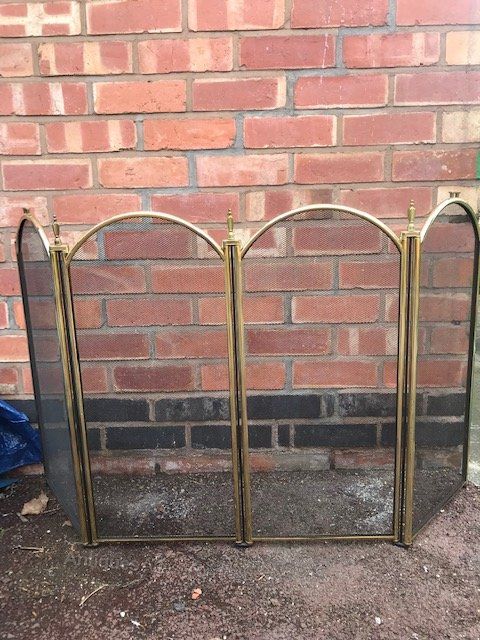
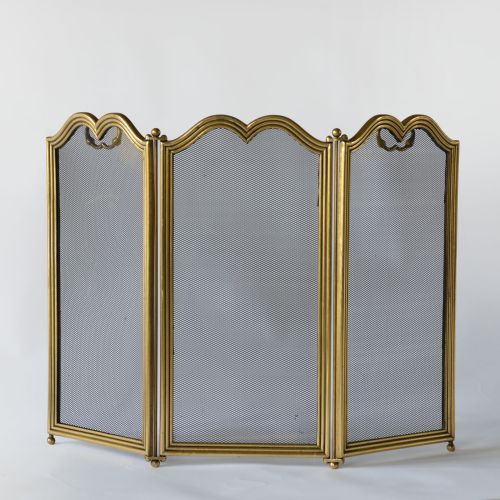
Folding sections utilise hinges to create tripartite or multi-fold configurations that adjust to different hearth widths. Frames often feature embossed details or decorative brass rims surrounding the central mesh panels.
Listings span the nineteenth century through the nineteen-twenties, featuring brass, iron, and gilt bronze materials.
Quality variations
Quality rests on the weight of the metal frame and the tightness of the woven wire mesh. Finer examples display crisp casting work in the rococo or empire revival styles rather than flat, stamped sheet metal.
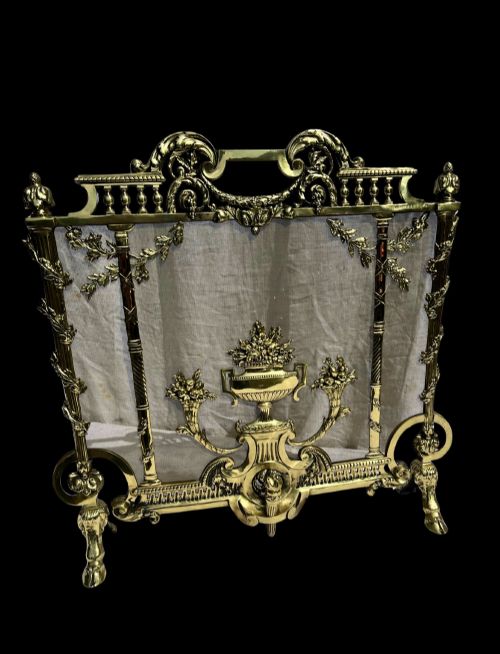
The integrity of the folding hinges and the crispness of applied crests, dolphins, or torches distinguish superior decorative screens from utilitarian guards.
The Mesh Fireplace Guard Glossary
- Nursery fender
- A tall wire mesh guard designed to surround the hearth completely and protect children from open flames. These pieces often include a sturdy top rail.
- Spark guard
- A secondary screen placed directly before the fire to catch flying embers. They frequently feature folding side panels for easy adjustment.
- Rococo revival
- A nineteenth-century design style marked by asymmetric scrolls, floral motifs, and shell ornaments. This aesthetic heavily influences many brass frames.
- Gilt bronze
- Metal cast with a gold-colored finish, commonly used for decorative mounts on French screens. It provides a bright surface reflection near the hearth.
Mesh Fireplace Guard: Frequently Asked Questions
How do I measure for a mesh fireplace guard?
Measure the width and depth of your hearth opening to ensure the guard sits securely against the surround. Folding sections offer flexibility for hearths with irregular dimensions.
Take into account whether you need a flat screen or a bowed nursery fender that projects into the room.
Can I use these guards with an active fire?
These historical pieces were originally built to contain sparks and embers from open coal or wood fires. The wire mesh and metal frames handle high temperatures effectively.
Check the stability of the folding hinges and frame before placing the guard in front of an active hearth.
How do I clean a brass fire screen?
Dust the wire mesh gently with a soft brush and wipe brass frames with a dry cloth. Avoid harsh chemical polishes that strip away historical patina.
Preserving the aged surface maintains the character developed over the nineteenth and twentieth centuries.
What is the difference between a screen and a nursery fender?
A fire screen stands upright on feet to block heat and sparks from a specific angle. A nursery fender forms a protective enclosure around the entire hearth area.
Fenders stand taller and feature robust frames designed to prevent direct contact with the fire source.