
Mens Silver Watch Chain
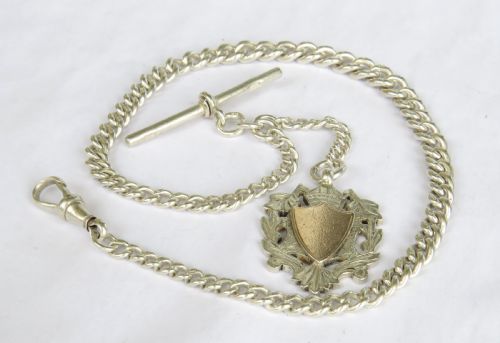
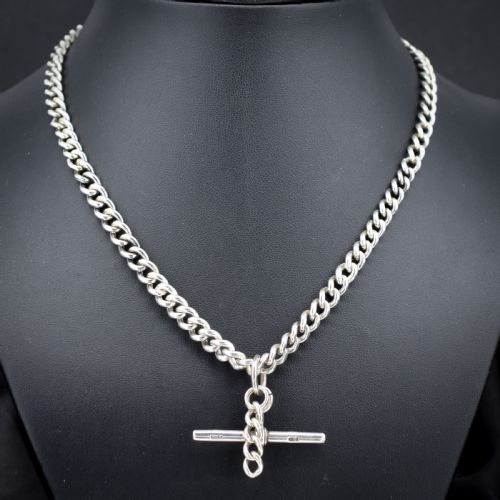
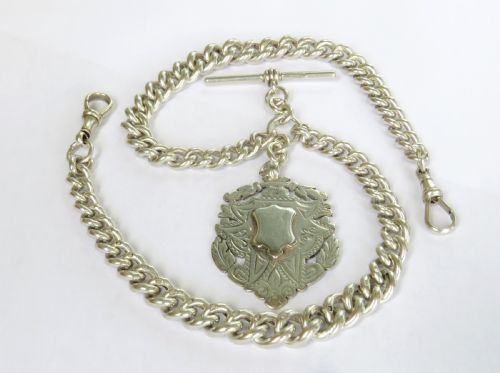
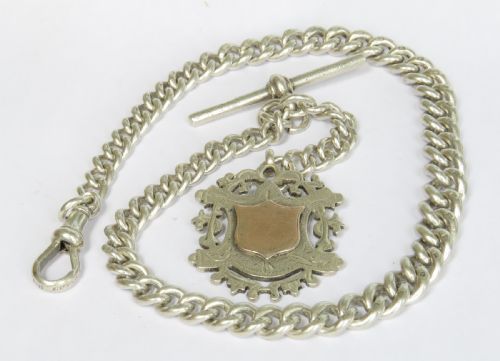
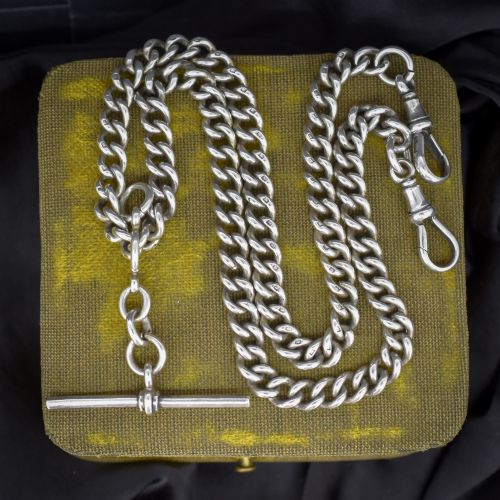
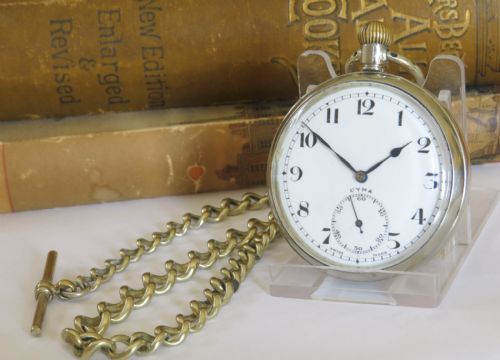
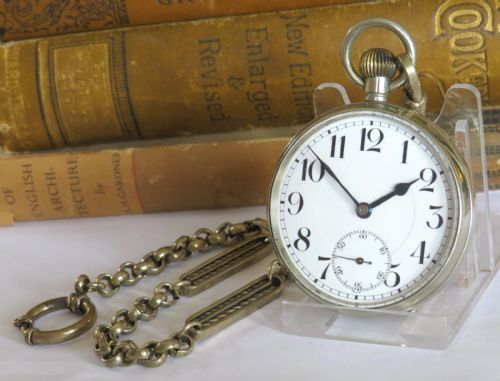
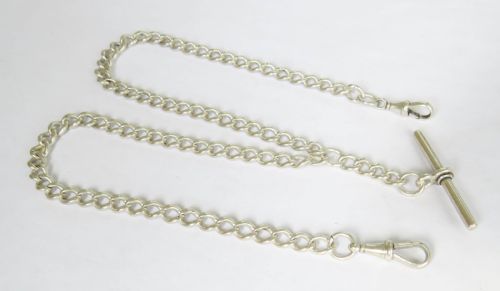
A mens silver watch chain is a heavy metal link designed to secure a pocket watch, commonly found here paired with fobs, T-bars, and pendants.
Mens Silver Watch Chain
When you search for a mens silver watch chain, you are looking at substantial functional jewellery dating from the Victorian era through the 1930s. The items recorded here span the late nineteenth century, the Edwardian period, and the Art Deco years of the 1920s and 1930s.
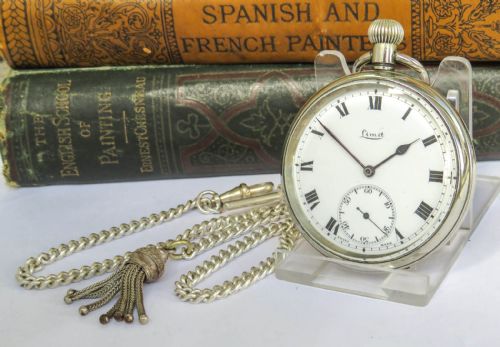
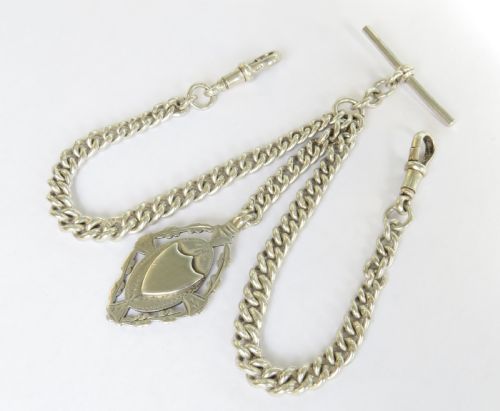
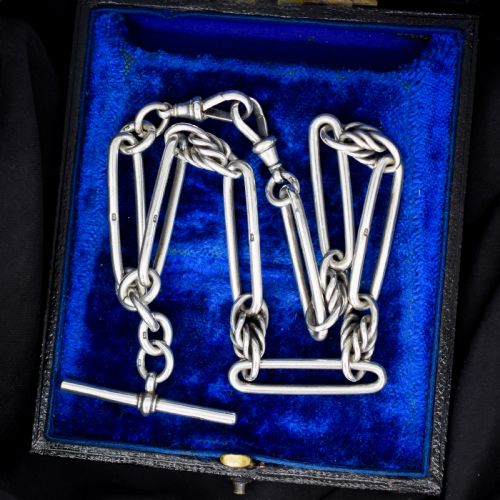
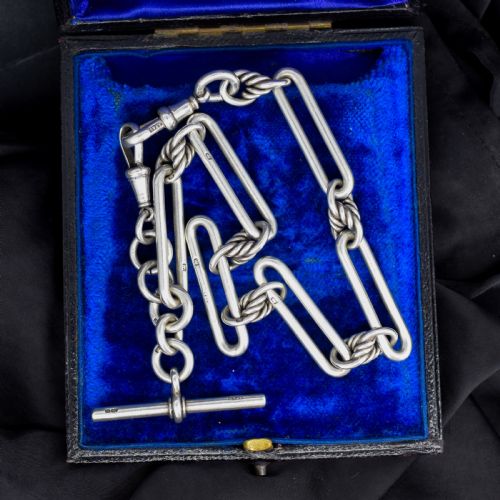
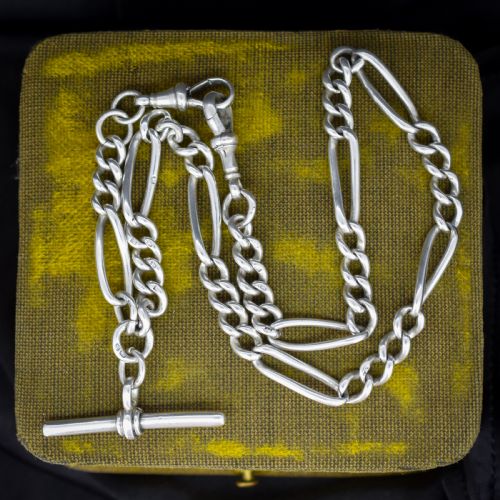
You are most likely to meet the albert chain or double albert form on this page, often equipped with dog clips, swivel clasps, and a central T-bar. These pieces frequently incorporate curb links, trombone links, or Figaro links, and many are paired directly with pocket watches or commemorative fobs.
The materials recorded across these listings are predominantly sterling silver and silver, occasionally supplemented by enamel, glass, nickel, brass, steel, and other metals. Many of these chains now find a second life worn as necklaces.
How they were made
The pieces listed here are constructed primarily from sterling silver and solid silver, shaped into distinct link patterns such as curb, trombone, and Figaro configurations. Metal links were hand-assembled or machine-formed, then fitted with secure dog clips, swivel connectors, and rigid T-bars designed to anchor through a waistcoat buttonhole.
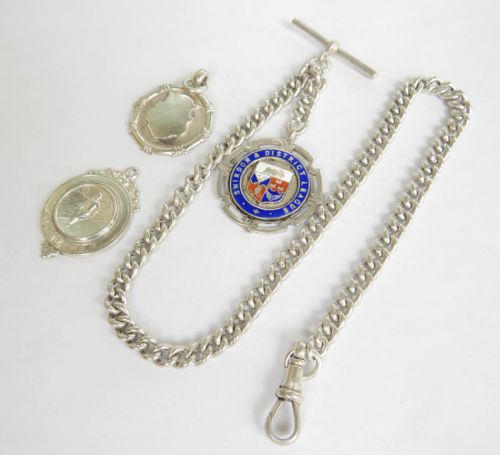
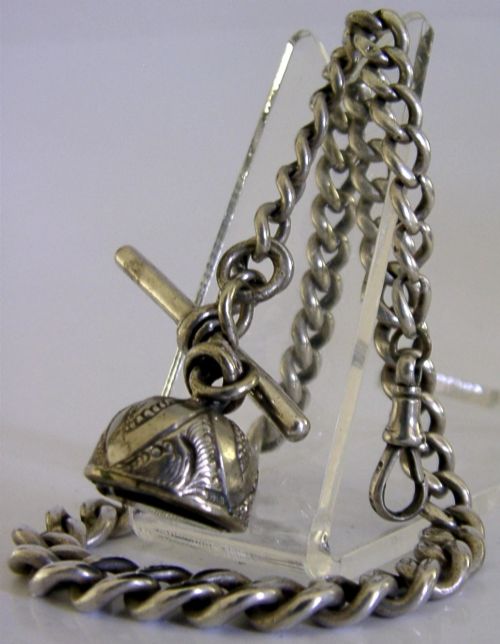
Many examples incorporate subsidiary elements such as enamel shields, seal fobs, bloodstone swivel pieces, keys, and compasses attached via jump rings. These additions reflect the manufacturing standards of periods spanning the Victorian era, the First World War, and the Art Deco movement.
Mens Silver Watch Chain Retail Price Guide 2026
Typical asking prices for mens silver watch chain among the pieces listed under this phrase on Sellingantiques today, from the lower quarter to the upper quarter. They describe what is for sale here now, not the wider market.
Several chains arrive accompanied by unexpected functional companions, including working compasses, miniature keys, and Irish football fobs.
What varies in quality
Quality in a mens silver watch chain is dictated by the weight of the silver, the structural integrity of the individual links, and the original crispness of hallmarks. Heavier examples with substantial gram weights and dense link construction occupy the upper tier of the range.
The presence of matching original components, such as fully marked T-bars, functional dog clips, and decorative fobs including bloodstone or enamel, elevates a piece. Maker marks and clear date letters further distinguish exceptional specimens from standard utility chains.
The Mens Silver Watch Chain Glossary
- T-bar
- A short transverse bar attached to the centre of a watch chain. This bar was passed through a buttonhole on a waistcoat to anchor the chain securely.
- Dog clip
- A spring-loaded snap hook attached to the end of a watch chain. It provides a secure fastening to pocket watches or pendant fobs.
- Fob
- A small ornament or medallion attached to a watch chain. These often include seals, football medals, or stone-set swivels.
- Curb link
- A type of chain link formed of interlocking oval links that lie flat. This pattern provides both flexibility and high tensile strength for daily wear.
Mens Silver Watch Chain: Frequently Asked Questions
How do I wear a mens silver watch chain today?
Many people wear these chains as necklaces by fastening the dog clip directly to a link or by connecting both ends. The substantial weight of curb and trombone links suits contemporary neckwear styling.
Alternatively, you can thread the T-bar through a buttonhole and suspend a pocket watch from the clip in traditional fashion.
Are these chains made of solid silver?
The listings here record sterling silver and silver as the primary materials. Many items feature clear hallmarks indicating solid silver standard.
Some variations incorporate base metals like brass, steel, or nickel, particularly in components or associated items like compasses and certain fobs.
How do I date a mens silver watch chain?
Dating relies on hallmarks stamped onto the links, T-bars, or dog clips, which indicate specific assay offices and years of manufacture. Stylistic markers such as Edwardian proportions or Art Deco geometric fob designs also help assign pieces to periods like the 1910s or 1930s.
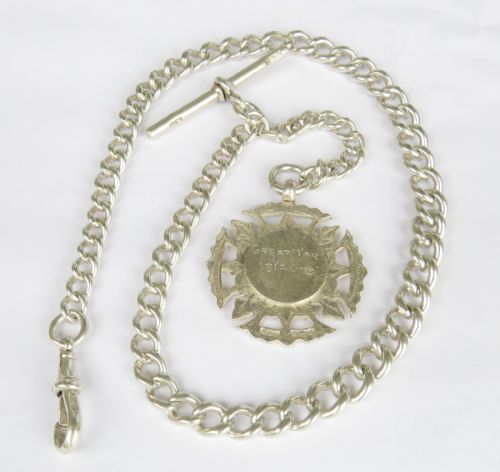
Inscribed dates on attached fobs, such as football medals or commemorative shields, provide a precise year for the piece's history.