
Mens Silver Pocket Watch
A mens silver pocket watch is a classic mechanical timepiece offering tactile daily utility, spanning Victorian craftsmanship to Art Deco design.
Mens Silver Pocket Watch
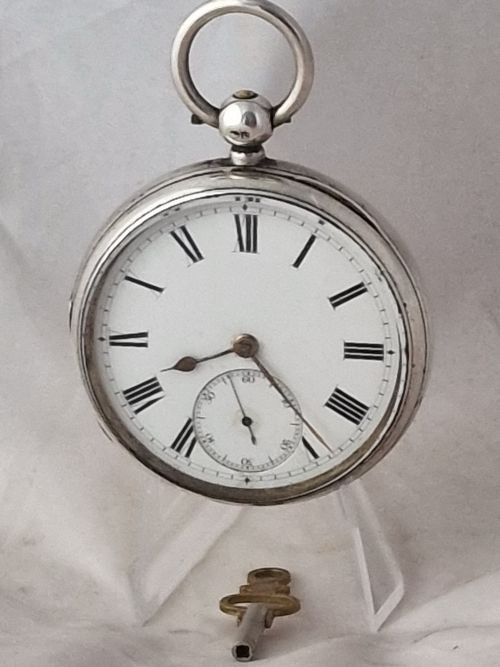
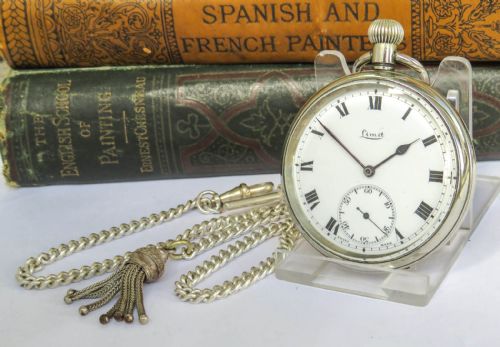
When you search for a mens silver pocket watch, you encounter portable timepieces and accompanying silver chains originating from the nineteenth and early twentieth centuries. The selection encompasses Victorian specimens, Edwardian examples, and 1930s designs.
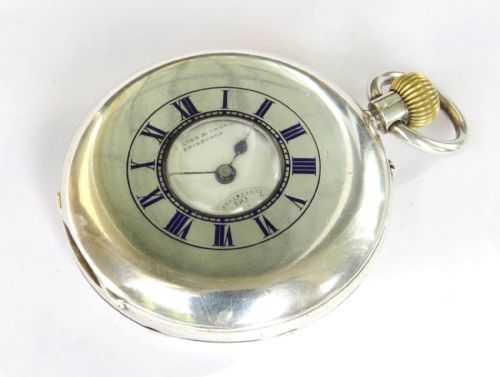
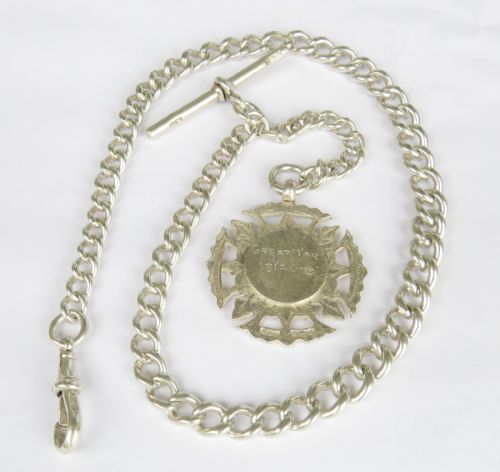
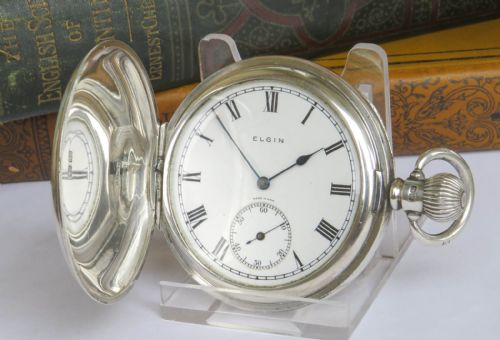
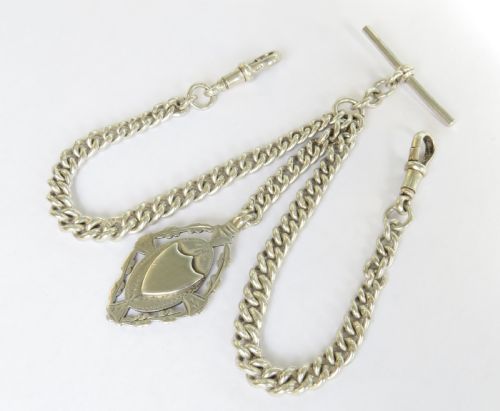
Most items you meet on this page take the form of hunter or half hunter pocket watches, alongside watch chains and fobs. These objects combine timekeeping utility with period metalwork.
How they were made
The cases and associated chains utilise silver and sterling silver, supplemented by internal brass, steel, and nickel components. Dials integrate glass lenses and enamel chapter rings for legibility.
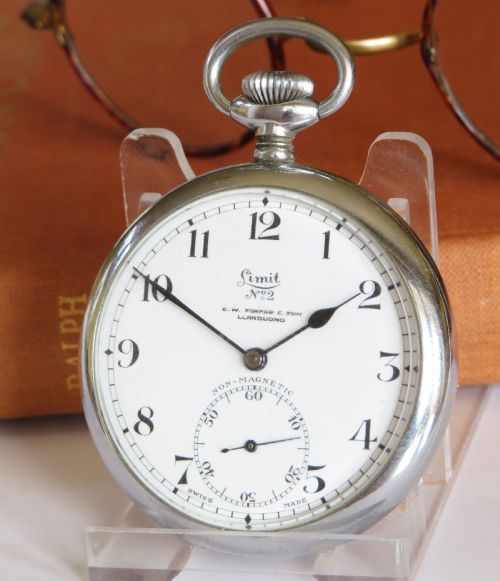
Watchmakers combined precision mechanical movements with stamped or forged metal links for albert chains. Enamel work provides contrasting dial numerals and decorative markers.
Several pieces preserve historical civilian bravery awards and Oddfellows society mementos.
What varies in quality
The standard of a mens silver pocket watch depends on the refinement of its movement and the crispness of the case engraving. Maker signatures from established watchmakers distinguish higher grades from unmarked alternatives.
Chain quality relies on the weight of the sterling silver links, the durability of dog clips, and the presence of matching silver fobs or seals.
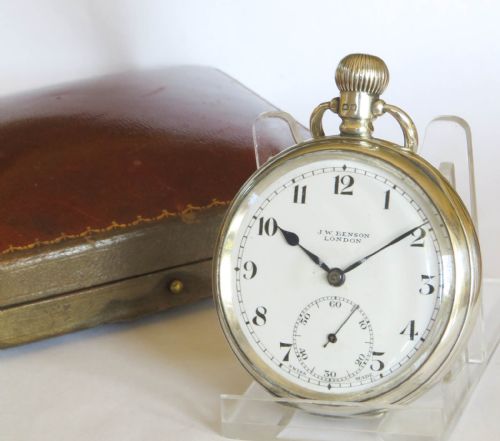
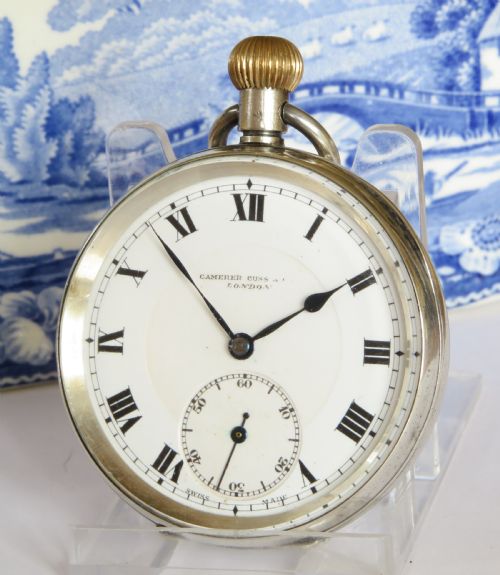
Hamilton and Inches·Hinds London·J W Benson·Camerer Cuss·Elgin·Tavannes·Longines·Omega·Cyma
The Mens Silver Pocket Watch Glossary
- Hunter pocket watch
- A timepiece featuring a spring-loaded metal cover that protects the glass dial from damage. Users press a crown button to release the lid.
- Half hunter pocket watch
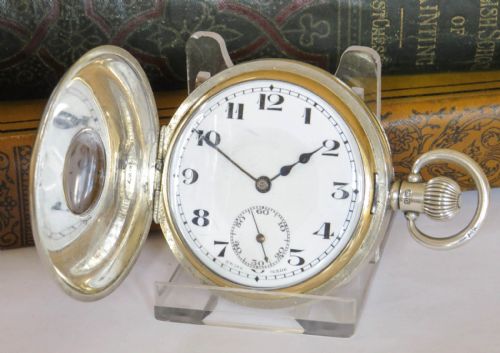
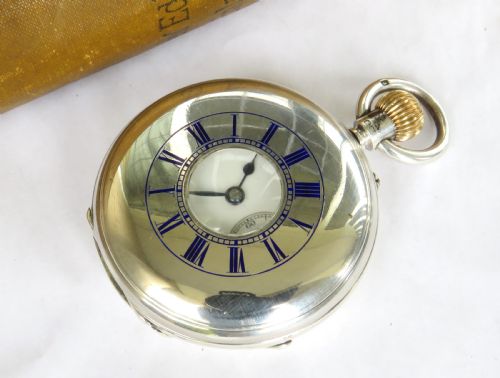
- A watch case fitted with a small glass aperture in the outer lid, allowing the user to view the hands without opening the cover.
- Albert chain
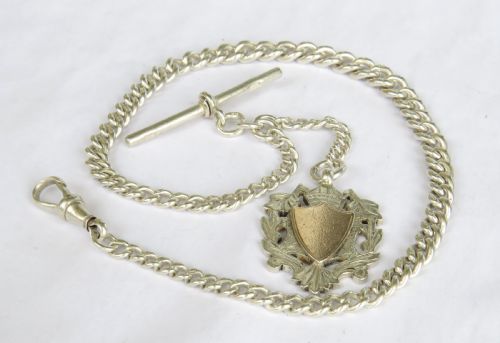
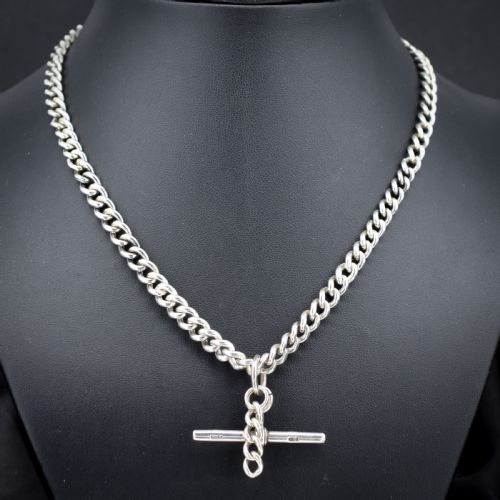
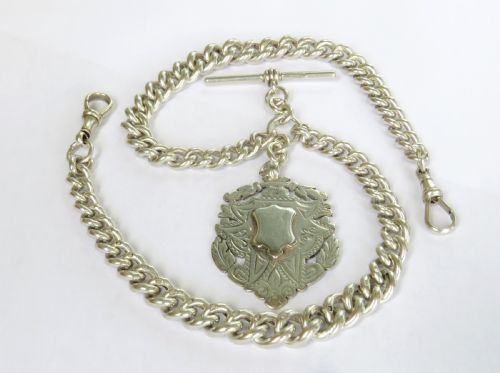
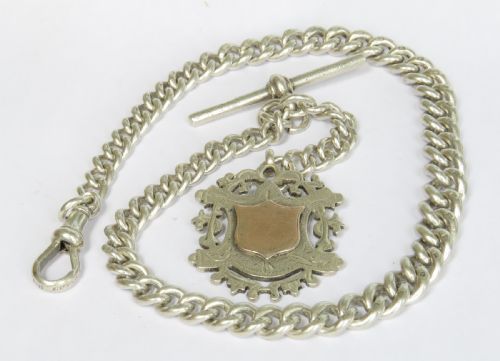
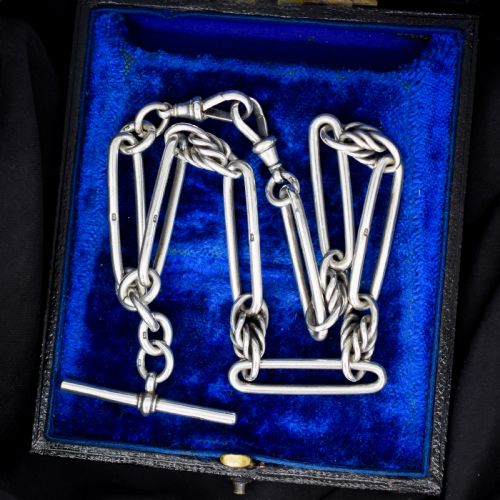
- A decorative silver chain attached to a waistcoat buttonhole and secured to the pocket watch. Double variations connect from the centre to two separate pockets.
- Fusee movement
- An antique mechanism utilising a cone-shaped pulley and chain to equalise the mainspring power as it unwinds. This system improves timekeeping consistency.
- T-bar
- A transverse metal bar fastened to the end of a watch chain, designed to slip securely through a waistcoat buttonhole.
Mens Silver Pocket Watch: Frequently Asked Questions
What is a half hunter pocket watch?
A half hunter pocket watch incorporates an outer metal lid with a central glass window. This design lets you check the time quickly without opening the primary case.
The protective cover shields the delicate dial beneath from scratches during daily use. Engraved enamel markers often encircle the glass aperture on the outer case.
How do you wear a pocket watch chain?
An albert chain threads through a central waistcoat buttonhole using the attached T-bar. The watch itself rests securely inside the lower waistcoat pocket.
Any accompanying fob or seal hangs downward from the buttonhole as a decorative pendant. Double chains span across the chest to connect two items simultaneously.
What is a fusee pocket watch movement?
A fusee movement is an early mechanical system designed to regulate power delivery from the mainspring. A small chain wraps around a conical pulley to smooth out tension variations.
This engineering approach helps maintain steady timekeeping as the spring winds down. Such mechanisms are characteristic of earlier Victorian timepieces.
How do I date a silver pocket watch?
Dating relies heavily on British silver hallmarks stamped inside the case exterior and back covers. These assay marks indicate the specific year of manufacture and testing.
Stylistic cues like Art Deco numerals or Victorian engraving styles also provide clues. Maker signatures and associated award fobs offer further chronological context.