


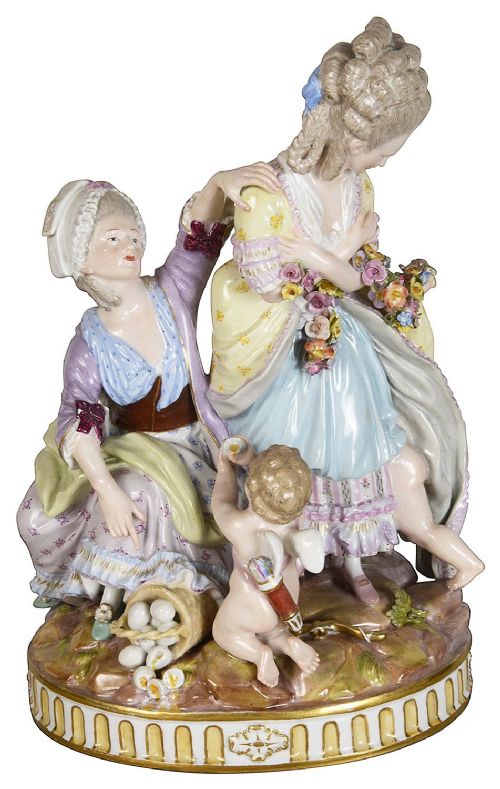


Meissen Style Porcelain Group
A meissen style porcelain group brings elaborate rococo drama to a room, capturing classical allegories and romantic scenes in intricately modelled glazed ceramic.
Meissen Style Porcelain Group
When you search for a meissen style porcelain group, you are looking at figural compositions that depict multiple figures engaged in romantic, pastoral or mythological narratives. The pieces available here span the eighteenth and nineteenth centuries, taking the form of paired lovers, musicians, children in gardens, and classical subjects such as the Drunken Silenus or the Four Seasons.
You will most commonly meet nineteenth-century interpretations that adopt the spirited modelling and theatrical disposition of earlier rococo works. These groups bring together several modelled characters on a shared base, often enriched with scrollwork and naturalistic details like foliage or garden settings.
The subjects range from lighthearted domestic moments like 'Broken Eggs' or 'A good mother' to grander allegorical scenes. Each composition relies on balanced arrangements of bodies and garments to draw the eye around the entire sculpture.
How they were made
These sculptures are formed from hard-paste porcelain, a dense and vitrified ceramic body capable of holding exceptionally sharp detail during the modelling process. Artisans built up complex multi-figure scenes by pressing clay into multiple moulds, then joining the separate arms, limbs and accessories with liquid slip before firing.
Surface decoration relies on polychrome enamel painting combined with gold leaf or gilt highlights applied to bases and garments. The high-temperature glazes fuse with the hard-paste body, giving the colours a bright, durable finish that accentuates the facial expressions and textiles of each figure.
Meissen Style Porcelain Group Retail Price Guide 2026
Typical asking prices for meissen style porcelain group among the pieces listed under this phrase on Sellingantiques today, from the lower quarter to the upper quarter. They describe what is for sale here now, not the wider market.
What varies in quality
Painting quality governs the overall impact, separating pieces with flat washes from those featuring subtle shading in the flesh tones and precise brushwork on the patterns of costumes. The application of gold leaf and the vibrancy of the enamel palette further distinguish the more ambitious studio outputs from standard commercial work.
The Meissen Style Porcelain Group Glossary
- Hard-paste Porcelain
- A durable ceramic composition made from kaolin and petuntse fired at very high temperatures. This material forms a dense, white body that resists scratching and accepts bright enamel colours.
- Rococo Revival
- A nineteenth-century design movement that revived the ornate scrolls, asymmetrical curves and playful motifs of the mid-eighteenth century. It heavily influenced the style of these figural groups.
- Enamel
- Vitreous coloured pigments painted onto the glazed surface of the porcelain and fixed in a muffle kiln. It provides the vibrant hues found on garments and floral elements.
- Gilt
- A thin layer of gold applied to the porcelain surface, often highlighting scrollwork bases and costume details. It adds a reflective warmth to the composition.
Meissen Style Porcelain Group: Frequently Asked Questions
What is a porcelain group?
A porcelain group is a sculptural composition featuring two or more figures interacting on an integrated base, designed as a decorative centrepiece.
Unlike single standing figures, these arrangements tell a narrative story, ranging from classical mythology to domestic romance.
How do I clean my porcelain figures?
Dust these delicate sculptures gently using a soft, dry artist brush to prevent accumulation in crevices and around delicate appendages. Avoid using water or chemical cleaners, particularly near gilt highlights and enamel painted surfaces.
Display them away from direct sunlight and high-traffic areas where accidental knocks might damage projecting fingers, floral details or musical instruments.
What themes appear in these groups?
Common themes include classical allegories such as the Four Seasons, mythological scenes like the capture of an infant Triton, and romantic pastoral encounters.
Domestic subjects depicting children in gardens or everyday dramas also feature prominently in nineteenth-century production.
How do I tell nineteenth-century pieces apart from earlier ones?
Nineteenth-century works often display heavier bases, brighter synthetic enamel colours, and a distinct rococo revival theatricality compared to mid-eighteenth-century prototypes.
Examining the paste under magnification and assessing the sharpness of the mould-work helps clarify the period of manufacture.