





Meissen Group Figurine
A meissen group figurine brings eighteenth-century modelling and courtly narrative directly into your room.
Meissen Group Figurine
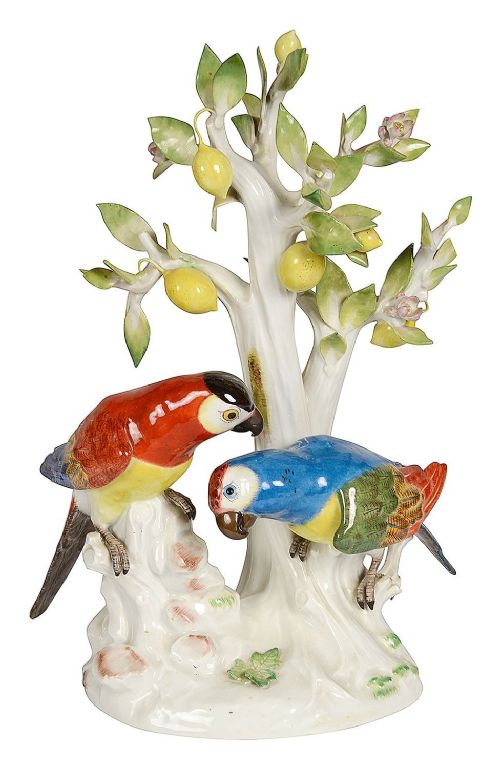
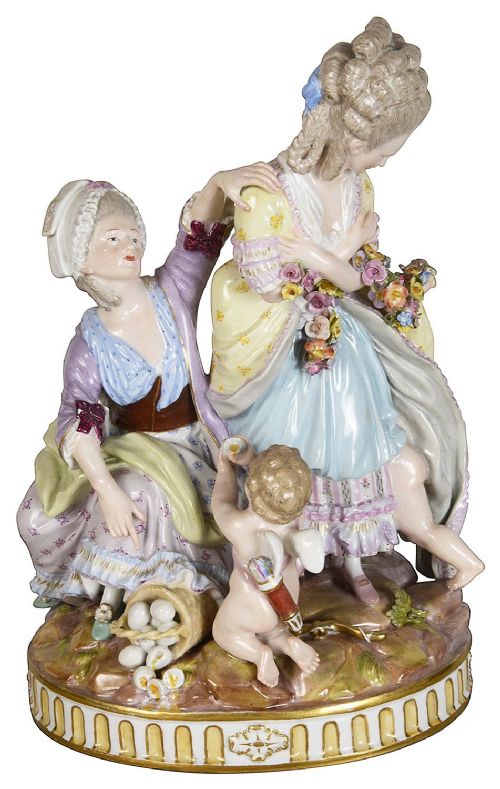
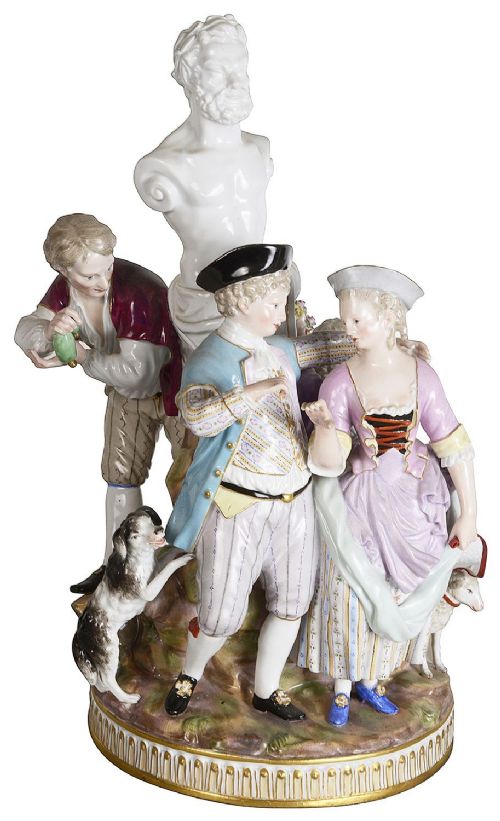
A meissen group figurine shows multiple human figures, children, musicians, or animals arranged in pastoral, romantic, or classical scenes. These sculptural compositions range from eighteenth-century originals from the Marcolini period to later nineteenth-century interpretations in Rococo Revival and Neoclassical styles.
The subjects span courting couples, gardeners, and characters from the commedia dell'arte such as Harlequin and Columbine alongside allegorical sets like the Four Seasons. Most examples on this page date from the nineteenth century or the late eighteenth century, combining elaborate figural grouping with botanical or architectural elements.
Materials and technique
Hard-paste porcelain forms the structural body of these figures, shaped through multi-part mould casting and detailed hand-modelling. Enamel pigments provide the polychrome palette, fixed by firing, while gold leaf highlights details on garments and bases.
Mounts in gilt bronze or ormolu occasionally frame the porcelain, as seen in pieces combining mechanical or architectural elements with ceramic figures. Wood and straw also appear in supporting structures or historical mounts associated with these decorative objects.
Meissen Group Figurine Retail Price Guide 2026
Typical asking prices for meissen group figurine among the pieces listed under this phrase on Sellingantiques today, from the lower quarter to the upper quarter. They describe what is for sale here now, not the wider market.
Even silenus and children found themselves immortalised in ceramic paste, proving that eighteenth-century party animals make surprisingly charming shelf-sitters.
What varies in quality
The crispness of the modelling in faces, hands, and foliage separates superior examples from softer secondary versions. Early eighteenth-century productions and careful nineteenth-century revivals maintain sharp relief in garments and naturalistic details.
The application of enamel and the precision of the gilding dictate the visual impact of the group. Finer pieces retain vibrant hand-painted tones and clean integration where separate porcelain sections join.
The Meissen Group Figurine Glossary
- Hard-paste porcelain
- A vitrified ceramic composed of kaolin and petuntse fired at high temperatures. This material allows for crisp modelling and a smooth, glossy glaze.
- Marcolini period
- The phase of Meissen production dating from the late eighteenth century. Pieces from this era often display specific factory marks and refined neoclassical tastes.
- Rococo Revival
- A nineteenth-century design movement resurrecting the curved lines and ornate asymmetry of the mid-eighteenth century. This style appears frequently in Victorian interpretations of earlier figures.
- Ormolu
- Gilt bronze applied to mounts and decorative frames. It provides a metallic contrast to the white and painted porcelain surfaces.
- Commedia dell'arte
- A form of theatre featuring stock characters like Harlequin and Columbine. These figures frequently served as subjects for European porcelain modellers.
Meissen Group Figurine: Frequently Asked Questions
How do I date a meissen group figurine?
Dating relies on stylistic markers, modelling quality, and historical context such as the distinction between eighteenth-century originals and nineteenth-century revivals. Examining the baseline characteristics helps place the piece within the recorded production periods.
Factory marks, where present, offer further clues but require careful comparison against known historical ciphers and kiln practices from different eras.
Where were these figures displayed?
These decorative objects historically occupied prominent positions on mantelpieces, side tables, and cabinet shelves in elite European interiors. Their complex multi-figure arrangements invited close inspection from seated guests.
Today, they function well as focal points on sturdy wooden furniture away from heavy foot traffic or direct sunlight.
How should I clean porcelain groups?
Dusting requires a soft, dry brush to prevent delicate elements like leaves, fingers, and musical instruments from snapping off. Moisture should be avoided, especially around old repairs or gilt surfaces.
Professional conservation advice is recommended if deeper cleaning becomes necessary due to accumulated grime in recessed folds of clothing.
What is the difference between a figure and a group?
A figure depicts a single individual or animal standing alone on a base. A group incorporates two or more interacting characters or animals engaged in a narrative scene.
Groups demand greater technical skill in moulding and firing due to the complex weight distribution and multiple contact points between the figures.