

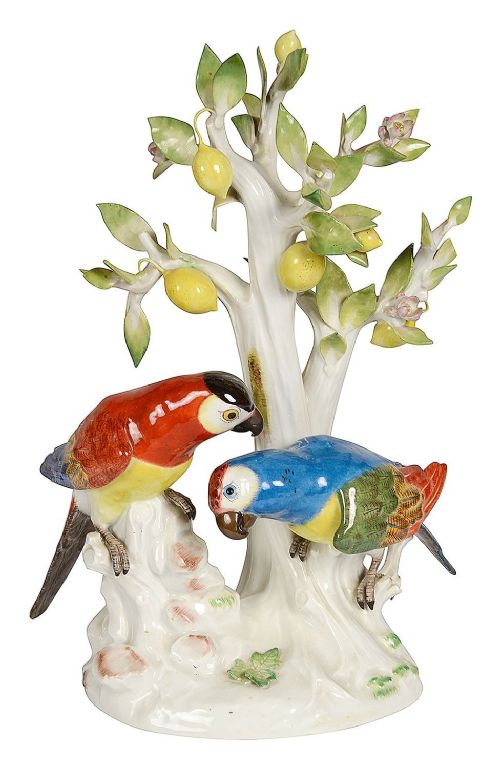


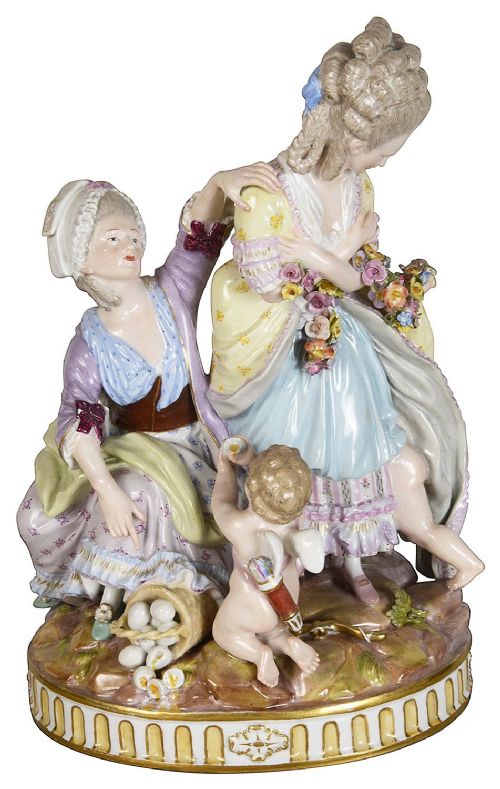
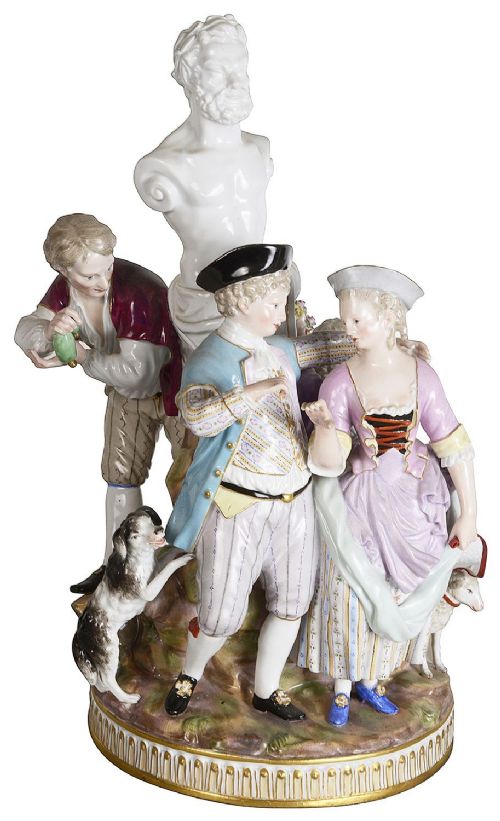


Meissen Figure Group
These meissen figure group pieces bring the theatrical drama of European kilns into your drawing room, offering intricate modelled porcelain scenes full of narrative and character.
Meissen Figure Group
When you search for a meissen figure group, you encounter complex porcelain compositions depicting multiple figures engaged in stories, allegories or pastoral pastimes. These objects translate theatrical performances, classical mythology and romantic scenes into permanent ceramic form, often combining several characters on a single integrated base.
The versions you meet most frequently on this page date from the nineteenth century, encompassing Rococo Revival tastes alongside interpretations of eighteenth-century models. Subjects range from pairs of lovers and musicians to children in gardens and satirical figures like the Drunken Silenus.
Earlier examples also surface, including eighteenth-century pieces bearing Marcolini period marks or specific model numbers like the Broken Eggs and pairs of gardeners. Some groupings incorporate mixed media, mounting porcelain harlequins within gilt bronze or ormolu architecture.
How they were made
The foundational material for these works is hard-paste porcelain, fired at high temperatures to achieve a dense, durable body capable of holding minute sculptural detail. Artisans then applied enamel colours and gold leaf by hand to highlight costumes, facial expressions and naturalistic elements.
Complex groupings required multiple moulds for individual limbs, animals and botanical accessories, which were assembled using liquid porcelain slip before the initial firing. Ormolu and gilt bronze mounts occasionally framed these ceramic centrepieces, adding architectural structure to the composition.
Meissen Figure Group Retail Price Guide 2026
Typical asking prices for meissen figure group among the pieces listed under this phrase on Sellingantiques today, from the lower quarter to the upper quarter. They describe what is for sale here now, not the wider market.
Listings feature hard-paste porcelain and enamel, alongside mixed media components such as ormolu, gilt bronze, wood, and straw.
What varies in quality
The integration of secondary materials like ormolu bases or gilt bronze framing influences the overall sculptural success of the object. Marcolini-era and eighteenth-century examples demonstrate historical mastery of form that later nineteenth-century interpretations sometimes chose to emulate rather than innovate.
Meissen Porcelain Manufactory
The Meissen Figure Group Glossary
- Hard-paste porcelain
- A vitrified ceramic composed of kaolin and petuntse fired at very high temperatures. This formula creates a hard, translucent body that resists scratching and supports intricate sculptural modelling.
- Gilt bronze
- An alloy of copper and zinc treated with gold leaf or a gold amalgam to produce a bright metallic finish. It frequently appears as structural mounts or frames for eighteenth-century porcelain figures.
- Rococo Revival
- A nineteenth-century stylistic movement that revived the asymmetrical scrolls, natural motifs and playful themes of the mid-eighteenth century. This aesthetic heavily influenced the production of romantic figure groups.
- Marcolini Period
- The phase of Meissen production spanning the late eighteenth century under the direction of Count Camillo Marcolini. Pieces from this era often carry specific factory marks associated with neoclassical restraint.
Meissen Figure Group: Frequently Asked Questions
What subjects do these figure groups show?
These compositions portray a wide range of narratives, including romantic couples, musicians, mythological characters like Silenus, and allegorical representations of the seasons. Garden scenes and domestic episodes involving children also appear frequently.
Many designs draw inspiration from contemporary theatre, literature and classical sculpture, translating complex stories into multi-figure ceramic tableaus.
How do I distinguish eighteenth and nineteenth century pieces?
Eighteenth-century examples generally exhibit the direct stylistic conventions of their period, sometimes featuring specific marks from periods like the Marcolini tenure. Nineteenth-century pieces often reflect revivalist tastes, reinterpreting earlier models with different stylistic nuances.
Examining the application of the enamel colours and the composition of the porcelain body helps clarify the manufacturing era.
How were these porcelain groups displayed?
Historically, such groupings served as ornamental centrepieces for dining tables or decorative objects placed on mantelpieces and cabinets within elite interiors. Their intricate modelling invited close inspection from guests.
Today, they function as cabinet pieces or focal points on sturdy surfaces where their detailed painted surfaces remain protected.
Why are some figures mounted in ormolu?
Certain eighteenth-century groups incorporate gilt bronze or ormolu mounts to elevate the status of the porcelain and provide architectural framing. This practice combined the work of ceramic modellers with skilled metalworkers.
These mounted objects often served specific decorative functions in wealthy European salons, blending two distinct luxury crafts.