






Meiji Period Table Lamps
Meiji period table lamps bring together heavy cast bronze, vibrant enamel work and hand-painted porcelain from nineteenth-century Japan into functional home lighting.
Meiji Period Table Lamps
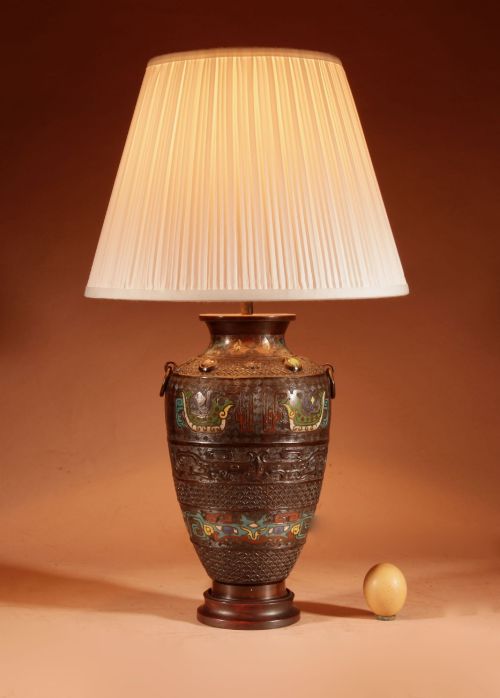
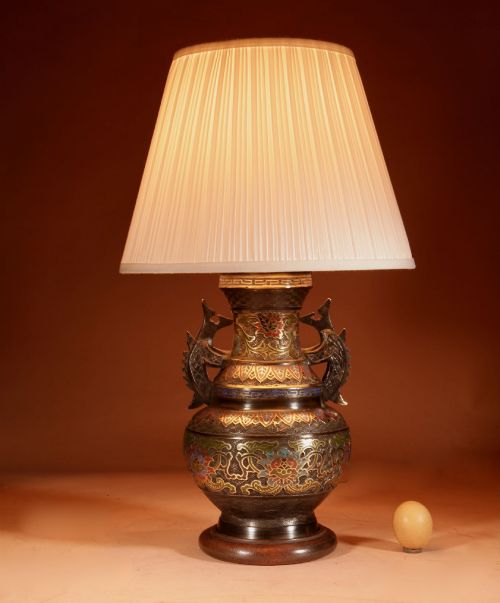
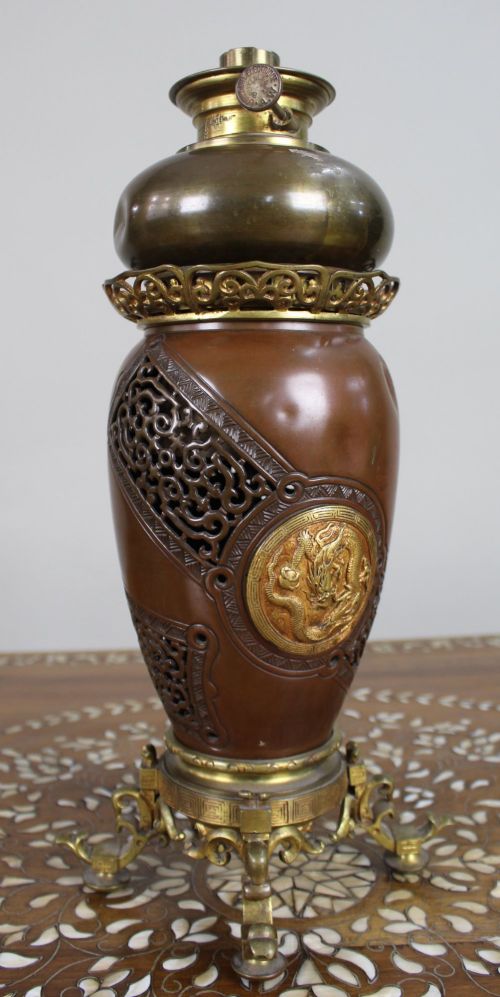
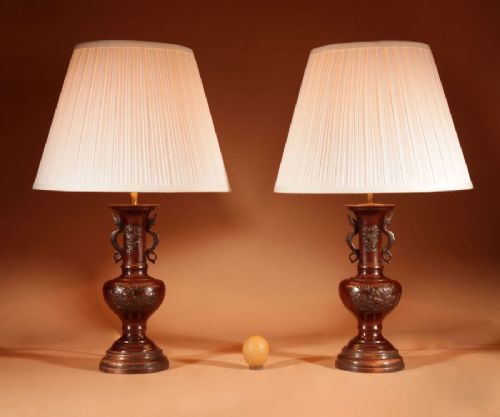
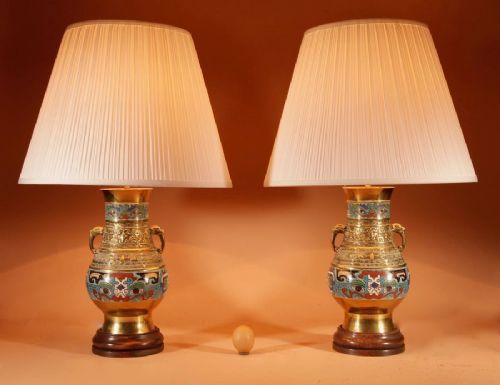
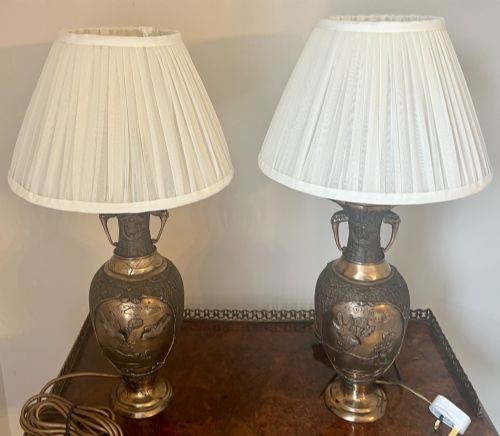
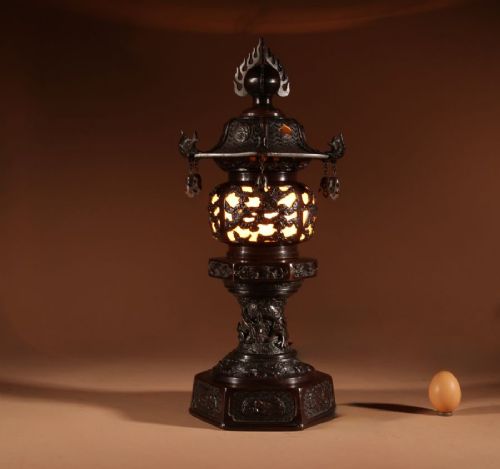
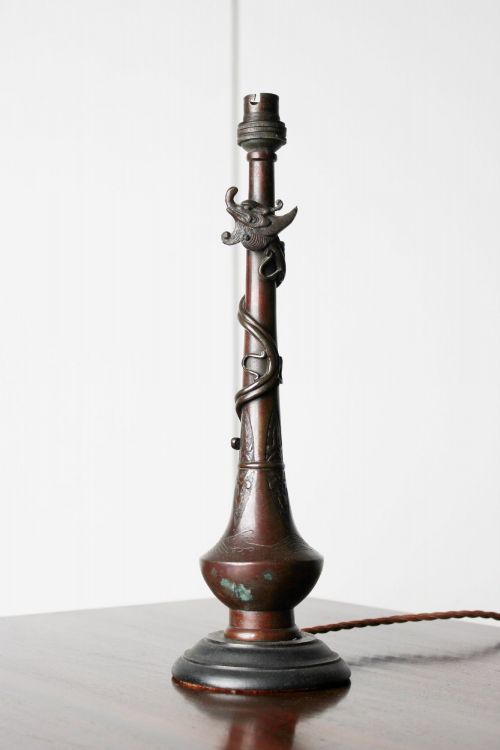
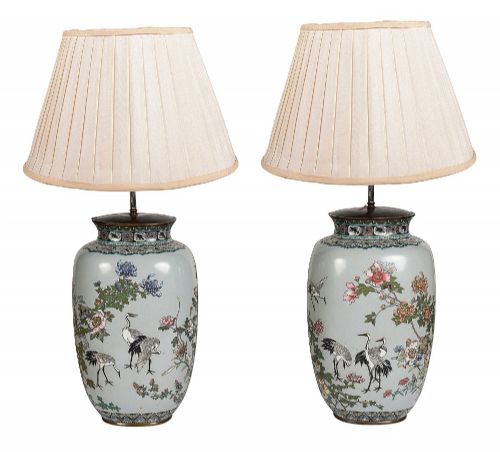
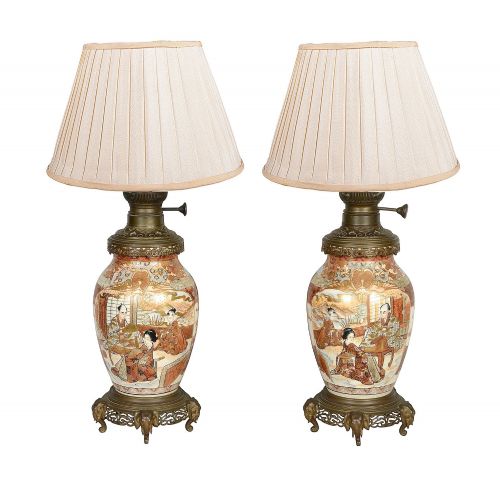
Meiji period table lamps comprise converted Japanese vases, brush pots, lanterns and oil lamps mounted for electrical illumination. The selection relies heavily on nineteenth-century bronzes, champlevé enamels and cloisonné designs alongside porcelain forms from Kutani, Satsuma, Imari and Yokohama.
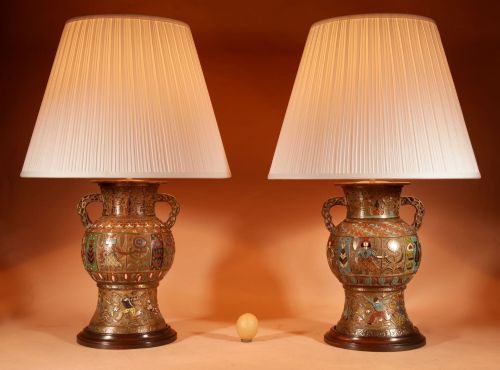
Buyers encounter pairs and single lamps spanning the Meiji period, with additional pieces recorded from Victorian and Edwardian periods as well as the early decades of the twentieth century. Forms range from large dragon and elephant figural bronzes to slender ceramic vases and carved root structures.
How they were made
Metal lamps utilise bronze and brass, often decorated with champlevé and cloisonné enamel work where coloured pastes fill recessed compartments or wire cells before firing. Ceramic bodies including earthenware and porcelain display hand-painted glazes, while wooden elements incorporate carved details, mother of pearl inlay and ebonised elm.
Many of these lighting fixtures began life as decorative vases, spill vases or brush pots before receiving electrical fittings. Makers combined traditional Japanese metalworking and ceramic techniques with domestic wiring adaptations suited for European and British interiors.
Meiji Period Table Lamps Retail Price Guide 2026
Typical asking prices for meiji period table lamps among the pieces listed under this phrase on Sellingantiques today, from the lower quarter to the upper quarter. They describe what is for sale here now, not the wider market.
Elephants and dragons hold up the nineteenth-century room.
What varies in quality
Quality rests upon the crispness of the initial casting in bronze elements and the precision of the enamel work in cloisonné and champlevé surfaces. Finer examples display intricate surface details, well-defined figural motifs like dragons or elephants, and harmonious balance between the body and its mounting.
Ceramic quality shows in the fineness of the porcelain body, the complexity of hand-painted Satsuma, Kutani or Imari decoration, and the preservation of the glaze. The integrity of converted vessels depends on how cleanly the original vase or jar accommodates the lamp fittings without disrupting the historic form.
The Meiji Period Table Lamps Glossary
- Champlevé
- An enamelling technique where metal is gouged or cast with troughs to hold enamel paste. The resulting surface shows bold coloured designs divided by metal lines.
- Cloisonné
- A method of decorating metal objects with coloured paste placed inside wire compartments soldered to the base. Each thin metal wire forms part of the intricate pattern.
- Satsuma
- Japanese earthenware featuring a crackle-glaze ivory surface decorated with polychrome and gilt enamels. These ceramics frequently depict figures, flora and traditional scenes.
- Kutani
- Japanese porcelain distinguished by strong colour palettes, particularly iron red and deep greens. Pieces often exhibit detailed pictorial scenes across the vessel body.
- Imari
- A traditional style of Japanese porcelain featuring underglaze blue and overglaze iron red, gold and black. The palette creates a rich, decorative contrast across the ceramic surface.
Meiji Period Table Lamps: Frequently Asked Questions
What are meiji period table lamps?
Meiji period table lamps are decorative objects from late nineteenth and early twentieth century Japan that have been adapted for domestic lighting.
They primarily utilise antique bronze vessels, cloisonné enamel vases, and porcelain jars from kilns such as Kutani and Satsuma.
How do you date meiji period lamps?
Dating relies on stylistic markers from the Meiji era between 1868 and 1912, alongside later Victorian, Edwardian and early twentieth-century mounting styles.
Material composition, casting techniques, and the transition from oil lamp mechanisms to electrical fittings help establish the period of conversion.
Were these lamps originally made for lighting?
Most of these pieces started as decorative vases, brush pots, lanterns, or oil lamps rather than factory-produced electric lights.
Craftsmen later converted the historic Japanese vessels into table lamps to serve contemporary interior requirements while retaining their original artistry.
What materials are used in these lamps?
The construction encompasses cast bronze and brass, champlevé and cloisonné enamels, and various ceramic types including earthenware and porcelain.
Additional materials include carved wood, ebonised elm, mother of pearl inlay, silk, and fabric shades.