

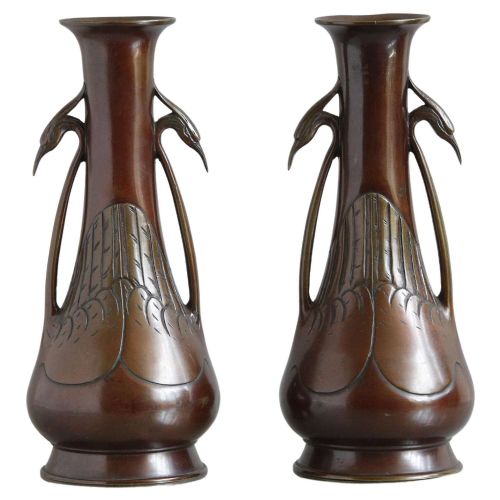


Meiji Metalwork Vase
These meiji metalwork vase examples combine disciplined bronze casting with intricate surface inlay from nineteenth-century Japanese workshops.
Meiji Metalwork Vase
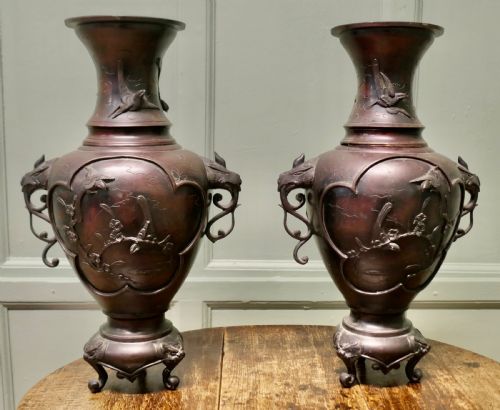
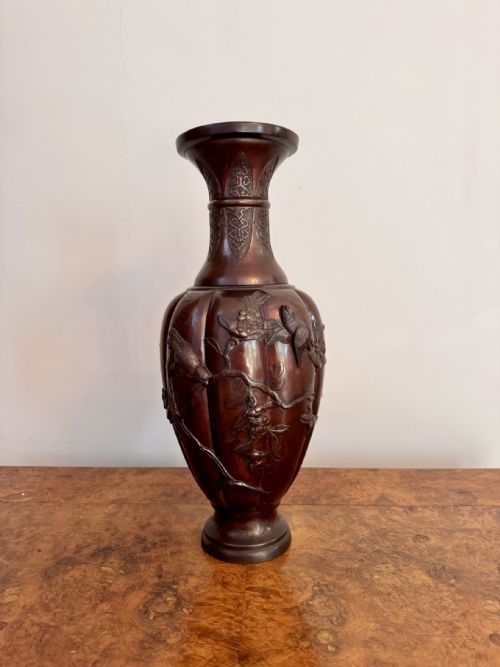
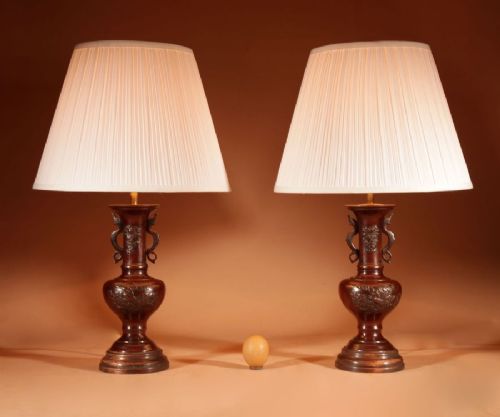
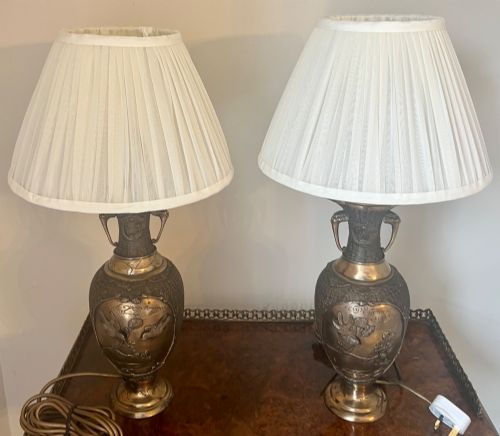
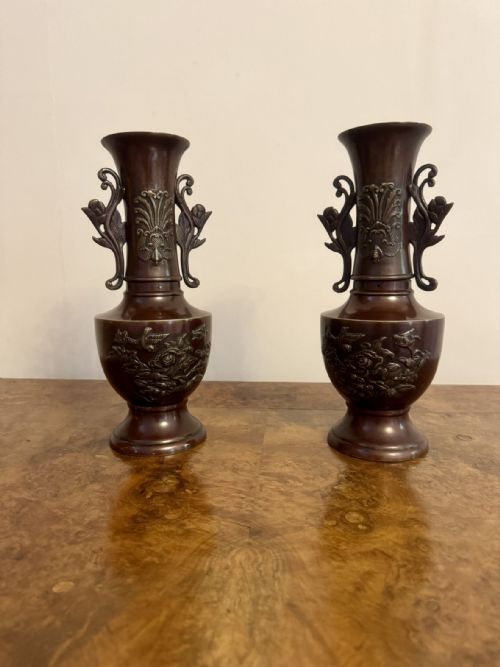
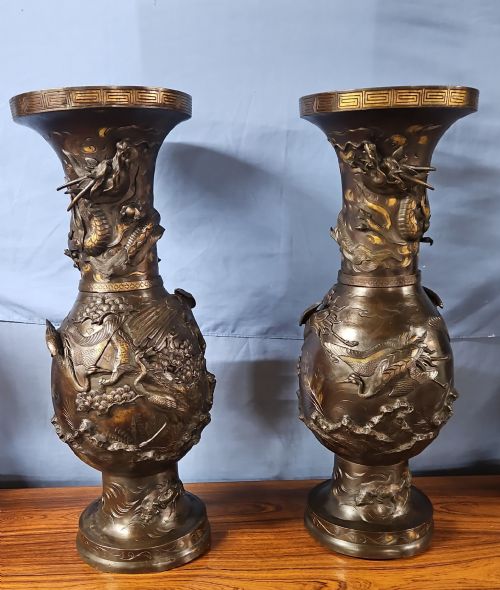
A meiji metalwork vase brings domestic display forms from the Japanese Meiji period into British collections, appearing mainly as bronze vessels alongside cloisonné enamel variants. These pieces span standard baluster urns, twin-handled vessels, and stem vases that originate from the nineteenth and early twentieth centuries.
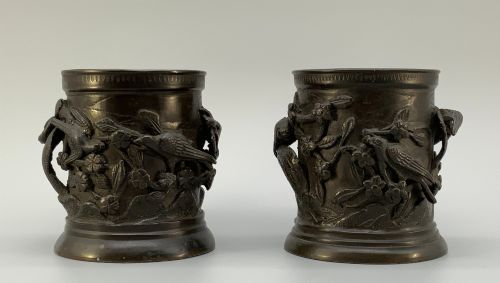
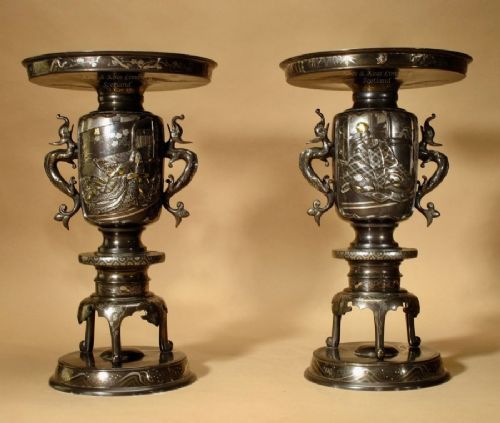
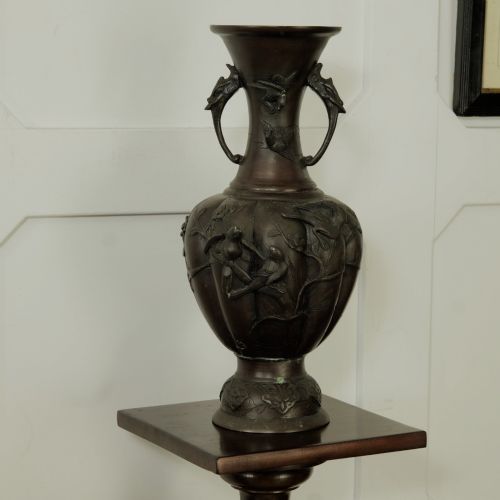
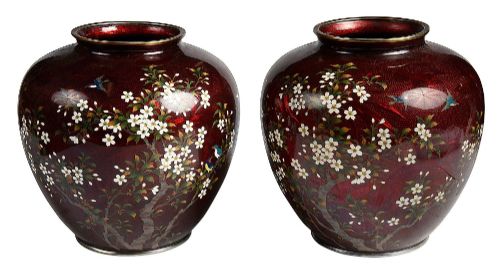
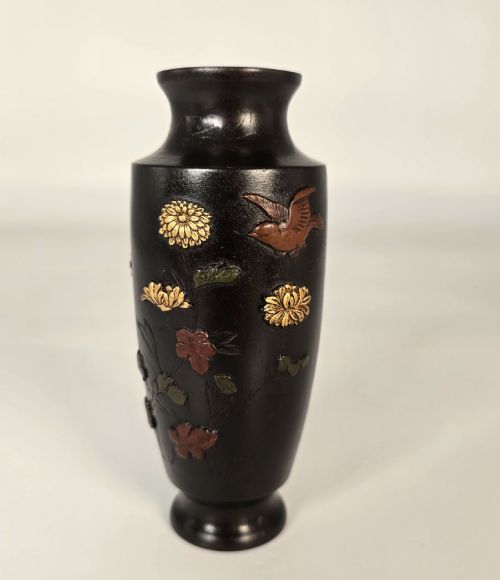
Buyers encounter single vessels, matched pairs, and larger decorative urns often ornamented with birds, blossom, or floral motifs in raised detail. Many retain original patination, while others incorporate mixed metal elements or silver wire cloisonné work.
How they were made
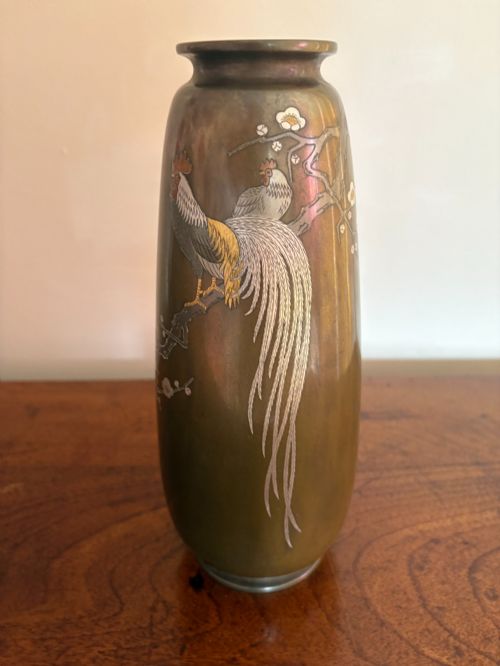
Metalworkers used bronze and copper as the primary foundation for these vessels, applying patination techniques to darken or enrich the metal surface. Workshops also utilised brass, silver, and gold for mixed metal details and applied wire to outline enamel cells.
Cloisonné pieces combined metal wires soldered to a base with coloured enamel pastes fired in kilns, while other vessels featured cast elements supplemented by hand-carved or inlaid decorative motifs.
Materials recorded include bronze, copper, enamel, brass, patinated bronze, silver, gold, and fabric.
What varies in quality
The standard of a meiji metalwork vase rests on the precision of its surface enrichment and the weight of the cast metal body. Superior examples display crisp relief work in mixed metals and secure enamel placement without surface distortion.
Design complexity and signature marks from known makers or schools elevate certain pieces above standard decorative production, showing greater depth in the patination and finer execution of motifs like birds and floral sprays.
KANASAWA·Ando Jubei
The Meiji Metalwork Vase Glossary
- Meiji Period
- The era in Japanese history spanning from 1868 to 1912, associated with rapid artistic production and increased export of decorative metalwork.
- Cloisonné
- An enamel technique where thin metal wires form raised cells on a metal body to hold coloured glass pastes before firing.
- Patinated Bronze
- Bronze treated with chemical solutions or heat to create a specific surface colour and aged appearance.
- Mixed Metal
- A decorative method combining different metals such as bronze, copper, silver, and gold on a single vessel surface.
- Baluster Urn
- A vase form featuring a curved, bulbous lower body tapering upwards toward a narrower neck and rim.
Meiji Metalwork Vase: Frequently Asked Questions
How do I identify a Meiji period piece?
Look for nineteenth-century Japanese stylistic markers, including naturalistic bird and blossom motifs executed in bronze or cloisonné enamel.
Many examples feature signature marks or characteristic patination associated with late nineteenth and early twentieth-century Japanese export production.
Were these vases made as pairs?
Makers produced both single vessels and matched pairs intended for mantelpieces or decorative garniture sets in domestic interiors.
Pairs often mirror each other in height, handle placement, and surface decoration depicting floral or avian scenes.
What is mixed metalwork?
Mixed metalwork involves combining different metallic elements like copper, brass, silver, and gold upon a bronze body to create contrasting tones.
Craftsmen inlaid these various metals to render detailed raised scenes of animals, plants, and natural landscapes.
How should I clean bronze vases?
Dust bronze and patinated surfaces gently with a dry, soft cloth to preserve the original finish and historical patination.
Avoid chemical polishes and abrasive cleaners, as these substances strip away aged patinas and damage delicate surface inlays.