


Meiji Cloisonne Enamel Charger
When you search for a meiji cloisonne enamel charger, you are looking at decorative metalwork created in Japan during the late nineteenth century.
Meiji Cloisonne Enamel Charger
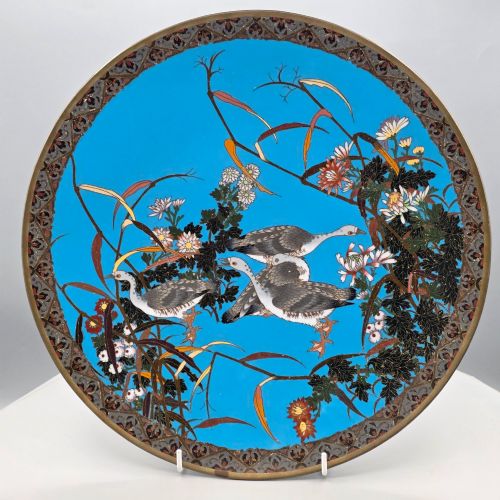
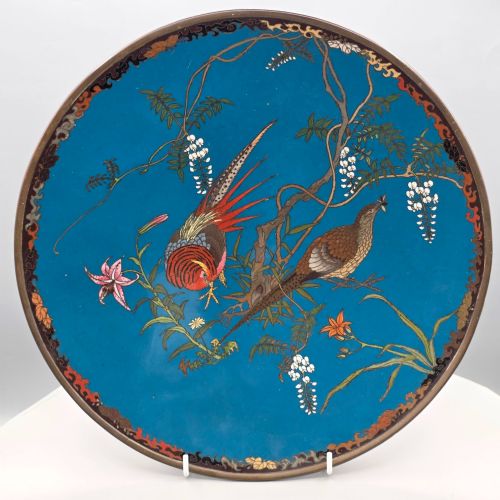
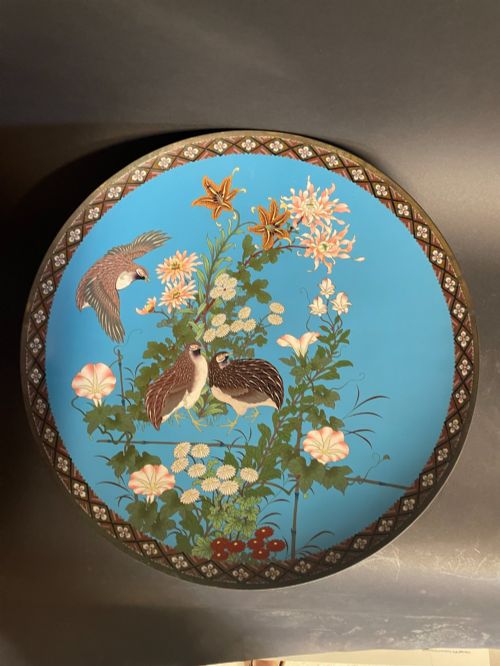
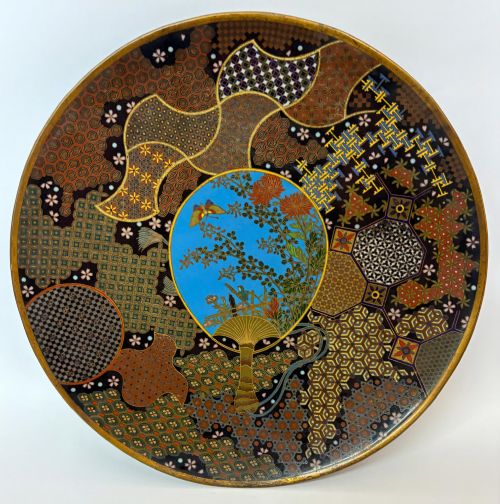
A meiji cloisonne enamel charger is a wide decorative plate, tray, or dish designed for display rather than dining. These pieces originate from Japan during the Meiji period and the transitional late Edo period, spanning the mid-nineteenth century through to about nineteen hundred.
The objects appear in various formats on this page, including large chargers, medium plates, square trays, and octagonal dishes. Common subjects depicted across the surfaces include dragons, phoenixes, birds, landscapes, and floral motifs.
Materials and Technique
The foundational body is typically formed from copper, brass, or bronze, though some examples utilise porcelain cores known as Totai Shippo. Fine wire is bent and soldered onto the metal base to create cellular compartments for the coloured enamel paste.
Once filled with enamel, the pieces are fired and polished to achieve a smooth finish. Certain variations incorporate simulated tree bark textures alongside traditional wirework.
The listings span multiple decades from the mid-nineteenth century through to the early twentieth century, incorporating both copper bases and porcelain Totai Shippo bodies.
Judging Quality
Quality rests upon the precision of the wirework and the complexity of the design. Finer pieces display intricate, thin wires forming elaborate pictorial subjects such as landscapes, samurai, or detailed dragons.
The skill of the artisan is further demonstrated by the depth of colour and the absence of flaws in the fired enamel surface. Signed pieces often reflect the higher tier of production from this era.
Kinkozan
The Meiji Cloisonne Enamel Charger Glossary
- Cloisonne Enamel
- A metalwork technique where fine wire creates raised partitions that are filled with coloured glass paste and fired. This method allows for intricate pictorial designs across chargers and trays.
- Totai Shippo
- A specific Japanese technique where enamel and wirework are applied directly to a porcelain body rather than metal. This creates distinctive surfaces that often mimic textures like tree bark.
- Charger
- A large decorative plate or dish intended for display on a wall or stand. These items form the primary large-scale format for Meiji period enamel work.
- Ho-o Bird
- A mythological Chinese phoenix frequently depicted in Japanese decorative arts. It appears regularly as a central motif on nineteenth-century enamel dishes.
- Mon
- A traditional Japanese heraldic badge or crest. These symbols are occasionally incorporated into the borders or fields of cloisonne plates.
Meiji Cloisonne Enamel Charger: Frequently Asked Questions
How were these chargers used?
These chargers served purely as decorative objects rather than functional tableware. They were displayed on stands or hung on walls to showcase the wealth and taste of the owner.
The intricate depictions of dragons, birds, and landscapes made them prized interior ornaments during the late nineteenth century.
How do I tell periods apart?
Pieces originating from the late Edo period tend to feature heavier construction and distinct colour palettes compared to later Meiji examples. The shift towards finer wires and more pictorial realism characterises the progression into the eighteen-nineties.
Examining the base metal and the style of the wirework helps place an object within the nineteenth-century timeline.
What are Totai Shippo plates?
Totai shippo designates pieces where the enamel is applied over a porcelain core instead of the standard copper or brass base. Artisans often worked the surface to resemble natural textures like tree bark.
These porcelain-backed items provide a different weight and structural feel while utilising the same cloisonne wire techniques.
How do I care for them?
Enamel chargers require gentle handling to prevent impacts that could chip the glass paste or dent the underlying copper and brass. Dusting with a soft, dry cloth is sufficient for routine maintenance.
Avoid exposing the pieces to direct sunlight or moisture to preserve the stability of the metal and the vibrancy of the enamel colours.