


Mechanical Travel Timepiece
A mechanical travel timepiece is a portable clock designed for journeys, offering brass framing and glass panels to display its movement.
Mechanical Travel Timepiece
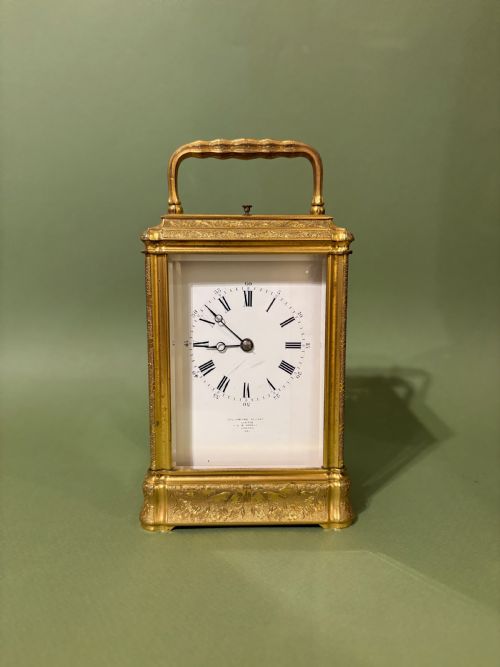
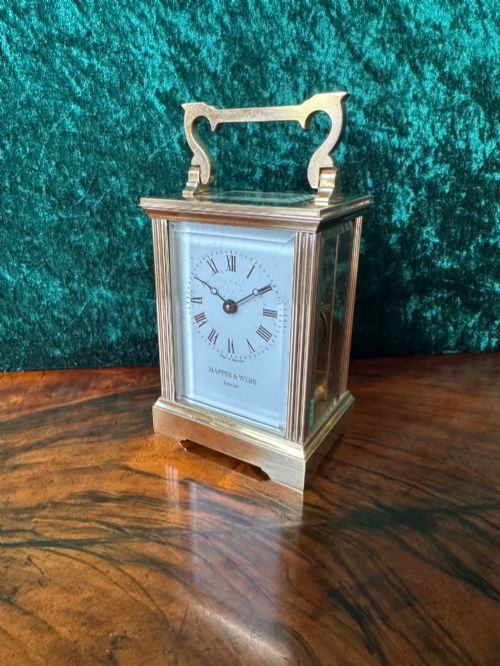
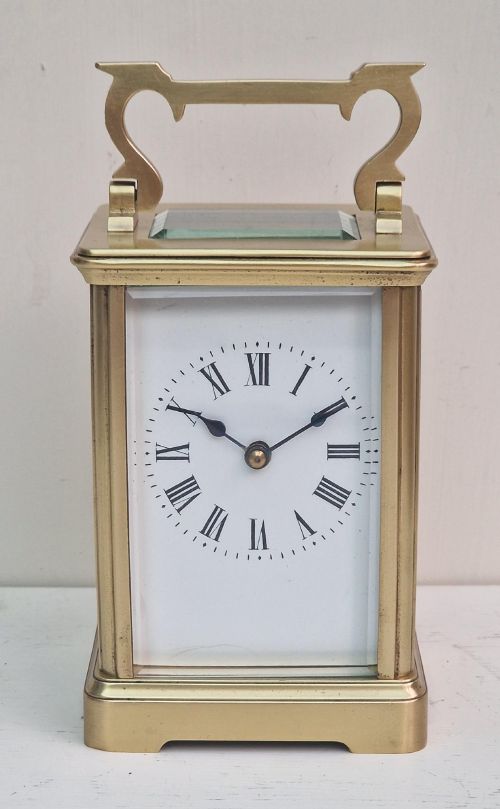
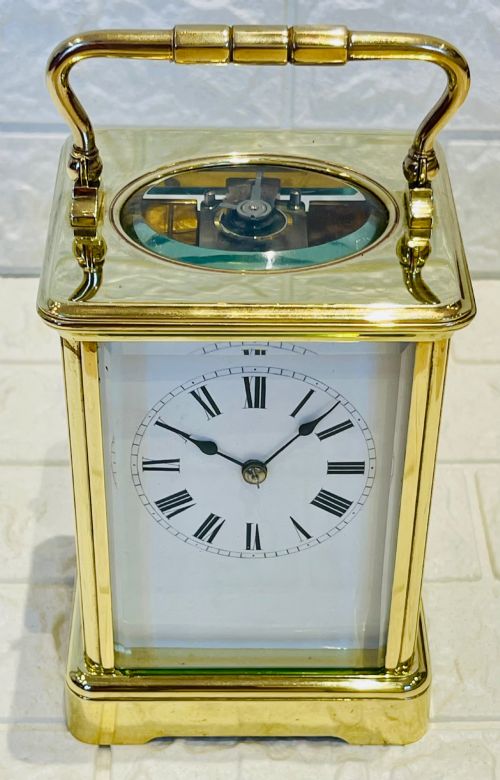
A mechanical travel timepiece is primarily represented on this page by carriage clocks originating from French and British makers during the nineteenth and early twentieth centuries. These portable clocks house mechanical movements inside robust metal cases fitted with glass panels for viewing the internal gears.
The assortment relies heavily on Victorian and Edwardian examples, spanning periods from the eighteen-fifties through the nineteen-fifties. Collectors encounter standard time-only pieces alongside more complex iterations featuring striking mechanisms, repeaters, alarms, and original leather travel cases.
What varies in quality
The standing of a mechanical travel timepiece rests on the precision and reputation of its maker, ranging from standard workshop output to signed examples by notable Parisian and London horologists. Finer pieces demonstrate superior finishing on the movement plates and more complex train functions.
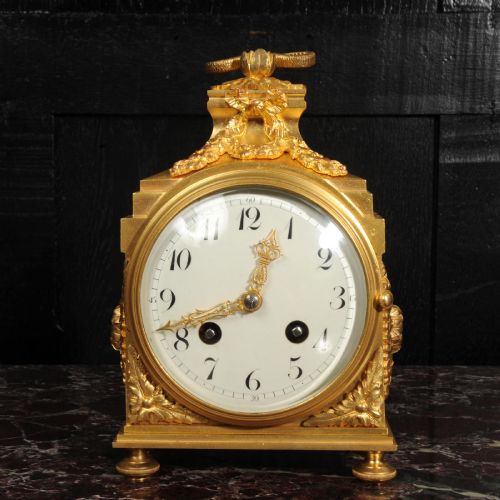
Case construction likewise dictates the hierarchy, with heavy cast brass, gilt bronze, or ornate ormolu framing distinguishing superior models from simpler production. The presence of matching numbered travel cases and specialised complications like quarter-repeating bells further elevate a piece.
Henri Jacot·Mappin and Webb·Drocourt Paris·C. Detouche Paris·Paul Garnier
The Mechanical Travel Timepiece Glossary
- Carriage clock
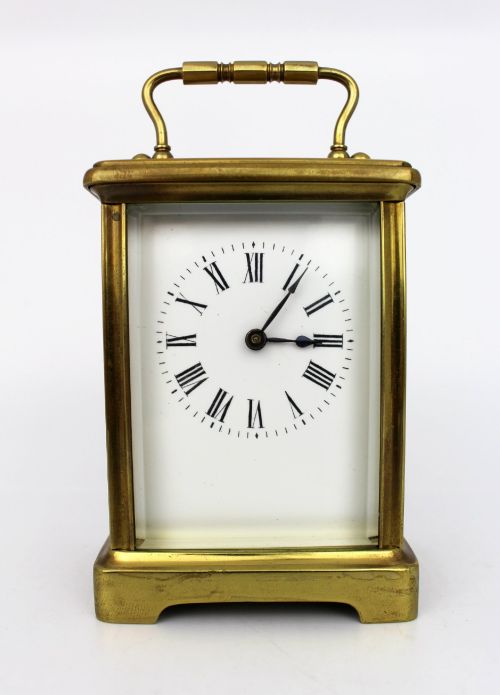
- A portable mechanical travel timepiece equipped with a handle, originally designed for officers and travellers during the nineteenth century. These clocks typically feature a rectangular brass frame with glass panels.
- Gorge case
- A specific stepped brass case design frequently seen on nineteenth-century carriage clocks. It provides a distinctive architectural profile to the housing.
- Pendule d'Officier
- An early French term for an officer's travelling clock. These portable timepieces often display robust mechanical construction suited for transit.
- Capucine
- An early French type of striking alarm clock with bell placement visible on top. They represent an important precursor to the standard nineteenth-century carriage clock.
- Repeater
- A mechanism that sounds the hours and quarters upon demand via a lever or push-piece. This complication demonstrates high horological skill in portable clocks.
Mechanical Travel Timepiece: Frequently Asked Questions
What is a mechanical travel timepiece?
A mechanical travel timepiece is a portable spring-driven clock housed in a metal case with glass windows. They were built for transport by carriage or rail.
Most examples date from the Victorian and Edwardian eras, combining brass work with mechanical movements designed to keep accurate time away from a mantelpiece.
How do repeating carriage clocks work?
A repeating mechanism sounds the last hour or quarter-hour when a button or pendant is pressed. This allowed travellers to check the time in the dark.
These systems rely on additional gear trains and gongs fitted within the brass case alongside the standard timekeeping movement.
Did travel clocks come with cases?
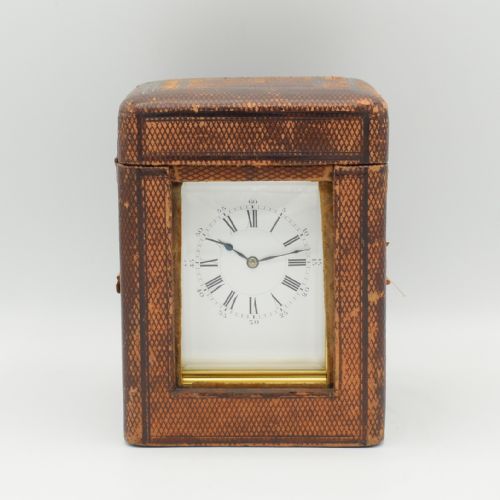
Many fine travel timepieces included fitted leather outer cases to protect the brass framework and glass during journeys. Surviving cases often match the exact contours of the clock.
Finding a piece with its original travel case adds significantly to its historical completeness.
How do I identify the period of a clock?
Stylistic shifts in case design, such as the transition from early French gorge cases to later serpentine shapes, help date these clocks. Maker signatures and serial numbers also provide chronological clues.
Materials like heavy ormolu point toward earlier nineteenth-century French production, while chrome-plating indicates twentieth-century manufacturing.