
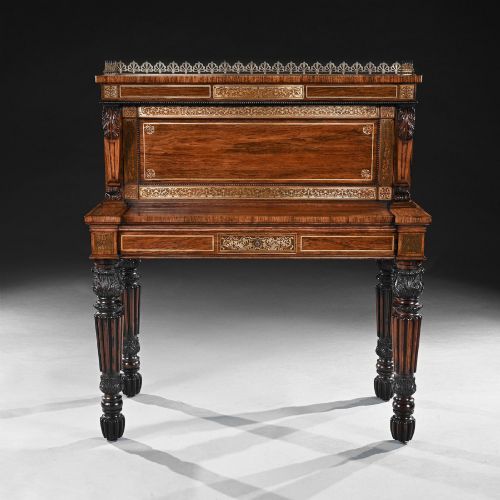
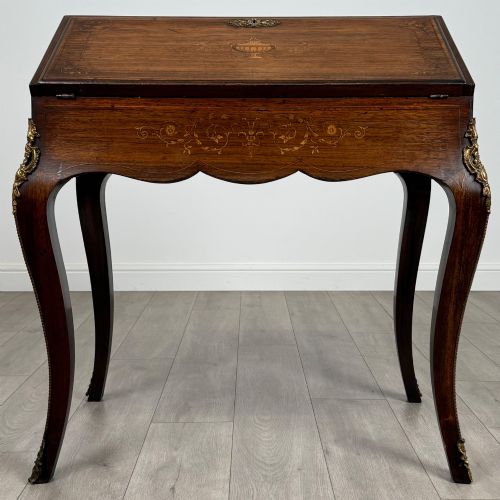

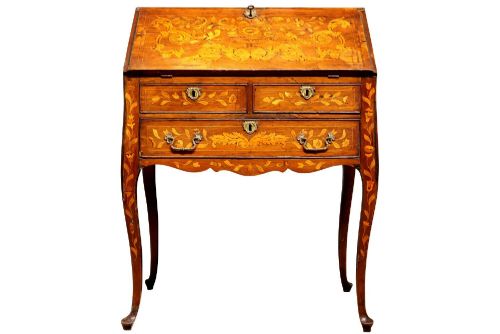
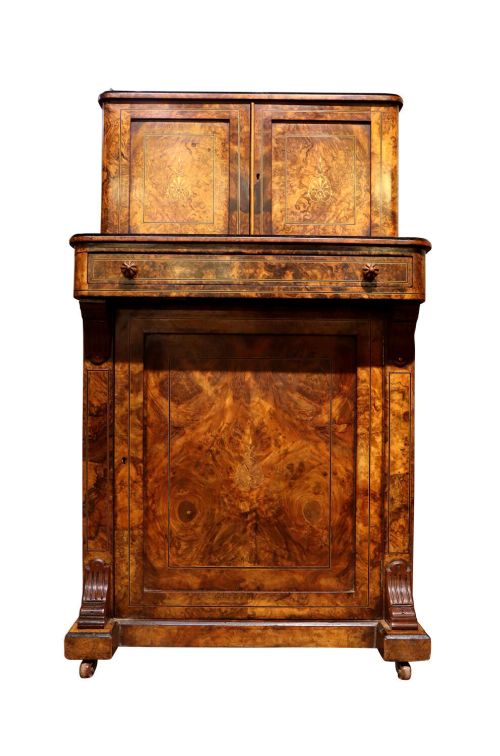

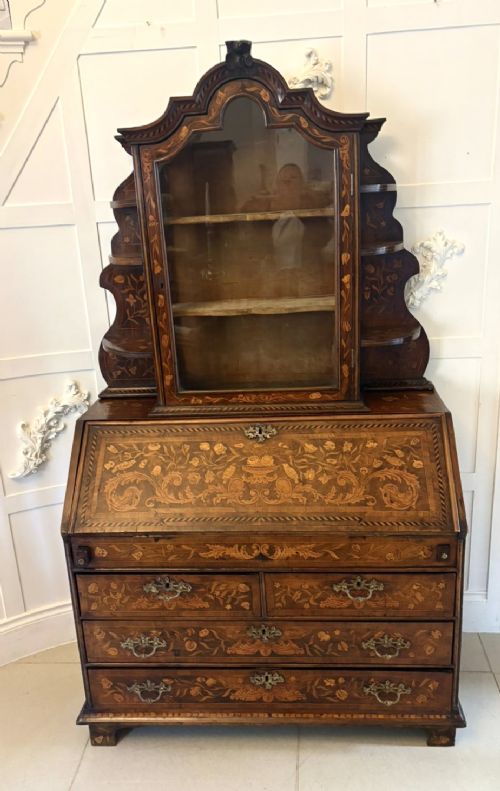

Marquetry Writing Slope Desk
A marquetry writing slope desk brings patterned wood veneer and portable writing storage together into a functional antique.
Marquetry Writing Slope Desk
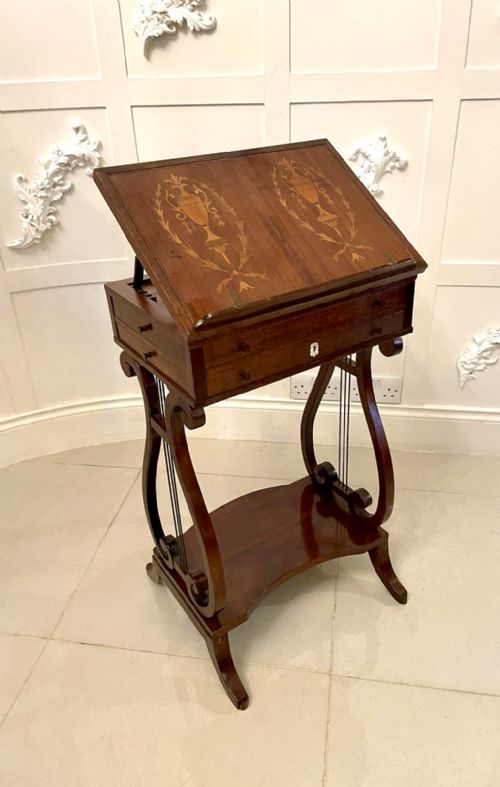
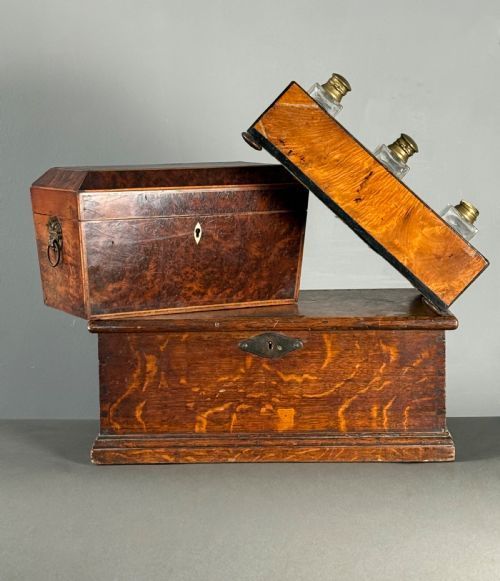
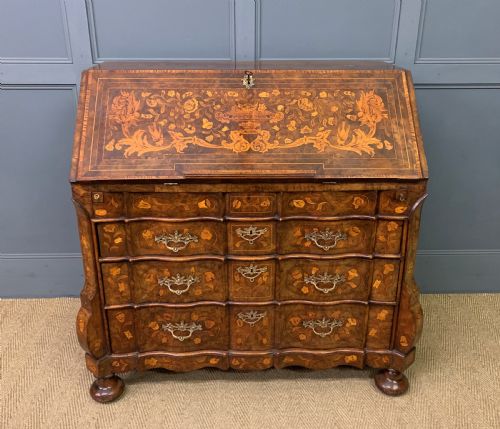
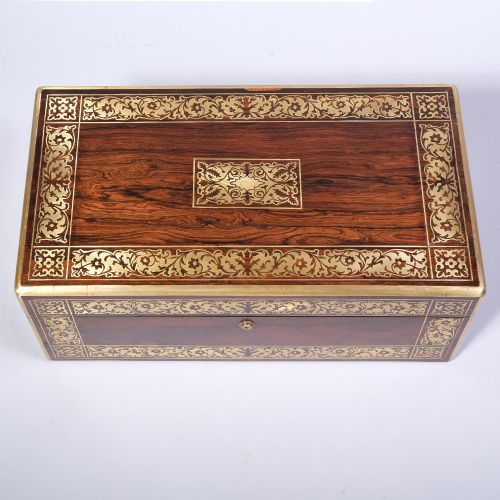
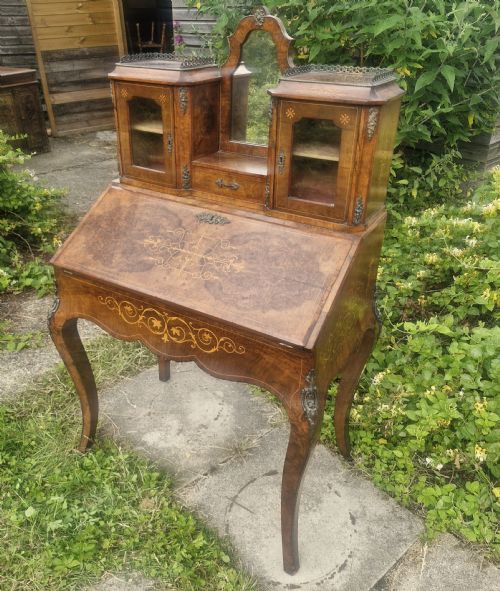
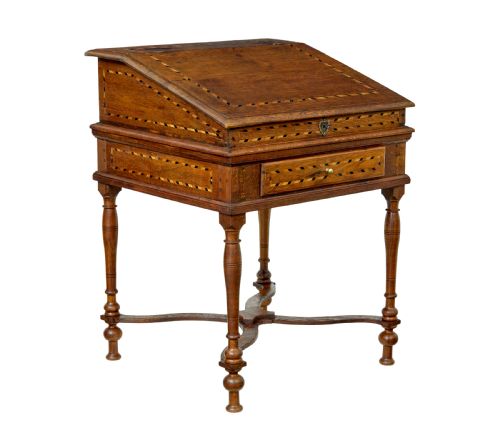
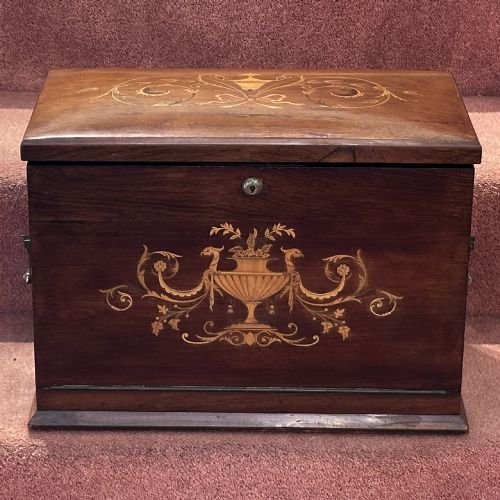
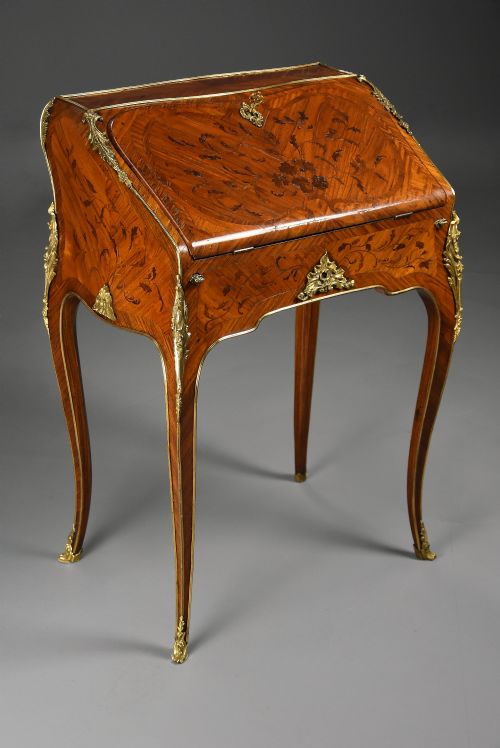
A marquetry writing slope desk encompasses portable writing boxes, davenports, and bureau desks decorated with fitted wood veneers. The selections here span the eighteenth, nineteenth, and early twentieth centuries, featuring British, French, and Dutch origins.
The most common forms on this page are Victorian burr walnut davenports and nineteenth-century writing boxes. These pieces combine fitted internal compartments with sloped writing surfaces for correspondence.
How they were made
Cabinet makers utilised dense timbers such as rosewood, walnut, and mahogany as foundations for intricate marquetry inlay, brass banding, and ormolu mounts. Woods like satinwood, box and bone supplied contrasting details within the floral and geometric patterns.
Surfaces received careful polishing over veneers applied to solid carcases, whilst internal drawers utilised secondary softwoods.
The listings on this page span the 18th, 19th, and early 20th centuries, featuring walnut, rosewood, and mahogany woods.
What varies in quality
Quality rests upon the precision of the marquetry cutting and the choice of burl or burr veneers. Finer examples display meticulous grain matching and elaborate brass or ormolu mounts rather than plain timber surfaces.
Interior secondary fittings, such as secret drawers and matched stationery compartments, separate standard production pieces from master workshop outputs.
Gillows Oxford Street Workshop·BVRB
The Marquetry Writing Slope Desk Glossary
- Marquetry inlay
- Decorative woodwork where small pieces of contrasting veneer form pictorial or geometric designs. This technique defines the visual character of many desks on this page.
- Writing slope
- A portable box with an angled lid that lifts to reveal storage for paper and ink. It provides a flat surface for handwriting when opened.
- Davenport desk
- A compact nineteenth-century writing desk featuring a sloped top above a pedestal of side drawers. It often incorporates stationary compartments on top.
- Bureau de dame
- A small ladies writing desk, frequently fitted with a cylinder top or fall front. French versions often employ rich veneers and mounts.
- Ormolu
- Gilt bronze mounts applied to furniture for decorative accent. These metal details appear on various nineteenth-century pieces.
Marquetry Writing Slope Desk: Frequently Asked Questions
What is the difference between a writing box and a davenport?
A writing box is a portable chest designed to sit on a table, housing a folding writing slope and inkwells inside.
A davenport is a freestanding piece of furniture incorporating a sloped desk above a permanent stack of drawers.
How do I care for antique marquetry surfaces?
Keep these wooden pieces away from direct sunlight and dramatic humidity changes to protect the delicate veneer and glue.
Apply a quality beeswax polish periodically to nourish the timber and maintain the natural sheen without using modern liquid sprays.
How can I tell a Victorian desk from an eighteenth century one?
Victorian examples frequently utilise burr walnut with machine-cut veneers and mass-produced brass hardware. Eighteenth-century pieces often display heavier oak or walnut carcases with hand-cut floral marquetry and simpler internal joins.
Examining the secondary woods inside drawers reveals construction shifts between these eras.
Were these desks meant for travel?
Writing boxes and smaller slopes were built for portability, allowing travellers to carry correspondence materials securely.
Larger davenports and bureau desks remained stationary items intended for static placement in a study or drawing room.