



Marquetry Wooden Tea Box
These marquetry wooden tea boxes are containers crafted for storing dry tea leaves, combining complex wood veneers with period utility.
Marquetry Wooden Tea Box
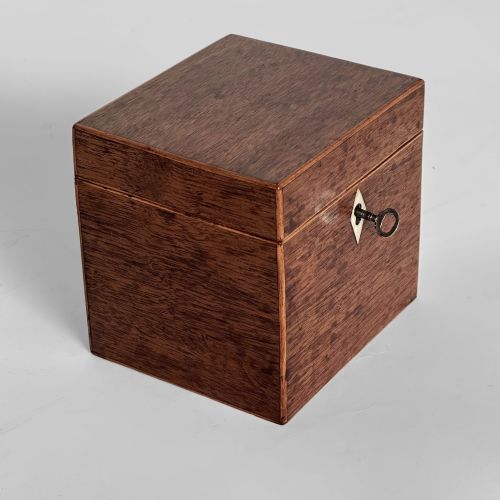
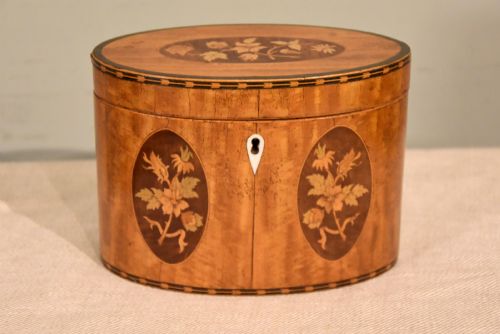
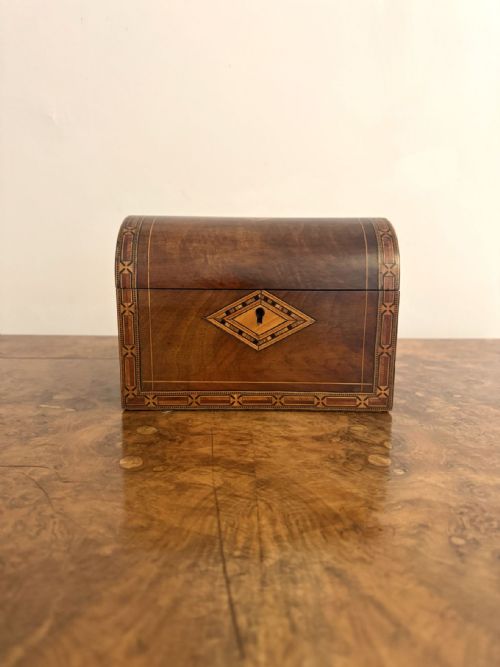
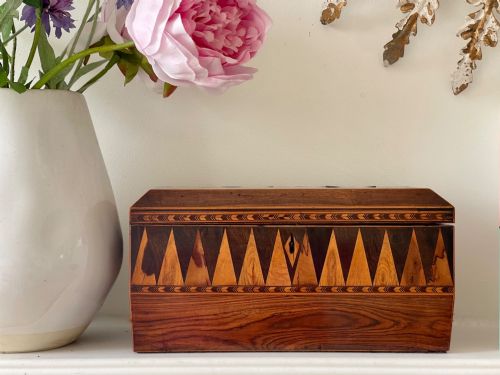
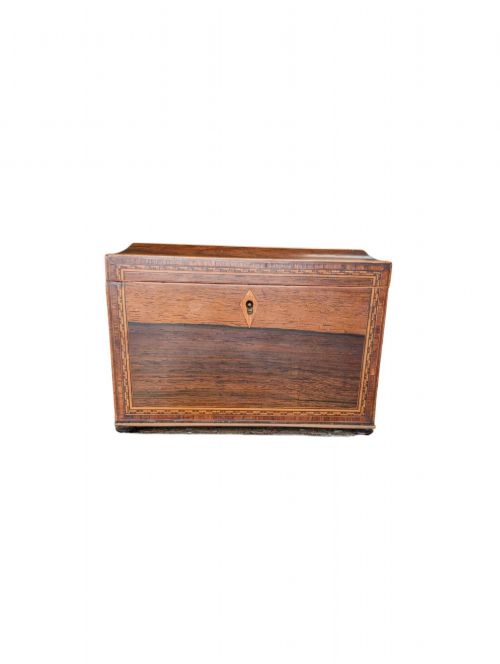
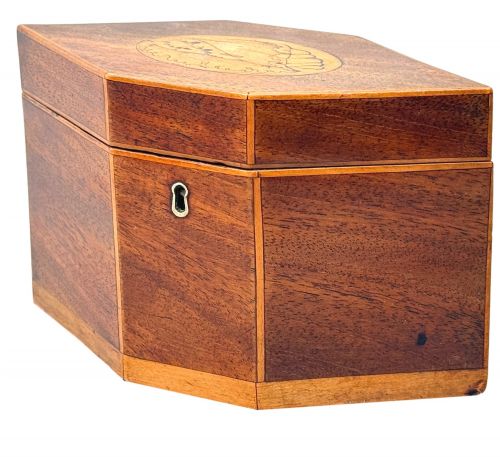
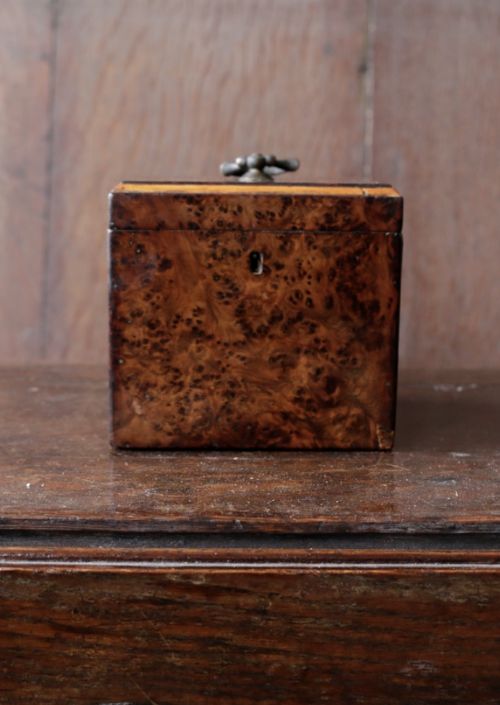
A marquetry wooden tea box collects pieces spanning the eighteenth and nineteenth centuries, including Georgian, Regency, and Victorian eras. The selection contains tea caddies, teapoys, and decorative boxes taking hexagonal, oval, cube, and sarcophagus forms.
Makers utilised woods such as mahogany, satinwood, rosewood, walnut, harewood, and burr yew, often embellished with bone, brass, or tortoiseshell details. Examples range from simple geometric inlays to pictorial Tunbridge Ware and intricate floral marquetry.
Materials and Technique
Cabinetmakers constructed carcass boxes from dense primary timbers like mahogany and rosewood, applying fine veneers of satinwood, harewood, and burr yew to the exterior surfaces. Marquetry and parquetry patterns involved precisely cutting and fitting small geometric or pictorial wood segments together.
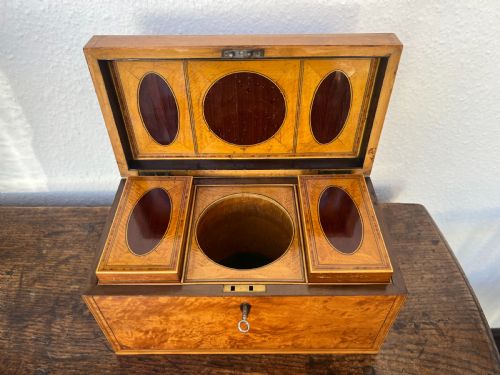
Specialised workshops employed contrasting timbers such as boxwood and calamander to create borders and medallions. Many specimens incorporate fitted interiors, brass handles, and bone escutcheons.
The listings show boxes formed from satinwood, rosewood, and mahogany, spanning the eighteenth to nineteenth centuries.
Judging Quality
The standard of a piece depends upon the precision of the veneer work and the complexity of the wood inlay. Sharper contrasts in timber selection and tighter joints separate superior examples from standard production.
The retention of original fitted interiors and working locks distinguishes finer specimens. Overall balance in proportion and the subtlety of natural wood grain figures dictate the standing of individual boxes.
Henry Hollamby
The Marquetry Wooden Tea Box Glossary
- Marquetry
- A decorative technique applying pieces of veneer to a structure to form ornamental designs. Artisans cut various coloured woods to build pictorial or geometric scenes.
- Teapoy
- A freestanding pedestal table fitted with a box for holding tea. These pieces often feature internal compartments for different tea varieties.
- Tunbridge Ware
- Woodworking characterised by tiny mosaic tiles formed from differently coloured natural timbers. Workers glued these together to create detailed geometric or pictorial motifs.
- Carcass
- The underlying structural body of a box or piece of furniture before veneer is applied. It provides the essential strength for the outer decorative shell.
- Escutcheon
- A protective plate surrounding a keyhole. These elements are frequently fabricated from brass or bone on period boxes.
Marquetry Wooden Tea Box: Frequently Asked Questions
What is a marquetry wooden tea box?
A marquetry wooden tea box is a lidded container designed during the Georgian and Victorian periods to store dried tea leaves securely. These receptacles protected expensive imported tea from moisture and light.
Craftsmen decorated the exterior surfaces using contrasting wood veneers arranged in geometric patterns, floral motifs, or pictorial scenes.
How were these boxes used?
Households kept them in the parlour or dining room, where the master or mistress of the house dispensed tea to guests. The boxes typically featured internal lidded compartments to keep different tea grades separate.
Because tea was a valuable commodity, the boxes usually included a working lock and key to restrict access.
How do I date a tea box?
Dating relies on assessing the timber choices, construction methods, and stylistic cues present in the marquetry. Eighteenth-century pieces frequently utilise satinwood and harewood with neoclassical motifs.
Victorian examples often display rosewood, walnut, or Tunbridge Ware decoration. Sarcophagus shapes and brass inlay generally point toward the Regency era.
How do I care for antique wood?
Keep the box out of direct sunlight and away from heat sources to prevent the wood veneers from drying and cracking. Maintaining stable room humidity protects the delicate marquetry inlay.
Apply a microcrystalline wax occasionally to nourish the timber surface without building up excessive residue.