
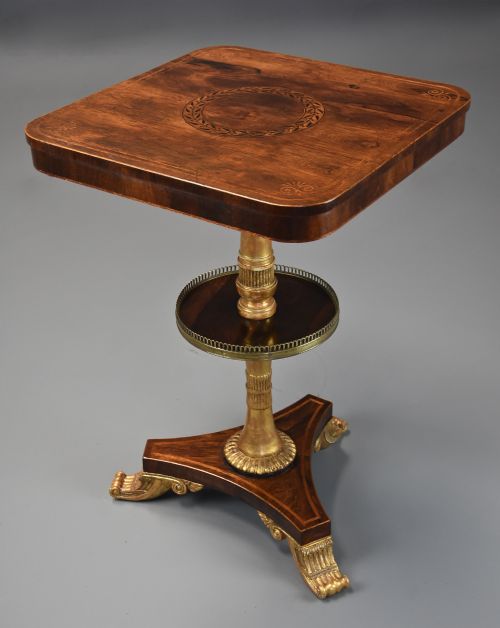


Marquetry Wood Wine Table
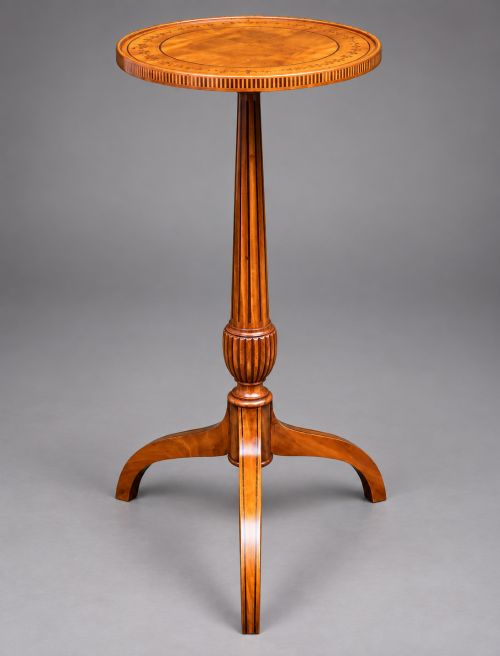
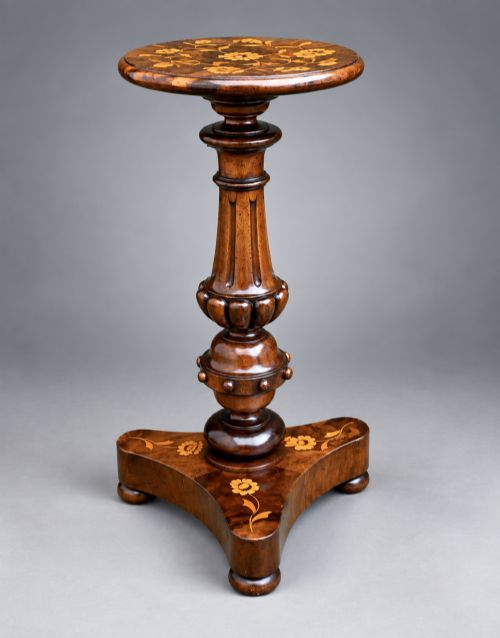
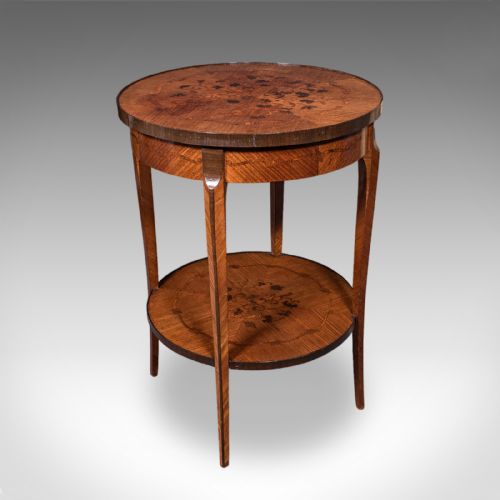
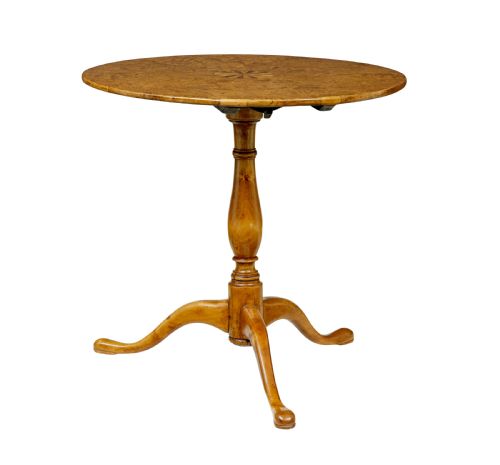
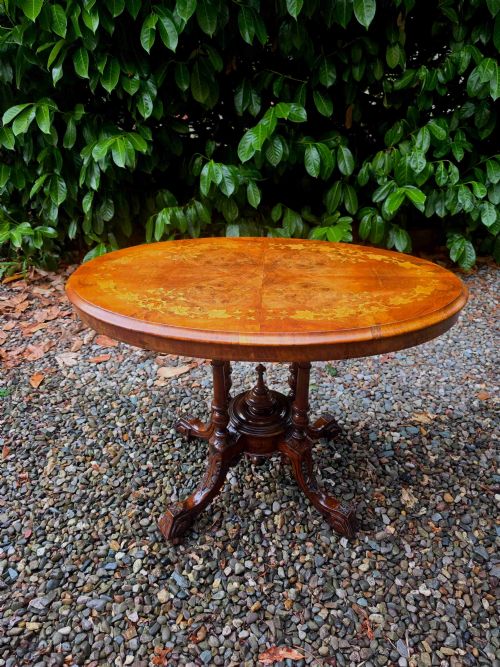
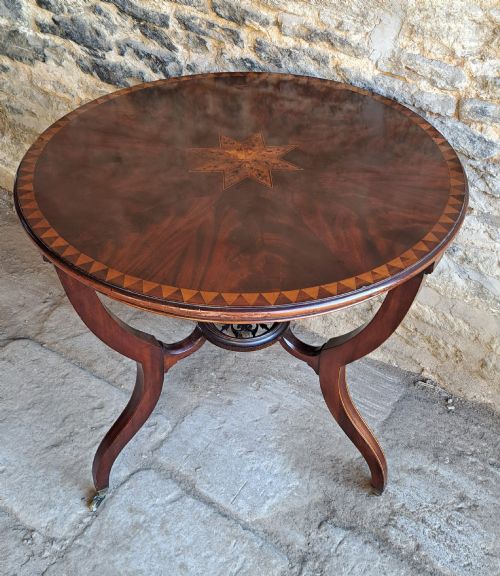
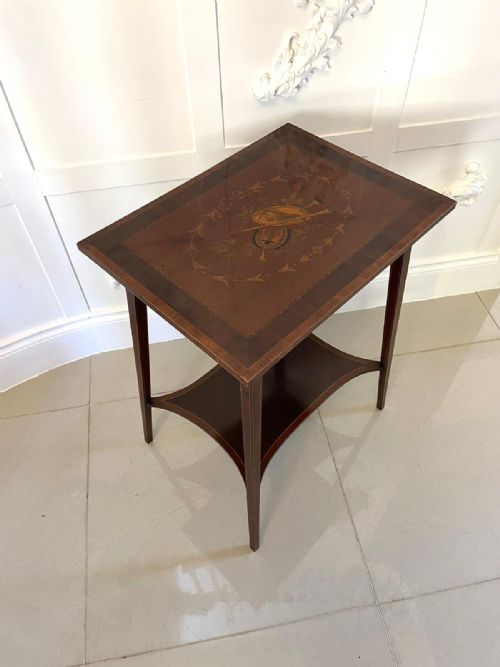
A marquetry wood wine table brings intricate floral or geometric veneers together with a compact tripod or pedestal form.
Marquetry Wood Wine Table
A marquetry wood wine table is a small portable surface designed to hold glasses and bottles, appearing across the Georgian, Victorian, and Edwardian periods.
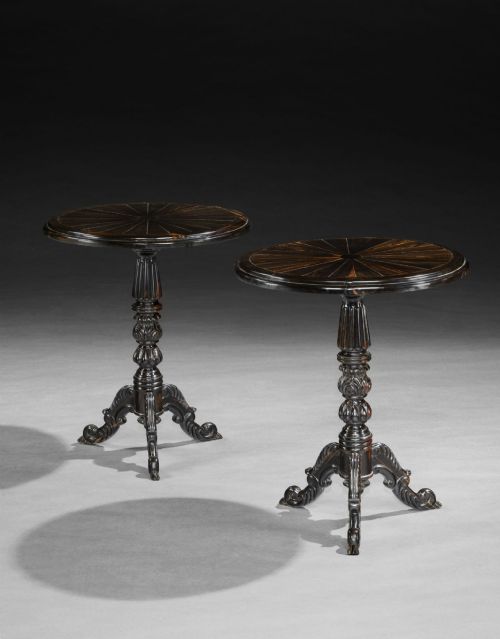
The pieces on this page span several forms including tilt-top tables, candle stands, and occasional tables featuring detailed wood inlays from Britain, Italy, and beyond.
Buyers seeking this phrase encounter circular or multi-sided tops supported by single pillars or tripod legs in woods like walnut, mahogany, and rosewood.
How They Were Made
Cabinet makers utilised a foundation of solid timbers such as mahogany, oak, or walnut, applying contrasting decorative veneers across the top surfaces.
Marquetry and parquetry techniques involved cutting thin slices of fruitwood, satinwood, ebony, and bone to form intricate pictorial or geometric patterns.
Many examples incorporate tilt-top mechanisms, brass fittings, or turned pedestals resting on tripod bases.
Some Sorrento and Swiss Black Forest workshops added hidden bone inlay and secret panels to surprise observant visitors.
What Varies in Quality
The refinement of the marquetry design and the variety of contrasting timbers determine the visual success of the top.
Construction details such as the stability of the tilt-top mechanism and the turning of the pedestal separate standard production from finer cabinet work.
The Marquetry Wood Wine Table Glossary
- Marquetry
- Decorative veneer work assembled in geometric or pictorial patterns across a surface. It uses thin pieces of various woods to create pictures or designs.
- Tilt-top
- A table mechanism allowing the surface to fold vertically when not in use. This clever design saved valuable floor space in period rooms.
- Specimen wood
- Furniture constructed from a multitude of different timbers, often collected during travels. Each wood exhibits a distinct natural colour and grain.
- Tripod base
- A three-legged support structure commonly found beneath small tables. It ensures stability on uneven floors.
- Parquetry
- Geometric wood inlay forming repetitive patterns such as cubes or chequers. It creates a structured contrast to curved floral marquetry.
Marquetry Wood Wine Table: Frequently Asked Questions
What is a marquetry wood wine table used for?
These small tables were originally designed to hold wine bottles and glasses beside a chair or sofa during evening gatherings.
Today they function effectively as lamp tables, plant stands, or decorative accents in sitting rooms and hallways.
How do I tell a Victorian table from a Georgian one?
Georgian tables often display restrained classical proportions with solid mahogany or walnut construction.
Victorian examples frequently embrace heavier marquetry, burr veneers, and more elaborate pedestal turnings.
What is a tilt-top mechanism?
A catch beneath the table top allows the surface to swivel from horizontal to vertical.
This feature enabled historical owners to store the tables flat against walls when rooms needed to be cleared.
What are specimen wood tables?
These are decorative pieces built using many distinct imported and native timbers.
Makers arranged contrasting light and dark grains to form sunbursts or geometric mosaics across the surface.