
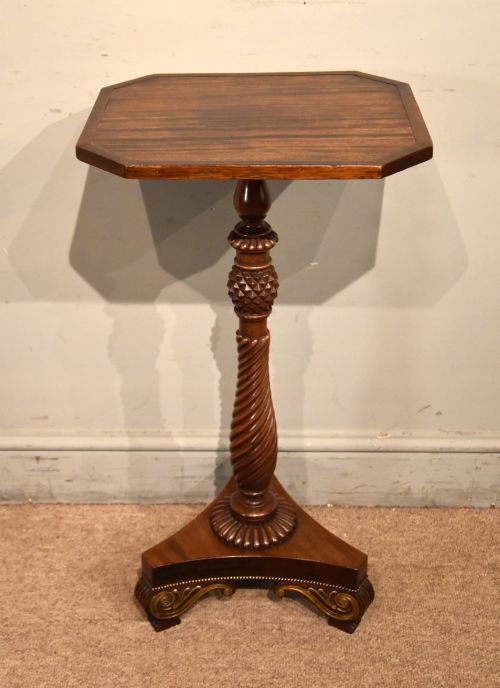
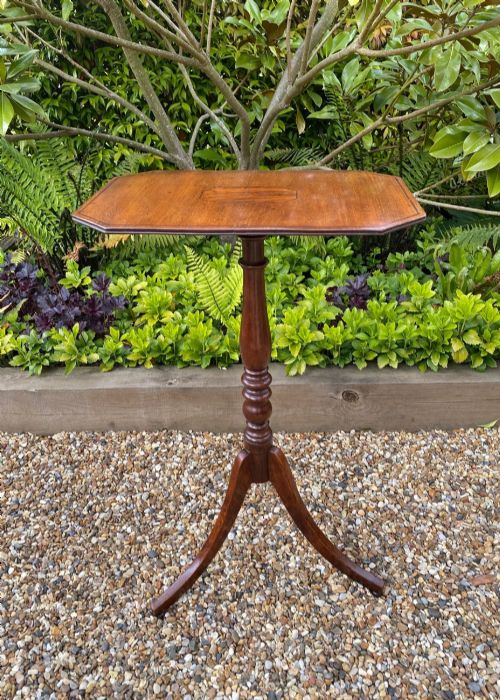
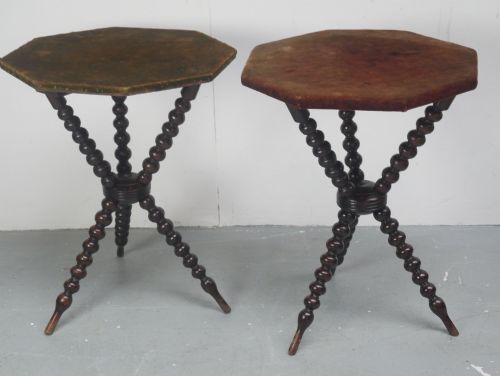
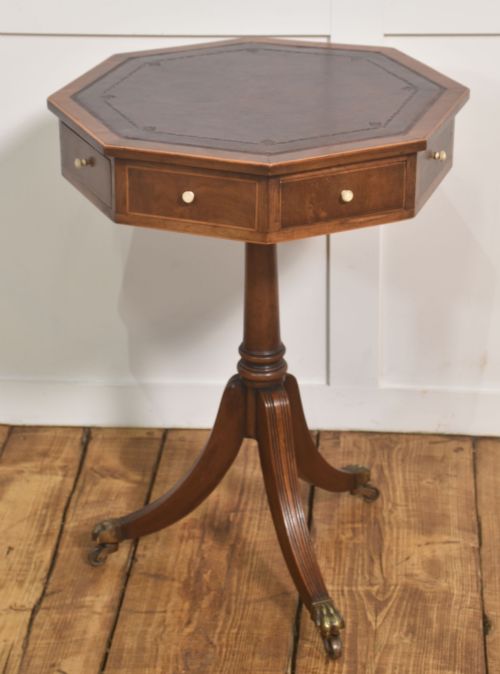
Octagonal Tripod Occasional Table
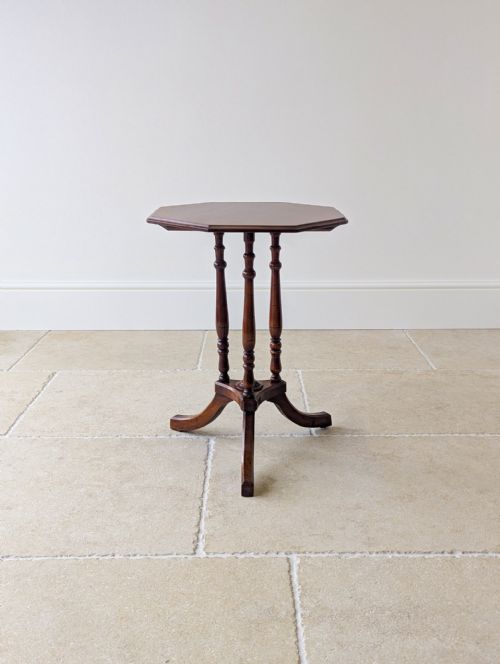
An octagonal tripod occasional table brings compact geometry and a balanced three-legged support to a room as a functional surface.
Octagonal Tripod Occasional Table
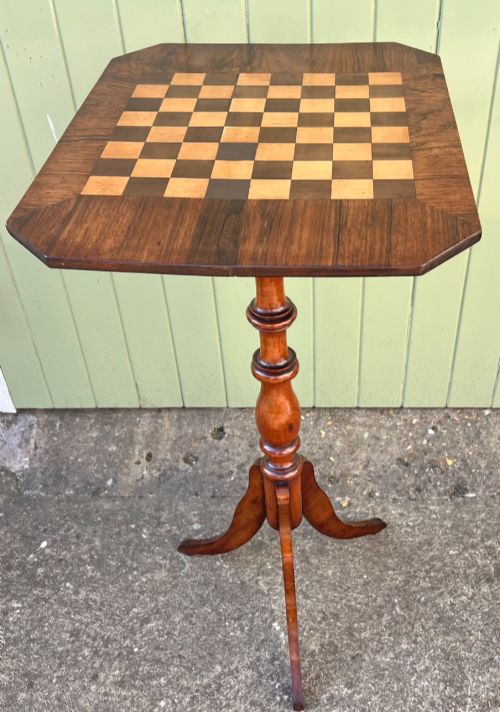
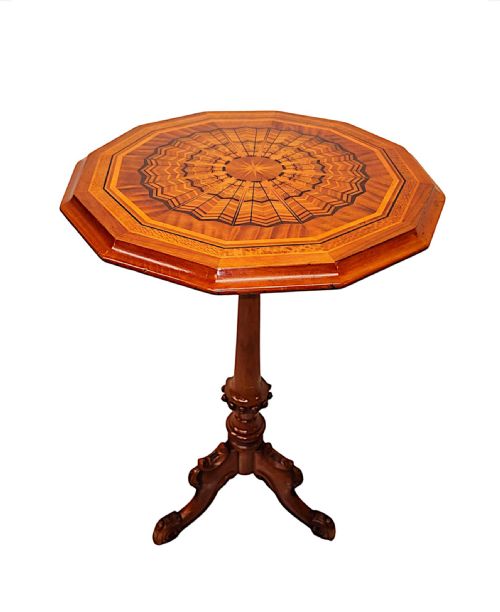
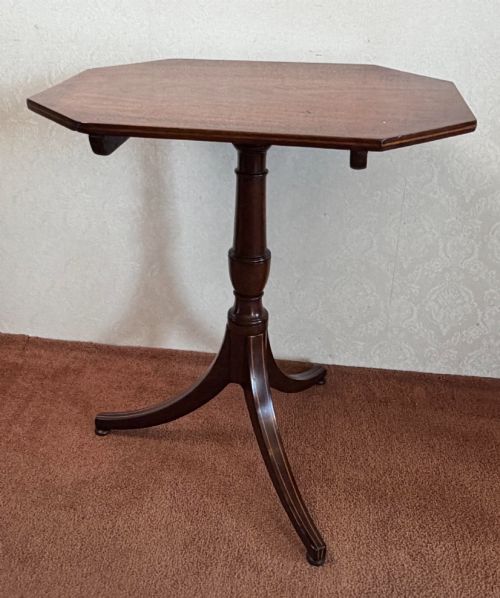
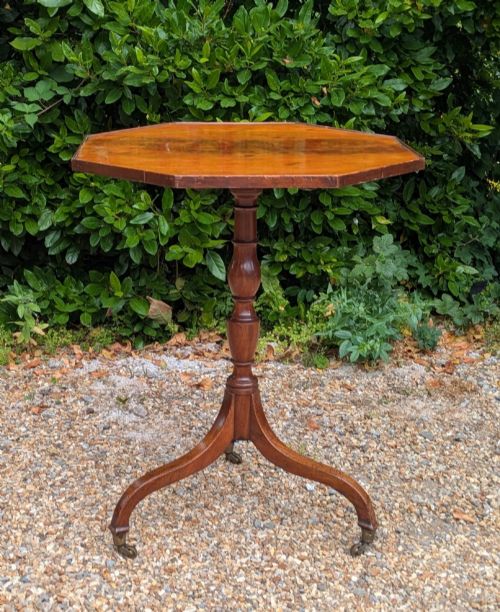
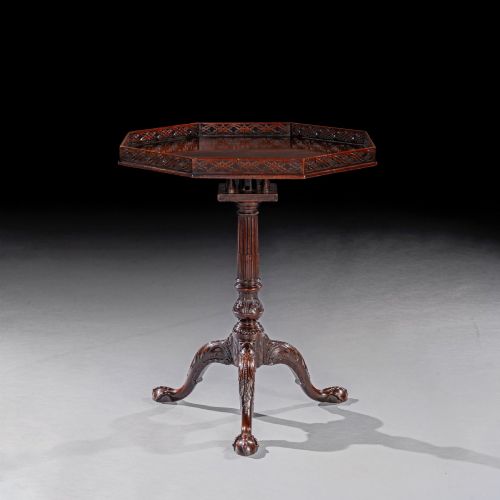
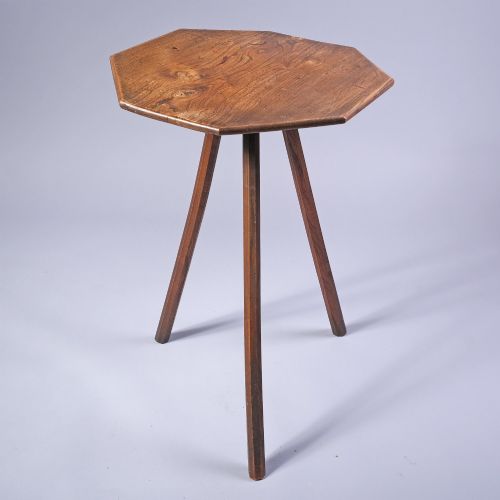
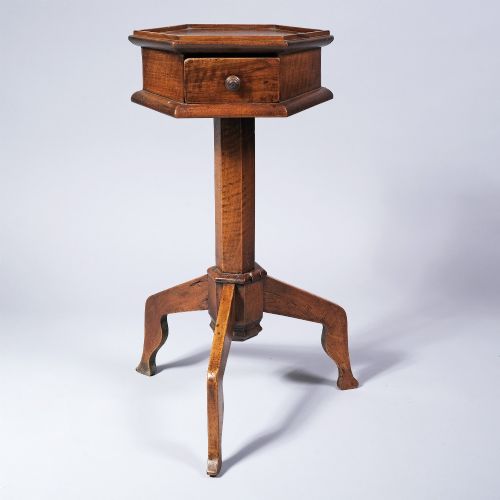
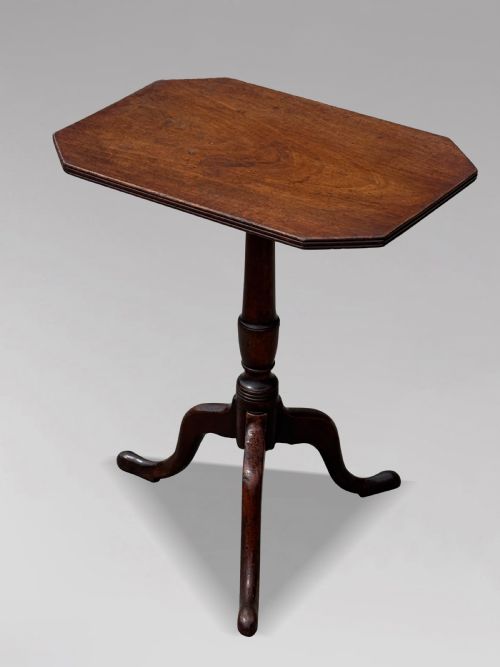
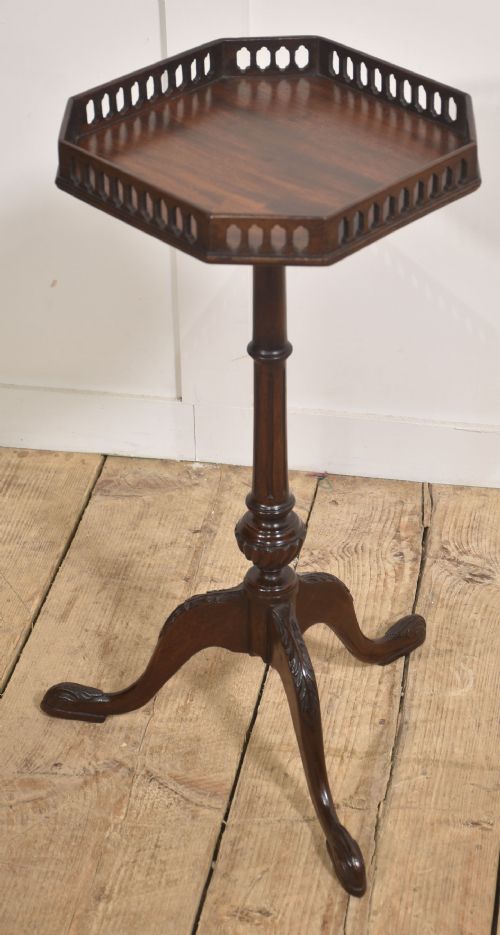
The octagonal tripod occasional table brings an eight-sided top supported by three legs into rooms as a compact surface for lamps, books, or drinks. These small tables appear in forms such as wine tables, lamp tables, and side tables.
Examples on this page span the Georgian, Regency, Victorian, and Edwardian periods, stretching from the late eighteenth century into the early twentieth century. Makers of these periods built them in mahogany, walnut, rosewood, and various fruitwoods.
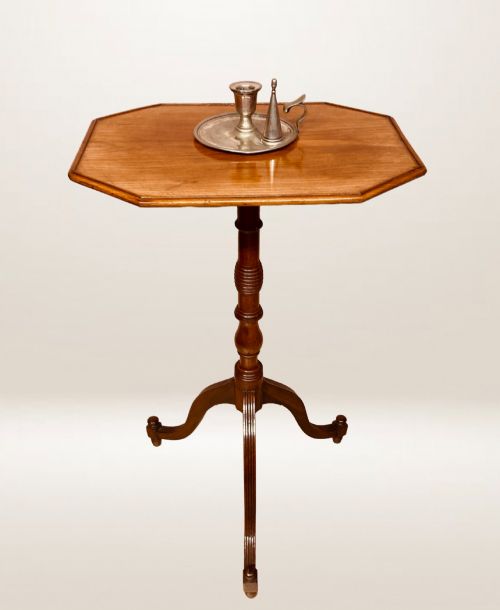
The eight-sided top distinguishes these from round or square tripod tables, often featuring decorative borders, tilt-top mechanisms, or birdcage mountings that allow the top to pivot and fold.
Materials and Technique
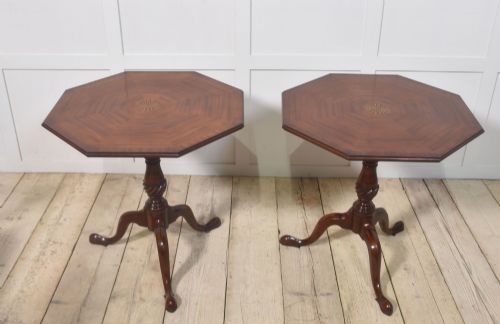
Cabinet makers constructed the tops and pillar supports from dense hardwoods like mahogany, walnut, and rosewood, frequently incorporating softer fruitwoods or oak for secondary framing. Marquetry, boxwood stringing, and contrasting specimen woods embellished the octagonal surfaces.
The three-legged bases rely on sturdy turned pillars fitted into splayed tripod feet, sometimes joined by birdcage mechanisms that enabled the top to rotate and tilt vertically for storage.
Some tables tilt up so the top mimics a giant wooden coin waiting to roll away.
Craftsmanship and Detail
Quality rests in the precision of the timber selection, such as figured mahogany, pollard oak, or elaborate marquetry and specimen wood inlays on the octagonal top. The crispness of carved details on the pillar and the stability of the tripod base distinguish finer work.
Mechanisms like tilt-top hinges and birdcage mountings operate smoothly on better pieces, fitting snugly without wobble when locked in the horizontal position.
Gillows
The Octagonal Tripod Occasional Table Glossary
- Tripod base
- A furniture support consisting of three legs radiating from a central turned pillar. This design provides steady contact on uneven floors.
- Tilt-top action
- A pivoting mechanism beneath the table surface allowing the top to swing into a vertical position. This saved floor space when the furniture stood against a wall.
- Birdcage
- A wooden framework beneath the tabletop incorporating two small discs and turning spindles. This assembly allows the table to both rotate and tilt.
- Boxwood stringing
- Thin inlaid lines of light-coloured boxwood set into contrasting darker veneers. It frames the octagonal edge of the tabletop.
- Specimen wood
- An assemblage of various native and exotic timbers arranged in geometric patterns. Cabinet makers used these to display their skill with veneers.
Octagonal Tripod Occasional Table: Frequently Asked Questions
What is an octagonal tripod occasional table?
An octagonal tripod occasional table is a small, movable stand featuring an eight-sided top supported by a central pillar and three legs.
Craftsmen built these versatile surfaces during the Georgian, Regency, and Victorian eras for use as lamp stands, wine tables, or side pieces.
How do you use an octagonal tripod table?
These tables function well beside armchairs or sofas to hold lamps, drinks, or small decorative items without taking up excessive floor space.
Many examples feature tilt-top mechanisms, allowing the surface to fold flat against a wall when not in use.
How do you identify a tilt-top mechanism?
A tilt-top table has a catch or release mechanism beneath the octagonal surface that unlocks the top from the central pillar.
When released, the surface pivots on its hinge to rest vertically, a design originally intended for compact room storage.
What woods are used in these tables?
Mahogany, walnut, and rosewood form the primary structure of most examples, providing durable surfaces and rich dark tones.
Inlays and borders often incorporate lighter timbers such as boxwood, satinwood, and various fruitwoods to create geometric contrast.