

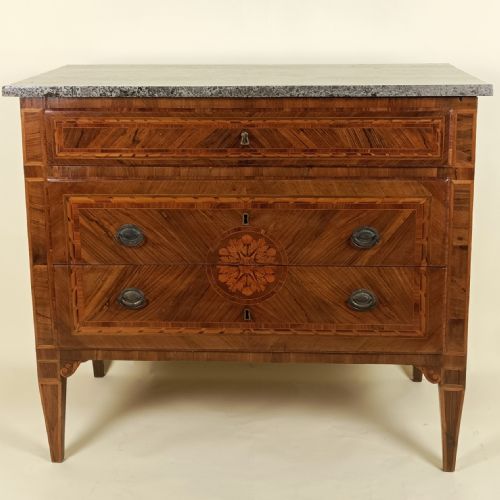


Marquetry Walnut Dresser
When you search for a marquetry walnut dresser, you are looking at substantial storage furniture patterned with contrasting woods.
Marquetry Walnut Dresser
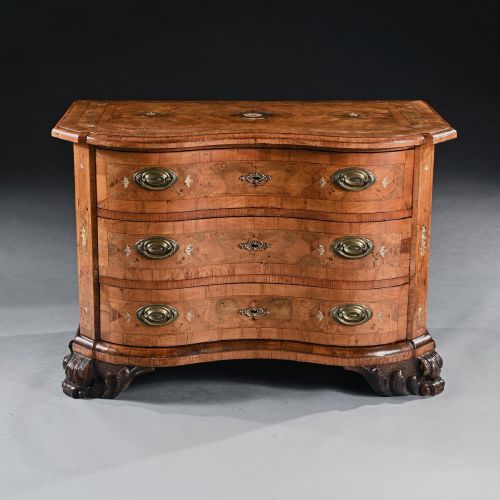
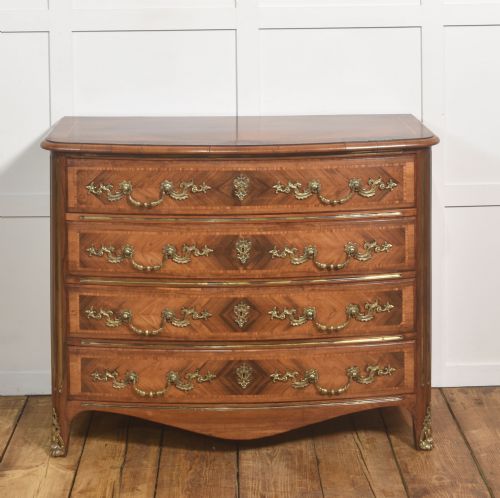
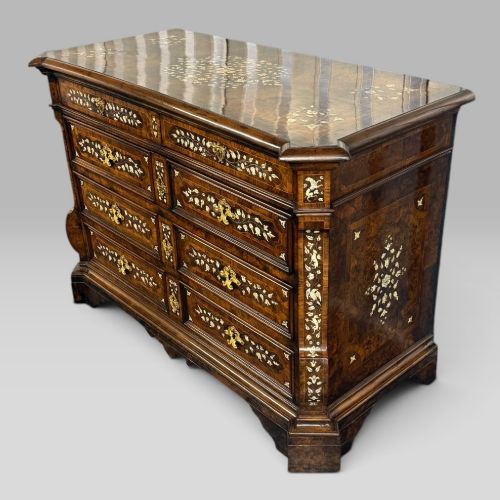
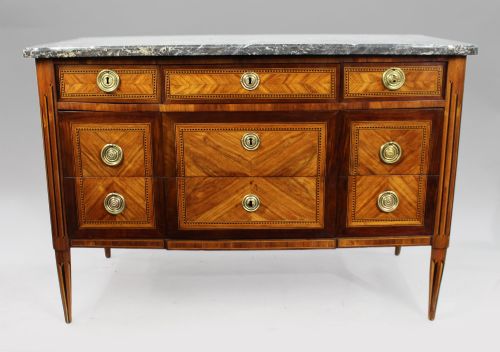
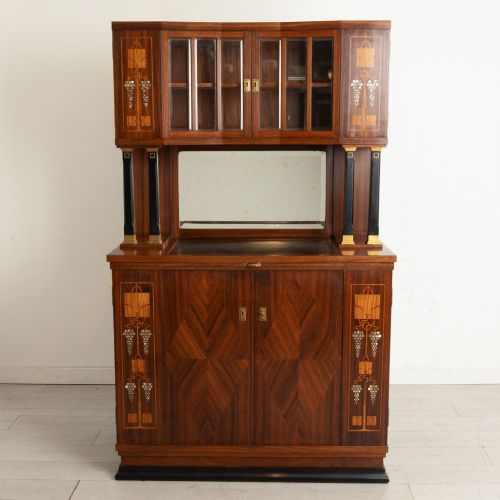
A marquetry walnut dresser encompasses elaborate storage forms predominantly manifested as chests of drawers, commodes, credenzas, and display cabinets. Pieces spanning the seventeenth through to the early twentieth centuries appear across this selection, drawing from English, French, Italian, German, Austrian, and Dutch origins.
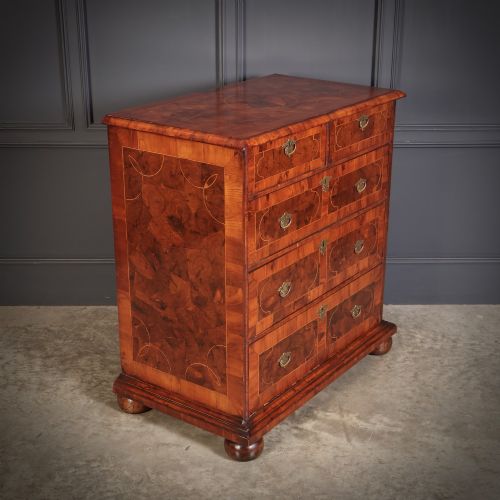
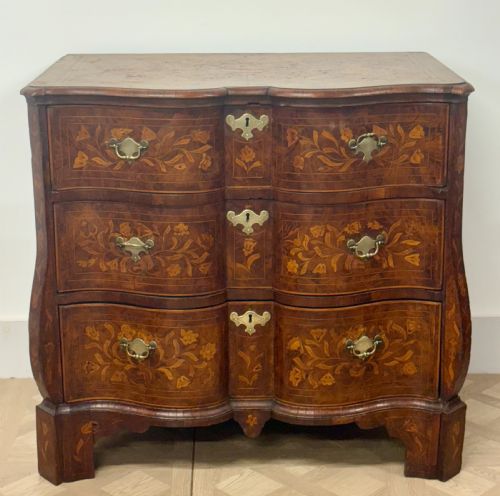
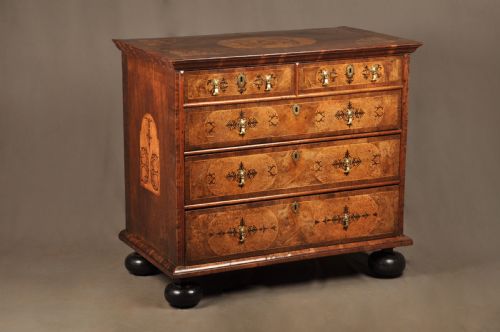
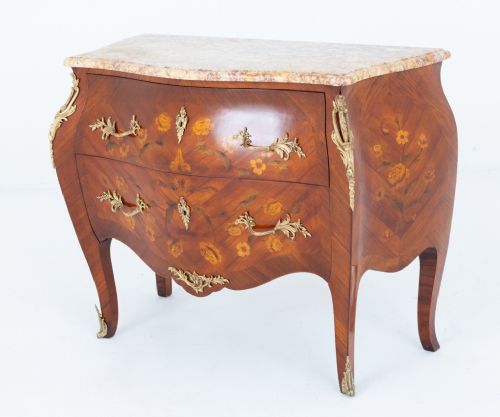
The buyer most frequently meets seventeenth-century William and Mary examples featuring oyster veneers alongside eighteenth-century Continental serpentine and bombé commodes. These items served as prestigious domestic storage for textiles and valuables in historic interiors, constructed with deep drawer configurations and cabinet bodies.
How they were made
Cabinetmakers constructed these forms using walnut, burr walnut, and fruitwood foundations, often enhanced by intricate marquetry and parquetry patterns. Secondary timbers such as oak provide structural rigidity to the carcass and drawer linings.
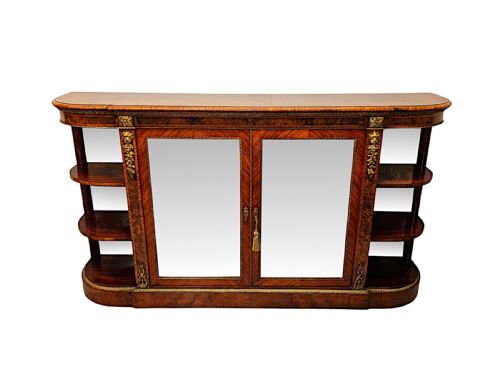
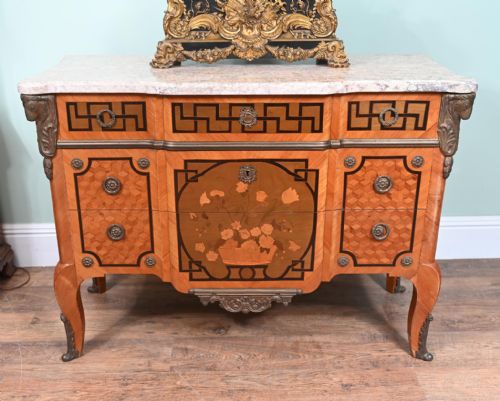
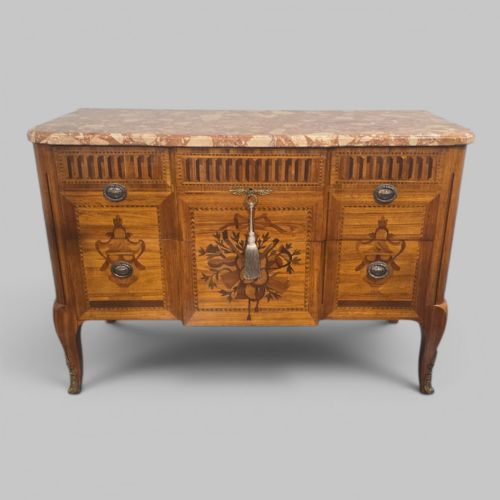
Surface ornamentation integrates brass hardware, marble tops, ormolu mounts, and delicate pewter or ivory inlay. Oyster veneering techniques utilise branch wood cross-sections arranged to create repetitive circular patterns across the principal facades.
The listings demonstrate a strong representation of seventeenth-century William and Mary oyster veneer alongside eighteenth-century Continental serpentine commodes in walnut and fruitwood.
What varies in quality
Quality rests upon the precision of the marquetry cutting and the selection of figured veneers, such as burr walnut or olive wood. Superior workshops executed floral or arabesque designs with tight joints and minimal filler between contrasting timber species.
Structural integrity and the retention of original mounts, handles, and marble tops distinguish finer examples from altered pieces. The subtlety of the underlying carcass proportions and the crispness of the serpentine or bombé curves determine the overall caliber.
Gillows·August Ungethüm
The Marquetry Walnut Dresser Glossary
- Marquetry
- Decorative veneer work forming pictures or geometric patterns by assembling small pieces of wood, fruitwood, and other materials. This technique defines the visual surface of many seventeenth- and eighteenth-century case pieces.
- Oyster veneer
- Transverse slices of small branches arranged to resemble oyster shells, creating repetitive circular motifs. This method is characteristic of late seventeenth-century William and Mary furniture.
- Commode
- A low chest of drawers or cabinet developed in France during the seventeenth century. These pieces often feature serpentine fronts and marble tops.
- Ormolu
- Gilded bronze used for decorative mounts and furniture trim. It frequently appears on nineteenth-century revival credenzas and commodes.
- Bombé
- A swelling, outward-curved commode or chest profile popular in Dutch and Continental furniture design. This form requires specialised joinery to shape the timber accurately.
Marquetry Walnut Dresser: Frequently Asked Questions
How do I identify a William and Mary chest?
William and Mary chests typically date from the late seventeenth century and employ distinct oyster veneering or floral marquetry. They often stand on ball feet or early stretchers.
Look for geometric drawer arrangements and walnut surfaces that display natural grain movement rather than heavy surface finishes.
What is the difference between a commode and a chest?
A commode generally refers to a low Continental cabinet or chest of drawers with decorative mounts or a marble top. The term originates from French furniture terminology.
Traditional chests may lack the shaped serpentine profiles and imported marble surfaces frequently found on Continental commodes.
How do I care for antique walnut veneer?
Antique walnut veneer requires stable indoor humidity and protection from direct sunlight to prevent timber shrinkage and lifting. Gentle dusting with a dry cloth maintains the finish.
Avoid commercial silicone polishes and excess moisture, which can penetrate historic joints and degrade old adhesives.
Where were these pieces made?
These pieces originate from workshops across England, France, Italy, Germany, Holland, and Austria. Each region developed distinct regional interpretations of marquetry and carcass shapes.
English makers favoured geometric oyster veneer, while Dutch and German cabinetmakers specialised in elaborate floral marquetry and bombé silhouettes.