


Marquetry Vanity Mirror
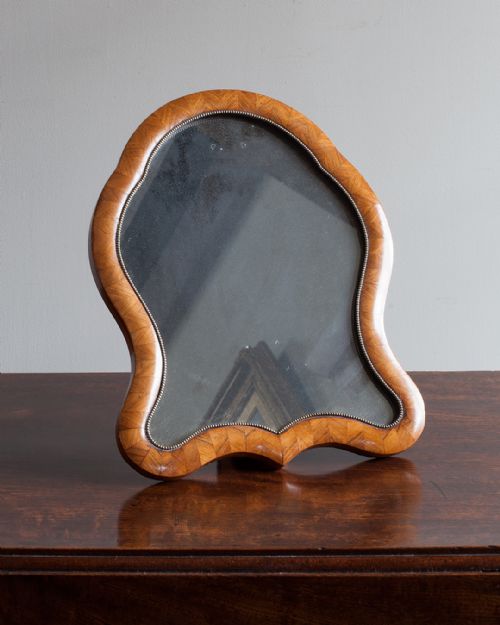
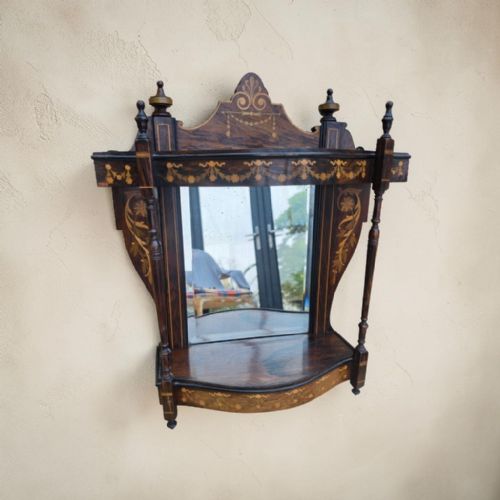
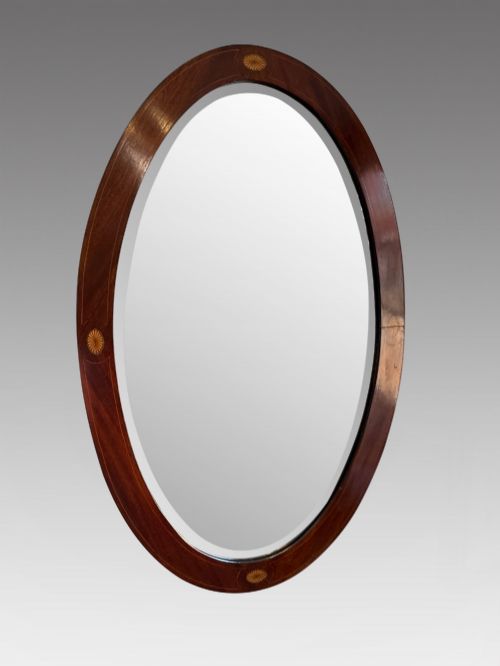
A marquetry vanity mirror brings intricate floral and geometric wood inlay to the dressing table, offering both a functional glass and a decorative focal point.
Marquetry Vanity Mirror
A marquetry vanity mirror sits upon a dressing table or chest, combining a swivelling mirror plate with a small box base or drawer framework. You are most likely to encounter Victorian and Edwardian examples alongside pieces dating from the nineteenth and eighteenth centuries.
Many of these dressing table mirrors and toilet mirrors originate from English workshops or continental makers, particularly Dutch craftsmen known for elaborate floral inlay. The selection includes swing mirrors, table mirrors, and larger dressing pieces incorporating fine wood veneers.
Makers utilised various secondary forms such as travelling mirrors and wall mirrors, though the classic swing dressing mirror remains central. These pieces reflect the periods of their construction, spanning Georgian elegance to later revival styles.
Materials and construction
Cabinet makers constructed these mirrors using solid timber frameworks veneered with figured woods like mahogany, walnut, satinwood, and kingwood. Artisans then applied intricate wood inlay and marquetry patterns, cutting contrasting timbers to form floral sprays, urns, and geometric borders.
The glass plates are held within adjustable frames mounted on upright arms, allowing the user to tilt the reflection. Brass brackets, knobs, and small lock escutcheons frequently complement the polished wooden surfaces.
Listings feature eighteenth, nineteenth, and twentieth-century examples, incorporating mahogany, walnut, satinwood, and oak with traditional marquetry.
Assessing craftsmanship and detail
The fineness of the wood inlay dictates the visual impact of the piece, with tightly fitted, multi-timber marquetry representing superior artistry. Simpler linear stringing appears on more utilitarian items, whereas elaborate floral and pictorial designs demand advanced skill.
Proportion and timber selection separate standard production from exceptional examples. Richly figured grains, well-balanced support pillars, and retained original mirror glass or drawer furniture elevate the standing of a piece.
Edwards & Roberts·Gillows·B Cohen & Sons
The Marquetry Vanity Mirror Glossary
- Marquetry
- The art of applying decorative pieces of veneer to a structural structure to form pictorial or geometric designs. It differs from simple inlay by covering the entire surface with fitted wood pieces.
- Toilet mirror
- A smaller mirror designed to stand on a dressing chest or table, often featuring small drawers beneath the frame. These pieces gained popularity in the Georgian and Victorian eras.
- Swing mirror
- A mirror plate mounted on pivots between two upright posts, allowing the glass to tilt. This mechanism forms the core of the traditional dressing table mirror.
- Satinwood
- A light-coloured, hard timber prized for its lustrous grain and yellow tone, frequently utilised in fine eighteenth and nineteenth-century cabinet work. It provides a striking contrast against darker woods in marquetry designs.
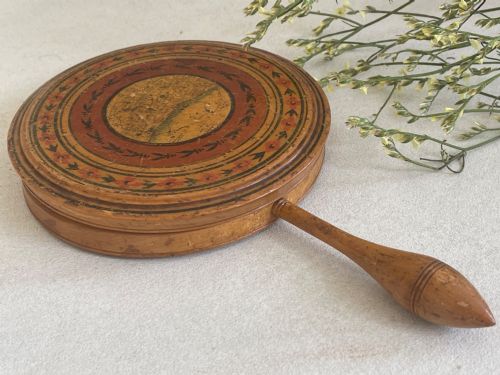
- Tunbridge Ware
- Small wooden items decorated with microscopic mosaic veneers, creating pictorial or geometric patterns from thousands of tiny coloured wood blocks. This specialised technique flourished in Kent during the nineteenth century.
Marquetry Vanity Mirror: Frequently Asked Questions
How do I date a marquetry vanity mirror?
Examine the construction methods of the drawer carcase, the timber species utilised, and the style of the inlay work. Georgian and Victorian pieces often display distinct dovetailing techniques and hardware that help pinpoint their era of production.
Secondary woods inside the drawers also offer clues, as early makers relied on native timbers before exotic veneers became common. Comparing the framing style to known period furniture provides further verification.
Are the mirror plates original?
Many older mirrors have replacement glass because original silvering degrades over centuries. Look for slight imperfections, distortion, or foxing within the glass as indicators of age.
Original plates often sit thin within the rebate and are secured with old wooden slips or backing boards. However, a clean replacement glass is common and practical for daily use.
How should I care for the wood and inlay?
Keep the wood away from direct sunlight and radiators to prevent the delicate veneer from shrinking or lifting. Apply a gentle wax polish occasionally to nourish the surface.
Avoid using liquid cleaners on the marquetry, as moisture can loosen the tiny wooden segments. A soft, dry cloth is sufficient for regular dusting.
Can I use these mirrors on a modern dressing table?
These pieces integrate easily into contemporary interiors, providing warm wooden tones and historic character. Their compact scale suits modern chest surfaces and dressing spaces.
Ensure the placement allows stable support for the base, protecting both the antique frame and your modern furniture surface.