
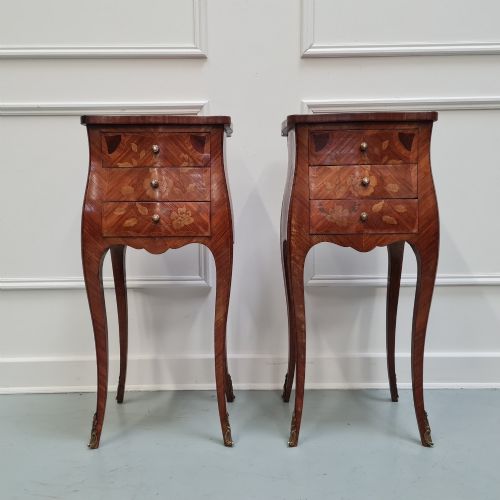
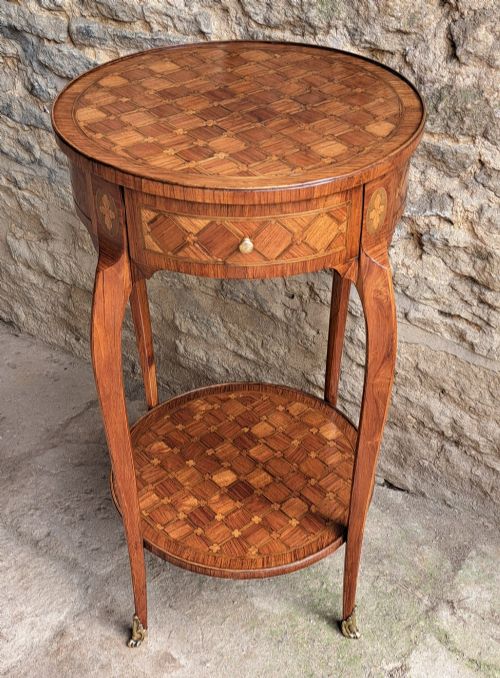
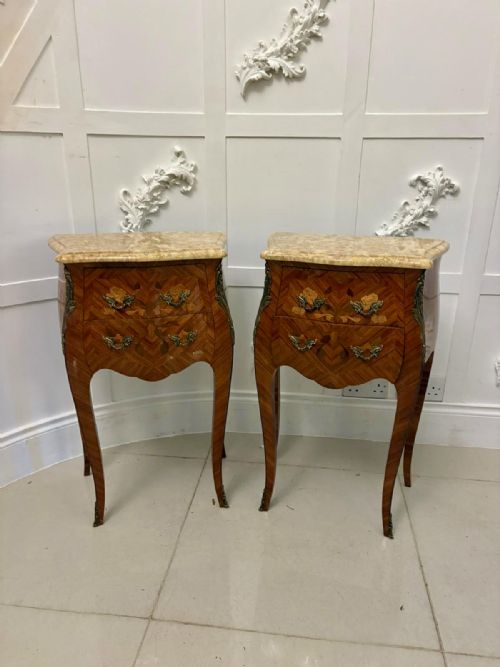


Marquetry Tables De Chevet
Marquetry tables de chevet bring French walnut, kingwood and rosewood craftsmanship directly to the bedside.
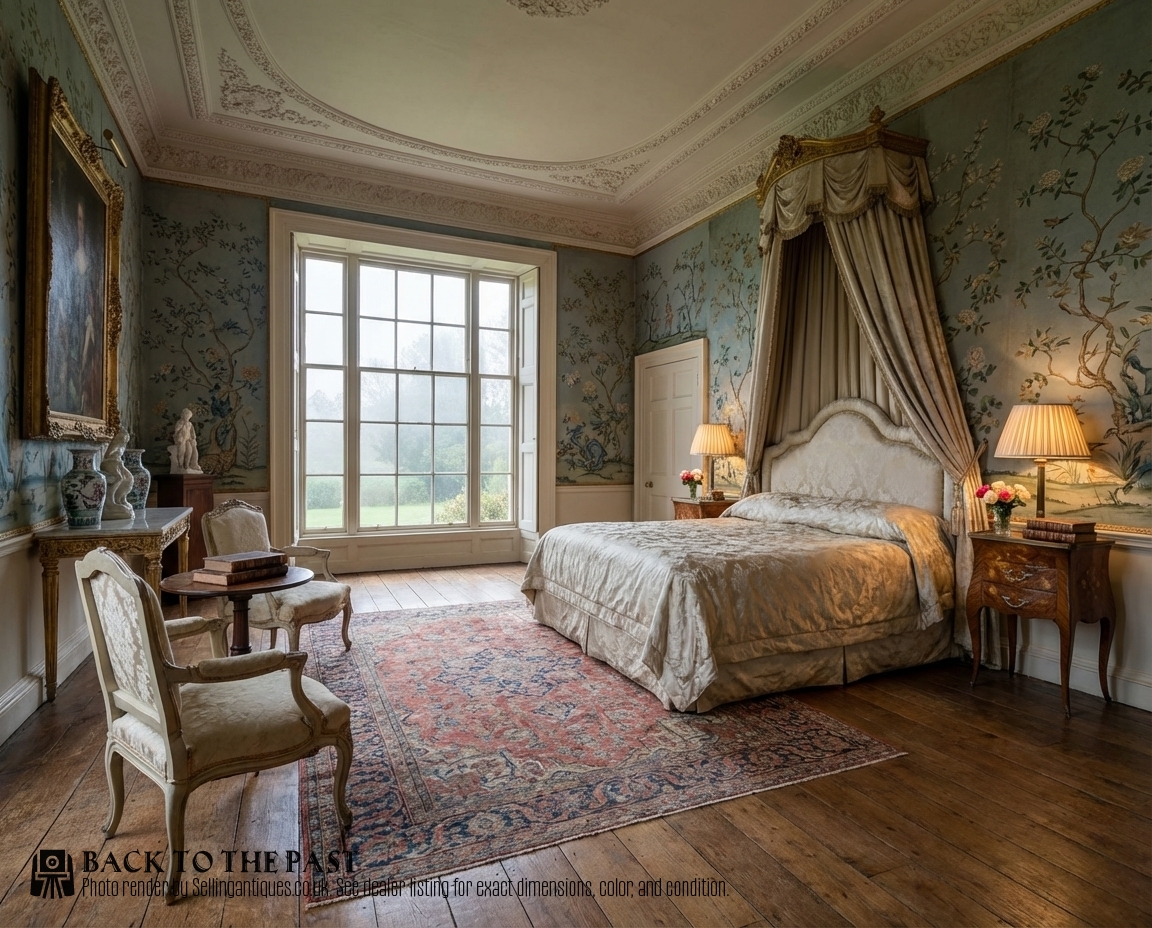
Marquetry Tables De Chevet
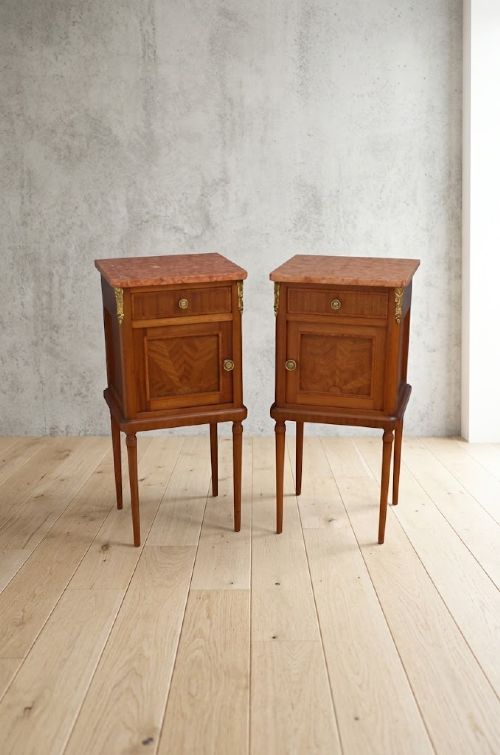
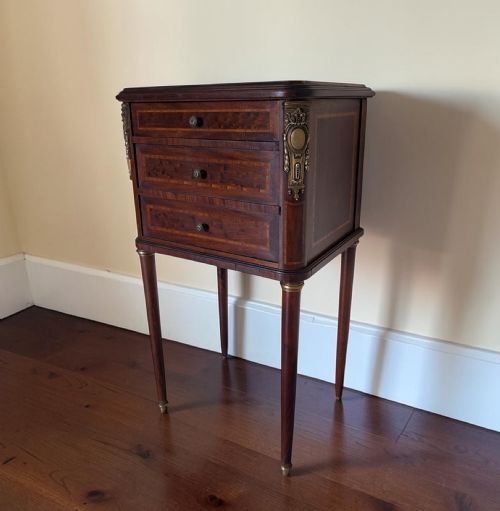
Marquetry tables de chevet are French bedside cabinets and tables designed for nocturnal storage, frequently appearing in pairs. These pieces emerge in styles inspired by Louis XV and Louis XVI revivals, dating from the nineteenth and early twentieth centuries.
The selections on this page span the Victorian era up to the nineteen-thirties, taking the form of bedside chests, cupboards and two-tier occasional tables. Most examples originate from French workshops adhering to traditional rococo taste.
Materials and construction
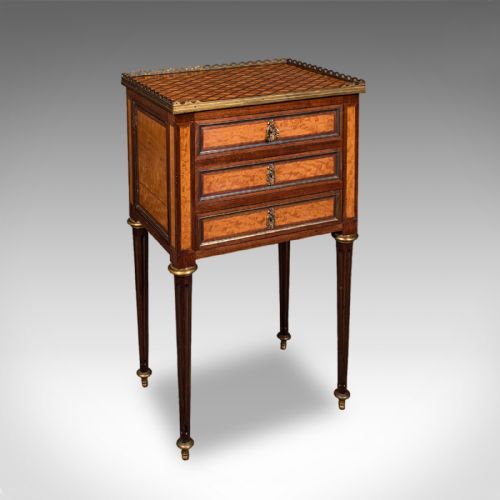
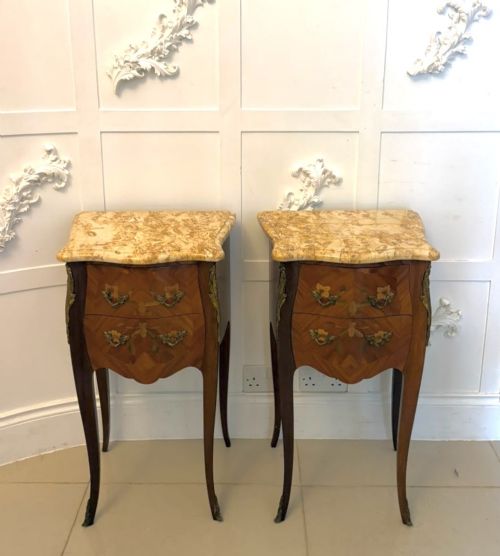
Cabinetmakers constructed these tables using walnut, kingwood, rosewood and satinwood, applying intricate marquetry and parquetry patterns across the surfaces. Many items incorporate marble tops alongside cast brass and ormolu mounts.
Internal elements often include bedside drawers and secret compartments, demonstrating precise French cabinet-making techniques from the nineteenth and early twentieth centuries.
Keep an eye out for hidden compartments, designed to keep your midnight secrets safe from the morning valet.
Distinctions in execution
The standard of floral and geometric marquetry inlay dictates the visual strength of each table, with finer examples showing meticulous timber selection. The integration of matched pairs also influences desirability among collectors.
Subtleties in ormolu mount chasing and the quality of fitted marble tops separate standard production pieces from finer cabinet work.
The Marquetry Tables De Chevet Glossary
- Marquetry
- A decorative technique where small pieces of wood veneer are applied to a structure to form intricate pictorial or geometric designs. This method defines the primary visual appeal of these bedside cabinets.
- Kingwood
- A dense, richly grained exotic timber utilised extensively in French cabinet-making for its dark violet and brown tones. It forms the base material for many inlaid surfaces.
- Ormolu
- Gilded bronze mounts applied to furniture edges and legs for decorative accent. These metal fittings reflect the French rococo and revival tastes.
- Parquetry
- A geometric mosaic of wood veneer arranged in repeating patterns such as cubes or chequers. It differs from pictorial marquetry through its strict geometric repetition.
- Table de chevet
- The French term for a bedside table or cabinet. These functional pieces served bedrooms in chateaux and townhouses alike.
Marquetry Tables De Chevet: Frequently Asked Questions
Are these tables usually found as pairs?
Many listings for marquetry tables de chevet comprise matching pairs intended to flank a bed symmetrically. These paired sets often share identical floral inlay and marble top configurations.
Single bedside chests and occasional tables also appear, offering alternative proportions for smaller bedroom spaces.
What periods do these pieces date from?
The inventory spans the nineteenth century through the early decades of the twentieth century. Key periods include the Victorian era and the nineteen-tens, twenties and thirties. Many pieces adopt earlier stylistic designations such as Louis XV revival and Louis XVI taste.
What woods are used in the inlay?
Craftsmen utilised kingwood, rosewood, walnut and satinwood to create contrasting tones within the marquetry designs. These exotic and native hardwoods provided the natural colour variations required for floral motifs.
Such timbers were sliced into thin veneers before being meticulously fitted together by hand.
Do these tables have marble tops?
Several tables feature fitted marble tops designed to provide a durable and decorative upper surface. These stone slabs often sit neatly within wooden surrounds.
Wood-topped variants remain equally common across the bedside cabinets and chests listed.