


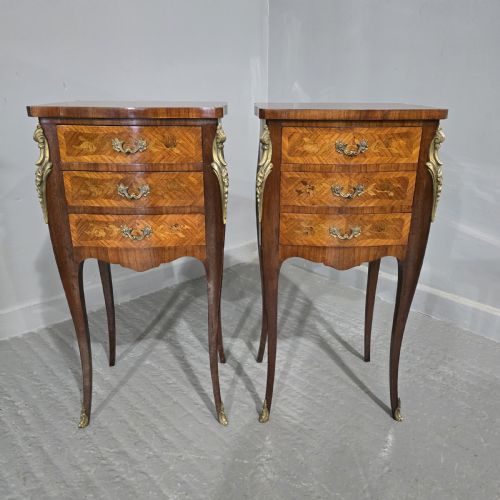

Kingwood Bedside Chest
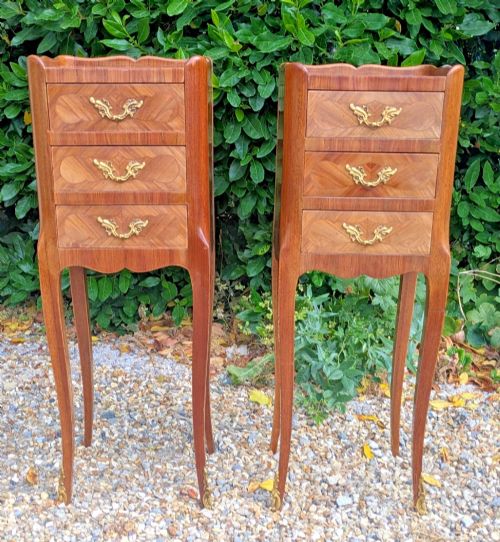
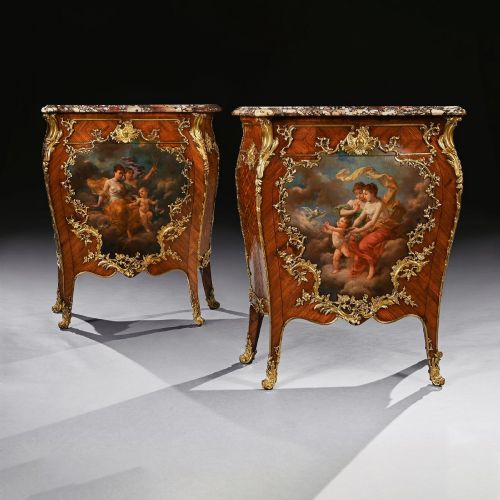
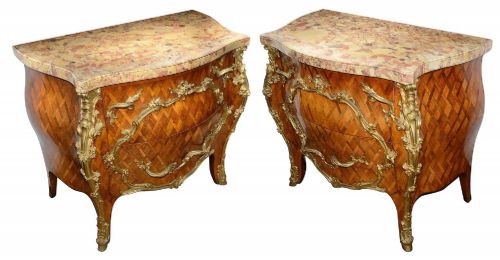
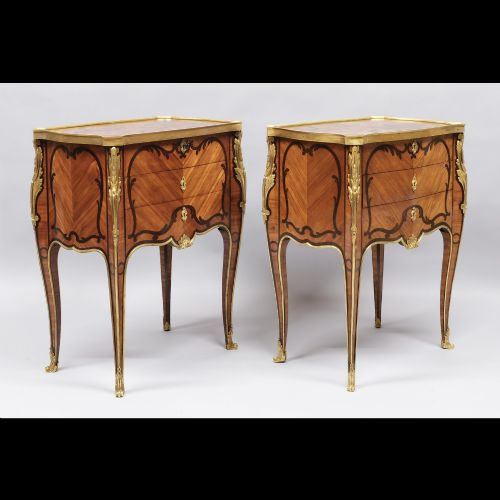
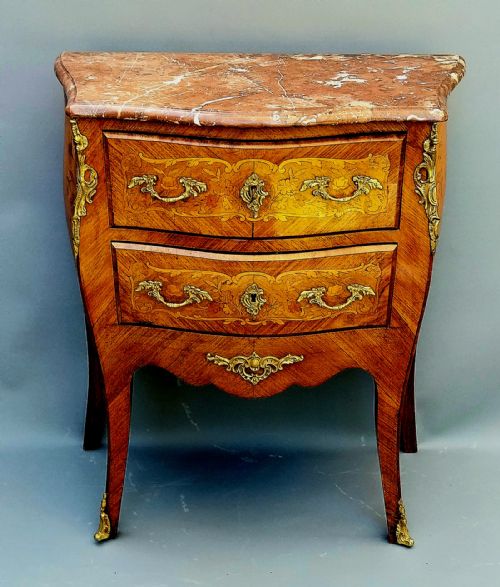
These kingwood bedside chests are French decorative tables built with rich veneers, marble tops, and metal mounts for use beside a bed.
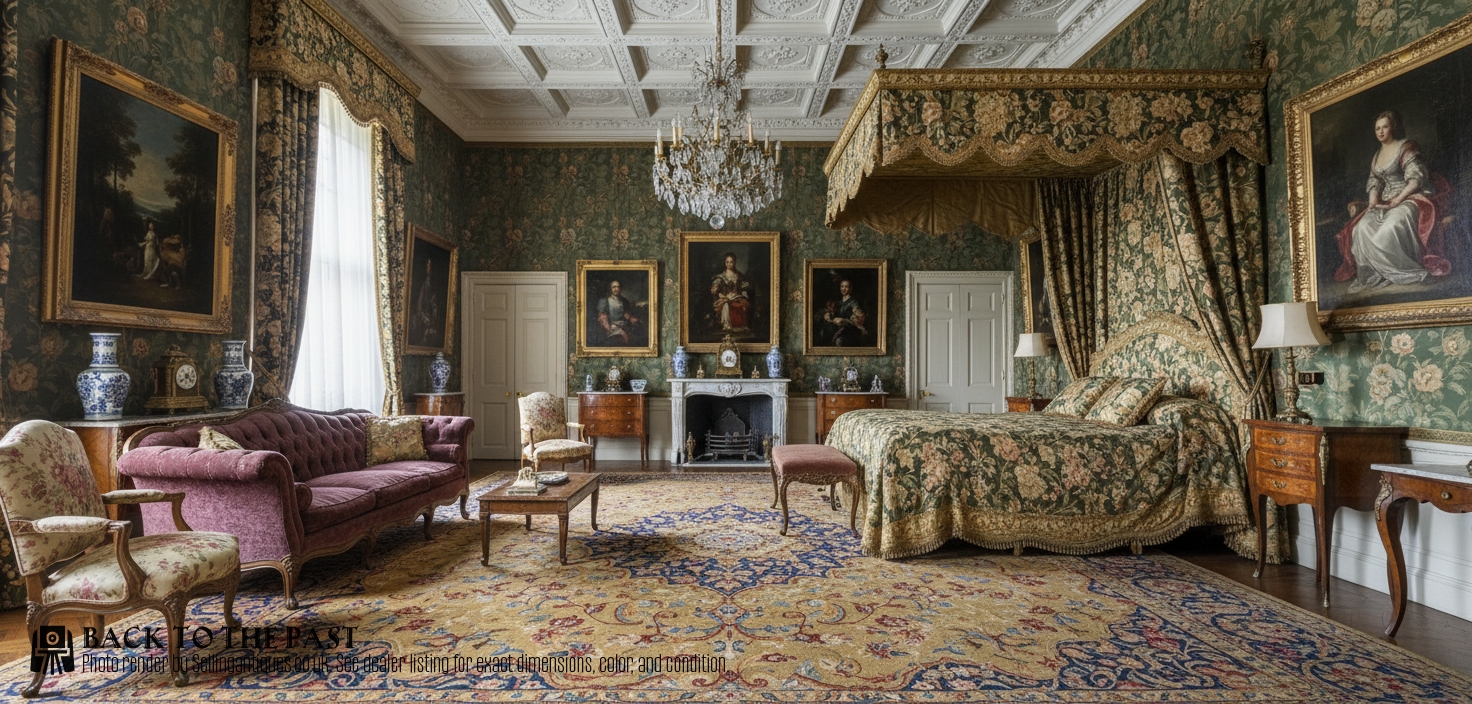
Kingwood Bedside Chest
A kingwood bedside chest functions as a small storage cabinet or commode placed beside a bed. When browsing this selection, you encounter pieces originating mostly from the nineteenth and early twentieth centuries, alongside occasional eighteenth-century examples.
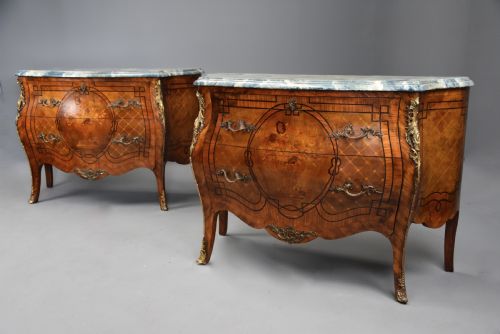
The dominant forms take inspiration from Louis styles, particularly French Rococo Revival and Louis XV designs. Many examples present curved bombe shapes or serpentine fronts paired with marble tops.
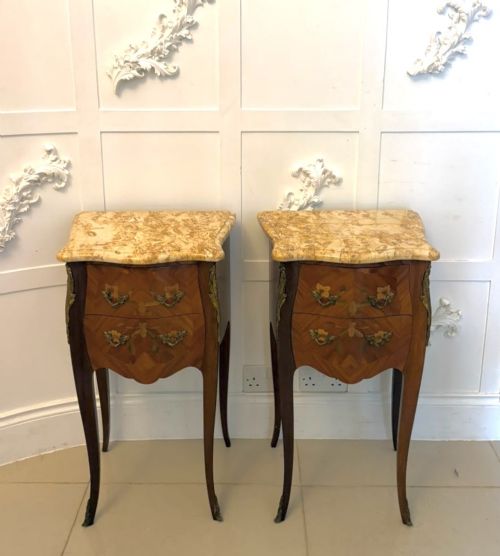
Makers constructed these cabinets as bedside tables, nightstands, and petite commodes. Pairs appear frequently across the inventory, alongside individual occasional tables.
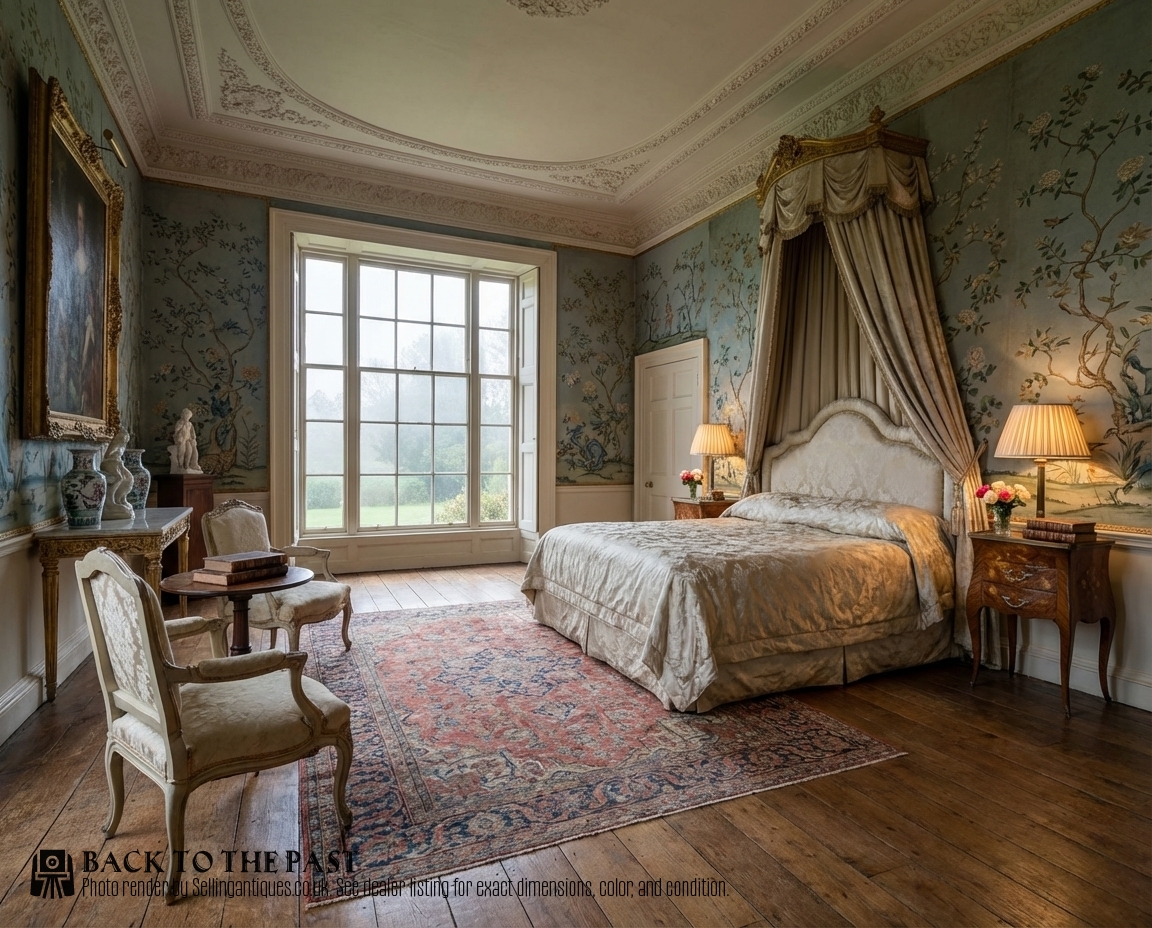
How they were made
Cabinet makers utilised dense timbers such as kingwood, walnut, and rosewood applied as fine veneers over underlying carcases. Craftsmen arranged these veneers into geometric parquetry patterns or floral marquetry pictures.
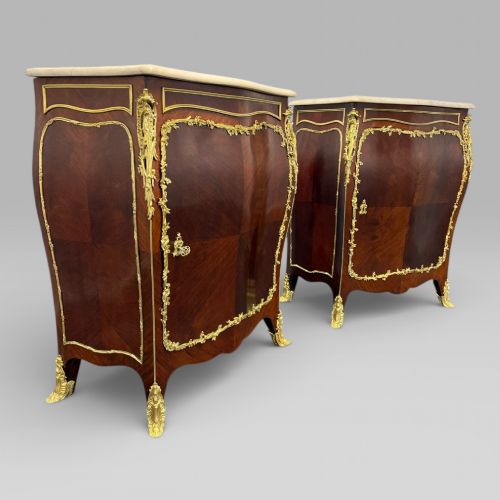
Surfaces receive heavy stone tops, notably marble, fitted precisely to the shaped wooden carcase. Metal components cast from ormolu, gilt bronze, and brass provide corner mounts, drawer pulls, and framing.
Some tiny bedside cabinets hide miniature secret drawers behind their decorative brass-mounted aprons.
What varies in quality
The distinction between ordinary and superior pieces rests upon the crispness of the marquetry cutting and the weight of the cast bronze mounts. Superior examples display intricate timber grain matching and finely chased ormolu details.
Construction methods determine durability, visible in the precision of the drawer dovetailing and the thickness of the marble slab. Better workshops employed heavier timber carcases and higher grade veneers that retain their colour.
E. Kahn·Sormani
The Kingwood Bedside Chest Glossary
- Kingwood
- A dense Brazilian timber with dark violet and brown streaking, widely utilised for decorative veneer work in French cabinetry. It forms the primary visual surface on these bedside chests.
- Bombe
- A swollen, bulging contour where the sides and front of a chest curve outward. This shape requires advanced woodworking skill to fit drawers accurately.
- Ormolu
- Gilt bronze mounts applied to furniture edges and corners for decoration. The metal is cast and chased to produce crisp relief details.
- Marquetry
- Fitted pieces of coloured wood veneer assembled to create pictorial designs on furniture surfaces. Craftsmen arrange floral or geometric patterns across the drawer fronts and sides.
- Commode
- A low French chest of drawers standing on legs. In bedside formats, these pieces offer compact storage beside a bed.
Kingwood Bedside Chest: Frequently Asked Questions
What periods do these chests come from?
The inventory spans the eighteenth, nineteenth, and early twentieth centuries. Most examples date from the Victorian era up to the 1930s.
Revival styles dominate the selection, referencing earlier French monarchical periods. Makers frequently utilised nineteenth-century historicist designs inspired by Louis XV and Louis XVI aesthetics.
How were bedside chests used historically?
These cabinets served as functional storage beside a bed, holding chamber items, books, and personal belongings. Their enclosed cupboards and drawers kept private items concealed.
Marble tops provided a durable, wipe-clean surface for water jugs, washing bowls, or bedside lamps. Their neat proportions allowed them to fit snugly next to period bed frames.
Are these chests usually found in pairs?
Pairs appear frequently among the listings, reflecting the historical requirement for matching bedside furniture. Single cabinets also occur regularly.
Matched pairs share identical timber veneers, dimensions, and mount styles, though slight hand-finished variations often exist between individual pieces.
What materials are typical for the tops?
Marble serves as the standard surface material for these cabinets. Slabs range in colour from white to patterned varieties such as breche d'alep.
The stone is heavy and sits unattached or pinned directly onto the wooden carcase, providing a cool, resilient top resistant to liquid spills.