
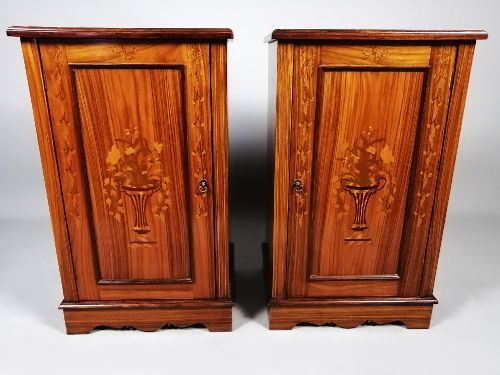
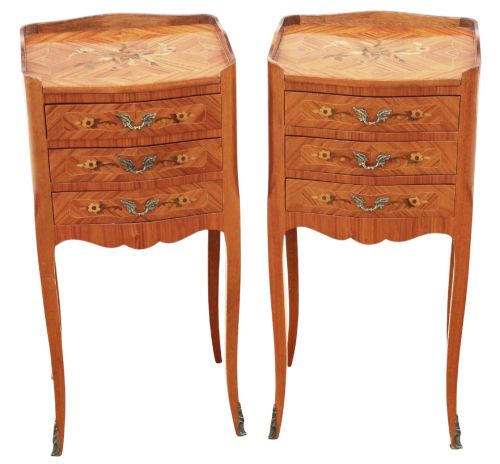
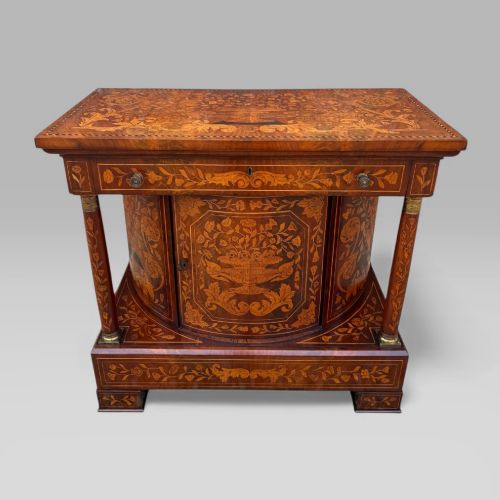
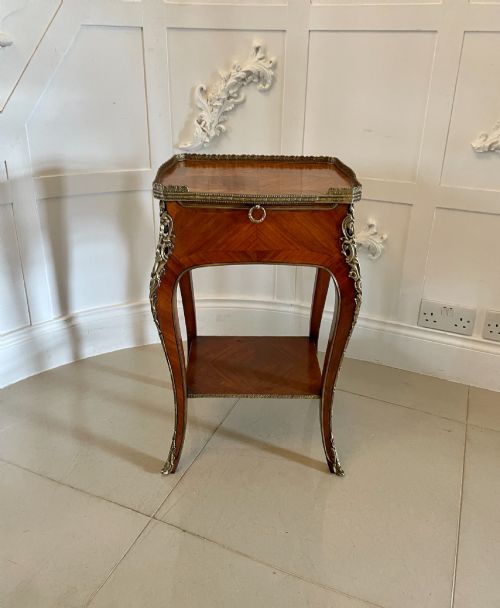

Marquetry Table Cabinet
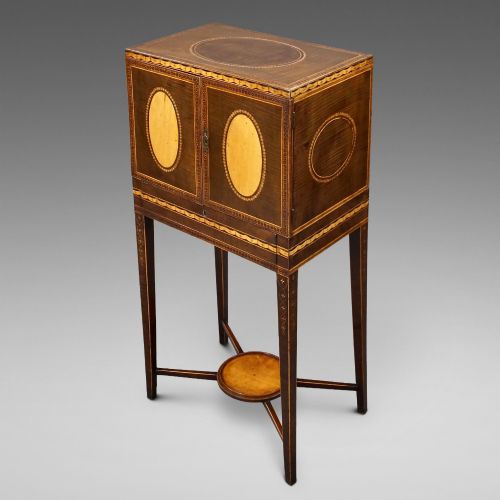
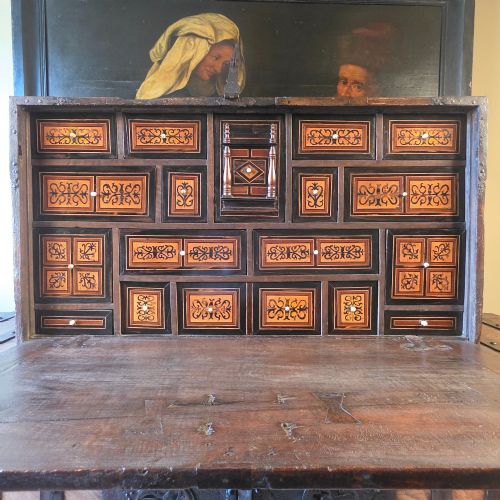
A marquetry table cabinet brings intricate floral and geometric wood veneers together with the practical storage of a small case piece.

Marquetry Table Cabinet
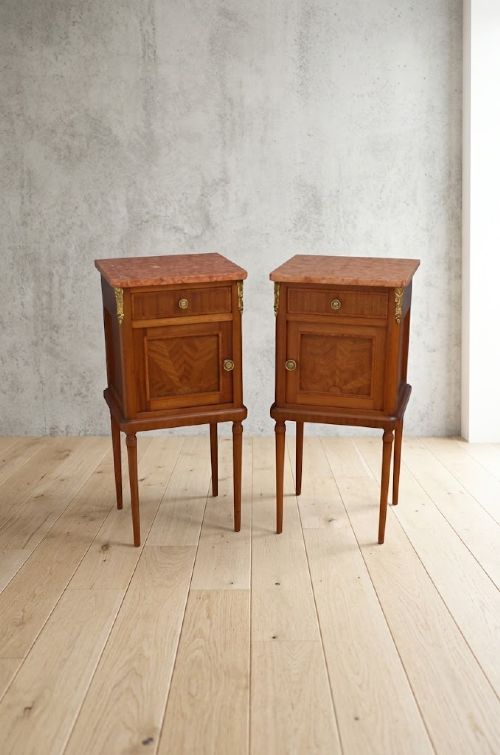
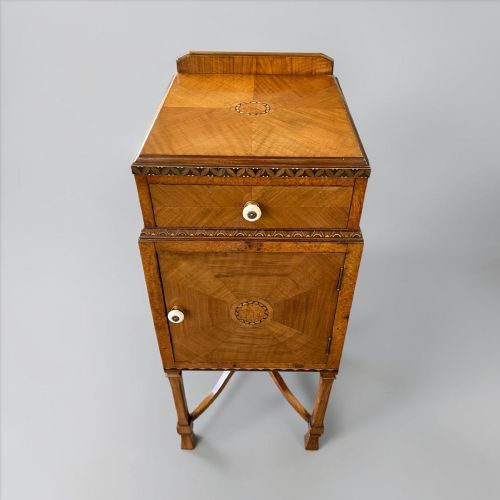
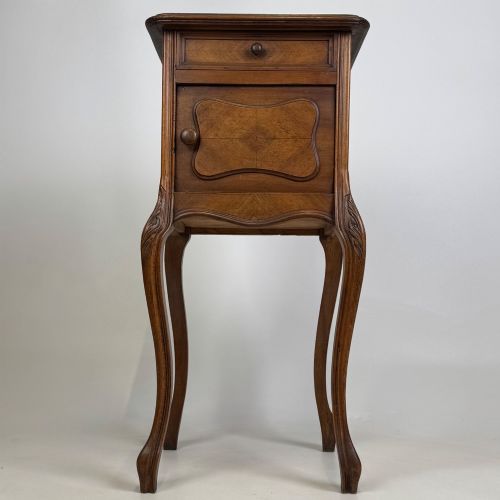
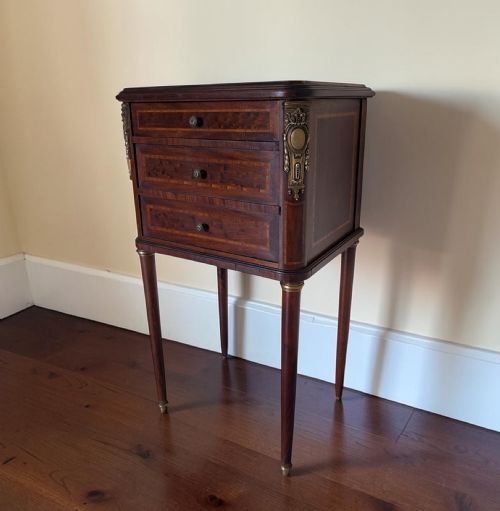
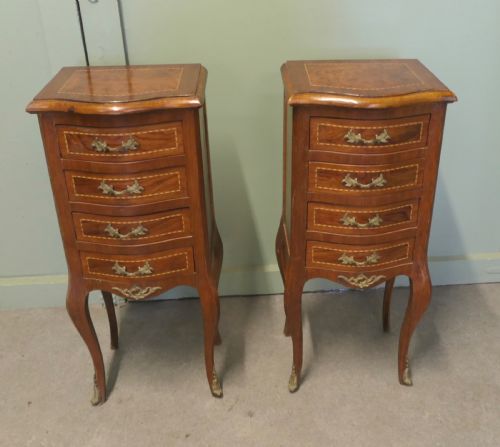
A marquetry table cabinet combines the intricate veneer work of skilled cabinet makers with the compact utility of a small case piece. These items bridge the gap between display surfaces and enclosed storage, appearing frequently as bedside cupboards, lamp tables, and small commodes.
The versions most commonly met on this page span the nineteenth and early twentieth centuries, drawing heavily on French Louis styles and Victorian tastes. Walnut, mahogany, and exotic timbers form the foundation for elaborate pictorial inlay.
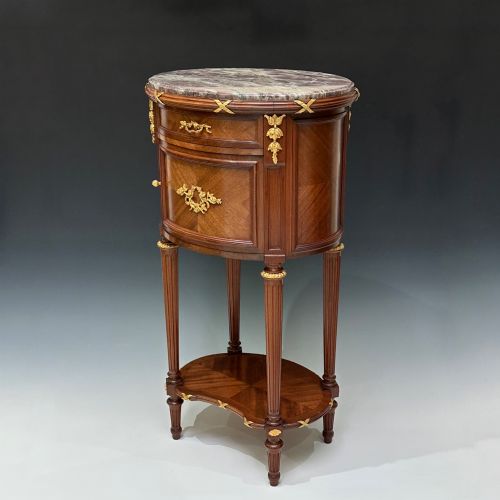
Makers often integrated marble tops, ormolu mounts, and delicate brass details into the design to elevate the furniture from simple utility to decorative display. These pieces served intimate domestic spaces like bedrooms and private drawing rooms, holding personal items or small valuables.
How They Were Made
Craftsmen built these cabinets using supportive structural timbers like mahogany or walnut, applying fine veneers of kingwood, rosewood, satinwood, and tulipwood over the core. Artisans cut contrasting woods by hand to assemble complex pictorial or geometric patterns that were then glued and pressed onto the surface.
Metalworkers contributed cast ormolu and gilt bronze mounts, framing corners and handles to accent the timber grains. Stonemasons shaped marble slabs to fit snugly atop the carcasses of the finer bedside chests and commodes.
Some nineteenth-century bedside cabinets conceal pull-out shelves designed specifically to hold a chamber candle safely away from the polished wood.
What Varies in Quality
Secondary elements reveal the underlying standard of the piece, from the crispness of the gilt bronze mounts to the hand-cut dovetails inside the drawers. Heavier, clumsier marquetry indicates a commercial output, whereas fine shading in the floral motifs points to accomplished artistry.
François Linke·Edwards and Roberts·Sormani
The Marquetry Table Cabinet Glossary
- Marquetry
- The art of applying decorative pieces of veneer to a structural structure to form intricate pictorial or geometric designs. Craftsmen utilised contrasting timbers to create depth and shade without relying on paint.
- Ormolu
- Gilt bronze mounts applied to furniture edges, feet, and handles for decorative enhancement. This technique was particularly favoured in French cabinet making during the eighteenth and nineteenth centuries.
- Kingwood
- A dense, heavy tropical timber displaying rich dark violet and brown tones with striking figuring. It served as a prized veneer for high-status French and English furniture.
- Satinwood
- A luminous yellowish timber harvested from tropical trees, prized for its reflective quality and smooth texture. It was frequently employed for contrasting inlay work and delicate banding.
- Commode
- A low chest of drawers or cabinet designed for domestic storage. These pieces often featured shaped fronts and elaborate veneer work.
Marquetry Table Cabinet: Frequently Asked Questions
Where were table cabinets placed?
These compact pieces typically stood beside beds or within private sitting rooms as lamp tables and small storage units. Their surfaces accommodated lighting while enclosed cupboards held night-time necessities.
In grander reception spaces, similar smaller furniture items functioned as display surfaces for decorative objects and collections.
How do I care for wood veneer?
Keep wooden surfaces away from direct sunlight and steady heat sources to prevent the underlying adhesives from drying out and the veneers from lifting. Regular dusting with a soft, dry cloth preserves the finish without introducing moisture.
Apply high-quality beeswax occasionally to nourish the timber and maintain a gentle sheen across the inlaid panels.
Are marble tops original?
Many French bedside cabinets and commodes were originally manufactured with fitted marble slabs designed to provide a durable, stain-resistant surface. These stone tops were selected to match the overall proportions and style of the case work.
Examining the underside and the seating rebate helps confirm whether the marble rests in its original housing.
How are different periods distinguished?
Eighteenth-century examples rely on structural proportions, simpler carcase construction, and natural timber ageing to signal their age. Nineteenth-century revival pieces often incorporate heavier ormolu mounts, machine-cut veneers, and more exuberant symmetrical patterns.
Later twentieth-century iterations simplify the decorative vocabulary while retaining the traditional forms of earlier decades.