


Marquetry Slant Desk
A marquetry slant desk combines a hinged writing flap with intricate wood inlay, offering a traditional workspace with decorative floral and geometric patterns.
Marquetry Slant Desk
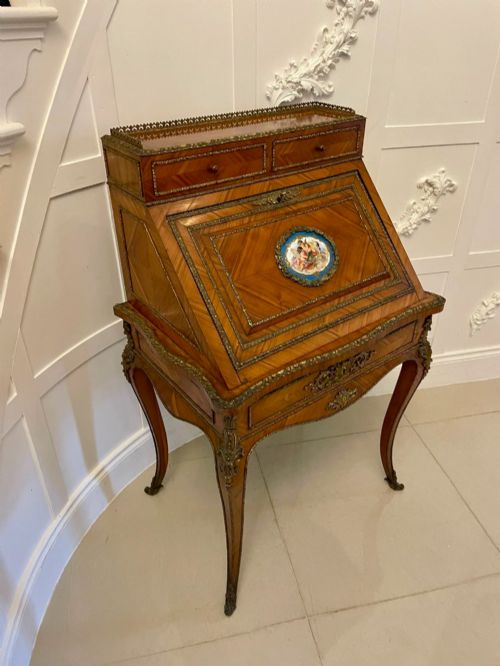
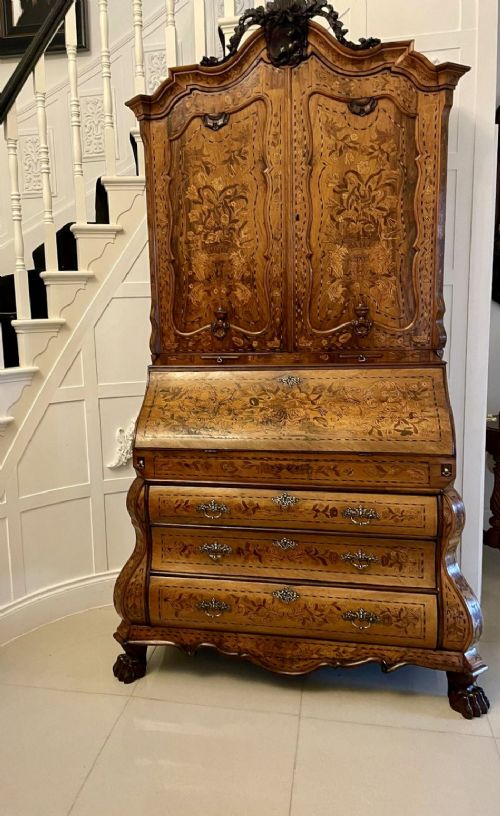
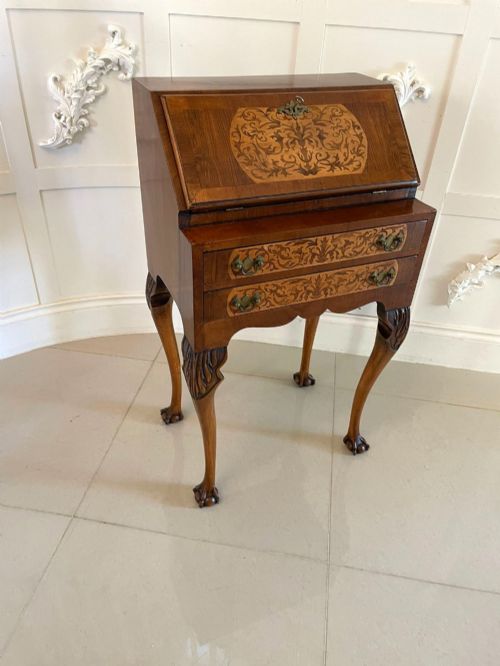
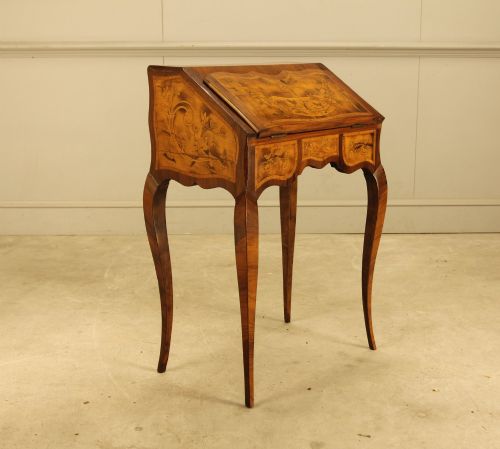
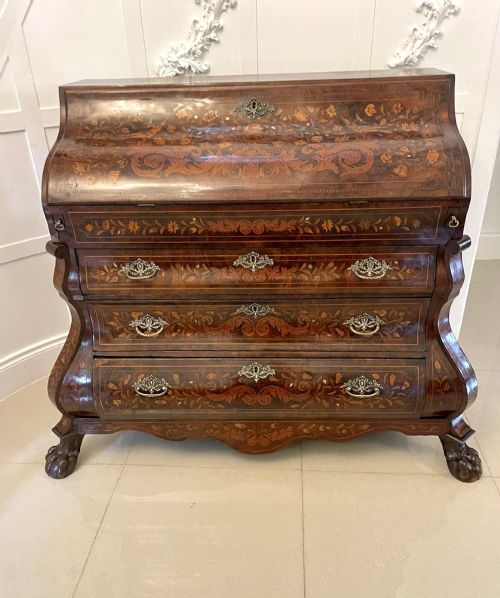
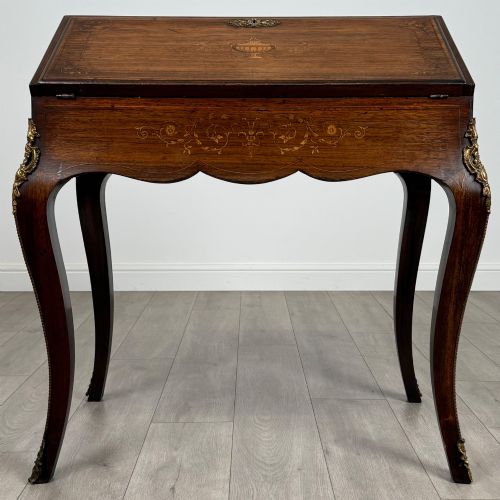
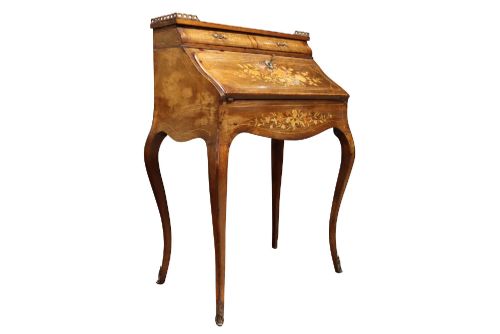
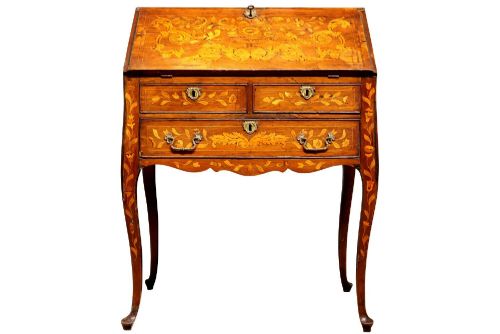
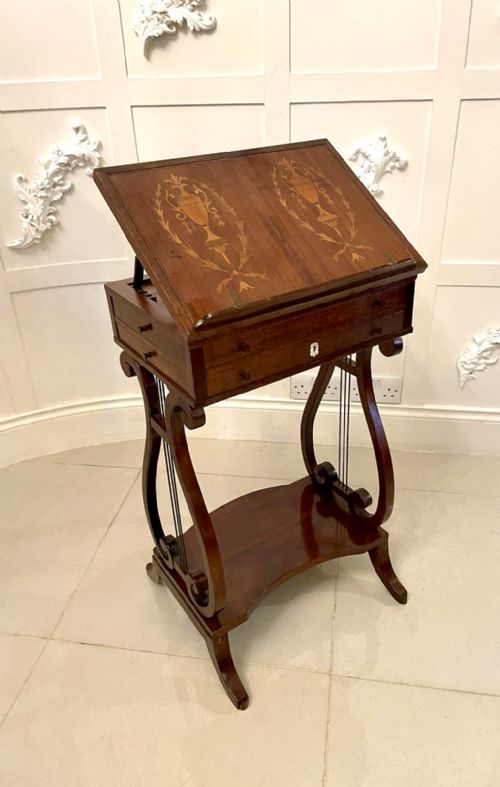
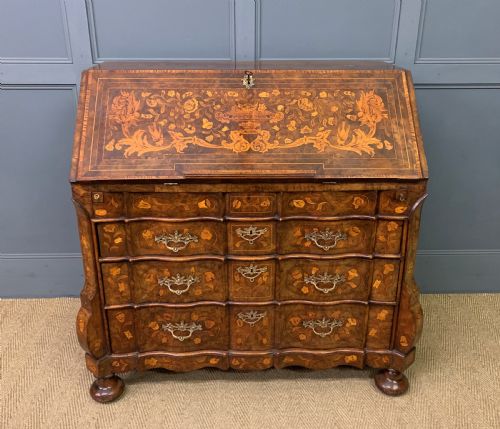
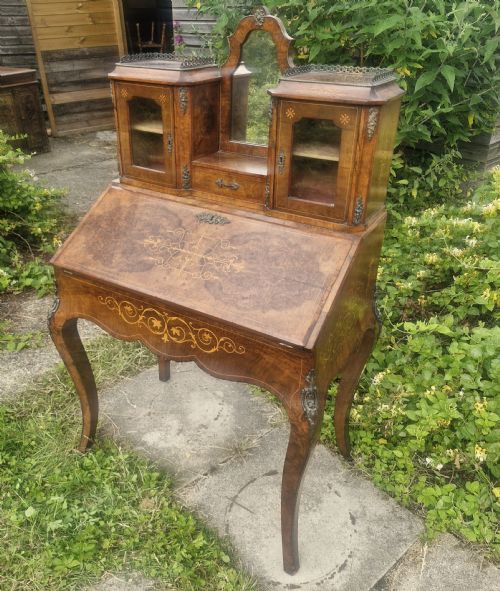
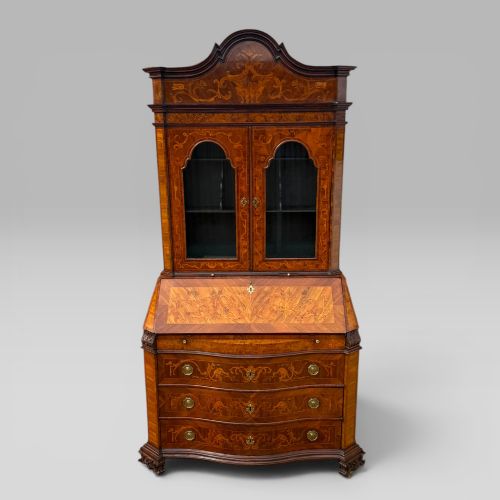
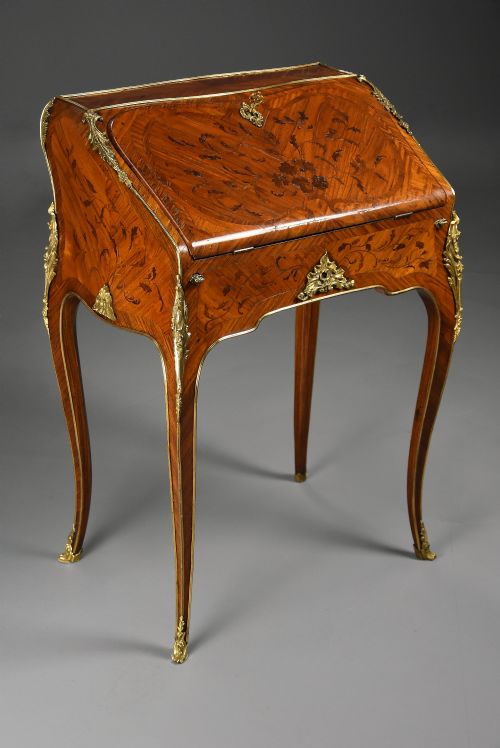
A marquetry slant desk is primarily encountered in the form of a bureau, bureau bookcase, or bonheur du jour dating from the eighteenth and nineteenth centuries. These pieces feature a sloping fall-front lid that opens to reveal fitted pigeonholes and small drawers for correspondence. Buyers search for these items to introduce period craftsmanship and detailed timber patterns into a room.
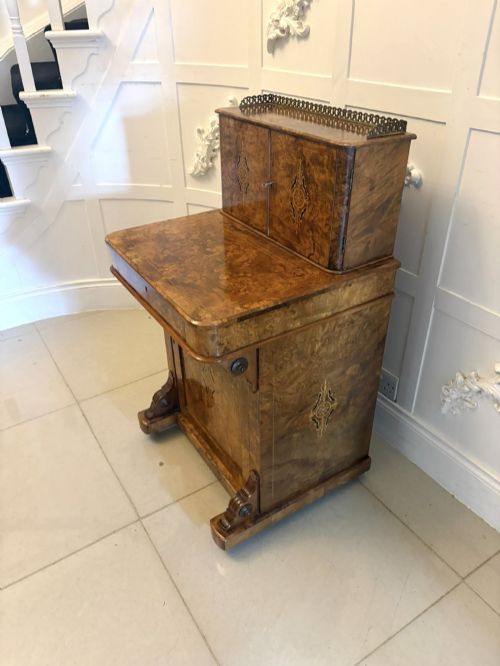
The selections on this page span several regional traditions, most notably Dutch, French, and English workshops. Eighteenth-century examples often exhibit bombe shaping and elaborate floral marquetry, while later Victorian variations include compact forms like the Davenport desk. Walnut, burr walnut, and rosewood serve as the primary timber surfaces for these decorated writing pieces.
Materials and construction
Cabinet makers utilised dense timber carcases of oak or pine veneered in figured woods such as burr walnut, mahogany, and kingwood. The characteristic sloping lid and drawer fronts provide a broad canvas for decorative veneers applied in contrasting grains.
Marquetry decoration relies on hand-cut veneers of fruitwood, tulipwood, and lighter woods fitted together to form floral, urn, or scroll motifs. Brass hardware, including escutcheons and hinges, completes the construction of these writing pieces.
Listings feature walnut, burr walnut, rosewood, and mahogany timbers across eighteenth and nineteenth-century periods.
Factors of quality
Quality in a marquetry slant desk rests upon the precision of the veneer work and the depth of the timber figuring. Superior pieces display crisp, tightly fitted floral inlay without excessive filler, maintaining sharp continuity across the slant lid and drawer fronts.
Structural integrity and secondary woods also distinguish higher grades of manufacture. Desks retaining original brass fittings, smooth drawer linings, and well-executed internal compartments reflect greater workshop skill during construction.
Edwards & Roberts
The Marquetry Slant Desk Glossary
- Marquetry
- Decorative veneer work assembled in geometric or pictorial patterns using various coloured woods. This technique adorns the exterior surfaces of desks and cabinets.
- Bureau
- A writing desk featuring a sloping fall-front flap that conceals interior compartments. It often sits above a set of graduated drawers.
- Bombe
- A swelling, outward-curved contour found on the front and sides of eighteenth-century case furniture. This curvilinear form requires advanced cabinet making skill.
- Bonheur-du-jour
- A light ladies writing desk featuring a small cabinet or superstructure with shelves and drawers above the main writing surface. It originated in mid-eighteenth-century France.
- Davenport
- A compact Victorian writing desk featuring a sloped, hinged top for correspondence and drawers accessed from the side. It frequently incorporates burr walnut or rosewood veneers.
Marquetry Slant Desk: Frequently Asked Questions
What is a marquetry slant desk?
A marquetry slant desk is a writing cabinet featuring a diagonal opening lid decorated with inlaid wood veneers. These pieces typically contain internal compartments for stationery and letters.
Originating largely in eighteenth and nineteenth-century European workshops, they combine functional workspace with elaborate floral or scroll decoration.
How do I date a bureau?
Dating relies on examining construction methods, secondary timbers, and hardware styles. Eighteenth-century examples often show hand-cut dovetails and oak secondary woods, alongside bombe contours.
Later Victorian pieces frequently utilise walnut or rosewood veneers with machine-sawn components and different interior layouts for stationery.
Where were these desks made?
These writing pieces originate from various European centres, with Dutch, French, and English workshops representing the primary traditions. Dutch makers favoured floral marquetry on burr walnut carcases.
French makers produced refined items like the bureau de dame and bonheur du jour using kingwood and rosewood veneers.
How do I maintain the wood?
Maintain the timber surfaces by keeping the desk away from direct sunlight and heat sources to prevent veneer cracking. Regular dusting with a soft, dry cloth preserves the polished finish.
Application of traditional wax polish occasionally helps nourish the burr walnut or mahogany grain without building up heavy residues.