
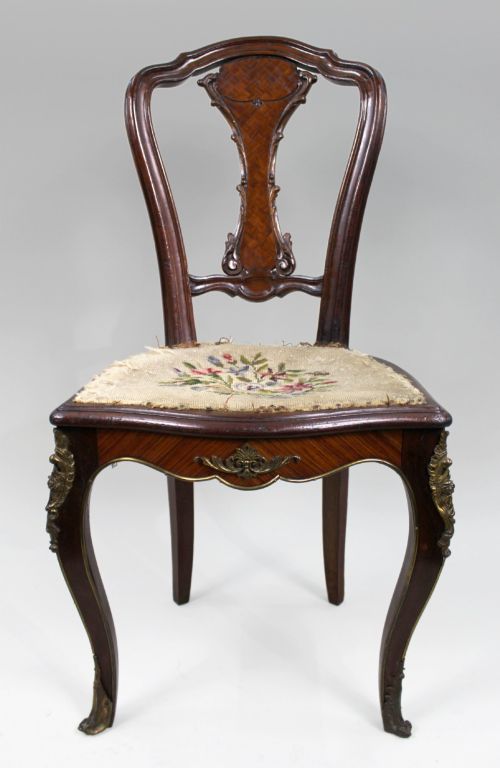


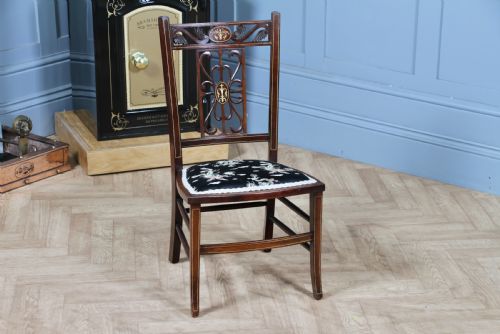


Marquetry Salon Seat
A marquetry salon seat brings intricate floral and geometric wood veneers into reception rooms, offering formal seating with decorative distinction.

Marquetry Salon Seat
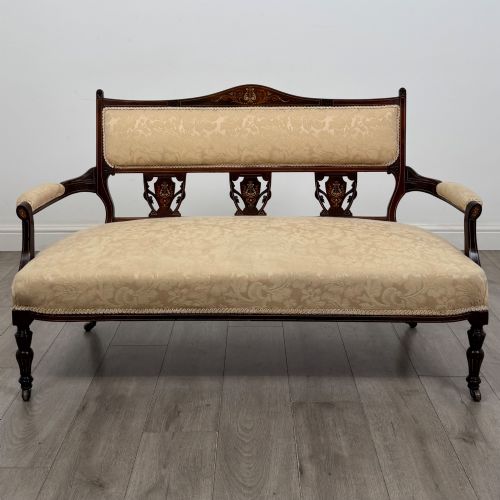
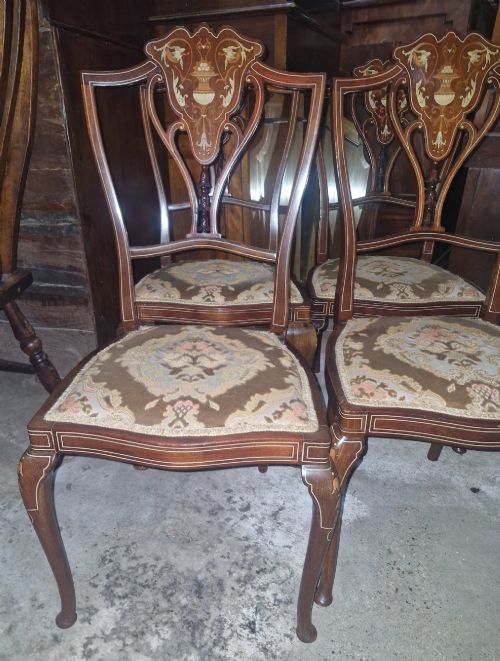
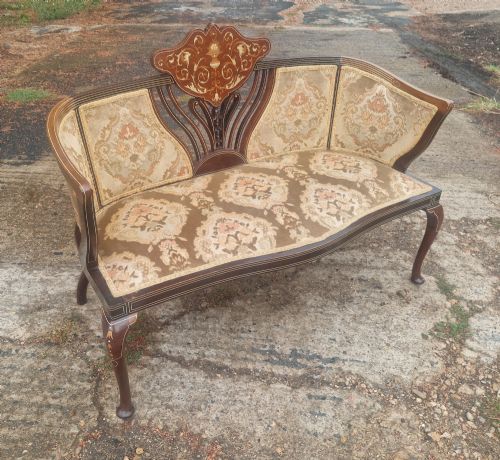
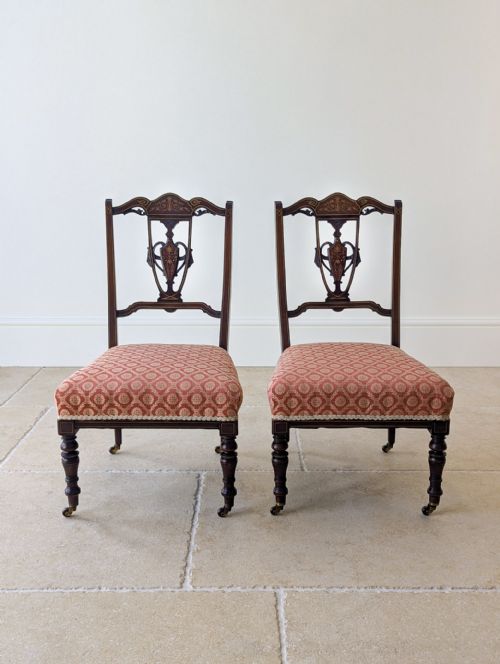
A marquetry salon seat is a formal chair, settee, or sofa designed for reception rooms, combining structural timber with patterned wood veneers. The selections here predominantly span the Victorian and Edwardian eras, reflecting the late nineteenth and early twentieth century appetite for revival styles.
Buyers encounter forms ranging from single salon and bedroom chairs to matched pairs of armchairs and multi-seat settees. Mahogany and rosewood form the primary structural timbers, frequently accented with satinwood or bone inlay.
The aesthetic vocabulary draws heavily upon Sheraton Revival, French Rococo, and Edwardian design principles. These pieces serve as both functional furniture and focal decorative elements within a traditionally styled interior.
Materials and construction methods
Cabinetmakers constructed the foundational frames using dense hardwoods like mahogany and rosewood, ensuring stability for carved and upholstered elements. Finer details rely on contrasting veneers, incorporating satinwood, bone, and marquetry inlay to create pictorial or geometric surface patterns.
Upholstery methods span silk, damask, and standard fabric coverings, sometimes presented ready for re-upholstering by the new owner. Metal mounts, including brass and ormolu, appear on specific French-influenced pieces to accentuate structural joints and contours.
Several Edwardian pieces are specifically designated as end of bed sofas, proving Victorians loved lounging everywhere.
Assessing craftsmanship and execution
The precision and complexity of the wood inlay dictate the visual merit of each piece. Finer examples display tight, seamless juxtaposition of varied timber species forming intricate botanical or symmetrical motifs without visible gaps in the veneer.
Structural integrity separates standard utilitarian seating from superior parlor furnishings. Well-preserved joinery, carefully carved woodwork, and the retention of original timber patination elevate the standing of a seat within its period category.
The Marquetry Salon Seat Glossary
- Marquetry inlay
- Decorative veneer work composed of small pieces of wood fitted together to form pictorial designs. This technique transforms flat surfaces into elaborate visual displays on backs and rails.
- Settee
- A medium-length upholstered wooden bench with a back and arms. It provides comfortable seating for multiple occupants in a formal drawing room.
- Satinwood
- A durable, lustrous timber native to India and Ceylon, prized for its golden yellow colour. It is frequently employed for contrasting inlay work against darker rosewood or mahogany.
- Sheraton Revival
- A late nineteenth and early twentieth century design movement replicating the refined neoclassical furniture style of George Sheraton. It relies on straight tapered legs and delicate stringing.
- Ormolu
- Gilt bronze ornamentation applied to furniture mounts and decorative accents. It became popular on pieces influenced by French cabinetmaking traditions.
Marquetry Salon Seat: Frequently Asked Questions
How do I distinguish Victorian from Edwardian seats?
Victorian examples generally exhibit heavier proportions, darker rosewood or mahogany timbers, and dense, exuberant carving. French revival influences also feature prominently in this earlier phase.
Edwardian pieces tend to display lighter framing, increased use of satinwood and bone inlay, and simpler Sheraton Revival lines. The overall aesthetic shifts toward airier drawing room elegance.
Where should I place a salon settee?
These settees suit reception rooms, drawing rooms, and large bedrooms where their decorative backs remain visible. They function effectively as statement pieces against a plain wall or paired with matching armchairs.
Avoid positioning them in direct sunlight to protect delicate silk or damask upholstery and veneered surfaces from fading.
Can I use these seats for daily lounging?
Salon seating was originally designed for formal entertaining and polite conversation rather than heavy daily lounging. The upright posture and delicate inlaid frames require a more mindful approach to seating.
Owners intending frequent daily use should select sturdier frames and ensure internal webbing and padding remain sound.