

Marquetry Rosewood Desk
These marquetry rosewood desks combine dense tropical timber with intricate pictorial veneer work, offering a sophisticated surface for correspondence and study.
Marquetry Rosewood Desk
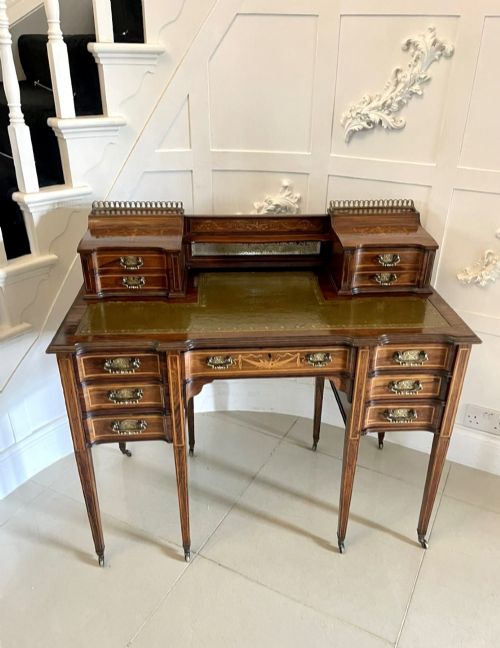
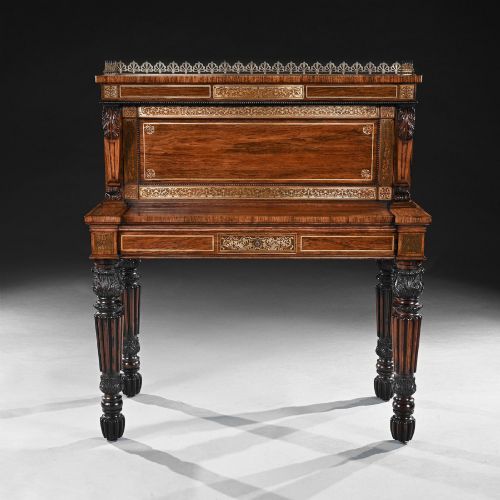
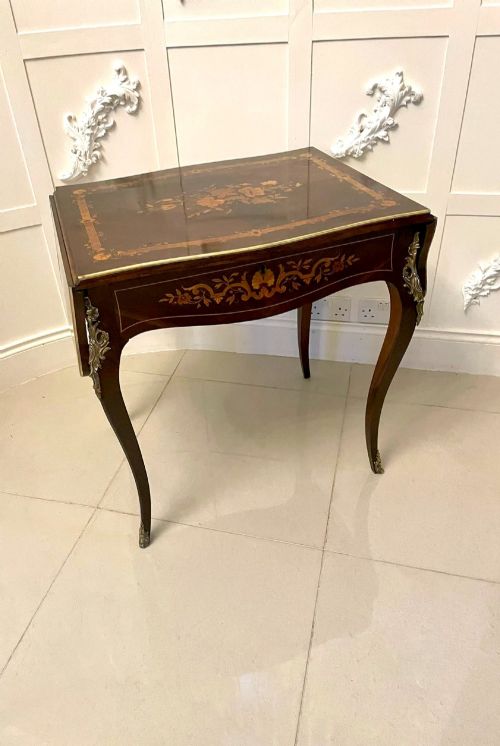
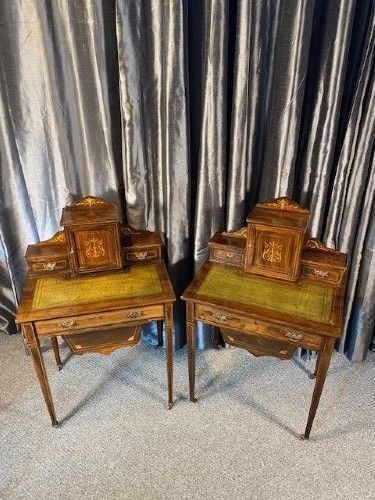
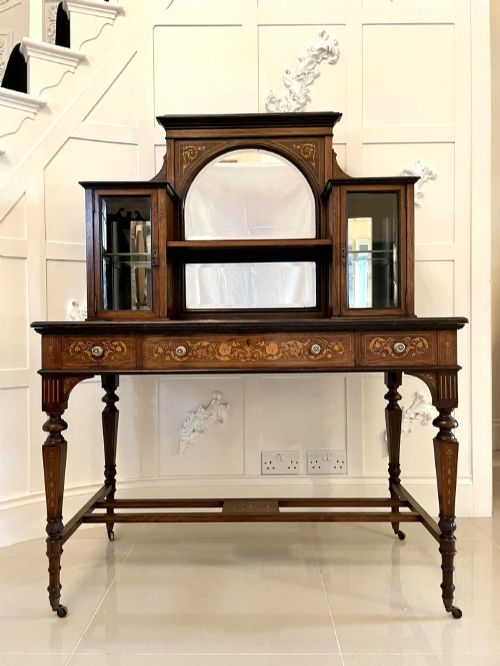
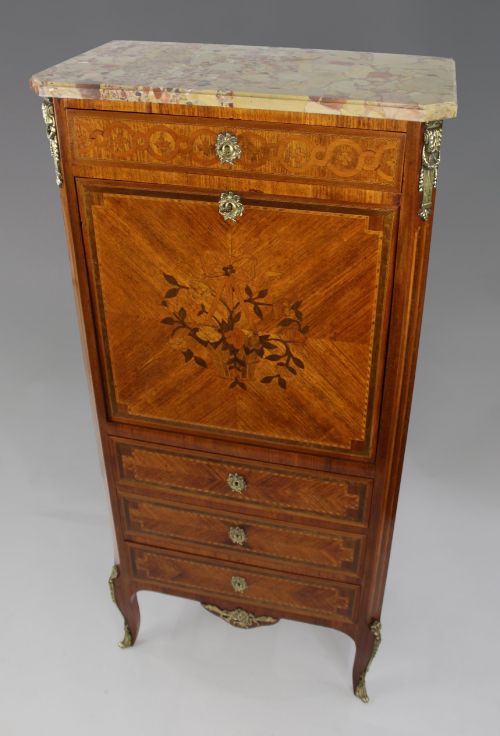
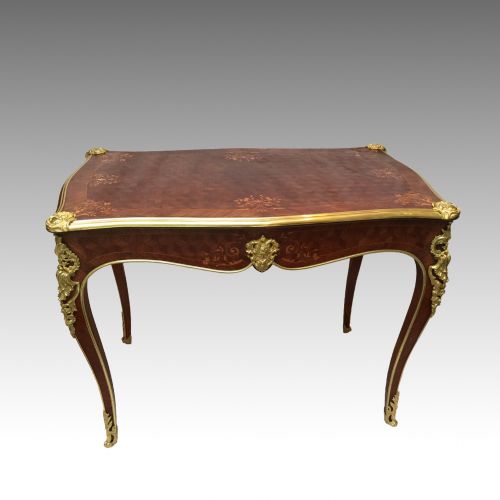
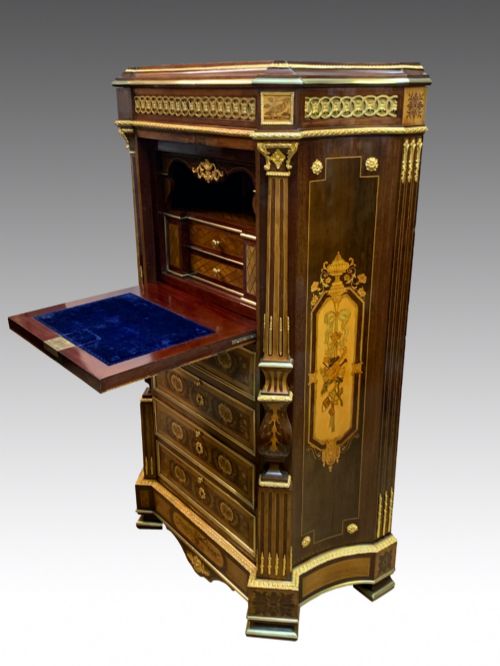
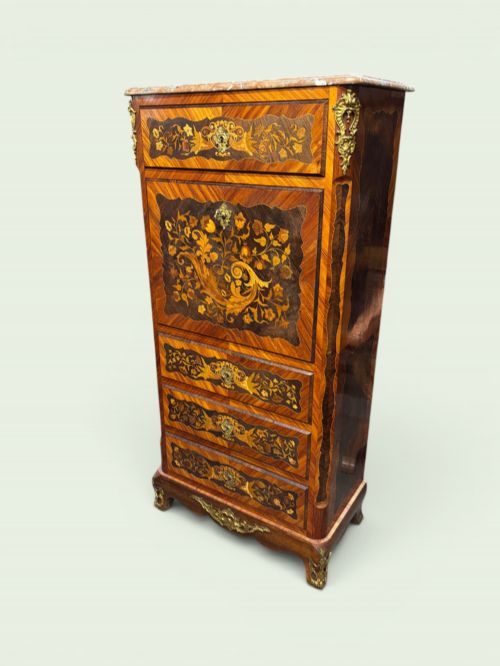
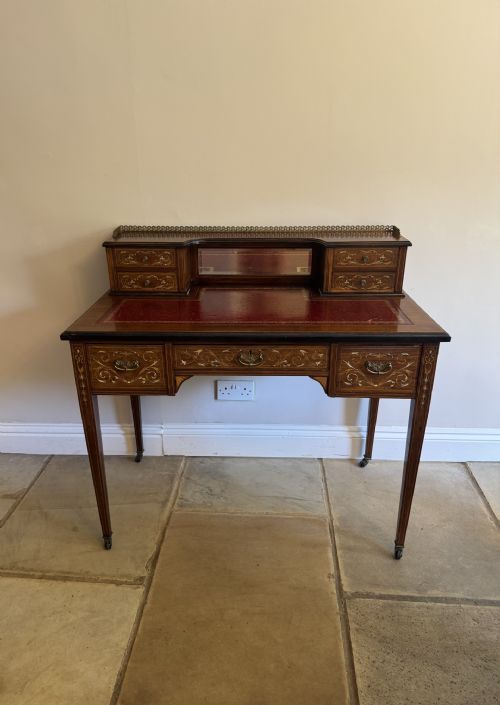
A marquetry rosewood desk is a refined writing surface ornamented with contrasting wood veneers arranged into floral, scrollwork, or geometric patterns. These pieces span the nineteenth and early twentieth centuries, drawing heavily on French cabinet-making traditions alongside English Victorian and Regency interpretations.
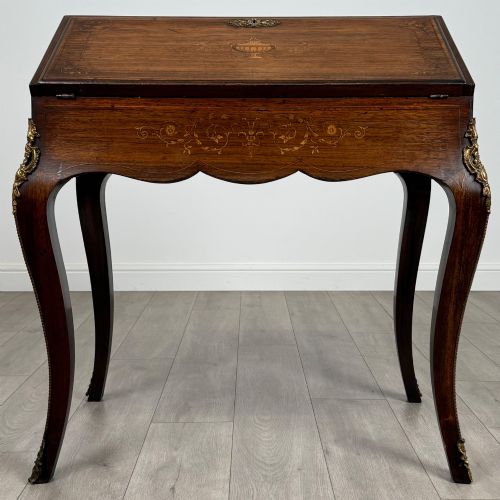
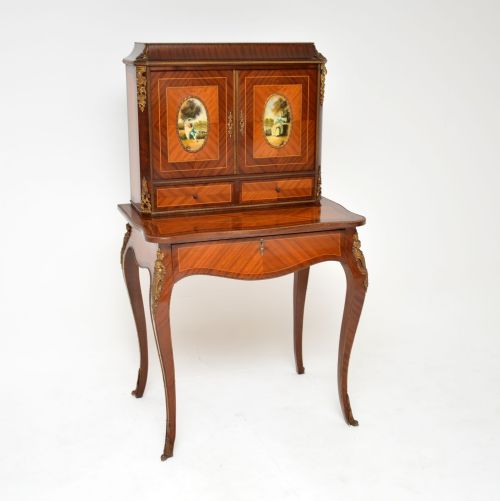
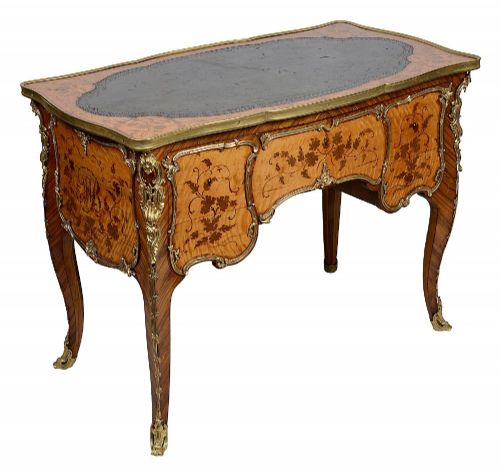
The selections on this page appear in various forms, from compact bureau de dame and cylinder desks to larger freestanding library and centre tables. English examples often favour linear brass stringing or satinwood details, whilst continental pieces lean towards elaborate floral marquetry paired with gilt-metal mounts.
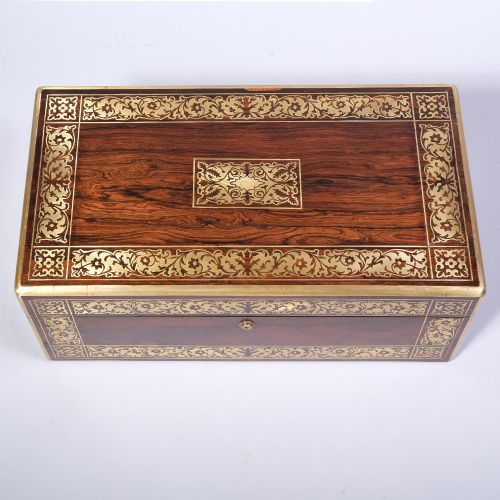
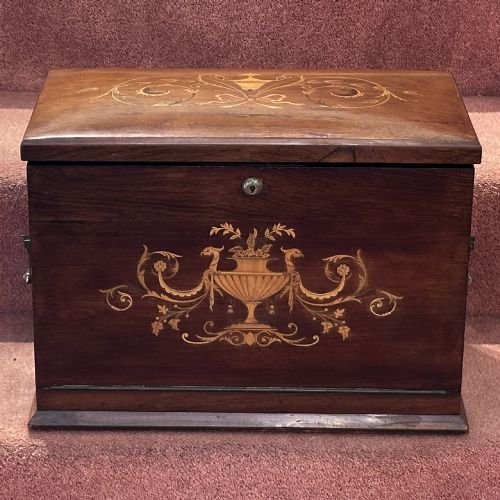
Buyers encounter numerous variations, including Davenport desks featuring sloped writing lids and stationery compartments, alongside refined writing boxes designed for portability. Rosewood provides a deep, rich brown ground that frames the lighter inlay work effectively.
How They Were Made
Craftsmen built the carcases using solid secondary timbers before applying fine veneers of rosewood across the exterior surfaces. Marquetry motifs were cut from contrasting woods like satinwood, kingwood, and boxwood, then fitted meticulously into the primary ground.
Many items incorporate cast or chased ormolu mounts to accent the structural corners and aprons, while brass inlay appears as precise lines or bound edges. Writing surfaces frequently feature inset panels of tooled leather to provide a durable medium for daily correspondence.
Secret compartments inside these desks often reward curious owners with hidden drawers designed for private correspondence.
What Varies in Quality
The fineness of the marquetry cutting dictates much of the visual success, where tighter joints and intricate botanical detail separate standard production from superior cabinet-making. The depth and grain figuration of the rosewood ground also influence the overall richness of the piece.
Hardware execution plays a decisive role, distinguishing between simple cast fittings and finely chased ormolu mounts that integrate harmoniously with the timber. The integrity of the underlying structure and the preservation of original polish surfaces determine the standing of each example.
Maple & Co.·Gillows Oxford Street Workshop·Maison Krieger
The Marquetry Rosewood Desk Glossary
- Marquetry
- The decorative technique of applying fine veneers of different woods to a structure to form pictorial or geometric designs. Artisans cut these patterns from thin sheets of timber and assemble them meticulously by hand.
- Ormolu
- Gilded bronze mounts applied to furniture for decorative accent during the eighteenth and nineteenth centuries. This material provides metallic contrast against dark rosewood grounds.
- Bureau de Dame
- A small ladies writing desk, often featuring a sloping lid or fitted superstructure with small drawers. These refined pieces were popular in French-influenced interiors.
- Parquetry
- Geometric wood inlay forming repetitive patterns such as cubes or chequers across a surface. It differs from marquetry through its strict geometric arrangement rather than pictorial representation.
- Satinwood
- A pale, lustrous timber utilised extensively for contrasting inlay and stringing on dark woods. Its reflective grain catches light effectively.
Marquetry Rosewood Desk: Frequently Asked Questions
How do I care for rosewood veneer?
Keep the timber away from direct sunlight and extreme temperature shifts to prevent the underlying veneer from drying or lifting. Apply natural wax polish sparingly to maintain the lustre without building up heavy residue.
Avoid placing damp items directly onto the polished surface. Gentle dusting with a soft, dry cloth preserves the historical finish effectively.
What is a bureau de dame?
A bureau de dame is a compact ladies desk typically featuring a fitted interior and a sloping writing flap. These items were designed for light correspondence and often incorporate delicate marquetry.
Originating largely from French workshops, they frequently stand on slender cabriole legs. Their diminutive scale makes them adaptable for placement in smaller reception rooms.
How do I distinguish French and English styles?
French examples from this period often display elaborate floral marquetry, curved cabriole legs, and prominent ormolu mounts. They frequently adopt Louis XV or Napoleon III revival aesthetics.
English pieces tend towards more restrained forms, utilising geometric brass stringing, satinwood crossbanding, and straight tapered legs. Regency and Victorian variants emphasise clean architectural lines.
Can I use these desks for daily writing?
Many of these pieces function well for contemporary writing and laptop use, provided the writing surface is treated with care. Leather inserts offer a suitable medium for everyday tasks.
Consider the interior depth and drawer clearance before storing modern supplies. Protecting the antique polish ensures the surface survives ongoing usage.