
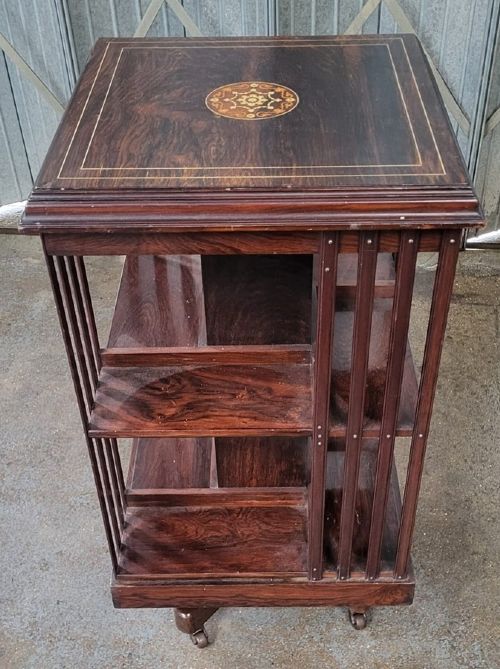
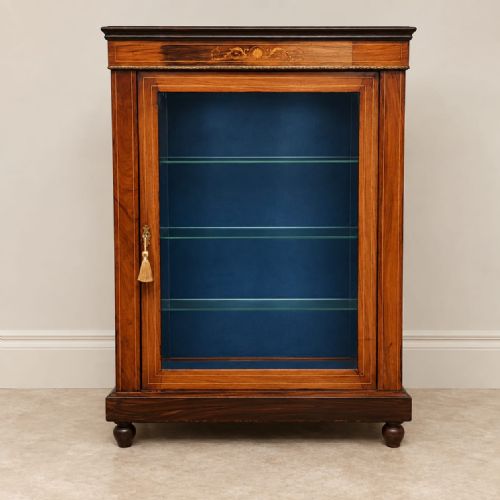
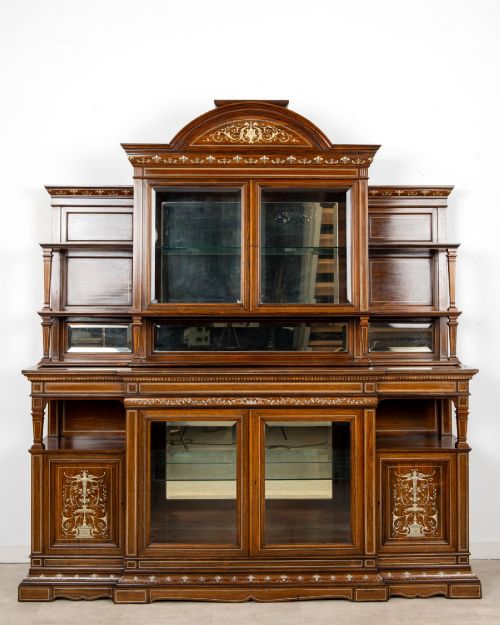
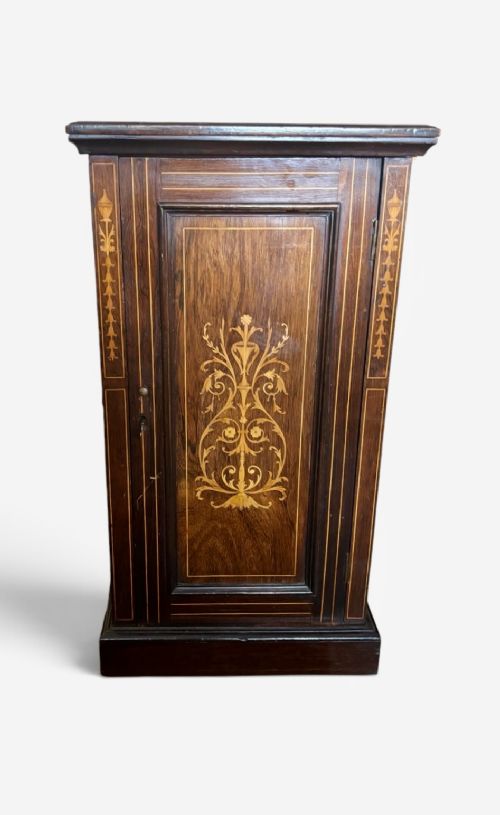


Marquetry Rosewood Bookcase
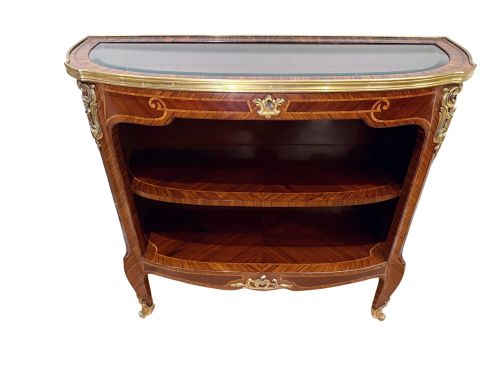
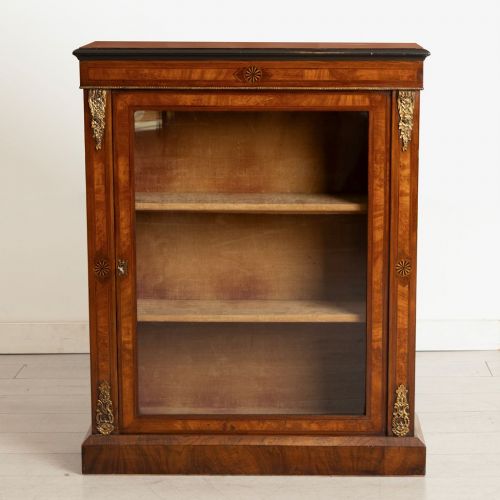
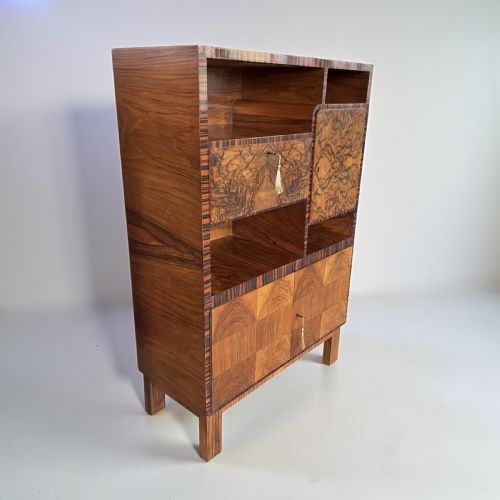
These marquetry rosewood bookcase pieces bring rich timber figures and fine inlay together, offering both display space and refined storage for the home.
Marquetry Rosewood Bookcase
A marquetry rosewood bookcase brings together distinct timber grains and detailed floral or geometric patterns, spanning display cabinets, side cabinets, and chiffoniers. You are most likely to encounter Victorian and Edwardian examples on this page, often featuring glazed doors or open shelving.
The selection also includes Regency side cabinets and later Art Deco pieces, reflecting shifts in taste from formal classical revival to cleaner modern lines. Pier cabinets and narrow display pieces appear frequently, designed to fit specific architectural spaces within a room.
Makers and workshops of the nineteenth century utilised rich contrasting veneers to elevate standard furniture forms into statement pieces. Whether configured with a vitrine top or revolving tiers, these items serve as both practical storage and decorative focal points.
Materials and construction
Cabinet makers built these pieces using dense rosewood as the primary carcase timber, often enriched with contrasting boxwood, satinwood, and walnut inlay. This combination of dark grain and pale floral or linear marquetry creates the visual depth characteristic of the style.
Metal mounts in brass and ormolu frequently accent the doors, corners, and galleries, adding structural definition and decorative shine. Glass panels define the display sections, framed carefully to showcase books or collected objects within.
Materials recorded across the selection include rosewood, satinwood, walnut, brass, ormolu, and glass.
Assessing quality and execution
Quality rests in the crispness of the marquetry and the precision with which contrasting timbers are fitted into the rosewood ground. Finer pieces demonstrate seamless integration of boxwood and satinwood, maintaining sharp edges without gaps.
The choice of secondary woods and the weight of the brass or ormolu mounts signal the workshop standard behind the piece. Superior examples balance robust carcase construction with delicate, balanced decorative schemes.
Collinson & Lock·Edwards & Roberts
The Marquetry Rosewood Bookcase Glossary
- Marquetry
- Decorative veneer work forming pictures or patterns on a wooden surface. Craftsmen cut contrasting woods like satinwood and boxwood to fit flush into the rosewood ground.
- Vitrine
- A glass-fronted display cabinet used for showing ceramics and small objects. These often form the upper section of a bookcase or stand as standalone pier furniture.
- Pier Cabinet
- A low cabinet designed to stand against the wall space between windows. They frequently incorporate rosewood veneers and elaborate inlaid motifs.
- Chiffonier
- A low sideboard or cabinet featuring shelves and enclosed storage. Nineteenth-century versions often include brass inlay and glass doors.
- Palisander
- A dense tropical timber often synonymous with rosewood. Its dark grain provides the rich background typical of these cabinets.
Marquetry Rosewood Bookcase: Frequently Asked Questions
How do I date a rosewood bookcase?
Dating relies on stylistic clues such as structural proportions, the style of the inlay, and prevailing design movements. Victorian and Edwardian pieces exhibit distinct differences in moulding and decorative motifs.
Examining secondary timbers and construction methods inside the carcase provides further confirmation of the period. Documentation or attribution marks can also narrow down the decade of production.
Where should I place a pier cabinet?
These narrow cabinets suit alcoves, hallways, or wall spaces between windows where standard furniture proves too bulky. Their shallow depth allows them to sit comfortably without dominating a room.
Positioning them away from direct sunlight and heat sources protects the rosewood veneer and delicate marquetry from drying out.
How do I care for rosewood furniture?
Maintenance involves dusting with a soft, dry cloth and avoiding modern silicone-based polishes that build up over time. Natural wax applied sparingly helps preserve the sheen of the timber.
Maintaining stable room humidity prevents the rosewood and inlaid boxwood from warping or cracking across the joints.
What is the difference between a display cabinet and a bookcase?
Display cabinets typically feature glass doors or open vitrine tops designed to showcase decorative objects and collections. Bookcases prioritise shelving configured primarily for storing bound volumes.
Many pieces on this page blur the distinction by combining glazed display compartments with practical shelving for books.