

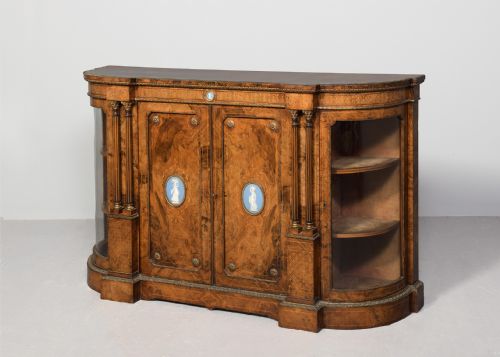


Marquetry Parlour Cabinet
A marquetry parlour cabinet brings together rich timbers and intricate inlaid details to anchor a formal reception room with period elegance.
Marquetry Parlour Cabinet
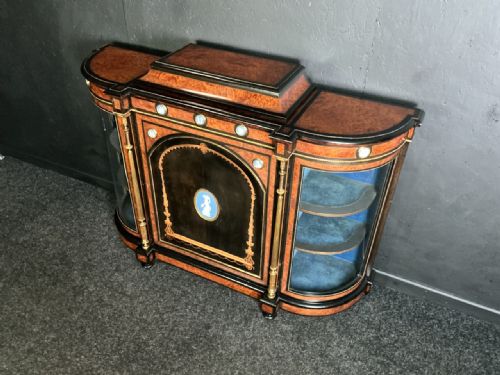
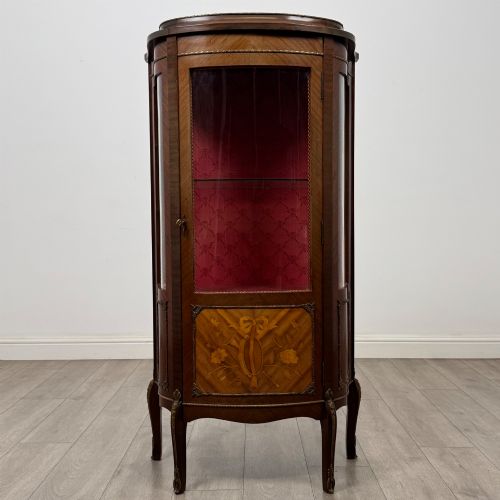
A marquetry parlour cabinet serves as a principal statement piece in a formal reception room, designed to display prized possessions while concealing other items behind panelled or glazed doors. These pieces emerge predominantly from the Victorian and Edwardian eras, spanning the mid nineteenth century through to the early twentieth century.
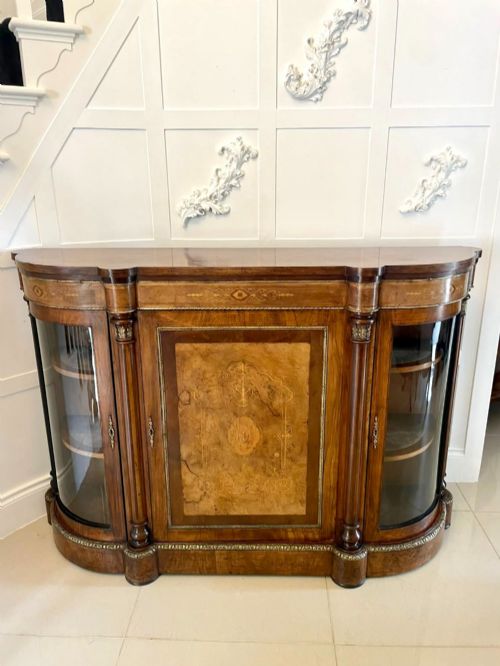
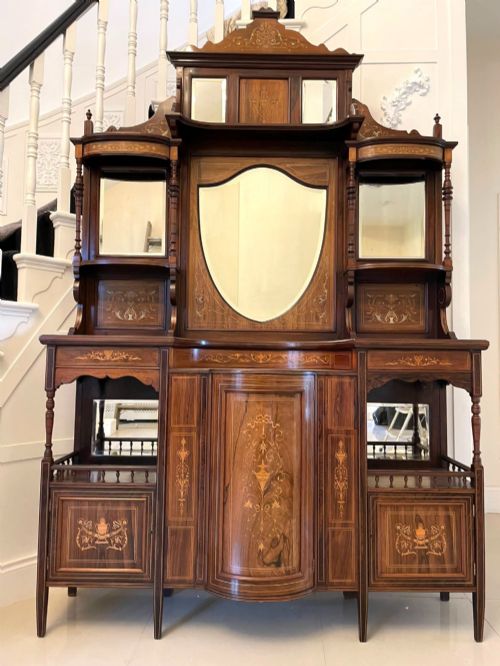
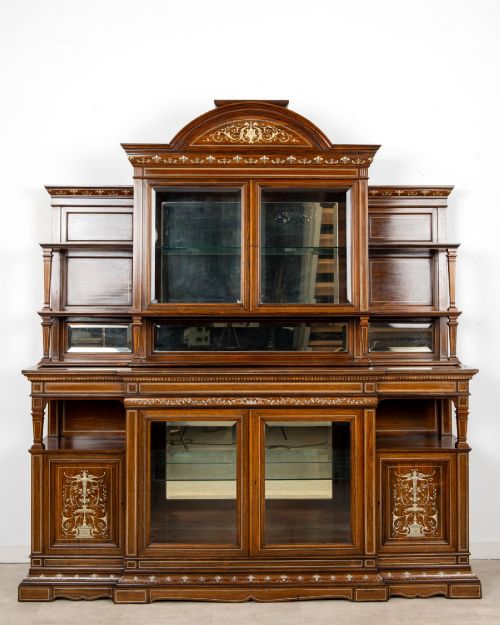
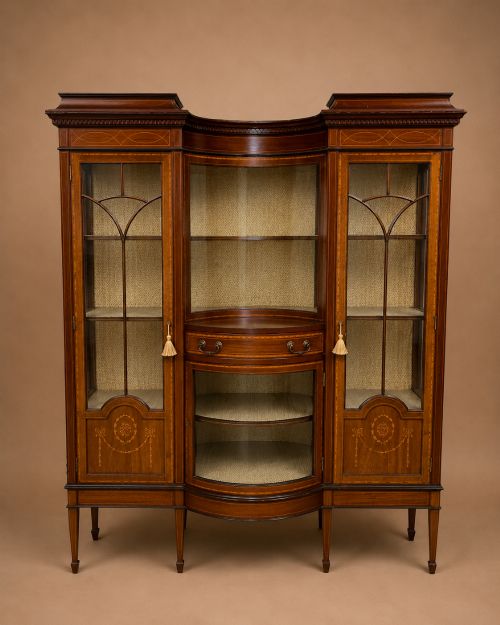
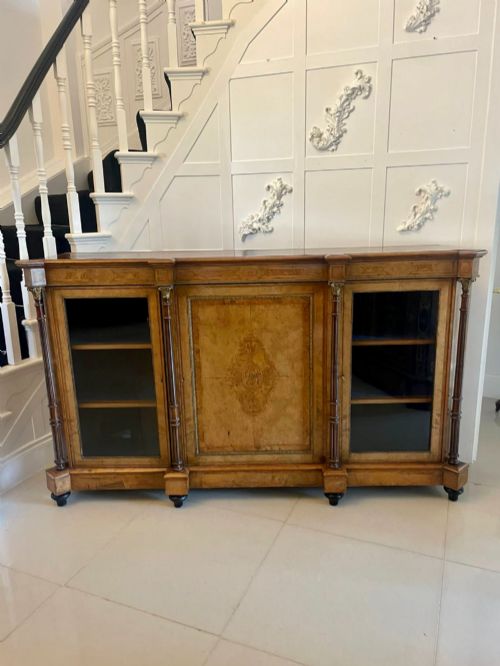
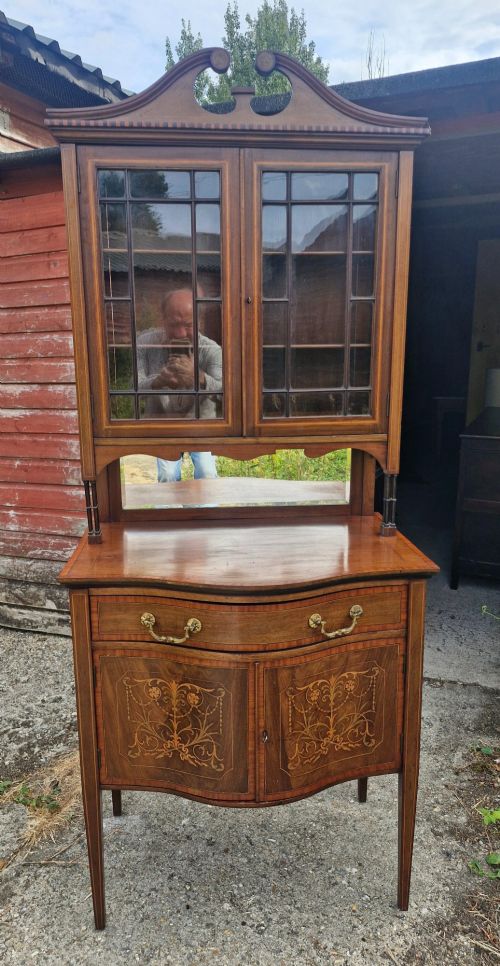
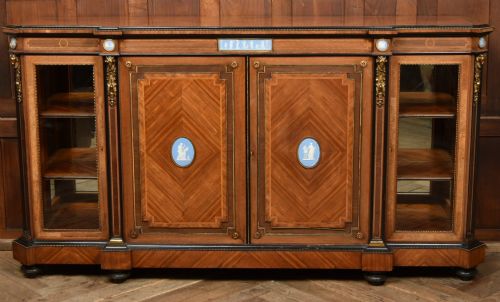
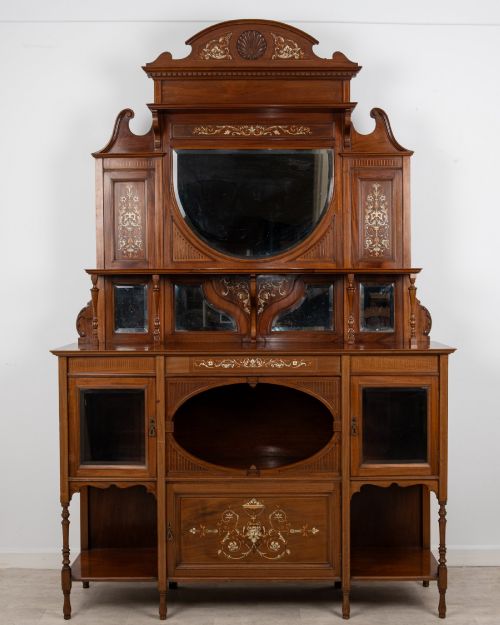
The forms on this page appear as credenzas, sideboards, display cabinets, and smaller side cabinets that utilise timber frames enriched with decorative wood veneers. Makers adapted these vessels for urban parlours and drawing rooms, combining glazed shelving with enclosed cupboards to suit domestic entertaining.
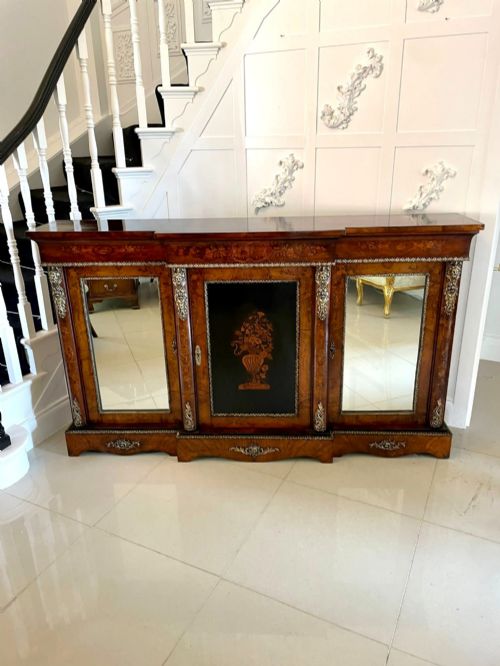
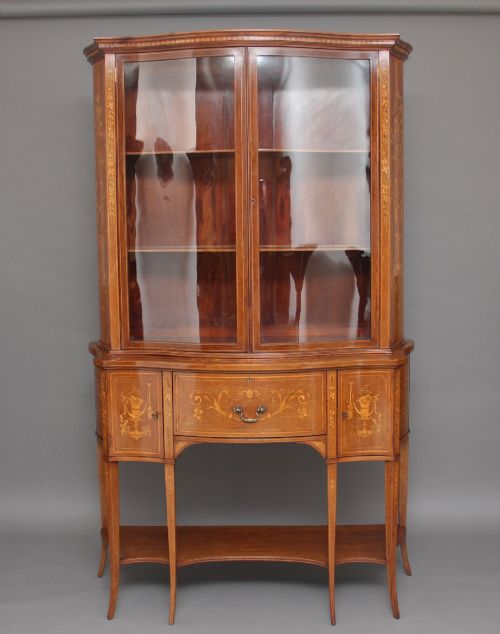
Victorian examples frequently showcase burr walnut or rosewood with dense botanical and geometric inlay, whereas Edwardian iterations lean towards lighter mahogany and satinwood grounds in Sheraton Revival styles. One encounters everything from bow-fronted display units to serpentine credenzas fitted with mirrored backs and ormolu mounts.
Materials and construction
Cabinet makers built these pieces using solid carcasing timbers such as mahogany or walnut, which they then faced with decorative veneers of burr walnut, rosewood, and satinwood. These choice veneers provided the canvas for detailed marquetry work, where contrasting woods were meticulously cut and fitted together to form floral and scroll motifs.
The ornamentation relied heavily on contrasting stringing lines, brass mounts, and ormolu framing to accentuate the curves of serpentine doors and bowed fronts. Glazed compartments incorporated sheet glass for display, while lower sections utilised panelled wooden doors backed by fitted shelving and occasionally concealed writing drawers.
Listings demonstrate that burr walnut and rosewood dominate the mid nineteenth century credenzas, while mahogany and satinwood define the later Edwardian display cabinets.
Assessing quality and execution
The distinction between ordinary production and top-tier work rests on the precision of the marquetry cutting and the depth of figure in the chosen veneers. Superior cabinets display seamless junctions in the inlaid woods without excessive use of painted lines to mask imprecise joints.
Quality also shows in the weight and detail of the cast brass or ormolu mounts, the selection of figured timbers for internal drawers, and the integrity of the cabinet carcase over time. Exhibition pieces often incorporate complex serpentine shaping and refined mirror backs that demand advanced carpentry skills.
Collinson and Lock·Edwards and Roberts
The Marquetry Parlour Cabinet Glossary
- Marquetry
- The decorative technique of applying finely cut pieces of veneer to a structural carcase to form pictorial or geometric patterns. These designs utilise the natural contrasting colours of various timbers.
- Credenza
- A low cabinet, typically featuring a central cupboard flanked by curved glazed display sections, popular in Victorian drawing rooms. They frequently incorporate mirror backs and ormolu mounts.
- Burr Walnut
- A specialised timber cut from the gnarled growths of a walnut tree, prized for its swirling and concentric grain patterns. It provides a rich, highly textured surface for cabinet fronts.
- Ormolu
- Gilded bronze mounts and decorative trimmings applied to furniture to highlight structural lines and corners. This French technique adds a metallic contrast to dark woods.
- Sheraton Revival
- A late nineteenth and early twentieth century design movement inspired by late eighteenth century neoclassical furniture. Pieces in this style favour lighter mahogany and satinwood with delicate inlay.
Marquetry Parlour Cabinet: Frequently Asked Questions
Where should a parlour cabinet go?
These cabinets suit principal reception rooms or large dining spaces where their decorative fronts and display surfaces can be appreciated. They work effectively against a flat wall to anchor the room's decorative scheme.
Position the cabinet away from direct heat sources and strong sunlight to protect fragile wood veneers and polished finishes from fading or drying out over time.
How do I care for inlaid wood?
Maintain the surface by dusting gently with a soft, dry cloth and avoiding silicone-based polishes or harsh chemical cleaning sprays. Natural beeswax applied sparingly helps nourish old timbers.
Keep humidity levels stable within the room to prevent the historic veneers from lifting or warping away from the underlying carcase.
What is the difference between a credenza and a display cabinet?
A credenza traditionally refers to a low, long cabinet featuring a central enclosed cupboard flanked by curved glass doors, often topped with a mirror back. They were designed for formal display and serving.
Standard display cabinets rise taller with an emphasis on glass panelling from top to bottom, intended primarily for exhibiting porcelain and collectibles rather than serving functions.
How do I date a marquetry cabinet?
Examine the secondary timbers used inside the drawers and carcase, alongside the overarching style, to determine the period of manufacture. Victorian pieces often use heavy mahogany or walnut frames with dense burr veneers.
Edwardian interpretations tend to feature lighter satinwood and mahogany grounds influenced by Sheraton Revival designs, marked by brighter finishes and finer framing.